Meet “HUNTR/X”, the animated K-pop girl group that took over the world with demons, dance moves… and lots of heart.
When KPop Demon Hunters first dropped on Netflix in March, few predicted the storm it was about to unleash.
The animated action-fantasy centers on a K-pop girl group moonlighting as demon slayers. Almost immediately, the film seemed tailor-made for a specific audience: teen viewers, fans of anime and K-pop enthusiasts.
But within weeks, it exploded beyond those boundaries: climbing Netflix’s Top 10 in over 80 countries, inspiring viral TikToks, dominating Spotify playlists and sparking think-pieces from Seoul to São Paulo.
Now, just five months later, KPop Demon Hunters is no longer just a film. It’s an unexpected hit that defied industry expectations, blurred genre lines and reminded us of the power of hybrid storytelling. Here’s how it happened.

“K-pop meets Buffy” with an animated twist
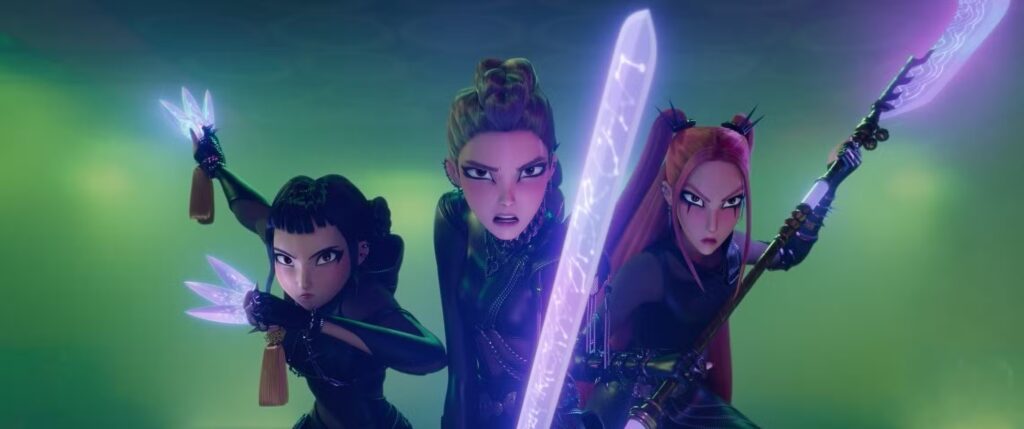
At its core, KPop Demon Hunters is as wild as it sounds: a high-octane adventure following “HUNTR/X”, a fictional K-pop girl group who balance rehearsals and world tours while battling demons threatening to break into our realm.
What makes the premise sing is its unapologetic blend of genres and aesthetics. The film borrows the slick choreography and high-gloss visuals of real-world K-pop videos and layers them with neon-drenched cityscapes and supernatural lore that feels pulled from classic anime like Sailor Moon or Bleach.
As the BBC noted in its cultural deep dive, the film’s “visual maximalism” creates “a kinetic, high-stakes fantasy world that never undercuts the emotional stakes”. Whether you’re in it for the fashion, the fight scenes, or the lore, the film delivers with stylish confidence.

More than just idols
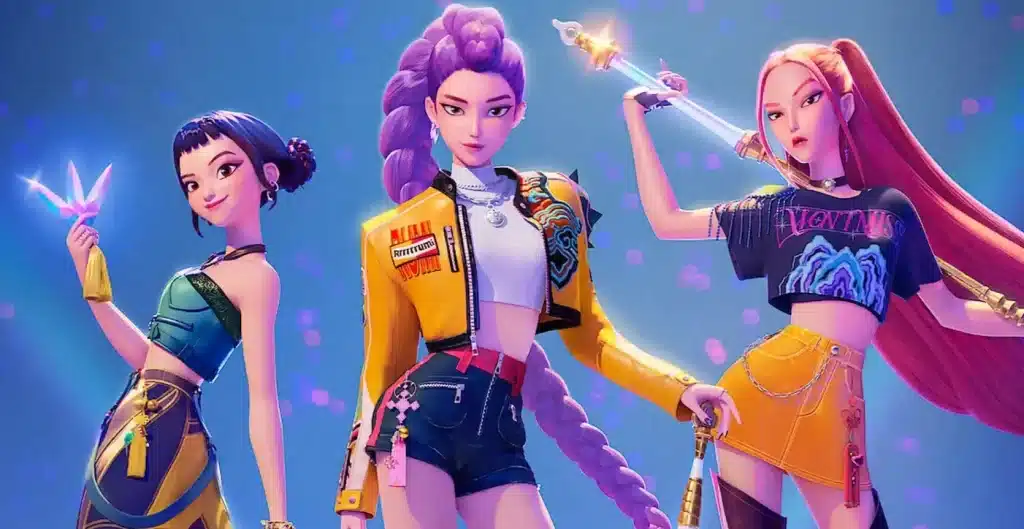
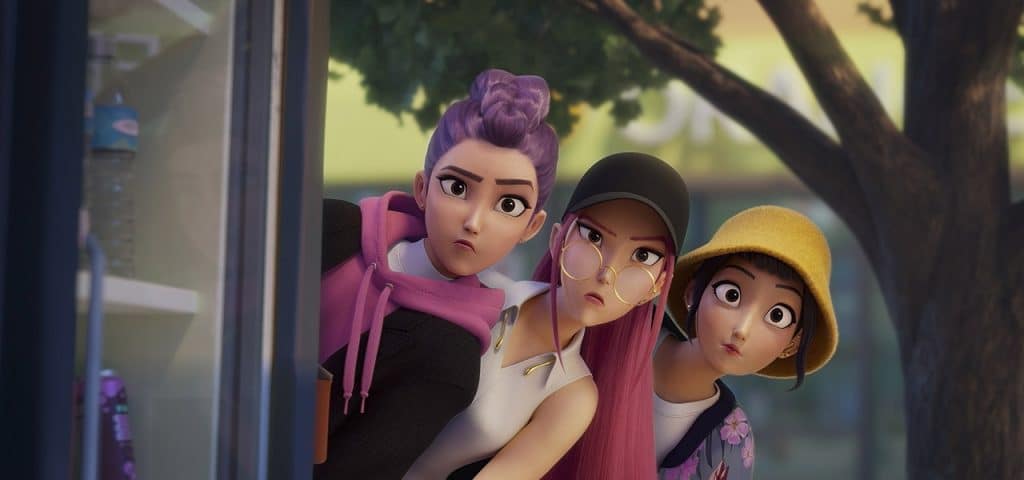
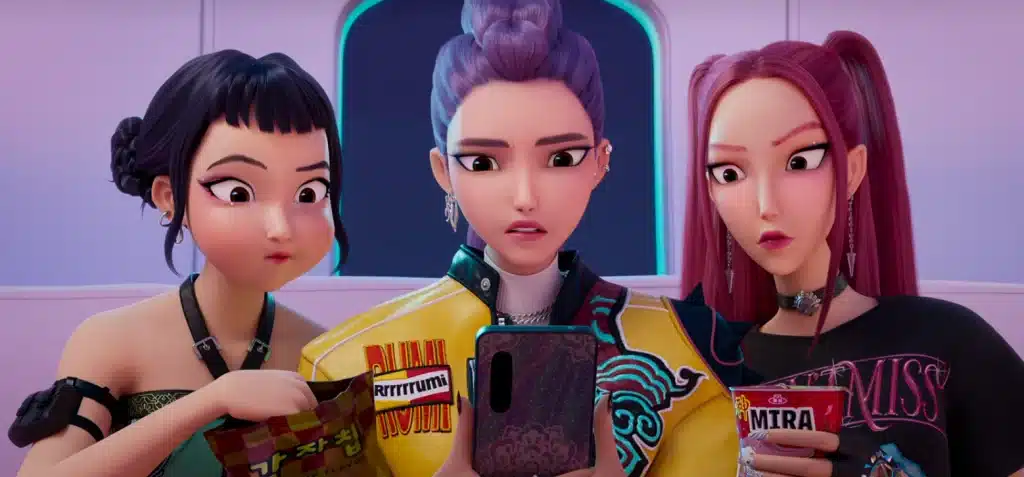
“HUNTR/X” is made up of three powerhouse members, each bringing a distinct energy that drives both their on-stage charisma and demon-hunting prowess:
- Rumi is the group’s leader and lead vocalist. Armed with a saingeom sword, she guides the group’s mission and bears the emotional weight of her hidden demon heritage.
- Mira is the visual and main dancer, whose precision and flair make her show-stopping both in choreography and combat. She also comes from a wealthy but rebellious background.
- Zoey is the rap lyricist and maknae, grounded in her Korean-American upbringing. She fights using shinkal throwing knives and brings a unique expressive edge to the trio.
This tight three-person dynamic gives “HUNTR/X” both emotional depth and narrative focus. Fans cite their individual connection with each member as a core reason for their love of the movie.
A Netflix and Spotify double crown
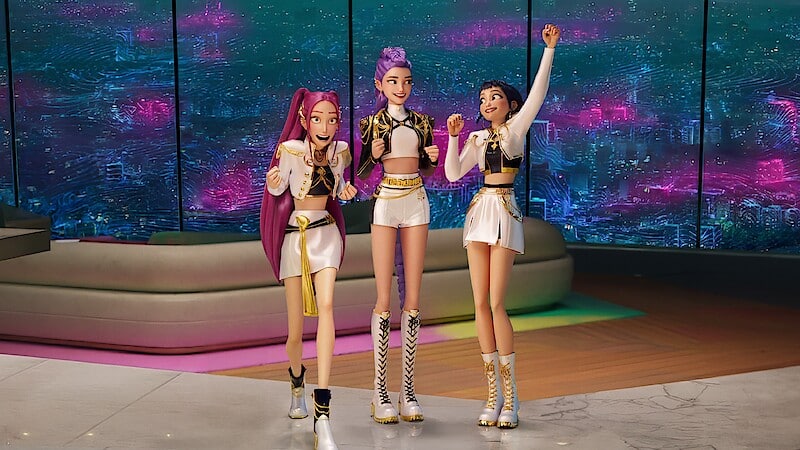
Streaming numbers tell part of the story. Within two weeks of release, KPop Demon Hunters became Netflix’s most-watched animated film of the year, pulling over 140 million hours viewed globally.
That momentum was mirrored on Spotify and Apple Music, where the film’s original soundtrack, produced by heavyweights like Teddy Park, the mastermind behind hits for BLACKPINK, BIGBANG, and 2NE1, topped charts in Korea, the United States, and Latin America.
The music’s success turned “HUNTR/X” into a genuine music act with fans debating their favorite “bias”, streaming songs on repeat, and remixing tracks on TikTok.
Maggie Kang’s personal love letter to identity and girlhood
Director Maggie Kang, best known for her work on The LEGO Ninjago Movie, infused KPop Demon Hunters with more than just pop culture savvy.
In an interview with “Geeks OUT”, she shared that the project was deeply personal, a love letter to both her Korean heritage and her teenage years spent idolizing pop stars and feeling like an outsider.
I’ve always wanted to see an animated film set in Korean culture. As a Korean person who was born in Korea but grew up in North America, it’s been surreal but also incredible to see our culture just become… so cool?
That vision is felt in every frame. From the character design to the nuanced moments of vulnerability between action beats, Kang’s fingerprints are everywhere.
Feminist themes, cultural fusion, and emotional depth
While KPop Demon Hunters may have been marketed to Gen Z, it’s resonated far beyond. The film’s feminist undercurrent depicting young women who reclaim agency and wield power has struck a chord across age groups.
As Variety pointed out during its awards-season preview, the film balances “genre spectacle with sincere emotional arcs,” allowing audiences to connect with the characters as more than just animated idols.
The film’s cultural hybridity doesn’t water down K-pop for Western audiences, nor does it rely on stereotypes. Instead, it invites viewers into a layered world that feels authentically Korean, yet universally accessible. In an increasingly global media ecosystem, that kind of cultural confidence is refreshing.
Sequels, spin-offs, and a new pop culture blueprint?
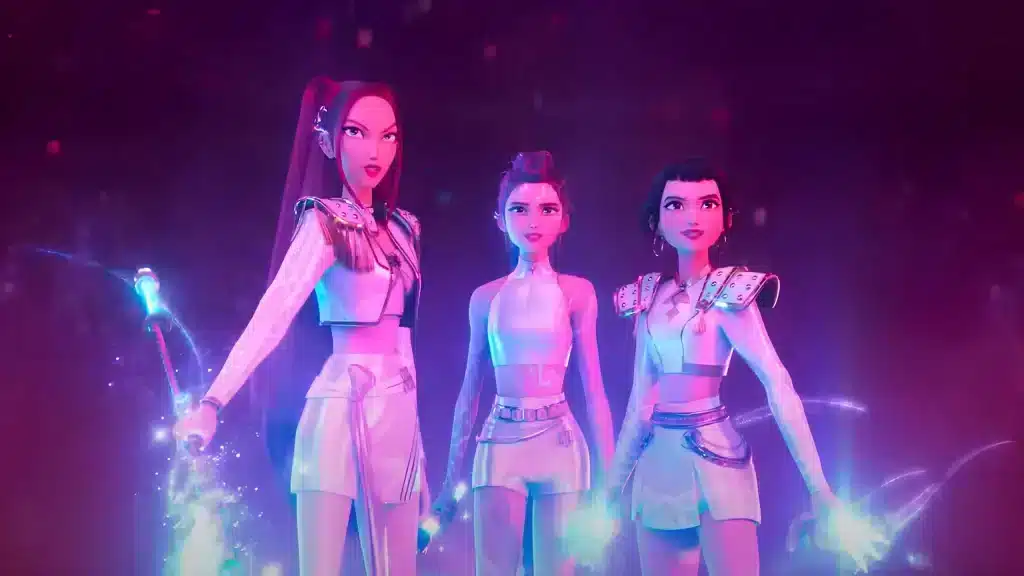
With its success, KPop Demon Hunters is already being positioned as the launchpad for a larger franchise.
Netflix has greenlit a limited series prequel exploring the origins of “HUNTR/X” and is reportedly in talks for a live-action adaptation aimed at international markets.
But beyond its own future, the film may mark a shift in what global audiences want: that being stories that are bold, hybridized, and culturally specific without being exclusionary.