I’m quite old-fashioned. Not too old–fashioned, but markedly more so than many of my peers. I love going for a pint. On my own, with an acquaintance, or on a date. The pub calls to me anytime, anywhere. Any excuse.
There’s something reassuring about the low hum of a pub, the clink of glasses, and the quiet understanding that no one needs a reason to be there, not even me. I like seeing the old regulars at my local bar and listening to their shit jokes. I’ve become a regular in my own right.
But I feel late to the game. Change is in the air! My city has been playing host to an absurd number of cafes. Across the high street, new artisan coffee houses are sprouting up like weeds in an unkempt garden. As far as the eye can see, entire streets are being filled with fold-out tables and chairs leading into identically branded cafes.
And these cafes are desperately latching on to new fads, with cold brews and matchas reeplacing pints in the sun. It’s kind of mesmerizing, right up until I ask myself a burning question: What does this trend mean for my beloved pubs?
Is Gen-Z embracing a new type of socialization, away from the pub, and into the trendy, warm ambiance of posh cafes?
Gen-Z’s good habits
The internet-raised generation is arguably more health-conscious than its predecessors. You notice it in small ways—fewer folk writing off entire weekends, more people talking about sleep like it’s a personality trait. There’s a quiet discipline to young adult life that wasn’t really part of the deal before.
The lifestyle, rebranded for twenty-somethings, has coincided with this shift. It’s not just about where people go, but what they value when they get there. There’s a newfound emphasis on balance—or the performance of it, at least. You can have your coffee, your chat, your routine, and still feel like you’ve got a grip on things by the end of the day.
People share their Strava run times the way they used to brag about rounds. Running clubs are popping up everywhere. Groups of folk are meeting at stupid hours of the morning to voluntarily put themselves through hellish exercise, then standing about afterward with coffees like they’ve earned some sort of moral victory. And maybe they have.

It’s hard to criticize people who are choosing to feel better, to move more, and to actually make use of their weekends. Socializing doesn’t need to be facilitated by alcohol anymore—it can exist around it, or without it entirely. The focus shifts from escape to routine, from excess to something a bit more measured.
But there’s still a looming question hanging over wellness culture: Is this genuine change, or another version of the same thing—habits dressed up differently, excess in more socially acceptable packaging? The buzz is still there. It’s simply coming from somewhere else. Runners’ high and caffeine have trumped being tipsy.
Flat whites vs flat pints
I’ve felt high and mighty amid the culture shift. It’s easy to take the piss, and I do. Sitting there watching someone photograph their coffee like it’s a newborn child does test your patience. Yet there’s a lingering sense that they’ve maybe figured something out that the rest of us haven’t.
The pub, for all its charm, has always come with a cost. Literally.
This past year, the price of a pint of Guinness has risen by 30%. That alone feels like enough to make anyone reconsider their loyalties. What used to be a casual default—“fancy a pint?”—now comes with a quick mental calculation. One turns into six, leaving a pint-shaped dent in your bank account, and suddenly the whole ritual feels a bit less harmless.
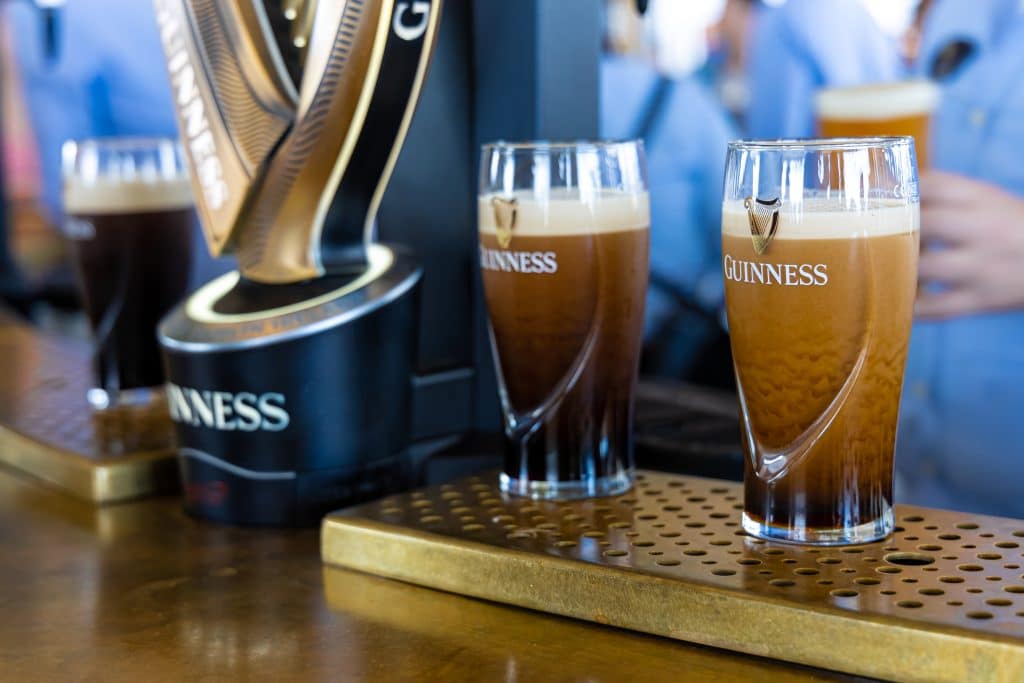
And yet, it hasn’t disappeared, it’s just…changed shape.
People are still bragging, just differently. Splitting the G has become its own kind of performance—a small act turned into content. There’s a strange pride in it, like you’ve passed some unspoken test. Then it goes online: the perfectly angled pint, the creamy head, the caption doing half the work, all set to a Kneecap track in the background. Add in a vague nod to Irish roots—real or imagined—and suddenly it’s more than a drink; it’s an identity.
It’s a new kind of bragging that’s less about how much you can drink and more about how well you can present it. Curated, aesthetic, and just self-aware enough to pass as irony. The chaos of the pub hasn’t vanished; it’s merely been skimmed.
That may say more about the shift than anything else. It’s not that people have stopped going out—it’s that even the messy bits are now expected to look good.
The boost in running culture feels like a physical attempt to outrun the hangover. There are only so many Sundays you can write off before it starts to feel like you’re wasting something.
Death of the local
The shift in attitudes has coincided with the slow erosion of the pub. Last year, it was estimated that a pub shut down every day across Wales and England. Yikes.
To match modern appetites, numerous pubs have been “redone”—gentrified into gastropubs and hybrid cafés/wine bars that feel less like lived-in local institutions and more like placeholder blueprints of what a pub is supposed to be: exposed brick, curated menus, and carefully lit corners that suggest atmosphere rather than accidentally creating it.
Cafés operate on a quiet order—people queue properly, wait their turn, and say thank you. Laptops are open, conversations are softer, and everything feels slightly more deliberate. Even the mess is controlled. A half-finished coffee looks intentional, not abandoned.
That contrast is where the change really becomes meaningful. Cafés feel like an extension of everyday life; something you can slot neatly into your routine. The pub feels like a break from it; a place where time stretches and blurs at the edges.
Neither is better, but they ask for different versions of you. One rewards control; the other depends on you letting go of it.
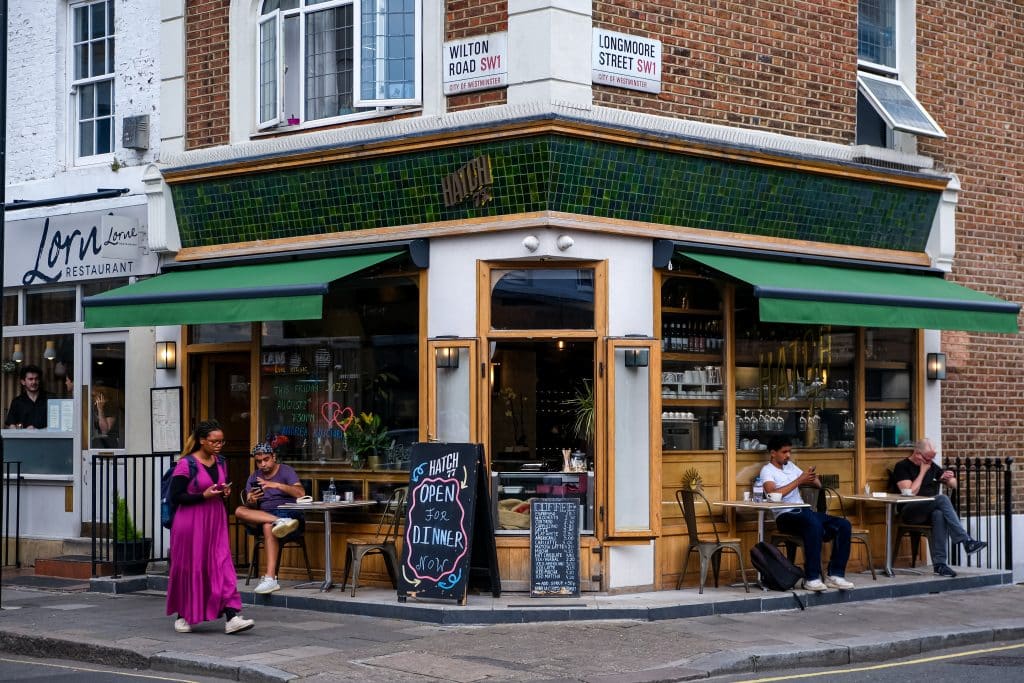
A “local,” once a given, is essentially a foreign concept in the modern age. Even my own sacred local—which at one time boasted pints for £2.50—has slowly transformed into something sleeker, pricier, and harder to recognize, like it’s been sanded down to fit an aesthetic that looks better in photos than it does in memory.
My pals and I haven’t dared to venture in yet
But perhaps this is somewhat inevitable. When we talk to our parents about how our cities used to be, there is a constant air of nostalgia. “Back in my day”-isms are beginning to ring true. Though the local is dissipating, the artisan coffee house and cold brew matcha salon are sweeping in to take its place.
Same ritual, different glass
Maybe this isn’t a replacement. Maybe it’s an expansion. Different moods, different settings, different ways of being around people.
Or maybe, in a few years, the same people sipping iced matcha in the sun will find themselves leaning on a bar, pint in hand, listening to someone else’s terrible patter—and realizing they quite like it.
And maybe it works the other way around as well. Maybe the ones clinging to the pub will start drifting into cafés. Sitting in the window with a coffee that costs about the same as a round, watching the street instead of the clock, and finding a different kind of comfort in the muted hum of it all.
Because when you strip it back, it’s never really been about the drink. Pint or flat white, it’s the same thing underneath—an excuse to sit somewhere, be around people, and feel part of something without having to try too hard.
I’d like to think there’s room for both. The chaos and the calm. The sticky floors and the polished tables.
But I’ll still take a pint.
Or two.