You are probably at least somewhat familiar with the growing ubiquity of artificial intelligence. Whether it is supplanting a Google search or generating a deepfake to deceive online audiences, AI is more present than ever before. Now, it is making its first forays into, among other things, music. AI-generated music isn’t exactly a phenomenon. Still, AI “musicians” like the one below garner millions of views, albeit with a mixed reception from audiences.
Above is a song created entirely by AI. Most would say that it’s almost indistinguishable from human-made music.
But music (especially when it’s made by humans) is storytelling. It is a deeply personal form of expression, broken down into innumerable genres and styles, all while making generous use of symbolism and figurative language. So how can something be expressive and personal if a machine creates it? Is it still music, or is it just a bunch of sounds mashed haphazardly together?
For now, AI music hasn’t really evolved beyond its odd corner of the internet. It is a niche with a much wider population of critics than actual audiences. But that might not be the case when AI dabbles in other art forms.
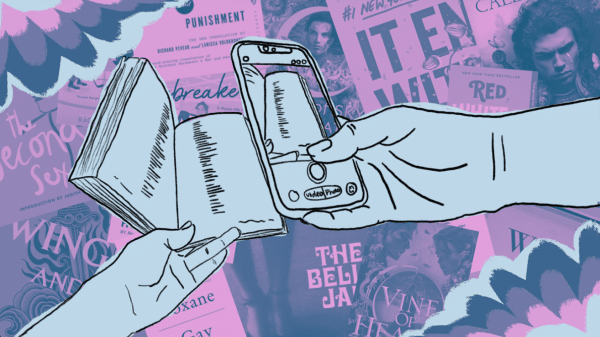
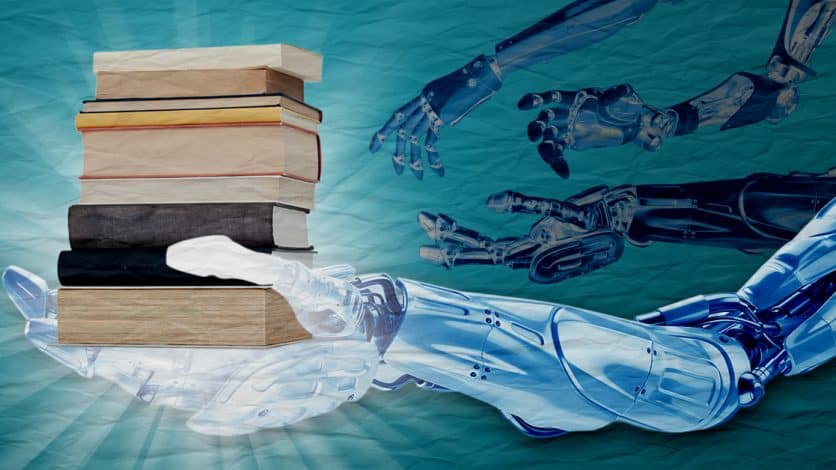
With that said, should we be worried about whether artificial intelligence will put the authors we love out of a job? Is the fiction genre itself in jeopardy?
No: AI can only replicate, not create.
Unless the world gets a more sci-fi coat of paint by the time you read this, AI is not autonomous. New and interesting ideas do not take form if the author of a book is an AI. More importantly, that means the work itself isn’t really an authentic exploration of themes, emotions, and characters. Authenticity is the cornerstone of any book written by a human.
You might have heard of authors being “caught” for using AI in their work, only to face stiff backlash from readers. There is a strong stigma against AI in literature for a reason. It’s because the creativity is removed from the equation and replaced with clumsy mimicry.
Even something that seems new from an AI is not. It is more of a Frankenstein’s monster of works that already exist. Barring the obvious ethical considerations of pilfering from thousands of artists’ work, it also just doesn’t meet the bare minimum requirements of a book.

Any real book, even the most loathed titles on Goodreads, is a unique tapestry of thoughts from the human mind. In its current form, AI is still eons behind real people.
Maybe: AI is advancing extremely fast.
This point is no secret. Artificial intelligence is already a multi-billion-dollar innovation, and it shows no signs of slowing down.
The goal of most AI software is to become so sophisticated that the output no longer even looks like a replication, but the real thing. It’s what keeps one platform ahead of another. Take OpenAI’s Sora 2, which brought AI video generators closer than ever to imitating reality, at least as far as the human eye can see.
Everyone knew someone who had ChatGPT write their essays for them. Maybe you were that person. In fact, people are increasingly making the argument to use AI in educational settings. Regardless, you might have noticed that large language models, or LLMs, like ChatGPT, lacked a human element. They often write in a dry, overly polite tone. For now, their purpose remains pragmatic, not artistic. An advanced Google search, you could say.
However, the demand for complex, nuanced LLMs is simply not as high as hyper-realistic video generators. Not yet, anyway. If filmmaking, special effects, and CGI are contending with AI, it may not be all that far-fetched to imagine the same happening to literature if the demand ever arises.
No. People don’t get the same things out of AI “art.”
If a book isn’t authentic, people simply won’t want to read it. We read books to connect with characters and to empathize with their struggles, both internal and external. There is no AI model, not yet anyway, that can replicate this so effectively that readers would not at least sense something “off.”
Clearly, the best it can do right now is cobble together motifs and cliches until there exists a veneer of authenticity. But it is that and only that. A veneer. Humans are perceptive enough to see easily past it, and once we do, the story we are reading becomes empty and stale. We are constantly reminded that it is a meandering mess, discarding any notion of a theme or human experience. Instead, the AI gives us a senseless amalgam of the most commercially successful story beats.
AI only has the capacity to say about the world what has already been said.
Maybe. Younger audiences may struggle to tell the difference.
What is and is not an authentic expression may grow muddled the longer AI sticks around. Anyone who is Gen-Z and older can readily remember the world before the surge of AI. But what about the generations after who can’t? Will they even be able to tell the difference between the work of a person and that of a machine? Will they care?
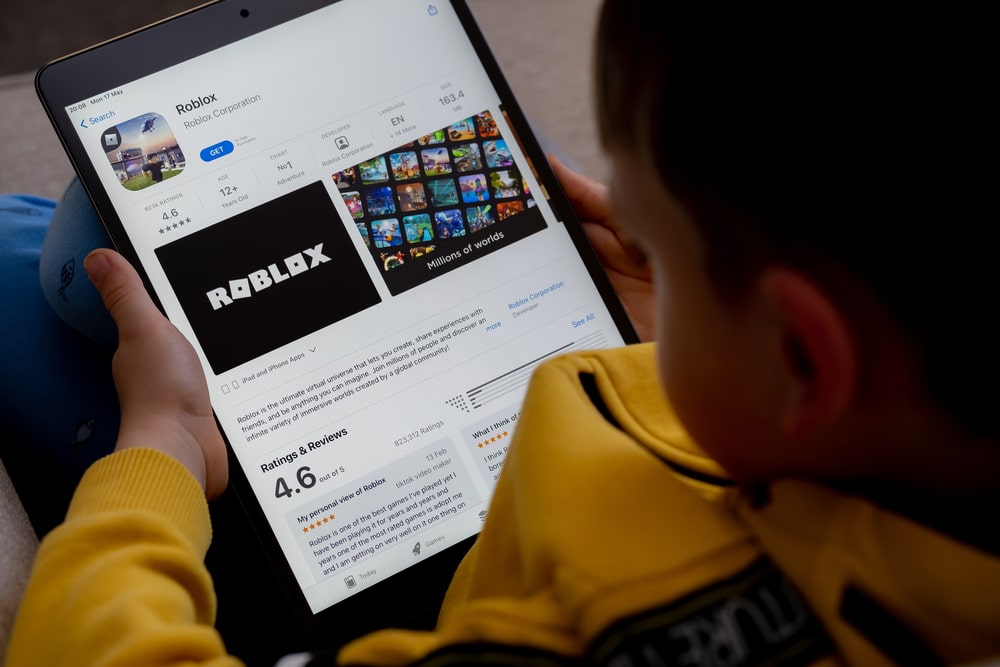
Let’s imagine a world where the ease of generative AI causes books “written” by AI to become far more common than those written by humans. For the youngest generations of the future, it may be the only world they know. The original purpose of a book–to tell a story through a distinctly human understanding of the world–may be lost.
The younger generations may someday find AI cannibalizing and regurgitating other media as normal. Stories made in this way would require little in terms of revision, drafting, storyboarding, or even an editor. The time and cost of crafting a story would be nullified, and the output would increase dramatically.
It is a bleak reality to imagine. But in this hypothetical world of ubiquitous AI, it may become the only world people know. They might even accept a definition of the book that we cannot fathom today.
No. Books have survived dozens of tech transformations.
Books have existed for thousands of years, and although they did not really become a common form of leisurely entertainment until only a few centuries ago, they have outlasted more than a few transformations. From the telephone, to the radio, to film, to television, the Kindle, and the internet, there have always been authors writing books and bookworms to read them.
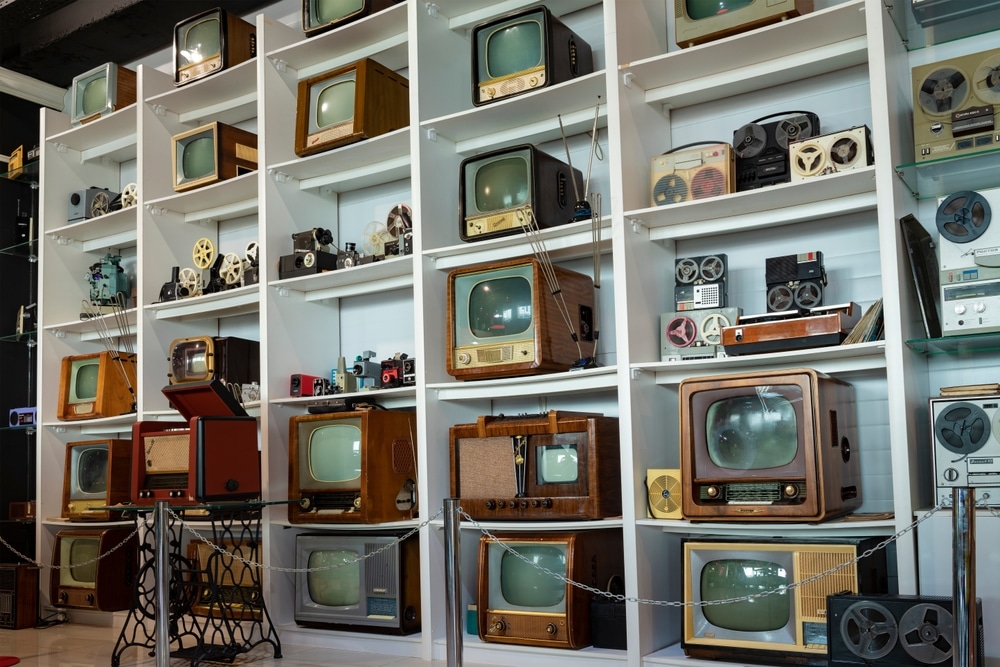
There may be a few reasons for this. One is that people simply like the aesthetic of a full bookshelf. They add volume and depth to our homes, and they might even convey a certain worldliness to our friends and family. Being well-read, after all, is almost always seen as a virtuous quality.
AI may be leaving a massive footprint, but if the book has survived this long, the advent of generative AI likely won’t be able to uproot it either.
No. Publishers are not interested.
At the end of the day, major publishing houses control a large swathe of the book market. Penguin Random House alone controls nearly a quarter of the market share. For those of us who hope books remain a human endeavor, it should be encouraging that they want to keep it that way, too.
We do not see any technology as a substitute for human imagination.
-Penguin Random House
Just like any company, our values generally influence theirs. You should keep one caveat in mind: Our values may someday change. It might be a decade, several, or maybe a century. But if using AI for creative purposes becomes more acceptable in the future, the paradigm for publishing houses may change as well.
Regardless, AI plus literature remains a taboo combination these days, and that doesn’t seem to be changing anytime soon. So, until there is some seismic shift in our culture, the established commercial streams for publishing are closed to AI.
Guessing the future
At the end of the day, we could spend hours speculating about how AI might shape the future. No one has a crystal ball that they can use to say for certain. Give it ten more years, and the trajectory of this rapidly evolving technology may completely change.
For now, however, fiction and books in general as art forms are firmly in the hands of human creativity. The publishing houses that, if we are being honest, have the most say, are simply not interested. What’s more is that even for all of its astonishing capabilities, AI remains far, far behind what an authentic, human brain can achieve.
If nothing else, we should remember that art is as much about the process as it is about the result. If it isn’t a human poring over it, is it really art, or just a disingenuous copy? It is good to be hopeful, but it is just as good to be cautious.