
The whole world knows the Lord of the Rings franchise, just like they know Star Wars and the Marvel Cinematic Universe. This is doubly true for the books that inspired the movies and the Rings of Power show.
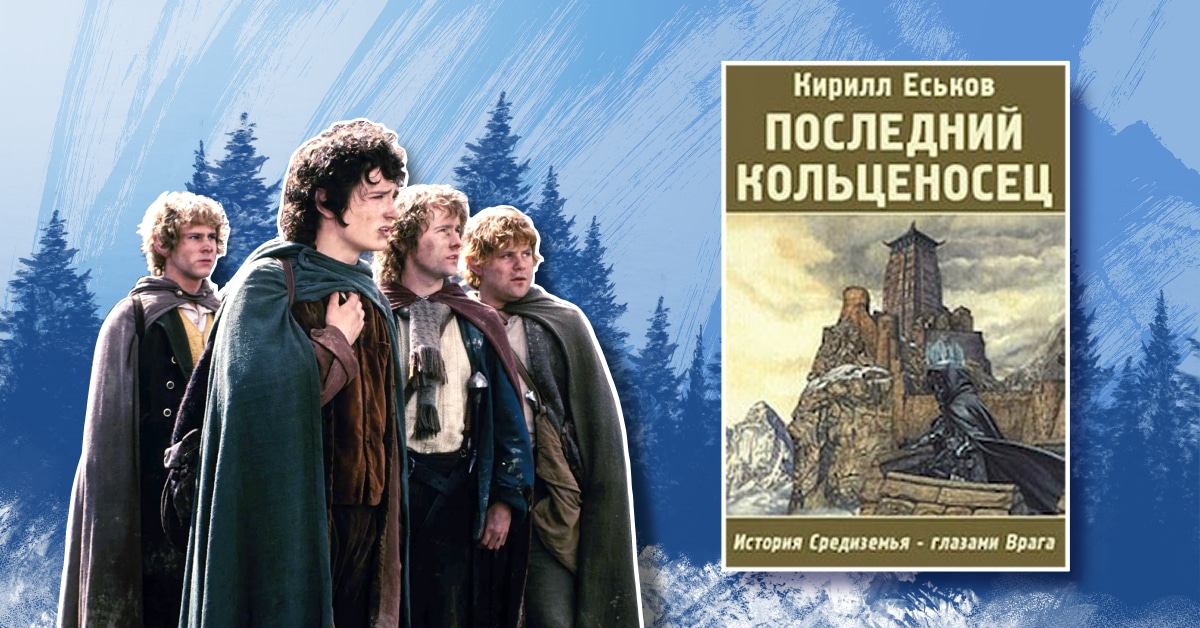
J.R.R. Tolkien’s series is often credited as one of the first and most important ever to be produced within the fantasy genre. It is undoubtedly the inspiration for countless fantasy novels that came after it. One book that was written as a direct response to the trilogy is Kirill Yeskov’s The Last Ringbearer. His novel looks to fill the world-building gaps of Tolkien’s works while answering the question, “What if the story as Tolkien told it was a big fat lie?”
Perspective: On Middle Earth and media literacy
Now, to understand this, a bit of explanation is needed. As long-time fans of the books may be aware, The Lord of the Rings book franchise was constructed on the premise that Tolkien was not its author. Instead, Tolkien claims to the reader that he is merely the translator of an actual historical text. According to him, the source of the text lies in the records kept by the protagonists — records that were preserved across the centuries until they came into his possession. As writer Allyn Gibson so eloquently puts it:
“Middle-Earth is not a fantasy world. Instead, Middle-Earth is our world, albeit in a far-distant past that is no longer remembered, and The Lord of the Rings is not a novel but is instead a written account, a memoir even, by some of the participants in the War of the Ring.”
This means that, within the canon of the Lord of the Rings world-building, the texts that we call The Hobbit, The Fellowship of the Ring, The Two Towers, and The Return of the King may not be accurate renderings of the actual events. They are Tolkien’s best efforts at translating and preserving the accessible records. The “source text” could have been altered over the centuries.
Or, as Yeskov suggests, the original records may not have been truthful to begin with. They could be colored by their author’s biases, or they could be outright propaganda — propaganda in support of the magically-based world powers of Middle Earth, of course. Yeskov works from that hypothesis. In doing so, he reimagines Middle Earth in response to Tolkien’s seminal works. The act was unsurprisingly unpopular with the Tolkien Estate, who are notorious for their protection of the series image and copyright.
Perspective bias
The questions that The Last Ringbearer invites are more relevant today than ever. In a world of information oversaturated with falsehoods, when media literacy is at an all time low, it is important to come to media with a critical lens. That is the case regardless of whether it is a movie or a scientific paper, a news report or a social media post. It is always prudent to consume your media of choice with your eyes wide open.
As shown through framing
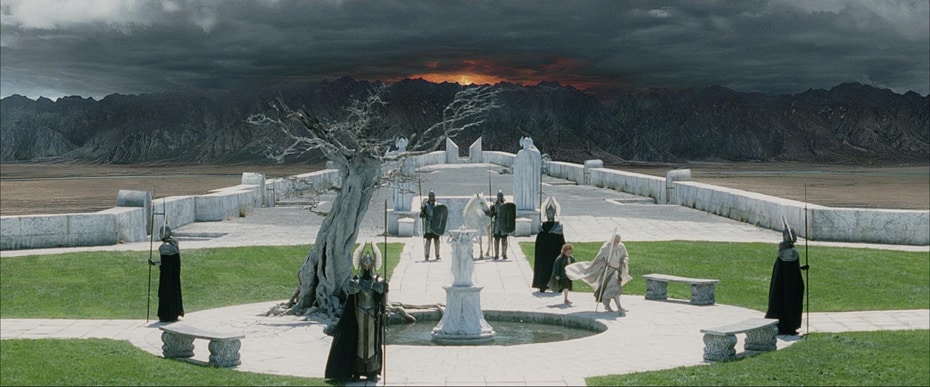
Take the first image as an example. It pictures Gandalf and Pippin moving through Minas Tirith, with the lands of Mordor in the backdrop beyond the mountain. Minas Tirith is white and green, symmetrical, and beautiful, while clouds loom ominously over Mordor. It is dark and fiery, reminiscent of the pits of hell. If you knew nothing of the movie or its characters, who would you assume were the “good guys,” and who would you assume were the “bad guys”? It’s quite obvious based on the framing of the scene alone.
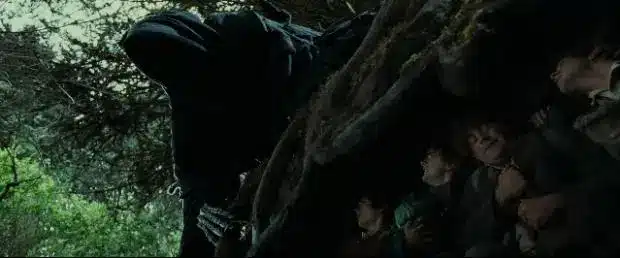
Or take this image below if one of the Nazgul searching for the One Ring. All while Frodo, Sam, Merry, and Pippin are cowering just out of his sight. How differently would this scene look framed from the Nazgul’s perspective? Would you assume he was the villain, simply for trying to retrieve a stolen item that is very precious to its maker?

All media has the capacity to lie and deceive. That is the nature of media, communication, and stories. Even the fantastical variety. Especially the fantastical variety, though not because it deals in magical impossibilities. Fantasy, in all its mediums, has the curious ability to use literal un-truths to address metaphorical truths and social realities. This is what both Tolkien and Kirill do in their novels and what any good creative does with their art.
What is the “Last Ringbearer”
The Last Ringbearer primarily serves as a critique of the subliminal messaging and moralization of the original Lord of the Rings trilogy. In particular, it challenges totalitarian and old-world power systems. Fantasy as a genre can serve as an effective mouthpiece for political ideology.
Its framing
“Gold is for the mistress – silver for the maid –
By Rudyard Kipling, and as featured in the opening of “The Last Ringbearer“
Copper for the craftsman cunning at his trade.”
“Good!” said the Baron, sitting in his hall,
“But Iron – Cold Iron – is master of them all.”
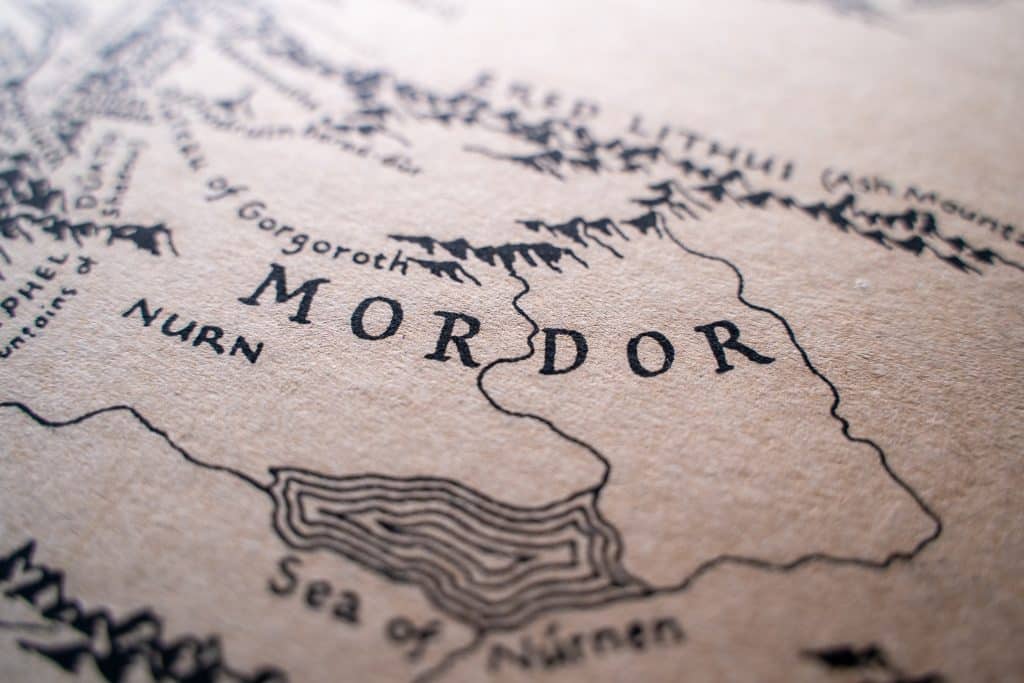
These are the opening lines of The Last Ringbearer. The text is a realistic technical study of the politics, trade, geography, supply lines, economics, and social structures of the people of Mordor. It delves into, among other things, the reasons that all the nations might have for engaging in the War of the Ring. For example, Kirill suggests that Mordor’s need for expansion stems from the lack of produce in their inhospitable climate.
What does it do?
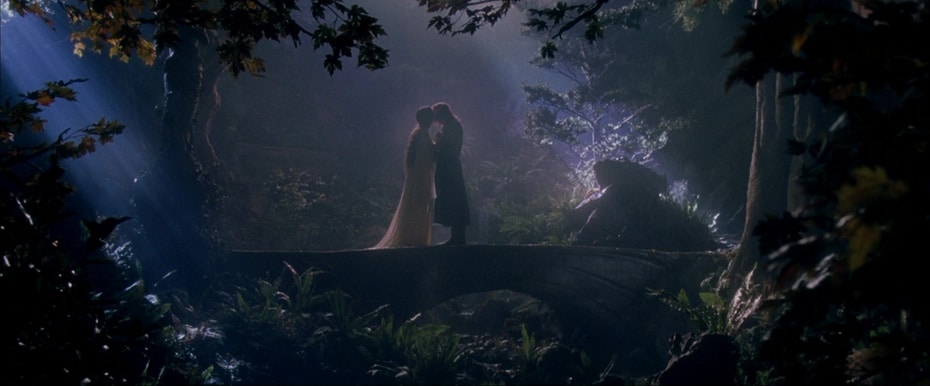
The Last Ringbearer tells the same story of Lord of the Rings but from different perspectives. If Tolkien’s work relies on his deep academic knowledge of old stories like King Arthur and Beowulf, then Kirill approaches the world of Middle Earth as a historian who knows only too well that history is always written by the winners and that nothing kills the romanticization of the past quite like the reality of it.
The pros
The Last Ringbearer is an intriguing reconceptualization of Middle Earth — and not just because it can enrich or test a reader’s beliefs about Tolkien’s world. It comments upon the necessity for pragmatism, as well as the nuances of nations, peoples, and their politics.
While Tolkien positions the War of the Ring as but an echo of an echo, a remnant of both the first war against Sauron and the earlier war against Morgoth, Kirill does not. The Lord of the Rings is an image of a world long past its glory days, a world in decline, a world steadily diminishing. It is a world slowly losing its wonder and magic and Arthurian romance. Kirill’s work pushes in the opposite direction. It depicts Mordor as an enlightened state on the first steps of its very own industrial revolution. It is a world that is constantly growing and changing and striving for more.
The cons
However, to put it bluntly, the plot is basic, and there are glaring overtones of sexism and racism throughout. The narrative centers around a cliche “Chosen One” gimmick. Women exist only to serve the men. Anti-Black racism is prevalent (including the use of the N-word, at least in English translations). And rape is repeatedly used as a comedic punchline
While none of the sections are bad on their own (sexism and racism aside), they don’t form a cohesive whole. Furthermore, the success of the “Chosen One” character relies too heavily on chance and plot convenience. In this way, The Last Ringbearer is much like the dystopia of 1984. It is interesting because of its subject matter and world-building rather than the lives of the characters or the execution of the plot.
Why write it?
Kirill has said that he wrote it to entertain himself and other academics like him who take issue with how Tolkien builds his world. In other words, he found The Lord of the Rings childish, so he poked and prodded the holes in the practical side of its world-building for his personal amusement.
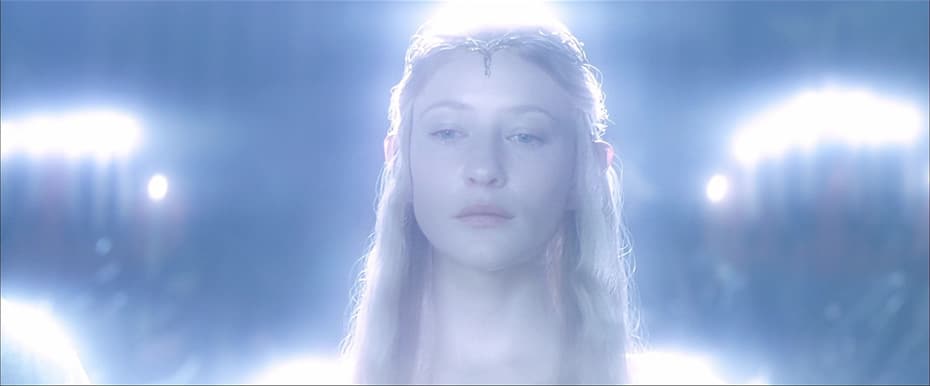
Below is a short excerpt of what he had to say about the matter, though anyone can read the full article here. I would highly recommend checking it out before reading the book to see if his approach to world-building is something you would enjoy.
“I wrote The Last Ring-bearer … strictly for my own enjoyment and that of my friends. [It] was written for a very specific audience, too – it’s [a] “fairy tale for junior scientists” of which I am one. It is meant for skeptics and agnostics … for whom Tolkien is only a charming, albeit slightly tedious, writer of children’s books. … I was attracted by a logical challenge to come up with a consistent explanation for several obvious contradictions in the image of Middle Earth that [Tolkien] painted.”
(Kirill Yeskov/Salon)
Should you read it?
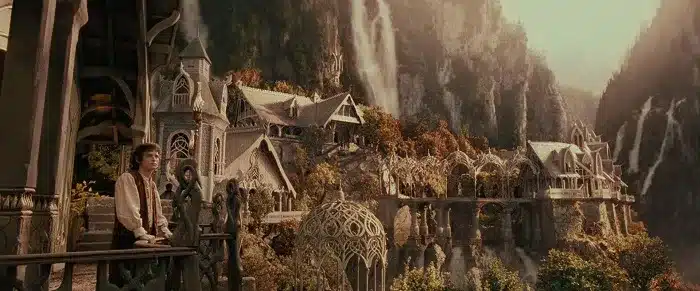
I think that The Last Ringbearer is something that anyone with at least a passing interest in fantasy or in Tolkien’s books specifically should try reading. I can’t guarantee that you will like the book. Or read it in its entirety. But even just reading part of it makes for a valuable mental exercise: to think about it in the context of the world that it expands on. I will not say that the book is good; that is entirely subjective, and I do not believe that it is particularly well written. But I do believe that it will be a fascinating read for anyone who attempts to do so.










ET
July 23, 2025 at 1:55 am
Of course it would take a Russian to rewrite a seminal Western work of fiction about a conflict between starkly defined good and evil from the point of view of the evil, using moral ambiguity and relativism as the instruments to rationalize and thus excuse the brutality and crimes of the fictional regime. Much like the ongoing very real narrative warfare campaign to rationalize and justify the brutality of the very real war crimes conducted by the Russian people against their neighbors.