Recently, there has been the emergence of what we call the “performative male.” This man has been identified by many different names, under many different guises through the years. He’s just not like other guys. He reads, he thinks, he feels. He’s into feminist literature. That’s why you should sleep with him, obviously.
Many may consider him the same as a “male manipulator.” But to get technical, there are a few key differences between these men. The manipulators view themselves as standouts. They’re the “alphas.” They often commit themselves to unconventional (and questionable) ideologies and practices, claiming that they’re just not on the same wavelength as the rest of us.
Conversely, the performative male wants to be relatable. They need to be relatable. They’re sensitive to women’s needs. They hate that women get periods, they hate the patriarchy, and they love to read. Specifically in public.
The performative man specializes in reading books that suggest to other people that they are emotionally mature, politically involved, and open to the feminine perspective.
On the other hand, male manipulators gravitate toward books that they feel represented by. Their interests are focal to themselves. They probably think you should be interested in them too, even if they just don’t believe you’ll ever understand.
So how might you identify them out in the wild? Well, you can check out what they’re reading and make an educated guess.
The Stranger by Albert Camus
The Stranger was published in 1942 by French-Algerian author Albert Camus. The novel follows an apathetic, near sociopathic man named Meursault. While he lives a relatively normal life, interacting with his neighbors, going on dates, and working a job, his interior dialogue lets us in on the fact that he couldn’t care less about any of it. Or at the very least struggles to find meaning in it.
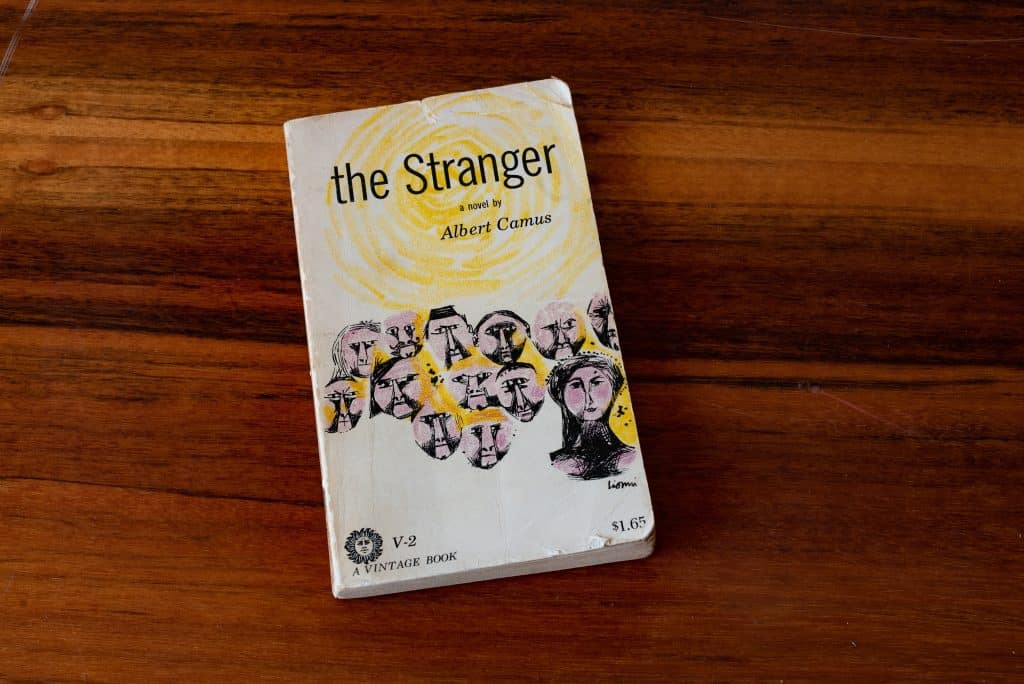
Considered an absurdist novel, The Stranger explores the concept of the disorderliness of life. It expands on the clash between how we try to construct an orderly life amidst the chaos of the natural world. Meursault faces senseless desires, and irrationality, and after committing a life-changing event, he begins to fathom true nihilism.

The Stranger is a profound story that, although written in the 1940s, still carries relevance today. As Gen Z continues to notice characteristics of nihilism across our generation, sparked by the endless seemingly bizarre and uncontrollable influences of our modern world, this novel has regained popularity. It reflects how we struggle to believe that there is rhyme and reason to the things that happen to us.
If he’s got The Stranger pulled out at your local cafe, chances are he’s performative.
A Clockwork Orange by Anthony Burgess
A Clockwork Orange was published in 1962 by English writer Anthony Burgess. The satirical novel takes place in a dystopian society overrun with reckless and rampant crime committed by the city’s youth. The main character of the novel is a particularly nasty teenager, Alex. He and his friends get together to do drugs, burglarize, destroy, and generally harass their neighborhood.
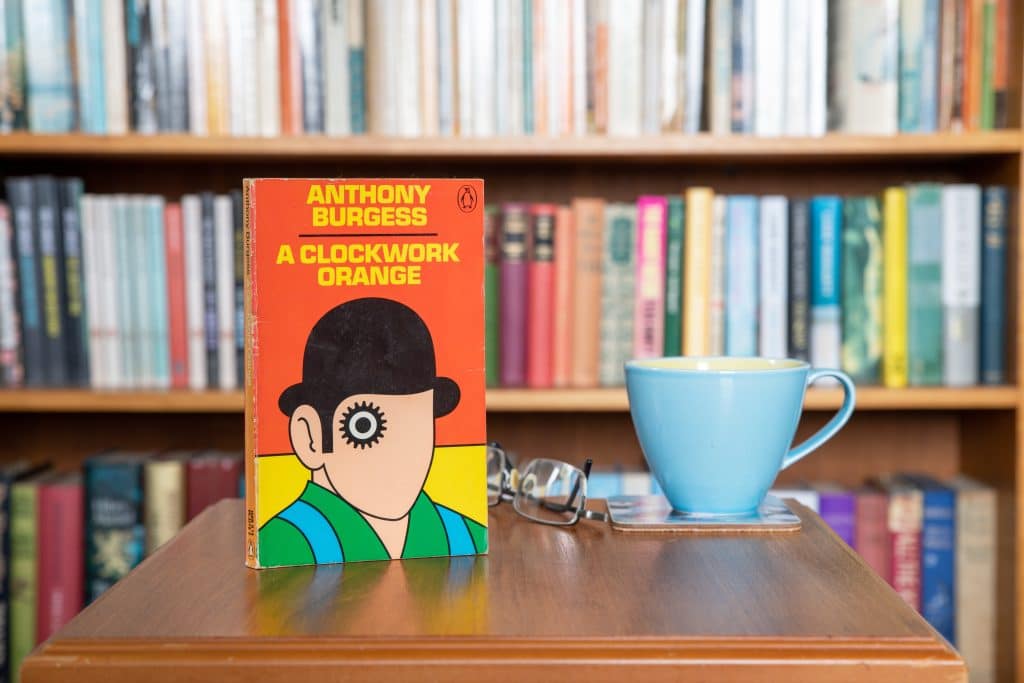
Yet the story takes a turn when Alex is imprisoned and subjected to a new experiment aimed at behavior modification. Alex volunteers to test the experiment in exchange for his freedom. His experience having been psychologically trained against crime explores concepts of freedom, society, and our inherent natures.
A Clockwork Orange is a male manipulator favorite. While Alex is clearly a miscreant, his being subjected to the morally objectionable experiment puts Alex into the victim category. At least in the eyes of the male manipulator. One of the key characteristics of the male manipulator is the ability to victimize himself as he faces the consequences of his own actions. Or the consequences we all equally face while living in the world with everyone else.
Additionally, a male manipulator will often have trouble recognizing satire. Since they think that typical social tropes don’t apply to them, satire that directly applies to them goes over their heads.
So yes, if he raves about A Clockwork Orange, he might fall into manipulator territory.
The Catcher in the Rye by J.D Salinger
Catcher in the Rye was published in 1951 by American author J.D Salinger. The novel follows the sixteen year old Holden Caulfield. Holden has just been expelled from Pencey Prep. It is one explusion in a series of many.
Holden struggles with growing up. He wanders through New York City for three days, savoring the time before his parents discover his latest expulsion. He desperately searches for a way to quell his anxieties and grief while attempting to place where his feelings of general despair are coming from.
Holden is frequently self-deprecatory, with his insecurities coming through in his first person narration. He is weary of the adults in his life and even more so of his peers who, despite him constantly accusing them of being “phonies,” he desperately wants to connect with. Holden still believes that an authentic bond will give him some sort of solace in the face of his confusion and emptiness.
Catcher in the Rye is a difficult one to place. My verdict is on the line, but because of Holden’s insistence on being “misunderstood” and claim that he amongst everyone else is not a “phony,” the novel definitely leans toward the manipulator spectrum.
The Unbearable Lightness of Being by Milan Kundera
The Unbearable Lightness of Being was published in 1984 by Czech-French author Milan Kundera. The novel follows two men, two women, and a dog through their lives in 1968 Prague. The lives of these protagonists intersect, but inevitably diverge as the characters cope with the lightness or heaviness of existence.
Tomas, the surgeon, becomes torn between his love for Tereza and his womanizing habits. He uses brief sexual encounters as a method of understanding “lightness” and detachment. Tereza searches for a profound, deep, committed love, struggling to navigate her relationship with Tomas.
Sabina is a free spirited, intent on following the lightness in her life after breaking free from her father’s repressive home. She and Tomas engage in a mutual relationship as Sabina contends with how she will balance her life between being free and making commitments that might tie her down. Franz strives to attach all aspects of life with deep meaning, approaching decisions with strong emotions and serious conviction.
The broken, tangled, and passionate relationships between the four characters are colored in even more complexity as they are set behind the backdrop of the Soviet Russian invasion of Czechoslovakia in 1968.
A novel winding together the sensitive and reactive intricacies of how we live our life amongst the uncontrollable forces of the world? Verdict says: performative. For sure.
All About Love by Bell Hooks
All About Love is not a fictional story like the others but a discussion on our perceptions of love.
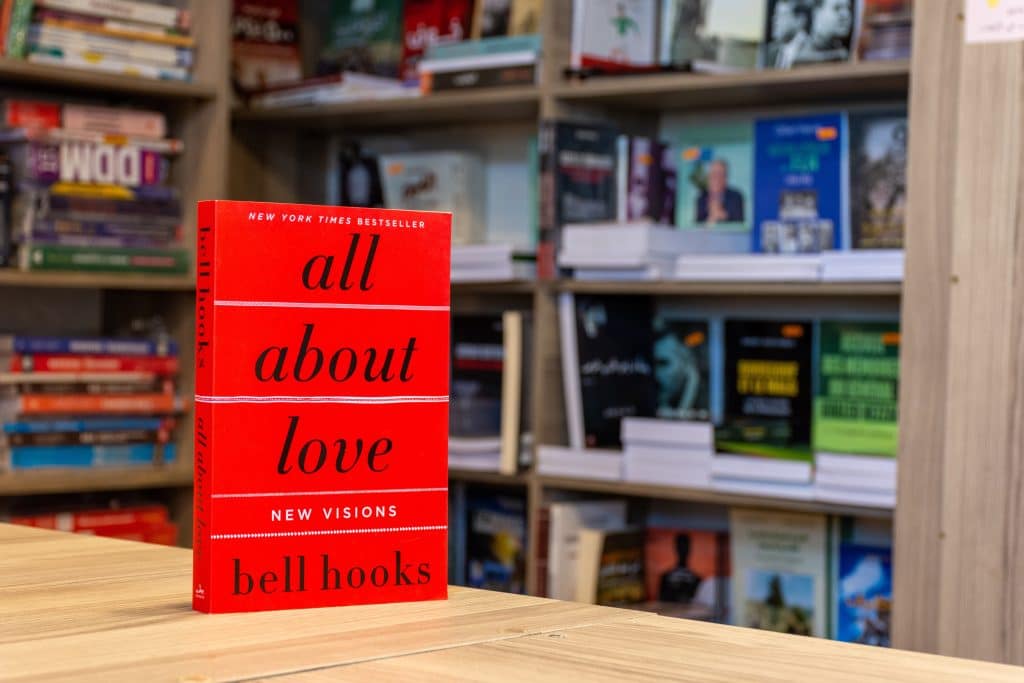
Bell Hooks was an American author who published All About Love in 1999. She advocates for us to explore how and why we perceive romantic love to be the single most important kind.
She aims to explore how we might begin to prioritize all kinds of love equally. Because romantic love is pined for as the ultimate form of connection, we are taught to tolerate higher levels of disrespect and overlook greater differences just to keep a relationship that we believe might complete us. Even if it never does.
If we are to understand friendship, community, and family as equal, we may better learn how to care for each other and ourselves. We will have a better grasp on what we should accept from a romantic partner.
Yet hooks understands how difficult it is to create this world under capitalism. She stands out by including perspectives on race, class, and feminism in her analyses of love.
Yes, All About Love has made it to the performative category.
It’s been a list of recommendations all along
Now, you might be thinking, wait, these sound like good books. Or, maybe you know they are because you’ve read them. Truthfully, that’s because the manipulator-performative thing was a guise.
I mean, if having and reading them means you have to be one of the two, performative or a manipulator, then the verdict says that I’m both. After all, I had to read them to write about them.
The performative male reads certain kinds of books for a reason (or pretends to). As does the male manipulator. The male manipulator reads to resonate with the story; to discover who he feels he is in this world.
The novels listed here, despite all being written up to eight decades ago, have circulated in the popular sphere because they hold a profound weight within all of us. They get us talking, and they speak to what we are going through both individually and as a generation.
By all accounts, I am not defending either archetype of men. Their issue lies in how they respond to the books and how they use their general conceptions to mold their own reputations and get what they want.
But I am advocating that all of us really do give the books a shot. They are worth the discussion. After all, it is worth giving a deeper look into why these books?