I’m studying for a degree in English literature. That means I read a pretty hefty amount of old classic literature. After reading several works, I began to notice a recurring theme. Although older authors could not openly discuss queer identities, non-conforming gender ideals, and same-sex orientation, they were nevertheless present within their work. And more often than not, they presented themselves through supernatural themes. The supernatural becomes an expression of queerness.
To understand the themes in these novels, first consider the time they were written in. I’ll be discussing stories published from the late 1800s to the early 1900s. During this time, having a non-normative identity was inherently subversive and never just a state of being, thereby limiting representation. I’ll be sticking mainly to English, given that the United Kingdom was one of the most dominant cultural spheres at the time and produced some of the most attention-grabbing authors whom we still study today.
The non hetero identity was and still is dangerous in many parts of the world. When society claimed that to be anything other than straight and cisgender was “monstrous,” the message translated culturally. As a result, these stories still resonate with us today. Be warned that I’ll include (generally) soft spoilers for each book.
The Picture of Dorian Gray
Oscar Wilde’s famous The Picture of Dorian Gray (1890) tells a story of a beautiful man whose soul is captured in a painting. The painting begins to reflect his actions, absorbing the damage he inflicts on himself and mirroring it back to him. He slowly discovers this, noticing injuries on the painting after they heal abnormally fast on his actual body. Soon, he realizes that he will remain youthful forever, and his corporeal form will never show signs of his sinful behaviors. The painting becomes his most heavily guarded secret.
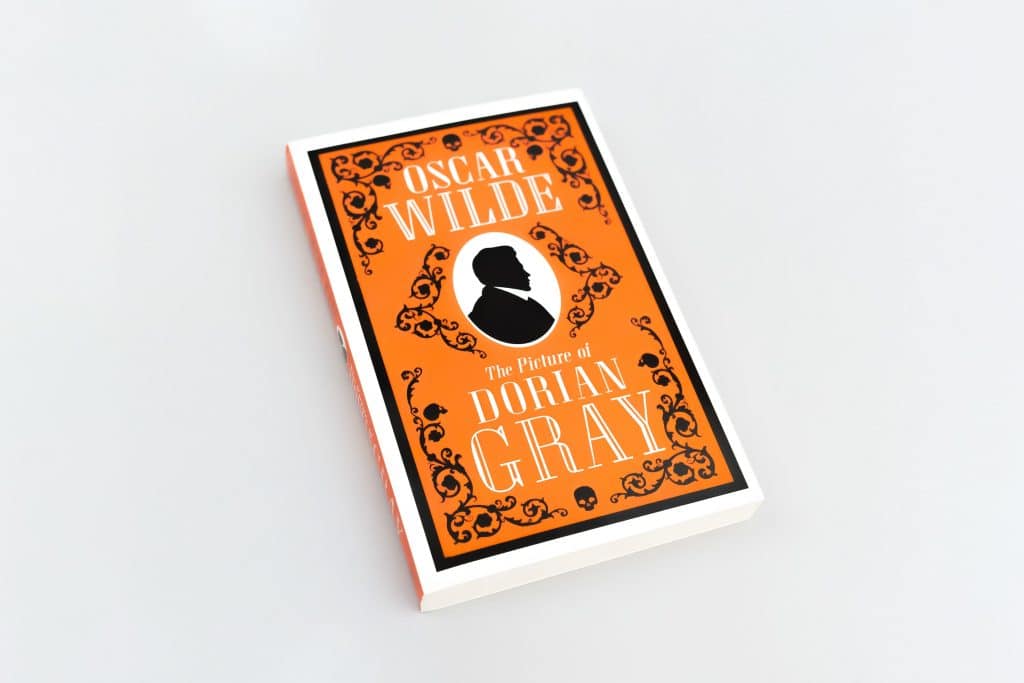
What makes Dorian Gray “queer” is not necessarily the concept of his soul in a painting, nor Dorian’s direct behaviors, but rather, his relationship with the man who painted it: Basil Hallward. Basil Hallward adores and dotes on Dorian. Not just because he is beautiful, but because when Basil first meets him, he is kind, naive, and soft at heart.
Although Oscar Wilde could only write the intimate relationship between the two men implicitly, in a modern reading of the novel, the tension is palpable. Basil captures Dorian’s very soul in his work. However, despite the immense skill required to produce the portrait, Basil insists on hiding it. He fears that showing it to the world would expose too much of himself. In this way, both of the men’s souls reside in the same work of art.
The painting ultimately comes to life, morphing into a destructive force that is invisible to all but its subject and creator.
Orlando
Orlando (1928) by Virginia Woolf is a satirical novel about a man who lives for centuries. Not only this, but he eventually transforms into a woman. Given that Orlando was published a little later than the other novels I’ll mention, the work is bolder in its expression of gender fluidity and queer sexuality.

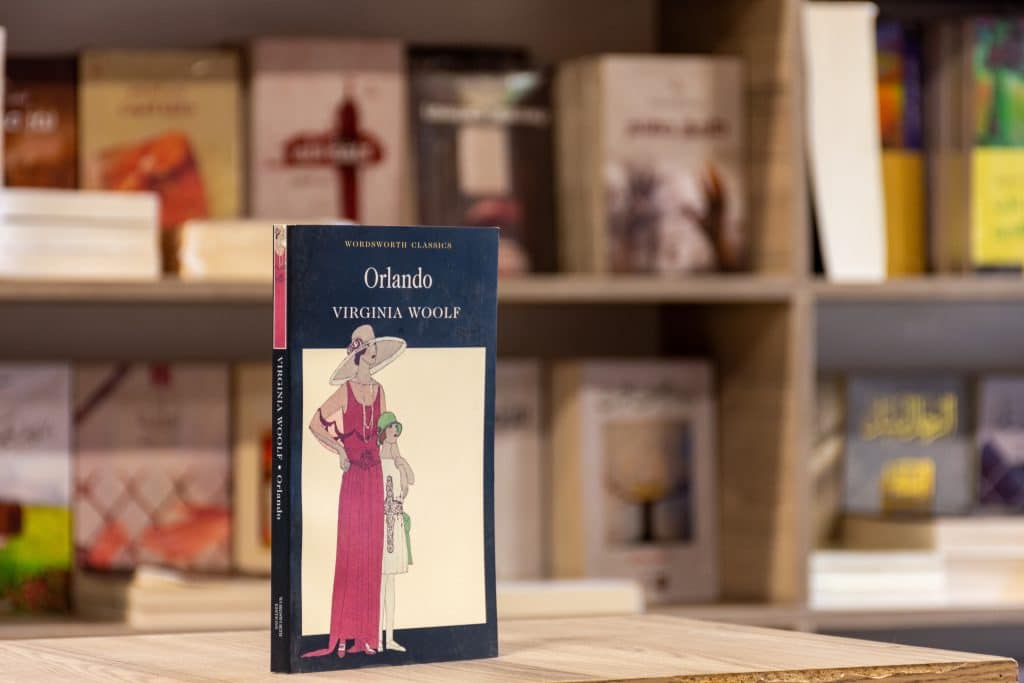
Orlando was born in the late 1500s. Queen Elizabeth takes a liking to him at a young age and decides to bring him into the royal court. He soon becomes a womanizer, which pushes him away from royalty and into life with “lowly people,” where he discovers that he has stopped aging at thirty-six.
Orlando spends centuries exploring sexuality, love, absurdity, and the meaning of life. The vast stretch of time minimizes the significance of his strange gender transformation. Woolf’s use of the comedic genre and the supernatural element of Orlando’s long life creates more space for her to incorporate queer themes.
Dracula
However, most depictions are far less generous in their depiction of queer identities. In many classic novels, the queer identity is used as an instrument of monstrosity. Queer sexuality symbolizes otherness and danger. Although not necessarily overt, its distorted presence is meant to frighten the reader.
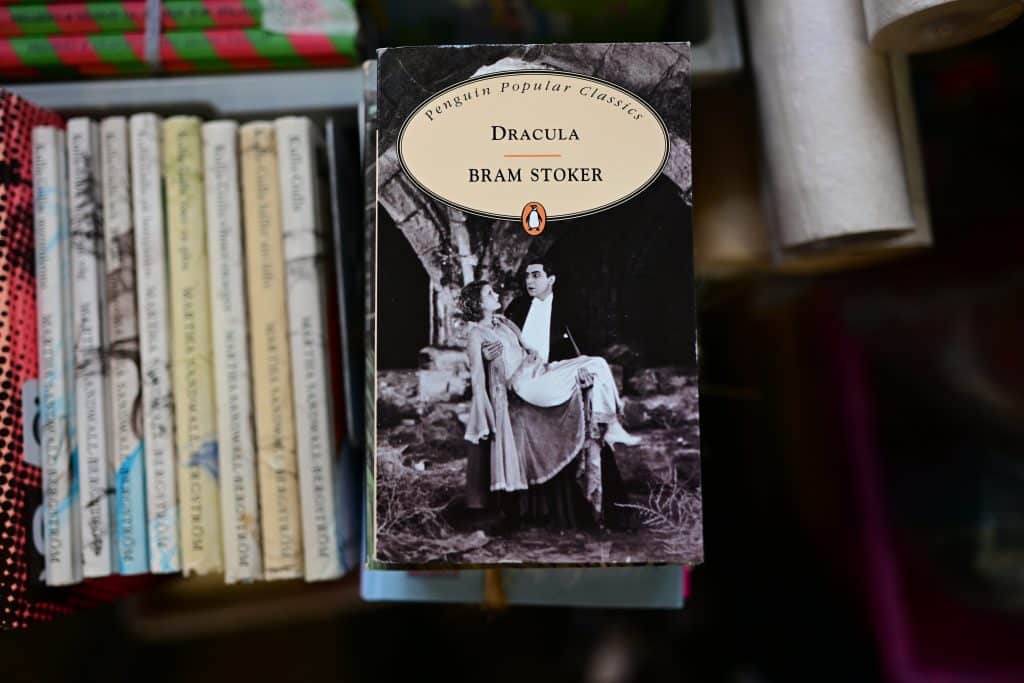
The most famous vampire novel of all time is Dracula (1897) by Bram Stoker. Thousands of essays and discussions identify the vampire as an erotic, gender bending being. The fear of his vampirism does not just come from his ability to vampify the protagonists’ loved ones. Rather, Stoker layers the fear into his allure, as well as the allure of his three female vampiric companions.
Vampires! And Desire
When faced with vampires, Dracula‘s protagonists find themselves besieged by a strange mix of fear and desire. The vampire, Count Dracula, feels a viscous frenzy of desire to feed on Jonathan and penetrate him with his sharp teeth. Thus, it’s very possible that Dracula wants Jonathan for more than his blood….
However, Dracula does not actually bite him; instead, the weird sisters in the Transylvanian castle begin to threaten him.
The sisters descend upon Jonathan with an intentionally wanton, lustful energy. Yet, despite being female and overtly feminine, the culmination of their sexual desire is also peneteration. Their vampirism grants them a crossover into a sexual practice typically reserved for heterosexual men.
The novel does not go as far as to have a male vampire feed off another man. However, it does blur the lines of stereotypical sex and gender roles. To create his monsters, Bram Stoker does not just identify the uncanny but imbues it with what he perceives as a perversion of the “normal.” Jonathan is terrified both of losing his blood and of being penetrated by a woman. More importantly, he is terrified because he cannot deny that part of him wants it. (Poor guy, seems like he was just born in the wrong century).
In the late 1800s, the vampire was a subversive entity coded with nonconformative characteristics. Protagonists guiltlessly destroyed this supernatural force to restore a “pure” society. Interestingly, historians still debate whether or not Bram Stoker himself was secretly same sex oriented.
And the Lesser Known Carmilla
Although Carmilla has recently seen a surge in popularity, the novella is actually Dracula’s lesser-known predecessor. Joseph Sheridan Le Fanu, an Irish author, originally published Carmilla in 1872. The gothic novella tells the tale of a vampiric woman and her lustful obsession with a young woman named Laura.
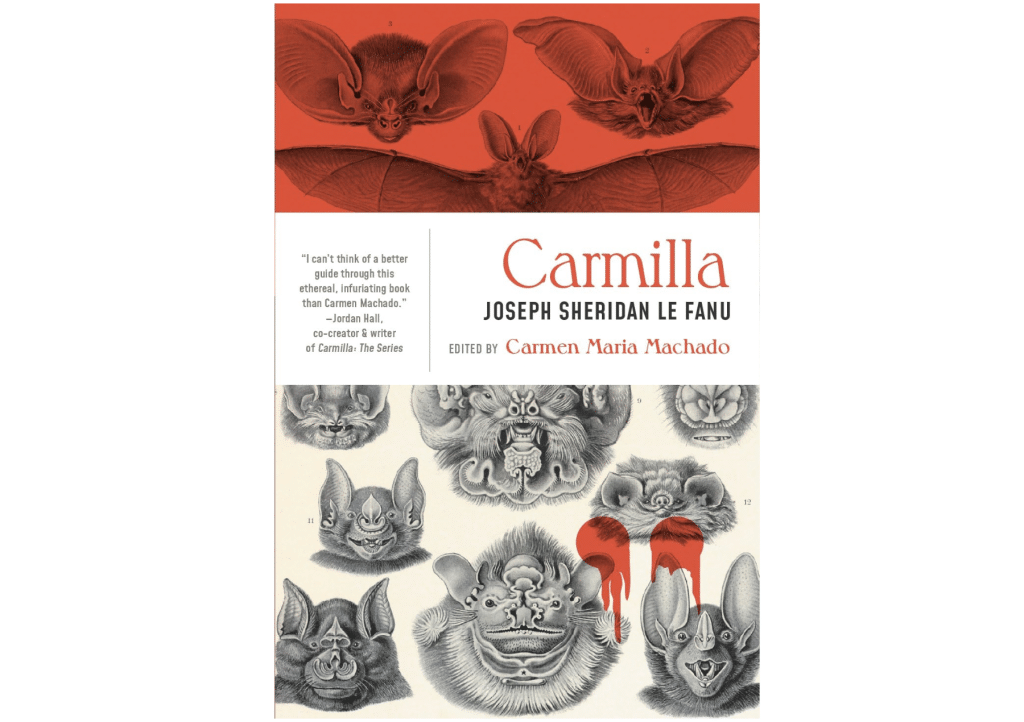
Laura lives in a secluded castle in Austria with her father. She longs for a friend, having never been able to mingle with people her own age. One day, Laura witnesses a carriage accident involving Carmilla and her mother. Laura and her father place the enigmatic Carmilla under their care as a result. The two women quickly begin to form an intense bond mixed with passion, fear, and desire. Laura’s loneliness and yearning for connection leave her vulnerable to Carmilla’s predation.
Much like the vampire Dracula, Carmilla is characterized by a fear-inspiring, yet hypnotic allure. Laura describes her as beautiful and overtly affectionate, yet somehow cold. Laura’s inexperience leaves her utterly confounded by Carmilla’s erratic behavior.
Carmilla’s shapeshifting abilities further emphasize her predatory demeanor. She transforms into a cat to prey on Laura, much like Dracula, who can shift into a bat or a wolf. Thus, Le Fanu depicts queer identity as supernatural, forbidden, and even primal. Yet these aspects simultaneously form the foundation of the relationship’s appeal.
Despite the threat to her life, Laura still cannot seem to forget Carmilla. Their toxic and complicated bond renders the novella relatable, frightening us by reflecting our dark desires to be with those who hurt us most.
Then and Now
While these authors could not openly write about queerness without facing persecution, their use of queer tropes is prominent in classic literature. This forces us to revisit how society has historically ostracized and derided queer figures. Classic literature tends to deem same sex orientation monstrous, or at the very least, destructive.
Where the vampiric stories of Dracula and Carmilla are imbued with sinister desires and even malice, The Picture of Dorian Gray is more so a tragedy. Oscar Wilde, having lived through a time when he was imprisoned for his sexuality, delivers a painful story where love proves incapable of saving one’s soul. Yet the undeniably queer elements confirm that these identities were nonetheless fighting for fulfillment.
When we compare the stories of the past with more modern renderings, we can clearly see the differences in how we are capable of expressing sexual orientation. Although queer artists have not completely abandoned the monster trope, it is no longer their only choice.
We must appreciate the persistence of queerness in literature over time, as it captures deep, intimate, and raw elements of the human experience.