

Rian Johnson has never been shy about his sources. In interviews, he has described the Knives Out series as “distinctly literary,” claiming that each film functions like a novel, with its own title, identity, and shelf presence.
When Johnson set out to make Knives Out in 2019, his goal wasn’t to modernize the mystery genre so much as to return to what made him love it in the first place: the Agatha Christie adaptations his parents kept on the bookshelf, the locked-room puzzle boxes he discovered later, and the belief that a well-constructed mystery is one of fiction’s most satisfying forms.
The series’ literary foundation isn’t limited to the atmosphere of the films, either. Specific novels shaped the plot mechanics, structural conceits, and thematic concerns of each film in the trilogy. Five books in particular, three by Christie, one by John Dickson Carr, and one by Dorothy L. Sayers, directly influenced the films. Read on to see how they left their mark, so that whether you’re a first-time viewer or a repeat watcher, you can see the Knives Out trilogy with fresh eyes.
1. And Then There Were None by Agatha Christie
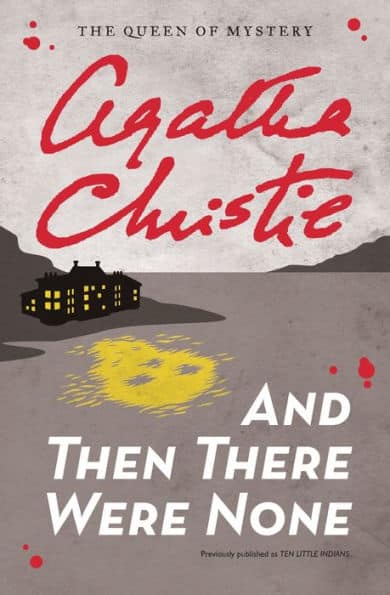
Influences: Knives Out (2019) and Glass Onion (2022)
Christie’s bestselling novel begins with a deceptively simple setup: Eight strangers are lured to an isolated island under false pretenses, and along with the butler and housekeeper, they start dying one by one. Notably, there is no detective figure in the novel. There is no outside help coming. The killer is already inside the room.
Johnson has called And Then There Were None a “proto-slasher”—not a traditional Poirot or Marple mystery, but something stranger and more unsettling. What makes it distinctive is its structure. The island setting creates a sealed world, the guest list doubles as a suspect list, and the body count rises before anyone has figured out the rules. Christie strips the genre down to its paranoid core.
Two Knives Out films inherit this blueprint.
The Thrombey estate in the first film and Miles Bron’s private Greek island in Glass Onion are each closed environments where the cast is fixed, exits and entrances are limited, and every character has a motive. Johnson also borrows Christie’s instinct for using the setting as a form of pressure—the longer the characters stay, the more the walls close in.
The parallels run even deeper than the setting. In And Then There Were None, the guests receive a pre-recorded accusation played on a gramophone—an indictment delivered without a face behind it. In Glass Onion, Miles Bron’s invitation comes as a literal puzzle box mailed to each guest: an impersonal, pre-designed object controlling the information that the guests (and the viewer) have from the start. In both cases, Christie and Johnson use the invitation mechanism as the first act of manipulation. The guests in each story believe that they have chosen to attend. But they haven’t. In Christie’s novel, a nursery rhyme counts down the deaths; in Glass Onion, Bron’s own mythology—his “disruptor” persona—functions as a similar false frame, a story told in advance to shape how the murder will be interpreted.

Why read it: It’s the rare mystery that doubles as horror. If you’ve only seen the films, the novel will reframe Johnson’s structural approach.
Buy on Amazon and Barnes and Noble.
2. The Murder of Roger Ackroyd by Agatha Christie

Influences: Knives Out (2019)
Published in 1926, The Murder of Roger Ackroyd is among the most discussed novels in mystery fiction—primarily because of what it does with its narrator. The book appears to follow the genre’s standard form: A man is murdered, Poirot investigates, and clues accumulate. But Christie’s twist depends entirely on a manipulation of point of view.
The first Knives Out film does something similar. The film gives the audience what appears to be complete information early on, then reveals that the information was framed. Like Christie, Johnson uses narrative perspective as a plot mechanism. Marta Cabrera’s role as the apparent viewpoint character and the film’s willingness to restructure its own logic mid-story echo Roger Ackroyd’s core gambit: The mystery is not just about who did it but about what we were allowed to see and when.
Ultimately, each story makes the same structural move.
In Roger Ackroyd, the narrator is the murderer. Yet every statement he makes is technically true. He doesn’t lie; he omits. Knives Out operates by the same logic. Marta witnesses Harlan’s death, and the audience watches alongside her. What appears to be a confession is in fact a misdirection. Both Christie and Johnson withhold information not through false testimonies but through incomplete framing. The audience, like Poirot, is given access to the right room but not the right vantage point. Johnson finds the central conceit of Roger Ackroyd to be an act of audacity—the kind of move that, if attempted today, would be met with accusations of cheating or genre subversion from critics. But Christie executes it so that the rules of fair play are never technically broken, even as the shock value skyrockets. Knives Out claims the same defense.
Why read it: The novel rewards a rewatch the same way Knives Out rewards a reread. Once you know the ending, the architecture becomes visible.
Buy on Amazon and Barnes and Noble.
3. Murder at the Vicarage by Agatha Christie
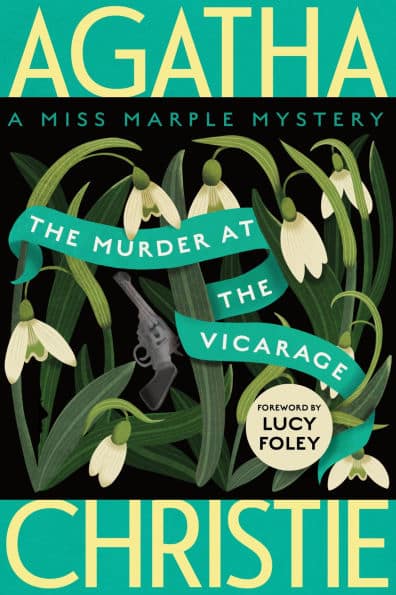
Influences: Wake Up Dead Man (2025)
Murder at the Vicarage (1930) is Miss Marple’s debut. A man is discovered dead in a village vicar’s study—a room he had no business being in, at a time when multiple people had reason to want him dead. Marple, an elderly woman with no official standing, solves the case through observation and inference rather than any actual authority.
The third Knives Out film centers on a priest found dead inside a closet to the side of the chancel during a service. One moment, the priest was alive; the next, he was on the ground with a knife in his back. No one had been in the closet before the priest entered, and no one went in after him.
The locked-room premise, the ecclesiastical setting, and the closed community of suspects all recall Christie’s vicarage mystery. Johnson has drawn on Marple before, including for the character of Benoit Blanc, who Johnson has described as operating “in the mode of the Golden Age detectives”—but Wake Up Dead Man adopts more than characterization from Christie. The crime itself and the logic required to solve it mirror the spatial and social impossibility of the Marple cases.
Christie’s vicarage is more than a setting, it’s a social system.
Everyone in the village has a role, a reputation, and a reason to lie. The vicar-narrator records a community’s worth of grievances and alliances before a single deduction is made. Wake Up Dead Man works from the same premise. The congregation surrounding the murdered priest in the third Knives Out film is a closed institution with its own hierarchy and loyalties. As a result, Blanc cannot rely on physical evidence alone because the setting has controlled who was present, who had access, and who had motive. Christie invented this model. Johnson’s third film is its most direct descendant in the trilogy.
Why read it: It’s the foundation of the “cozy mystery” tradition Johnson is operating within and thus serves to clarify the rules governing the third film.
Buy on Amazon and Barnes and Noble.
For more novels by women who defined the genre, check out this article: “8 Female-Authored Detective Novels You Need to Read Now.”
4. The Hollow Man by John Dickson Carr

Influences: Knives Out (2019) and Wake Up Dead Man (2025)
John Dickson Carr isn’t quite as famous as Christie, but Johnson has spoken about him with great enthusiasm. He distinguishes Carr from Christie this way: Where Christie is character-driven, Carr is mechanical. His novels are puzzle boxes first and foremost—intricate constructions that present an apparently impossible crime and then account for every variable.
The Hollow Man (1935) is Carr’s most celebrated work. A man is shot in a locked room with no exits. The killer left no tracks in the snow outside. The book contains a chapter—”The Locked Room Lecture”—where Carr’s detective, Dr. Gideon Fell, catalogs all the possible methods by which a locked-room murder could be committed. It marks a rare instance in which a novel is explaining its own genre in real time.
Johnson invokes this tradition most directly in Wake Up Dead Man, where the church’s closet functions as a Carr-style impossibility. Characters in the film explicitly reference Carr, with several of the suspects being part of a murder mystery book club that has read The Hollow Man. Benoit Blanc even bases his investigation upon Fell’s methodology.
The influence reaches back to the first Knives Out film.
Harlan Thrombey’s death is initially staged as a suicide—a man found dead in an attic room, the means apparent, the conclusion seemingly obvious. However, what looks like a closed case is, similarly to Carr’s locked rooms, a constructed illusion. Every locked-room mystery in Carr’s tradition depends on the same principle: The impossibility is designed. Someone built the scenario. In Knives Out, the original crime is less a whodunit than a how-was-it-done—and then a why-does-it-look-this-way.
Carr’s influence runs throughout the whole trilogy. Johnson builds plots akin to Carr’s: The crime is designed first, and the story is constructed around it. The impossibility of the murder is the point.
Why read it: For anyone who wants to understand how mystery plotting works at a technical level, The Hollow Man is the closest thing the genre has to a textbook.
Buy on Amazon and Blackwells.
5. Whose Body? by Dorothy L. Sayers
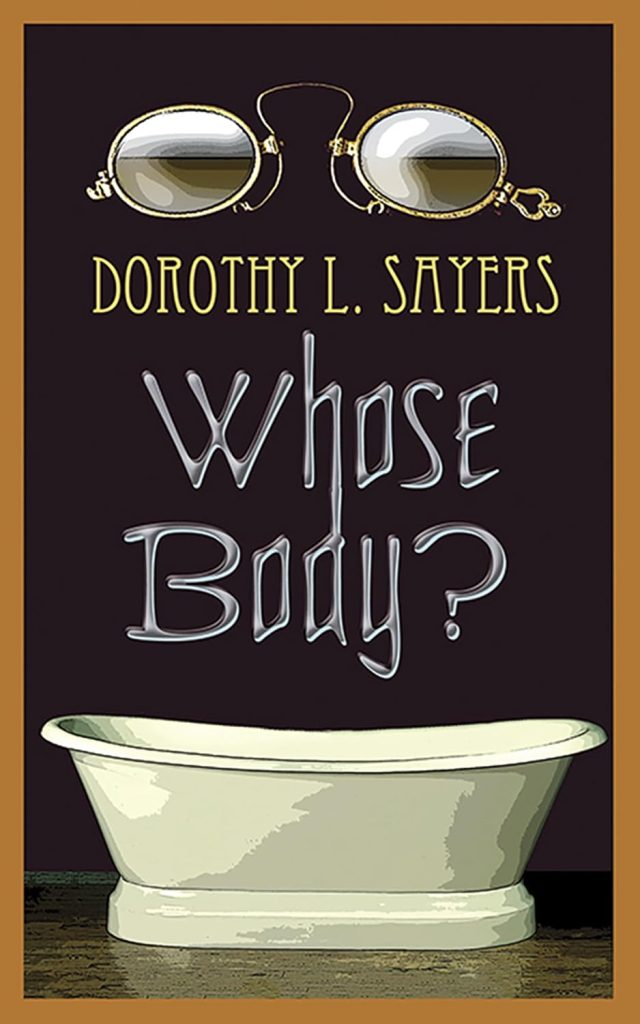
Influences: Knives Out (2019) and the trilogy’s detective figure
Dorothy L. Sayers’s first novel introduces Lord Peter Wimsey: an aristocratic, witty amateur detective who quotes poetry and solves crimes with the air of someone who finds the whole enterprise slightly amusing. Whose Body? (1923) opens with a body in a bathtub—naked, anonymous, wearing only a pince-nez—and Wimsey steps in to sort it out.
Main Character Similarities
Despite Johnson not having read Sayers until the first film had come out, Benoit Blanc is based on the Golden Age detective, of which Wimsey is one of the most well-known templates. Both detectives are gentlemen of leisure. Both perform a kind of theatrical eccentricity that accentuates their intelligence. And both operate outside official channels, which gives them freedom to observe and comment in a way that a police detective couldn’t.
The parallel to Wimsey also shapes Blanc’s narrative function across the trilogy. Wimsey is never simply solving a crime. He is the amateur who sees more clearly than the professionals because he has nothing at stake. In Knives Out, Blanc is hired by an anonymous party and operates on the margins of the official investigation. He watches. He asks questions that seem tangential. His eccentricity is, like Wimsey’s, a deflection strategy. Sayers understood that the gentleman detective’s apparent frivolity is what makes him dangerous, and Johnson built Blanc on that same model.
Beyond characterization, Sayers shares Johnson’s instinct for employing the mystery form as social criticism. Whose Body? is partly a story about class, identity, and what it means for a body to be unidentifiable. The Knives Out trilogy consistently uses the framework of murder to investigate wealth and power. That is a Sayers inheritance as much as a Christie one.
Why read it: It’s the best entry point into Sayers and the fastest way to understand Blanc’s character origins.
Buy on Amazon and Barnes and Noble.
Looking at the Films Differently
The Knives Out trilogy works as entertainment on its own terms—meaning you don’t need to have read Christie or Carr or Sayers to follow the plots or enjoy the jokes. But familiarity with these five mystery novels will fundamentally change what you’re watching. The locked-room setup evolves from a clever flourish into a powerful homage to the inherent complexity of murder mysteries. Blanc’s mannerisms mimic those of Lord Peter Wimsey. And as pioneered by Christie, each character has a motive. The structural gambits in the Knives Out films signify Johnson’s engagement with, adoption of, and occasional modification to a tradition he has spent decades admiring and absorbing.
Not only did mystery novels inspire the tone of the trilogy; they supplied specific mechanics: the setting, the unreliable narrator, the impossible crime, the gentleman detective, and the community as a suspect pool. Each of the five novels maps onto visible elements in the films. Johnson has stated that his goal with the films was to reproduce the joy he felt encountering classic mystery fiction as a child. Reading these mystery novels is less of a companion activity to the films than a way of watching them again from a different angle.