If you were to ask someone what the most useless art major to pursue is, there’s a good chance they’ll tell you art history…and to be honest, they’re not wrong.
Being an art history major has a bad track record of yielding limited job opportunities. While art students (myself included) are required to study art history, few of us make it our main focus.
So, if people rarely choose to devote themselves to art history, is there any point in learning it? I’ll argue that there is, and not just for art students, but for anyone.
Having a basic understanding of art history can not only help you identify popular pieces but also give you a deeper understanding that goes beyond surface-level pop culture references. I often hear people wondering why a certain piece is popular, or implying that their own skills outweigh those of the artist they’re viewing. Knowing the context behind popular pieces can prevent this kind of misguided thinking.
Cultural references
I’ve recently been learning about Van Gogh in my art history course, and he’s a perfect example of this phenomenon. Many people can identify Van Gogh’s most popular pieces, including Starry Night and his sunflower works. But while we see references to these paintings everywhere, the story behind them isn’t as well-known.
For example, many people associate Van Gogh’s Starry Night with peace. A feeling of calm and quiet. This painting can certainly evoke these feelings, but its story goes deeper than this. Starry Night was created near the end of Van Gogh’s life, when he was grappling with ideas about his mortality and the possibility of encountering experiences he wouldn’t be able to know in the living world.
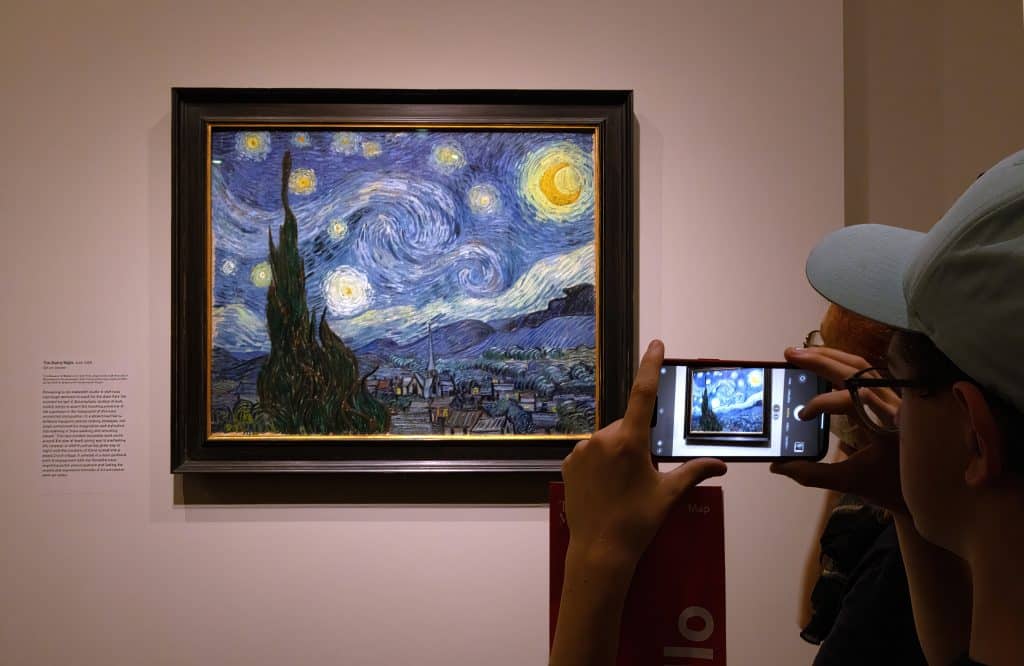
Understanding this, the painting seemed to hold a different weight for me. It’s still beautiful and quiet, yet it contains a strange heaviness–a feeling of sadness and longing all wrapped up in one.
Vincent Van Gogh is also a perfect example of misunderstandings about style and technique. Months ago, I stumbled upon a post bragging about how the user had recreated the painting Cafe Terrace at Night in a realistic style. Because they’d achieved greater realism, they bragged about their skills in comparison to Van Gogh’s.

This really bothered me, because Van Gogh was an impressionist artist. The point of impressionism is to convey subjects and feelings through implied color and form. This allows the viewer’s eye to swirl the elements together. Imagine how Starry Night might look if, instead of layered, swirling brush strokes, it were simply a flat, dark sky?
Understanding the context of a given piece of art helps you appreciate it for what it is. In this case, Van Gogh was among the artists who were scoffed at for their style in their own lifetime but are now appreciated for shaping Impressionism into what it is today.
Exploring different thought processes
Impressionism, like any art movement, teaches us not only about technique but also about how we understand the world around us. During Van Gogh’s lifetime, artists were exploring how to convey the truth of emotions through their work. The goal wasn’t realism; it was learning how to capture the human experience through light and color.
A good example is Neoclassicism. This art movement spanned roughly from 1660 to 1830 and is a direct reflection of the Enlightenment ideas of the time. While the Enlightenment’s documented scientific progress shows specifically what people were doing and learning, the artwork of the day represents what people thought about this new progress.
Learning about the past in relation to the future
One of my favorite paintings is by Joseph Wright of Derby and is titled An Experiment on a Bird In an Air Pump. It shows a group of people gathered around a demonstration of a bird being suffocated to death. Some marvel at the scientific implications, while others look sad and horrified.
This art piece reveals how many people thought about the Enlightenment–the world was grappling with the moral implications of this scientific progress. Just because mankind had the ability to do something, did that make it right?
When looking at this painting, I drew connections to current conversations involving the use of artificial intelligence. Generative AI exists whether we like it or not– there’s no way to “undiscover” it. But now that we’ve unlocked an ability that many would’ve once thought impossible, we have to decide how our ethics and morals will influence its use.
Looking at neoclassical art not only helps you see how people thought during the Enlightenment; it also helps you imagine how we might view our current situation decades from now.
Understanding the place of artists in our modern world
Generative AI is also relevant in conversations about how artists fit into our modern world. Understanding the history of how artists have been hired and commissioned can provide insight into how they might be valued moving forward.
Looking back to the Industrial Revolution, we see a situation similar to what we’re facing today. People sought decoration for their homes in the form of furniture, wallpaper, and more. With new methods of production made possible through the assembly line, people were making products in a less personalized way. Rather than one person creating a chair from start to finish, multiple people worked to create it, with each learning one specific part of the process.
An artist named William Morrison felt that this new way of manufacturing decor was too impersonal, resulting in products that lacked beauty, care, or passion. He felt that home furnishings should place a greater emphasis on artisanship and founded the company Morris & Co. in an effort to employ artists who were dedicated to and knowledgeable in their craft.
The company’s products were so stunning and iconic that they are still copied in modern decor. Because of the elevated skills and craftsmanship that the company prided itself on, their products were more expensive, thus becoming a status symbol for those who could afford them.
While it’s unclear what the future holds for artists in the face of generative AI, we might see a rise in people seeking real art to push back against the impersonal. By studying past trends, we might be able to identify when the modern equivalent of Morris & Co. is born.
Free learning resources
If you’re interested in learning more about history (and would rather not spend money to do so), there are plenty of free resources available to you.
The National Gallery
Here, you can explore a variety of specific artists and artworks. The website lists a brief overview of each piece in its gallery, as well as a more detailed article if you’re in the mood for a deep dive. You can also read about specific statistics, such as its median, previous owners, and more.
The National Gallery offers additional information about the artists behind the works in its possession, shedding light on their lives, styles, and influence. Knowing more about these artists is not only interesting; it can help you understand the artwork in a new way.
Art History for All podcast on Spotify
Hosted by Allyson Healey, this podcast dives into a variety of art history topics and is only 26 episodes long. I’m always looking for something to listen to while I work on tasks like drawing, cleaning, or painting, and Healey’s podcast is perfect to listen to while my hands are busy.
TheArtStory.org
This website is an excellent database of artists and art pieces, and it’s super fun to use. You can search by specific people or pieces, as well as movements such as baroque, conceptual art, art nouveau, and more.
@history.mae on TikTok
This is a creator I’ve been following for a while who gives helpful explanations of the meanings of different art pieces. Her videos are great for learning about a specific work without going through a full deep dive, and they are always captivating enough for me to watch all the way through.
In-person gallery and museum tours
There is nothing that can replace the experience of seeing art in person. Even if you don’t consider yourself an “artsy” person, the stories behind the pieces can be interesting to anyone! Consider going on a guided tour of a museum or gallery near you, or just walking through by yourself and reading about the pieces on your own.
It’s really fun to view new artwork, but there’s also a satisfaction in seeing a piece you’ve previously encountered online–it sort of feels like meeting a celebrity in person!
Art history for all
Overall, art history isn’t just about memorizing the names of paintings or dates of movements. It’s about learning history directly from the perspective of those who lived it, from prehistoric humans to pop artists of the 70s.
Having a basic understanding of art history can enhance the way we understand and appreciate the art around us. It can influence our perception of current trends, as well as where we see movements going in the future. This knowledge is valuable both to artists and to individuals who don’t consider themselves artistic at all.
There has never been a single art history lecture that hasn’t taught me something. Everyone deserves that feeling of excitement around this topic, whether they learn about it in a formal school setting, as I am, or research the topic on their own.
If you want to know more about how people are interacting with the art world today, check out our article about Brooklyn’s Fine Art Print Fair. And if the prospect of doing a little research into your favorite art movement has you in the mood for some self-led studying, read our article about the rise of study culture.