Being an English major means spending a lot of time surrounded by books—reading them, writing about them, and occasionally questioning why people enjoy either. Somewhere along the way, I discovered that some of my favourite novels are about books themselves. There’s something oddly satisfying about stories that celebrate reading while gently poking fun at the people who can’t stop thinking about literature. How meta!
I think these types of books deserve a special place on the bookshelf. Though often overlooked, there’s a certain charm to books about books. I thought I’d share some of the best I’ve read in my time. Though on paper (see what I did there), these types of books may seem boring, there is a certain joy to this type of literature.
This novel concept (did it again) is a distilled type of work. Authors explaining the nature of their craft or the dichotomy of literature in a novel’s form is a distinct and notable type of craft. And one that is often overlooked!
What makes these novels so satisfying is that they ask you to think about your own relationship with reading. Rather than simply telling a story, they invite you to question why we read, what books mean to us, and how literature shapes the way we see the world. They turn the act of reading into part of the story itself, which makes them surprisingly immersive.
I implore you to read these. Not only is my taste amazing, but I guarantee you’ll struggle to put any of these down.
Not to Read, Alejandro Zambra
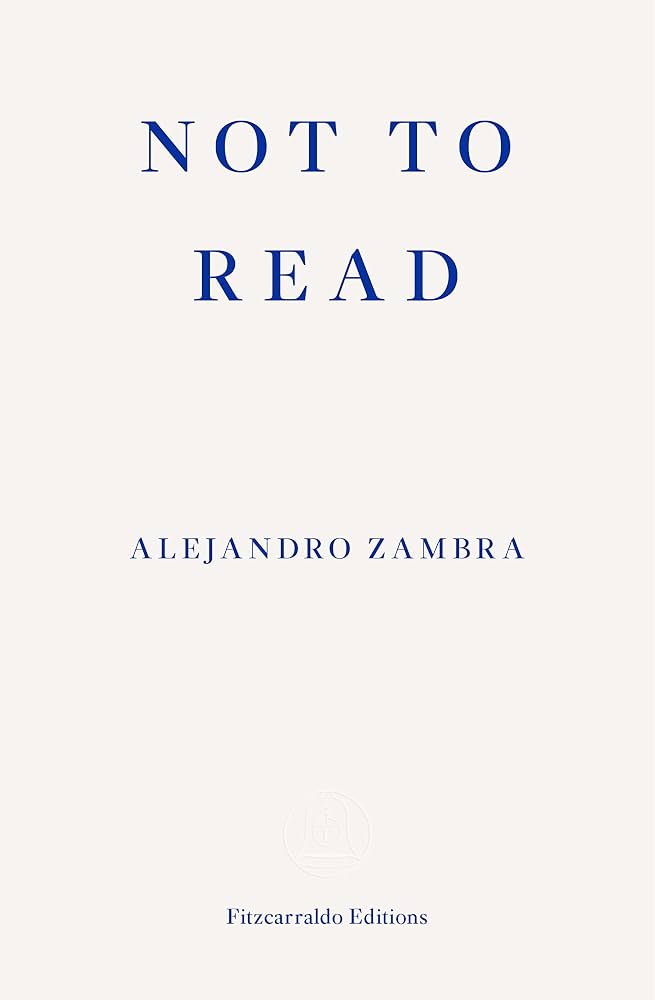
I’m starting this list with my favourite of the bunch. Logically, this should probably come last, but I don’t care. It’s my list, after all.
Alejandro Zambra is a Chilean novelist and essayist whose work has earned international acclaim. Born in Santiago during the Pinochet dictatorship, his writing reflects on memory, literature, and growing up in Chile’s political climate.
I stumbled upon Not to Read deep into my undergraduate degree. I accidentally ordered it after misreading the assigned reading list; it turned out Zambra’s book was only on the supplementary reading. What felt like a costly mistake became a serendipitous discovery. I’m stubborn—once I’ve bought a book, I’m going to read it.

What I like most about Not to Read is how it serves as both a love letter to literature and a challenge to the literary canon. In one essay, Zambra recalls the books he was assigned in high school and jokes that reaching page 100 often felt like an achievement rather than a pleasure.
Zambra balances brevity with a dry cynicism. He writes about the high cost of books in Chile and the inventive ways readers make books accessible to themselves. The result is a collection that is as much about the politics of reading as it is about the joy of it.
If On a Winter’s Night a Traveler, Italo Calvino
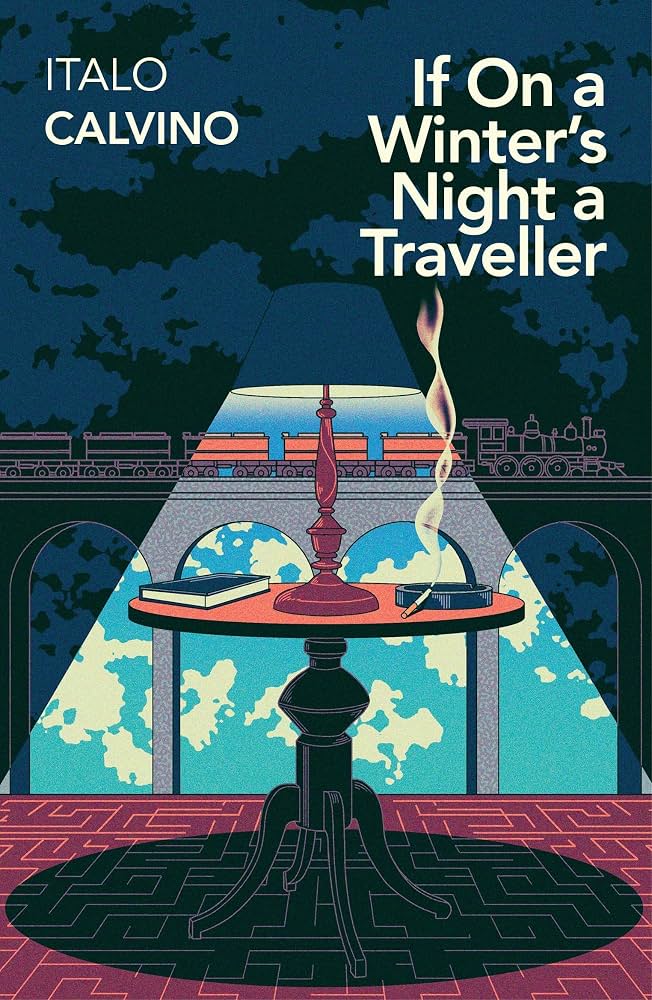
If there was ever a book that deserved to be described as “about reading,” it’s this one. Italo Calvino’s novel doesn’t just tell a story—it constantly reminds you that you’re reading one. In fact, you are the main character. Every chapter opens the beginning of a new novel before abruptly ending, forcing you to start all over again with another story. It’s frustrating, clever, and oddly addictive.
On paper (there I go again), it sounds like a gimmick. I thought the same before I picked it up. But somewhere between the constantly interrupted stories and Calvino’s playful narration, you realise the book isn’t trying to annoy you—it’s trying to capture what reading actually feels like. The excitement of discovering a new voice, the disappointment of reaching the last page, and that endless chase for the perfect book that somehow always feels just out of reach.
Calvino has a way of making you laugh at your own habits as a reader. Whether it’s buying books you never quite get around to reading or convincing yourself that this next novel will be the one that changes your life, he somehow understands the strange rituals that come with loving literature. It’s one of the most inventive novels I’ve ever read, and somehow, despite all its tricks, it never forgets that at its heart it’s simply a celebration of reading.
The Name of the Rose, Umberto Eco
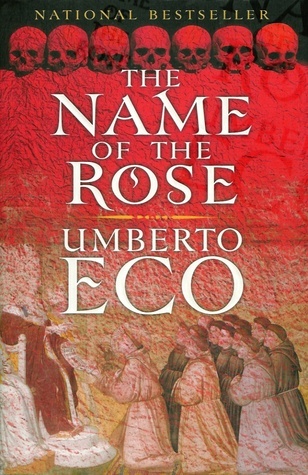
I’ll admit it: I picked this one up because someone told me it was a murder mystery. They weren’t lying, but they also neglected to mention that it was about four hundred pages of medieval monks arguing about books. Thankfully, that’s exactly what makes it so good.
Set in a monastery whose library is as mysterious as the murders themselves, The Name of the Rose is obsessed with knowledge. Every dusty manuscript feels dangerous, every forbidden text carries a secret, and every conversation somehow turns into a debate about language, truth, or whether books should make us laugh. It sounds impossibly dense, but Eco has a knack for making intellectual ideas feel like clues in a detective novel.
What I love most is how much respect the novel has for books. They’re not just objects sitting on shelves; they’re things worth protecting, arguing over, even dying for. It makes reading feel like an adventure rather than a quiet hobby. I finished it with a newfound appreciation for libraries—and also a slight fear of monks.
Stoner, John Williams
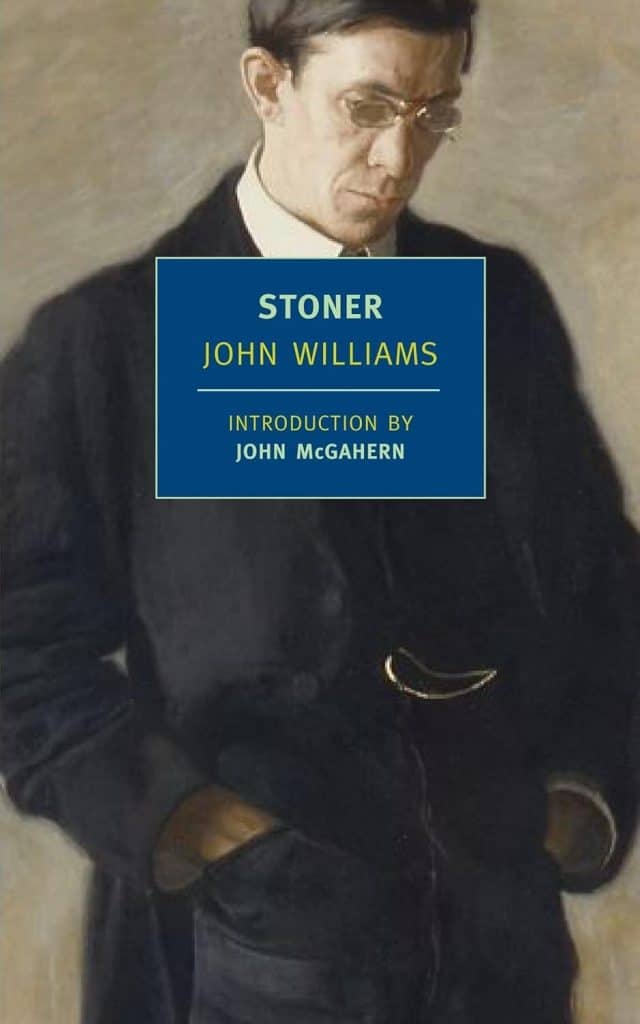
This one feels almost too obvious for a list about books, but I’d be doing both you and Stoner a disservice if I left it out. John Williams’ quiet masterpiece follows William Stoner, an unassuming English literature professor whose life is defined not by grand adventures but by his devotion to books.
This book has found a modern audience again after being primarily pushed through BookTok. I’ve recently seen it in many people’s must-read lists, along with East of Eden and The Bell Jar. I actually read this book in my undergrad degree and didn’t think very much of it.
Like the rest of Gen Z, I hate to do what everyone else is doing. Gatekeeping seems to be one of the nasty habits of this generation. However, in preparation for this list, I decided to give it a re-read. I expected to feel the same, but Stoner really amazed me.
No, this time around, I think I finally understood why so many people love it. Stoner isn’t really about academia, or even books, as much as it is about quietly getting on with life. Williams finds beauty in the ordinary—the lectures, the conversations, the pages turned in silence—and somehow makes them feel profound without ever trying too hard.
Much of that renewed popularity comes from readers being surprised by how emotionally affecting such a quiet novel can be. On the surface, very little happens, but Williams proves that an ordinary life can carry extraordinary weight. For anyone who has ever fallen in love with a subject or quietly questioned whether their work matters, Stoner has a way of feeling deeply personal.
The British Museum is Falling Down, David Lodge
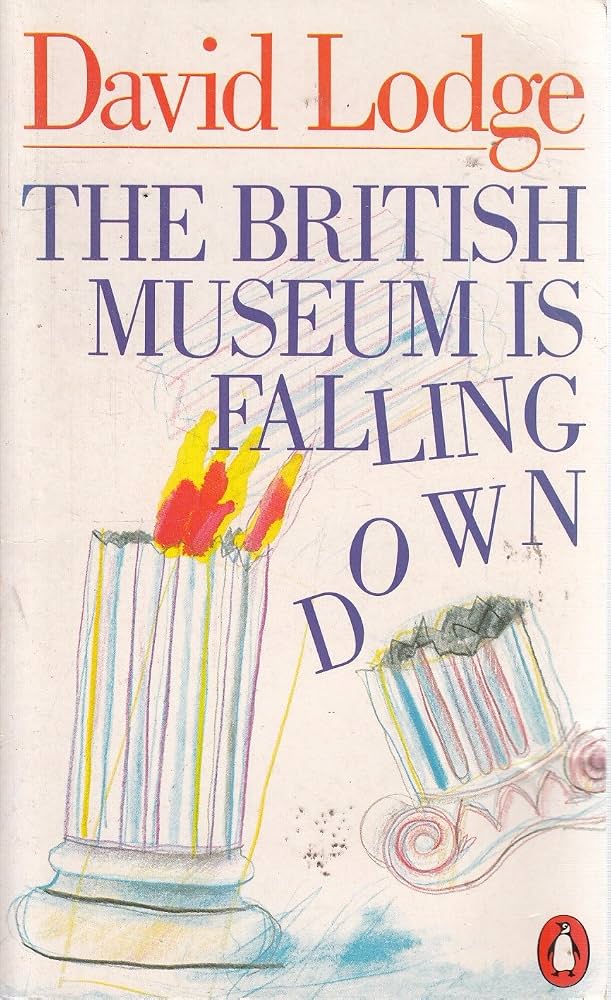
My last pick is a personal favourite. Although I said that about Zambra’s book, Lodge’s novel is simply hilarious. Though its subject is centred around an academic and his university paper on literature, I think it definitely counts.
This is another novel about academia, following a PhD student whose life begins to resemble the books he spends his days studying. The British Museum Is Falling Down is both a parody of literary culture and a love letter to it.
What the book manages to achieve is an almost sitcom-like approach to the narrative. It feels remarkably modern for a novel published in the 1960s, preferring a mundane story that opens into surprisingly complex questions about purpose, faith, and the place of old texts in the modern world. Considering it was written well over half a century ago, it’s quite remarkable.
David Lodge has a particular talent for poking fun at academia while clearly being fascinated by it. The novel takes the seriousness of literary study—the endless analysis, the intellectual debates, the obsession with meaning—and pushes it to absurd extremes. For anyone who has spent too long in an English department, there is something painfully familiar about its characters and their inability to escape literature, even in their everyday lives.
What makes it so enjoyable, though, is that the satire never feels mean-spirited. Lodge understands the eccentricities of academic life because he lived them himself, and there’s a warmth beneath the comedy that makes even the most ridiculous moments feel oddly relatable. It’s one of those novels that rewards readers who love books, but it’s just as entertaining for anyone who enjoys sharp observational humour and a protagonist constantly getting in his own way.
And there you have it. There’s something to be said about these types of books. Though concepts of meta commentary and 4th-wall breaking have become overly saturated, this type of literature really sings.
With all of these novels having relatively simple premises, there’s a certain promise each delivers. Though literature is the common thread, there are stark differences in each of these texts.
If you’re looking for an interesting read, all of the above are something a little different. Flaring up your summer reading is easy; just listen to my opinion!