
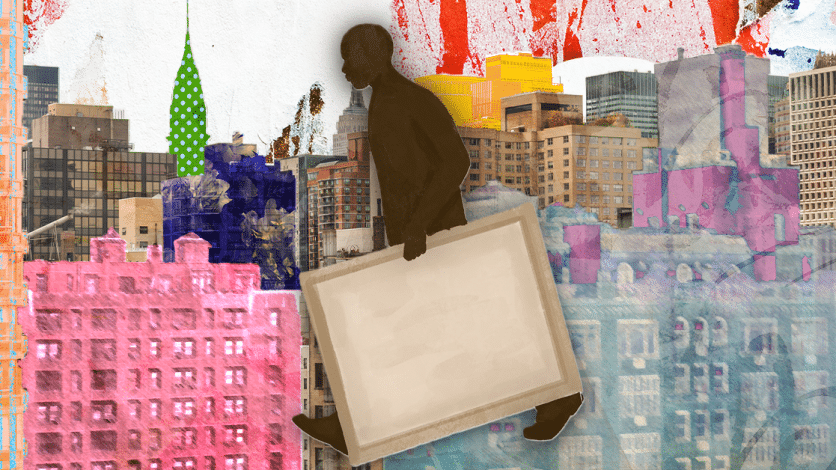
Art has long been a fundamental medium for self-expression and activism. Since the beginning of time, humans have honed their creative talents to express greater meaning in life. While art encapsulates artists’ personalities, it also connects to the broader world. Whether through painting, photography, pottery, etc., artists use their gifts to uncover the deepest questions and mysteries of life.
While most of us know famous artists such as Vincent Van Gogh or Pablo Picasso, there has been less and less education concerning contemporary artists. Lately, art has been swept under the rug in the educational world. And while mathematics, literature, and science are extremely important in a curriculum, art is especially beneficial for studying history and social change.
On a psychological note, art is a window into the human mind. Through its various styles, we can learn to appreciate our humanity while also broadening our worldviews. Art, both historical and contemporary, allows us to see through the eyes of another and to experience life in newfound ways. Therefore, let’s explore five different contemporary artists who are worth your time.
1) Jon Foreman: Sculpt the World
Jon Foreman is an artist who works with nature to create distinct sculptures. Based in Pembrokeshire, Foreman creates near coastlines and woodlands. Starting as a college student, he channeled the creativity that has been with him since he was young. He works with stones, leaves, sand, and other materials to accentuate the environment’s natural beauty. Rather than simply using the surrounding nature, he “collaborates with nature himself.”
Foreman doesn’t need an easel or a palette; his canvas is the nature he’s grown up with. Additionally, the stones, leaves, and sticks he uses for his art come from the natural sites themselves. To do this, he explores the surrounding area, familiarizing himself with what is nearby. All he needs to bring is his own creativity (and an occasional sand rake). Foreman’s work is a testament to his sharp mind and keen eyes: he can create something spectacular with just a few natural resources.
So why is his work significant, and what can we learn from it? To Foreman, his art allows him to ‘escape’ from stress and the pressures of life. But on a universal note, his website states that his art highly depends on the weather, climate, and even human activity.
“His work is ephemeral in many differing ways; most often the weather and immediate climate will make his work disappear (be blown away/washed by the tide), and sometimes other people will interfere. This is all part of the creative process and has proven to benefit his work.”
Foreman’s art demonstrates how forces of nature are unstoppable and ever-changing. It is commonly known that nothing lasts forever, and Foreman’s work perfectly encapsulates this saying. Instead of trying to work against these forces, he demonstrates how we can collaborate with the Earth’s beauty. In a world obsessed with artificial beauty, his art calls us to stop and look at the beauty that is already around us. Although it may not last forever, it is real, and it teaches us to appreciate those fleeting moments.
2) KangHee Kim: Photography
KangHee Kim is a photographer who specializes in image modification and Photoshop. Based in New York, she collages different scenes from around the state and merges them. Kim graduated from college with a painting degree, but later developed a passion for photography. Her website states that this development occurred after a stimulation in her life.

“Once when KangHee was running errands on the street of New York, she somewhat hoped for exciting things to happen. Though things did not go as she wished, she realized that, instead of waiting for miracles, she could instead create the magical moments in her imagination.”
Rather than limiting herself to realistic-looking images, she dabbles in surrealism. Most of her images leave no trace of possibility in them: stoplights in the sky, puddles of clouds, and doors opening to the heavens. And while she merges these images, she “leaves traces of imperfection untouched intentionally in the process.” Kim uses these flaws to her advantage, making her images stand out.
So why should we be paying attention to Kim’s art? It is a testament to the human imagination and drive to create joy and excitement. Rather than sitting in disappointment from her wishes not coming to fruition, Kim used her creativity to make something of her life. She realized that she didn’t have to depend on the world for invigoration; she could do it herself.
By interacting with her imagination and the surroundings in New York, she perfectly balances vision and reality. In a world that focuses too much on one or the other, Kim demonstrates the power of working with both. More often than not, people tend to be overly practical or overly imaginative. She reveals that we don’t have to sit idly or wait for something exciting to happen– we can use our creativity to change our lives for the better.
3) Kimberly LaVonne: Ceramics
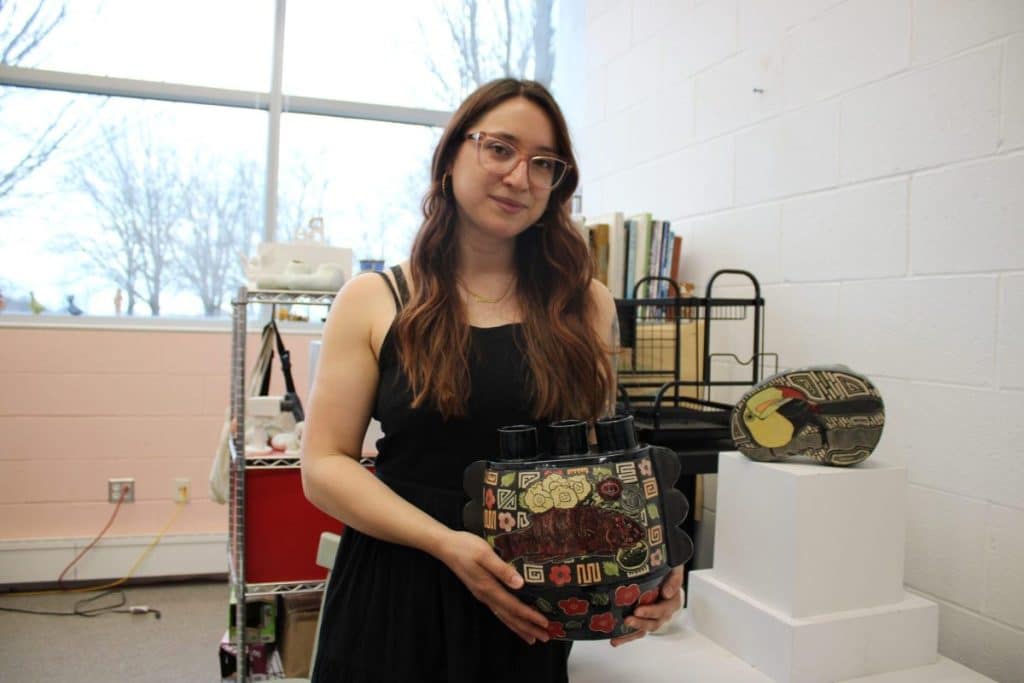
Kimberly LaVonne is a ceramic artist who designs pieces with illustrations of “her Panamanian heritage, ideas about the body, death, and remembrance.” Based in Detroit, Michigan, LaVonne has shifted many times during her artistic journey. Initially pursuing a degree in graphic design, she began veering towards ceramics, painting, and photography.
After shifting her focus, she went through many trials and errors, such as struggling to sell coffee cups and flower pots. Eventually, she realized that she needed to make her artwork “true to herself” (The DePauw). This eventually led her to work more in depth with her Panamanian heritage, allowing her artistic abilities to flourish. According to her website, she now creates ceramic bodies adorned with body parts, animals, Panamanian traditions, and foods.
“The forms are inspired by Pre-Columbian Coclé pottery, with soft rounded handles and voluminous bodies. I hand build the forms using coil and slab techniques, a repetitive and meditative process of manipulating the clay to create the desired shape…The pallet is simple allowing the graphic quality of the linework to pop against the black surface while pinks, greens and yellows reference the vibrancy found in the architecture and the tropical environment of Panama.”
Clearly, LaVonne’s art is significant because it demonstrates her appreciation and dedication to her heritage. Moreover, it reveals her determination to never give up, even during the roughest patches. As LaVonne stated, she went through many humbling moments in her career. Rather than calling it quits with her work, she grew step by step and became a stronger individual in the end. She learned to create what she was passionate about, not necessarily what people expected from her.
LaVonne also learned to embrace her culture and became more confident in her identity. Growing up, she struggled to connect with her community. Over time, she created vessels reflecting her culture, giving herself “permission to work with them and explore something she had never done before” (The DePauw). Because of this, LaVonne encourages herself and others to “keep going and keep making.”
4) Leah Beeferman: Digital Arts
Leah Beeferman is an artist who specializes in working with digital images, videos, objects, sounds, and prints. Based in Providence, Rhode Island, she travels the world to study landscapes and weather forms. Using a camera, she photographs/videos natural landscapes while also collecting scientific calculations and sources relating to their atmospheric conditions.
Beeferman works closely with science and its tools, feeling that it makes “the invisible visible.” Her art includes satellite images, weather maps, and even research from forest stations and cloud observatories. Beeferman often mixes these pieces of science, representing “this tension between what we can know and what we can’t know” (The DePauw). This is a common theme in her work, demonstrating the uncertainty we often feel towards the atmosphere.
“I take its images and combine them with my own to reflect on what I learn and see: cloud-scale uncertainties, passing atmospheres, graphs as narratives, events in time, environmental fluctuations, winds, variables, variations, earthly movements and motions. And I feel, through these images, some understanding of planetary scale.”
Through Beeferman’s art, we have a better understanding of the uncertainties we encounter in our day-to-day lives. A major portion of her art gets us to think about our bodies’ relationship to these natural elements (The DePauw). She often makes a point in her work, bringing out the ‘unsettling’ feelings we have relating to our current environment. Although we may have some idea, we certainly don’t know how it may change in the future.
Beeferman’s art shows appreciation for “these passing moments” (The DePauw). While the weather is constantly changing and we may never fully be able to predict it, her work calls us to let go of that need for control. Instead, we should view ourselves as a part of a larger collective and cherish the surrender. After all, we don’t always have to take center stage. When we step back and make less of a deal about ourselves, we begin to take less for granted.
5) Sean Yoro/HULA: Visual Arts
Sean Yoro, otherwise known as HULA, is a visual artist who paints murals on ocean walls, waterfalls, and icebergs. Based in Los Angeles, his journey started in NYC, painting on ocean walls whilst simultaneously balancing on a paddle board. He often paints “utilizing his Hawaiian roots to inspire both his work and the wide range of environments they are created in.”
Yoro is known for his realistic portraits of women that are often covered and revealed due to changing tides. To paint, he has to study the winds, tides, lighting, and rocks of the area. He spends hours on the water, balancing on his board as the tides vary, becoming a part of these natural processes. Yoro’s website states that he feels a strong sense of connection between himself and the environment, challenging him to become more aware of it.
“Hula has expanded his body of work on a global scale – from forest and sea floors to icebergs and waterfalls, the always-changing environments have kept Hula pushing both his creative and physical limits.”
Yoro’s art allows us to see how inseparable we are from the environment. We are not distinct from the land we live on; it is a crucial part of our everyday life. But rather than being mindful of this, many of us take it for granted. For example, humans play a large role in unnaturally changing environments. Deforestation, plastic waste, and excessive air pollution are all prominent issues caused by us. When we realize that we are a part of the problem, solutions arise.
Yoro’s art symbolizes the harmony of going along with the environment’s natural processes. Although it takes time, his work turns out spectacularly and is much more meaningful. In a world obsessed with time management and getting things done in our own ways, his work calls us to progress naturally. When we learn to observe environmental processes and move with them more mindfully, we appreciate our Earth better.
Art is so much more than a painting or a photo; there is meaning behind every brush stroke or click of a button. The thought processes, materials, and setting drive the art to meaning– art isn’t just pleasing to the eye. Although it is physical, it transcends into mental and spiritual domains. By studying not only historical but also contemporary artists, we can become more informed citizens. Art is communication, and communication leads to distinct changes and decisions. Although you may not be an artist yourself, these artists challenge you to step out of your view and step into their own.