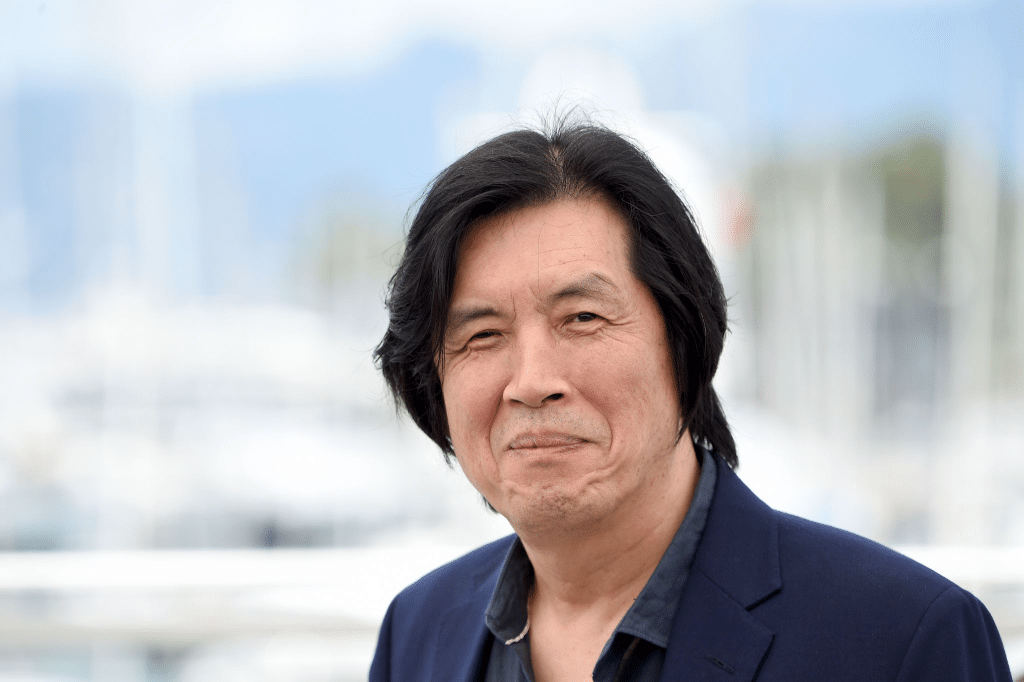
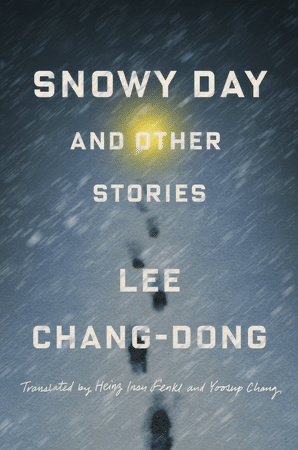
Gen Z, who has been thoroughly saturated in the K-wave. You will be happy to know that this next book is a Korean short story collection by Lee Chong Dong. Lee Chong-Dong has been hailed as one of Korea’s finest directors. He, however, got his start writing. I think that this is as good a place as any to get a flavor for Korean literature.
A Little Bit of Background:
This book was written about the two military dictatorships that South Korea experienced. It is inspired by how the author lived through that time. A time filled with tear gas and student–led riots, and the author turned to writing to express his feelings. In the preface it says, as not all of us read prefaces, but should. It says some of these stories are about some of the friends he had during this time.
Chang-Dong also states that a lot of the book, although a collection of short stories, is not all that fictionalized. One of the things that inspired the book was a car crash that involved his son. Others were about his time in the military like in the story Snowy Days. Can this book then be considered a political book? Indirectly perhaps as a kind of commentary on lived experience during this time?
What really astounds people who have read Chong–Dong’s work and followed his films is that they have a keen eye for detail. The moment that comes to mind is the moments where Jang-su’s friends are spreading his ashes and there is a bit of horseplay while they do that in the river is one such moment.That is also what attracted his then future translator to translate his work into this book. Perhaps you, too, will see the evocative swath with which he paints a scene with his characters.
The characters in question
Lee Chong-Dong’s characters are rather provocative, whether it is what they are doing or what they are saying. One story that comes to mind is that of “Fire and Dust.” Bang-su’s friend, other main character in “Fire and Dust,”Jang-su, passes away. Bang-su goes along with Jang-su’s other friends to spread his ashes.
In his final hours, Jang-su’s asked for the female main character, Oh Mija. Jang-su is told by the main character, his friend Gu Bongsu, that she was dead when she wasn’t. Gu Bangsu also proceeds to call her with an intense feeling of agitation toward her, is one instance of provocation. It was to the point of being ready to curse at her for no apparent reason upon telling her of Jang-su’s death.
Gu Bongsu then proceeds to go to a hotel and has an affair since Oh Mija. Oh-Mija is married to an American man. But the encounter goes awry for a reason that I will not say, but is rather provocative of a character to do to another
The structure of the Book
In “Fire and Dust,” the author divides into six parts as a single short story, while the other stories are unbroken. The author uses a similar structure to Jhumpa Lahiri’s interconnected stories about Hema and Kaushik. If you love that about the book, as I said, I am a sucker for that, maybe you will enjoy this

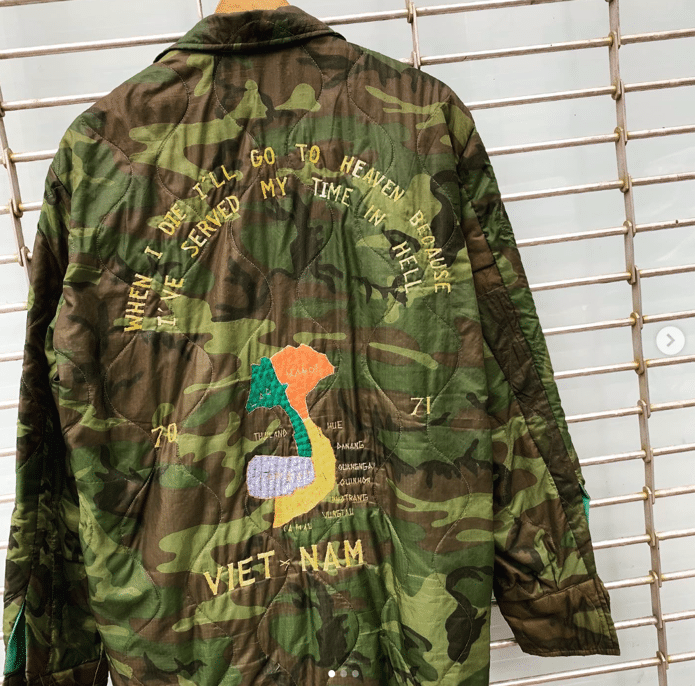
The storytelling is more politically charged, with a lot of references to the military, like the one time that Jang-su climbs to the top of a clock tower while barefoot. Jang-su staged the protest just before the military called him to active duty. The government sentenced him to three years in prison because he wanted to protest Korea’s political situation.This is a far cry from the more romance-based immigration stories of Lahiri. The evidence is right there in the details, as you can see in the picture above. I found the jacket with the gold embroidery that was written about in one of the stories with some digging.
Rich military details such as those are not amiss in the book. This book may appeal to military families and history buffs who are eager to read about this Korean politics. A drawback is although the book came out in 2025, translators have translated only one of Lee Chang-Dong’s other works into English: his biography. The title of which is his name.

Dynamics of the Characters
In this collection, the kinds of relationships and their dynamics are just as diverse as those in the Jhumpa Lahiri collection. Each story brings on a different relationship than the one before it. In “Fire and Dust,” it was a story between friends. In “The Leper,” a father and a son. There is also a pair of brothers, Muni and Junshik, in the story “There’s a lot of Shit in Nokcheon.”
Each pairing of people seems equally disgruntled and estranged as the characters in Jhumpa Lahiri’s collection, but I have to say the author includes fewer tender moments. I suppose that is natural in a book of this type that tries to convey the tension of the times. Each set of characters seems like they are more equipped to have a standoff with their fellows, rather than try to mend fences. This is the opposite in Lahiri’s collection.
You could say that the book is connected by its tension from story to story. How all the political upheaval from the 1980’s, caused a lot of grief and turmoil for a lot of families.
The other casualty of war in “The Leper”
After the 1980s, governments and political opponents often disgraced leftists. Authorities also accused many people of involvement in espionage rings or placed them under investigation. Even when individuals had no involvement in such activities, the government could still imprison them for about three and a half years simply for being communists during this period.
This is the case in the story “The Leper.” Kim Youngjin is the son of a man who was a leftist and went to prison 30 years ago, and is now a 70-year-old man. Authorities accused Kim Youngjin’s father of espionage because they believed he was a member of the Old South Korean Labor Party.
The thing is, everyone, even the other accused, for whom there is solid evidence they were a part of the spy ring, says Youngjin’s father is innocent. But his father confesses to the crime anyway, even though there is essentially no evidence that he did. Whether or not he actually did it. The stress this puts on his family and is indicative of the stress that a lot of families during this time. I believe he did it because that time of his youth was one of the few times that his life felt driven by a purpose and he had been living an unfulfilled life alone, and wanted to reconnect with that feeling.
Digging into an author
If you are like me, and when you discover a new author and pray when you look them up that they have a ton of literary work for you to devour, then Lee Chong-Dong is not that author. To my knowledge, there is only his biography which uses his name as the title besides this work.
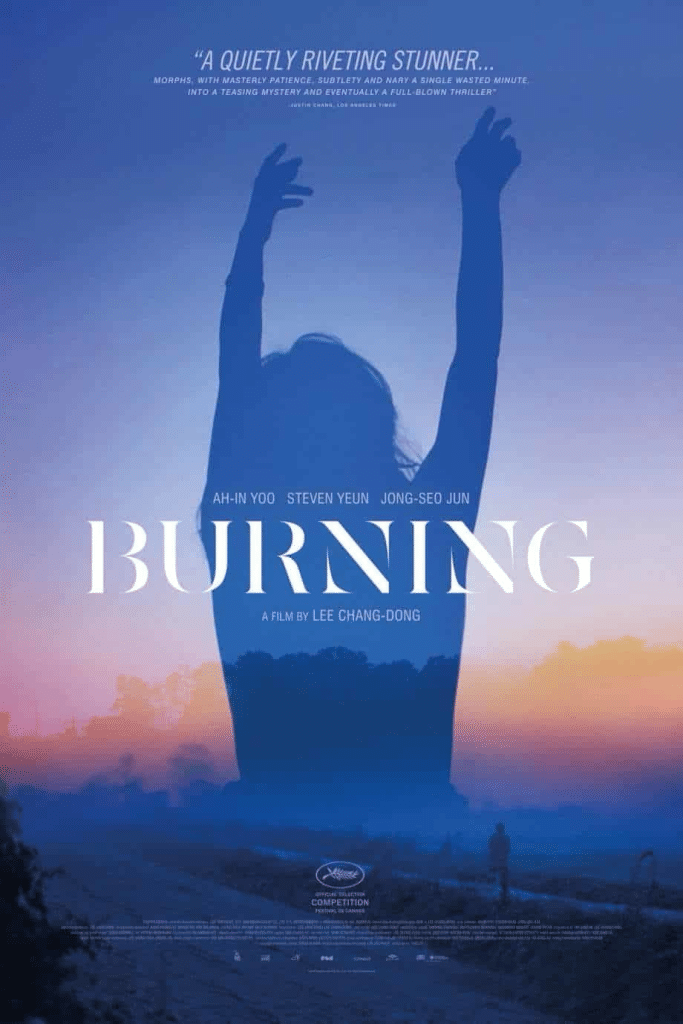
His career has largely been in film as a director of films like Burning. This film is based on a story by Haruki Marukami. The Academy Awards committee shortlisted Burning for the Best Foreign Language Film category at the 2019 Oscars, marking it as the first Korean film to do so.
His other works in film are mostly older Korean movies. These are from the 90’s and early 2000’s, but no less notable in their performance. If you like films like me and wouldn’t mind a foreign film, then I would read this book. Then go check out more of his work, but in cinematography.
My favorite Story in the collection
My favorite story in the collection was “The Lantern in the Sky.” Police suspect Xinhui, a young girl who works at a nearby café, of being an agitator and leading protests.Xinhu didn’t do that because of political reasons; she was trying to get the student body of her university to speak up against the current dean and the way that the dean ran school.
The police arrest Xinhu despite this and hold her there while the policemen try to force her to admit to a lot more than just that. They tell her to give up any of the people who might have helped her. She, of course, not having done those things, tries to convince them that she is innocent, but to no avail.
I enjoyed this one the most because it gets into the most detail of what could happen to any korean at this time, but especially the young. It shows how wrong, the sense of what was normal back then, really was. The story was a rather long piece, because of this, but I found it to be the most eye-opening of the collection of stories.

Well, we have reached the end of the line with this content series for young readers. I enjoyed this discussion. I hope you enjoyed the books we covered just as much. Now you can go find a new book worth reading soon. Do not be afraid to broaden your horizons; after all, it is a part of life, and we here at Trill are ready to help you with that. Here are some LGBTQ+ books that we, here at Trill, think are worth your time this Pride month
We are always here for you, young readers, to turn to for the latest updates and interesting happenings. So our readers can actively get involved with everything around them from that point forward. Don’t be afraid to take the initiative; sometimes the initiative is just picking an article and reading it.