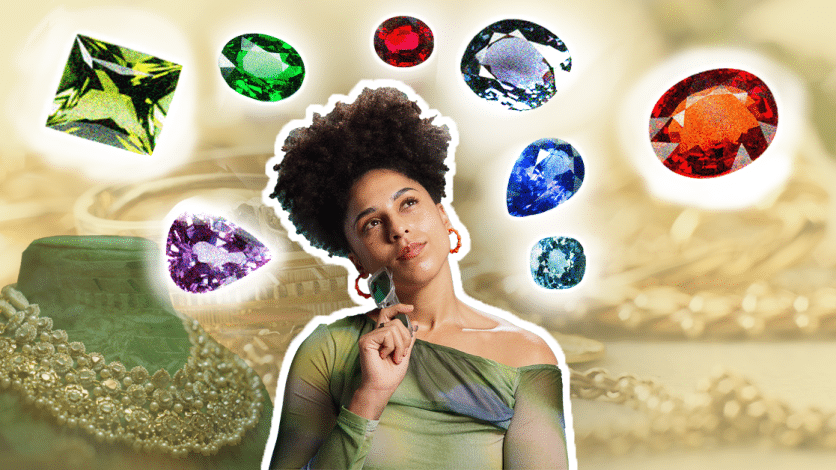
Is your outfit missing something? Perhaps a touch of sparkle?
Accessorising with jewelry doesn’t have to be intimidating or even boring. Jewelry can pull an outfit together; it can be a way to experiment with colours, textures, and designs. It can be an opportunity to be creative and have fun. All you need is a little guidance on where to begin.
Finding high-quality jewelry
A good jewelry collection should last your entire lifetime – they should be your forever pieces. Learning how to spot high-quality pieces can be really helpful if you’re looking vintage or antique.
One major identification is weight. High-quality jewelry is often heavier; of course, this depends on the type (i.e., fine pieces), but larger pieces such as chains and earrings should have weight.
Also check for a consistent finish with no lumps, bumps, or ridges. Pieces with a smooth, balanced shine not only look more aesthetically pleasing but can also suggest greater durability.
Earrings can be a little bit more difficult. Unfortunately, piercing allergies are very common, especially with titanium. High-quality earrings (as good as you can afford, of course) are recommended for a very sensitive part of your body.
Remember, if you’re getting a rash or feeling itchy from any jewellery, take it off, identify the material, and avoid it. Fashion shouldn’t be painful.
Finding your fit
It gets pretty stressful trying each and every ring in the store on all ten fingers – just because you don’t know your ring size. Save your time and do your research beforehand. Take a piece of string and wrap it around the finger you want the ring to sit on. And don’t be fooled into thinking every finger is the same size. Consider what feels comfortable and what you like the look of. Cut the string so both ends meet; make sure it’s not too snug or loose, or you’ll risk losing your ring or wearing it forever (well, not exactly, but it’s no fun trying to pull a metal band off your finger every day). Measure the string against a ruler or tape measure. Then, you have the circumference of your ideal ring. Use an online chart to find your size. UK ring sizes are categorised by letters and American/European sizes by numbers, so it may be useful to know both depending on the seller and store you’re using.

The same method can be applied to bracelets-, measure just below the wrist bone and alter the size depending on the piece and how you’d like it to fit. For example, you may prefer a chain to be a little bit tighter, while allowing a bangle room to move.
Whatever the style, knowing how your bracelets should fit is vital to avoid losing a precious accessory or leaving red imprints on your wrist.
Cool or warm? Matching metal to your skin tone
With a range of metals such as rose gold, platinum, yellow gold and silver, finding what works against your skin tone can leave you in a bit of a flurry. But once you find the right colour, suddenly your jewellery will pop, and your whole style will feel more cohesive.
People with warm skin tones have veins that appear greenish and tan easily without burning. People with cool skin tones, however, have blue/purple veins and burn easily.
Although matching metals to skin tone can help you find the ideal pieces, it’s always important to focus on what you think looks good on you. You’re the one wearing it after all; make sure you like how it looks.
Jewelry and closet chemistry
Your whole look from your head to toe should tell a story and represent your true identity, which is why it can be beneficial to ensure your jewelry matches the rest of your outfit.
The most common (and easiest) way is to match jewellery to the hardware on your other accessories, such as buckles on shoes, bags, and clasps on belts. These little things can really help bring your whole look together.
Yellow gold pairs well with warm tones (such as brown, olive, and rust), neutrals like ivory and cream, and autumnal shades of red and orange.
While gold and platinum (on the other hand) often look best with blacks, grays, navys, and jewel tones like blue, emerald, and purple. Rose gold can be styled with warm colours such as pinks, blush, and beige.
Now, what’s the point in wearing a necklace if you can’t see it? Pairing the best necklace with the right neckline can help highlight your jewelry. Scoop neck tops create a round base ideal for shorter pendant necklaces. With V-necks and strapless tops, however, there’s a little bit more room to play, so longer drop necklaces, or possibly a lariat, can be ideal. A chunkier necklace such as a chain or layering of similar sizes can help compete against higher collars such as crew necks. Angular pendants and structured necklaces can complement a square neckline.
Stacked and layered
When it comes to layering jewellery, it is all about experimenting with your favourite pieces, but if you’re struggling to decide – here’s an easy guide.
When layering multiple necklaces, opt for various lengths so each piece is visible. This will also create a smooth, purposeful look. Maintaining a common thread between pieces (such as tone or color) can help create a cohesive look. However, it is highly recommended to experiment with design, combining gemstones, pendants, charms, weights, and styles.
For example, begin with a statement piece such as a thick chain, adding a longer dainty piece with a charm.
Ring stacking has no rules. It’s all about experimenting with different tones, sizes, and designs. To create balance, try avoiding wearing an inappropriate amount of rings on one hand, and pairing too many similar rings together. Spread them out, create a pattern on your fingers. One with a jewel, a dainty piece, a signet, another jewel.
If you have a wrist, may as well pile bracelets up on it! You can mix and match bracelets and bangles in a colourful, jingling stack. When starting out, it can be easier to focus on one staple piece – perhaps it’s your favourite, or the most colourful. Then just build around it, and have fun. Maybe you want to create a cohesive look of silver bangles, some plain, some thin, others chunky, or embellished with diamonds. Or, you might prefer to mix metals, designs and textures; enamel with diamonds, and chains.
Glossary and key terms
Did anyone else know what a lariat was? Nope? Me neither. Knowing the correct terms for jewelry can make it much easier to find the right pieces – especially if you’re shopping online or looking for inspo.
A lariat is a necklace with a long chain hanging directly down the middle, often with a pendant or beads. Any Tumblr fan will know a choker is a smaller (or “tighter”) necklace.
Tennis bracelets and necklaces aren’t visually related to the sport but are actually made of a row of small diamonds or gemstones.
Enamel jewelry is made from molten glass, often designed to create patterns or designs such as flowers – this is a great choice for anyone who likes vibrancy.
A signet ring has a large flat face, often engraved or molded to represent… well, anything “significant”: initials, monogram, or crest. If you want something loud, a great statement piece would be a cocktail ring. Large and lavish, they’re considered a maximalist piece with colourful stones or an ornate design.
Knowing all the terms and definitions for specific pieces can make it far easier to find your ideal pieces – especially if you’re shopping online. It may even be an opportunity to learn about something new that you instantly love.
Jewelry is not just a way to spruce up an outfit; it’s a way to be fun and creative. Experiment with colours, designs, and textures – pile on necklaces and stack bracelets and rings. Create a look that is totally and utterly you.