

Vigilance, Punishment, and Obedience. More than a decade after the disappearance of the 43 Ayotzinapa College students, many questions remain unanswered. The purchase of Pegasus spyware, allegations of torture, corruption, and the suspicious actions of former Mexican official Tomás Zerón exposed the vulnerability of public institutions and pushed the truth further outside the machinery of state power.
September 26, 2014
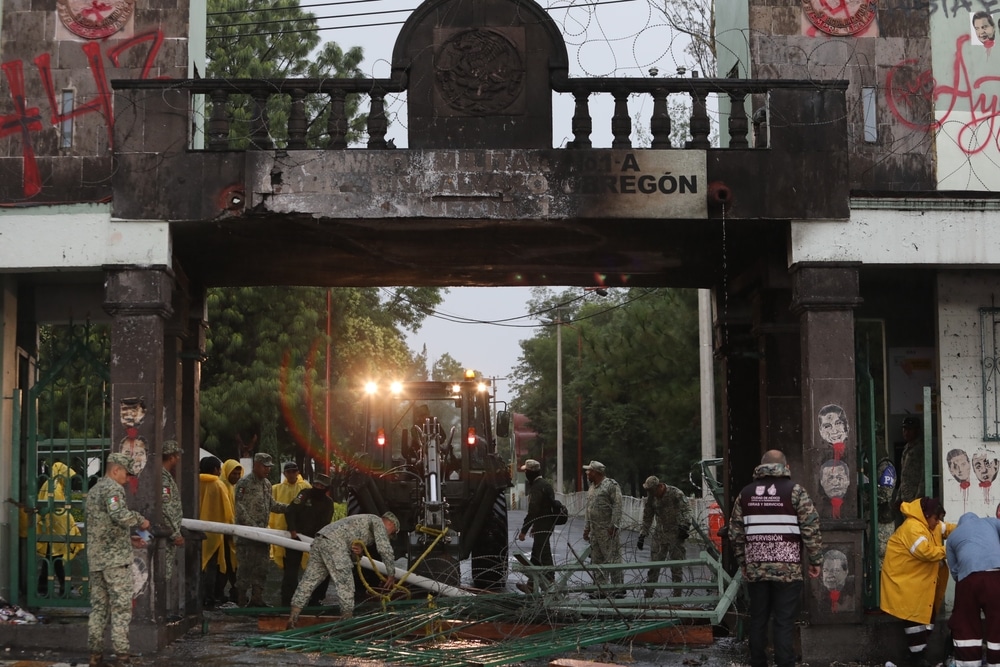
On September 26, 2014, students from the Raúl Isidro Burgos Rural Teachers’ College of Ayotzinapa traveled to Iguala, Guerrero, to secure buses for a trip to Mexico City, where they planned to commemorate the 1968 Tlatelolco Massacre.
Instead of honoring the victims of a past state crime, many would become victims of another tragedy. According to survivor testimonies, local police intercepted the students and opened fire on several buses.
Survivors also described unmarked pickup trucks carrying masked men armed with long firearms and additional gunfire near the Palace of Justice. By the end of the night, the attack had killed six people, injured dozens more, and left forty-three students missing.
The testimonies tell a story very different from the one many people first heard. Students recalled running through the streets of Iguala looking for safety, carrying wounded classmates, and begging for ambulances.
Some survivors claim that Cristina Hospital turned away injured students and forced them to search for help elsewhere. For many of them, the feeling of abandonment began while the attacks were still unfolding.
The violence did not end with the disappearance of the forty-three. A gunman shot Aldo Gutiérrez Solano in the head, leaving him in a vegetative state more than a decade later. Although government assistance exists, his family continues to carry much of the financial and emotional burden of his care.
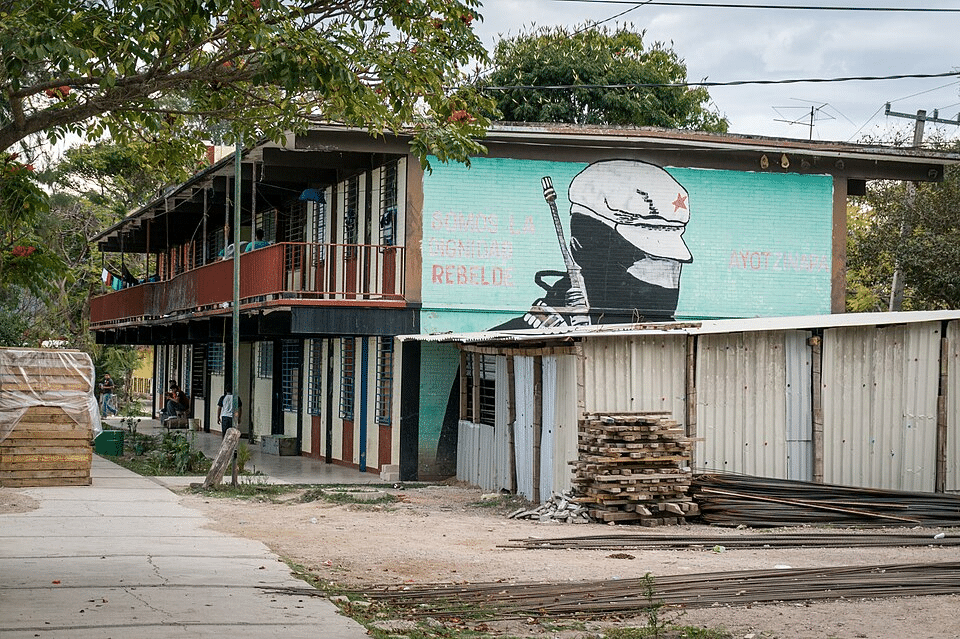
Julio César Mondragón was found dead the following morning. The image of Mondragón, found without his face, became one of the most horrific symbols of the case and a reminder of the brutality of that night.

Media coverage often described the events as a “confrontation.” Yet a confrontation suggests two sides fighting each other. Survivor testimonies describe something different: one group trying to survive while another pursued them through the streets of Iguala.
As public outrage grew, the government presented what became known as the “historical truth.” Years later, that version would be challenged by independent investigators, human rights organizations, and forensic experts.
At the center of this controversy stood Tomás Zerón, a man whose name would become closely associated with allegations of torture, manipulated evidence, and, eventually, the Pegasus spyware scandal.
The Corruption
The horrific events of Iguala exposed a deeper layer of corruption. They brought attention to the local police structure, especially former mayor José Luis Abarca and his wife, María de los Ángeles Pineda Villa, whose family members had ties to the criminal organization Guerreros Unidos.
Earlier cases, like the murder of social activist Arturo Hernández Cardona, who had accused Abarca of corruption before his death, also raised concerns.
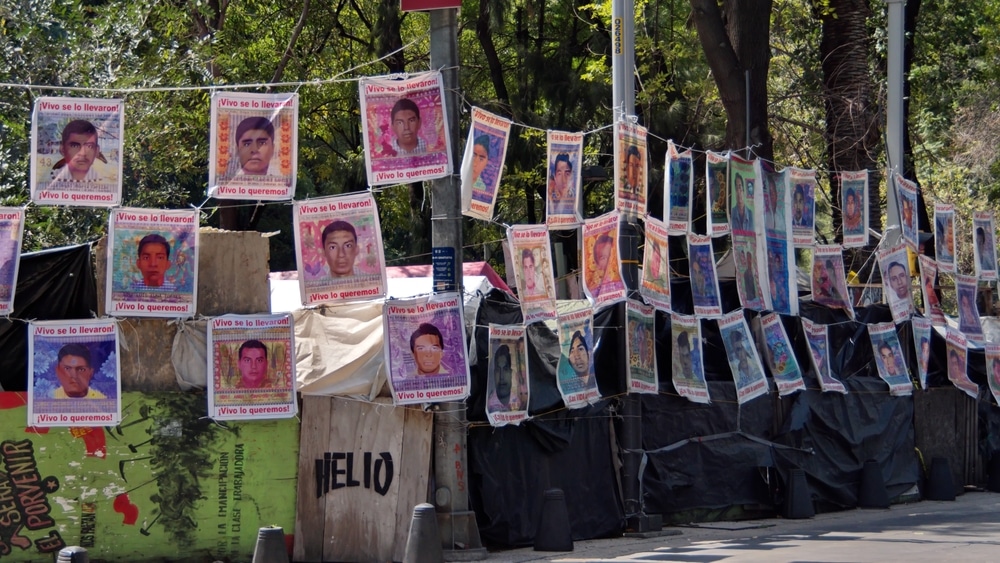
After the execution and disappearance of the 43 Ayotzinapa students, 22 municipal police officers were placed under arrest by authorities. Testimonies attributed to the leader of Guerreros Unidos suggested coordination between local police and the criminal organization.
As public pressure continued to grow, so did the demand for answers. The disappearance of the 43 students became an international story.
According to the Los Angeles Times, since the disappearance of the 43 students, authorities had found 104 bodies and 60 clandestine graves, and only seven had been identified by their families.
This led to the question: why were there so many bodies and clandestine graves?
The Historical Truth
On January 27, 2015, Attorney General Jesús Murillo Karam presented “the historical truth”. According to this version, corrupt officials handed the students over to members of the criminal organization Guerreros Unidos, who murdered them, burned their bodies at Cocula’s garbage dump, and then threw their remains into the San Juan River. This is the official government version of what happened the night of September 26, 2014.
However, the GIEI, a group of independent expert investigators who represented the families in the Ayotzinapa case, had an agreement with the Mexican State to search for the truth of what happened on the night of the mass disappearance.
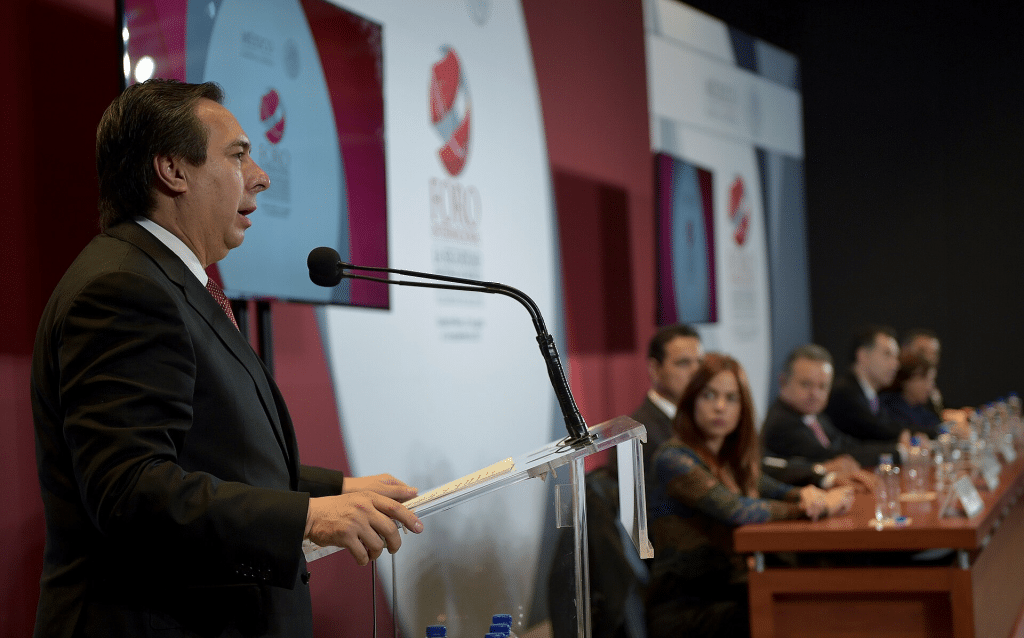
Alejandro Valencia and Francisco Cox, both human rights lawyers, Ángela Buitrago, a former Colombian prosecutor and human rights investigator, Claudia Paz, the former Attorney General of Guatemala, and other experts made up the group.
The GIEI challenged that version because of the actions of Tomás Zerón. Journalist Pepe Jiménez filmed Tomás Zerón carrying out irregular activities with the detainee “El Chereje” one day before the government presented the “historical truth.”
In the video, “El Chereje” is not accompanied by his lawyer. Video footage shows Tomás Zerón alongside his bodyguard, who carried an Israeli rifle. The Procuraduría General de la República (PGR) never registered this diligence, making the procedure irregular and potentially illegal.
Tomás Zerón claimed that Gualberto Ramírez, head of the Specialized Deputy Attorney General’s Office for Organized Crime Investigation (SEIDO), would arrive later with the documents and ‘El Chereje’s’ lawyer.
Despite the lack of registration and the absence of legal counsel, Tomás Zerón proceeded with the unregistered procedure. This raised serious questions about the responsibility and professionalism displayed by the Head of the Criminal Investigation Agency while conducting one of the most important investigations in modern Mexican history.
Tomás Zerón also denied the GIEI immediate access to the crime scene the following day when authorities presented the bag containing bone fragments later identified as belonging to student Alexander Mora Venancio. Zerón claimed that the GIEI only waited ten minutes before being allowed access; they were not present when they picked up the remains.
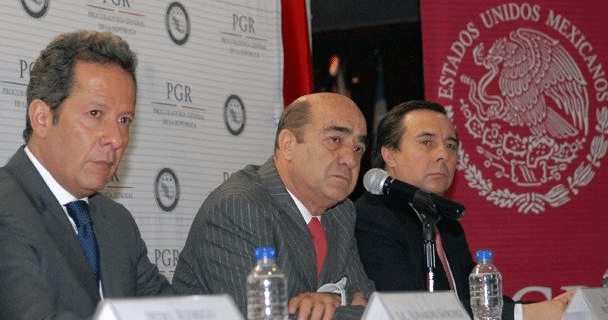
However, a lot can happen in ten minutes at a crime scene. For critics, this reflected further negligence by the Head of the Criminal Investigation Agency, treating the incident as if it were insignificant while diminishing both the concerns of the victims’ families and the work of the GIEI.
In 2023, authorities arrested Gualberto Ramírez, the head of the Specialized Deputy Attorney General’s Office for Organized Crime Investigation (SEIDO), on charges of torture and forced disappearance related to the forty-three Ayotzinapa students; however, investigators continue to examine the case.
Despite facing serious accusations of torture, evidence tampering, and other irregularities, Zerón remained in Mexico when authorities reopened the Ayotzinapa case in 2018. In 2019, he decided to leave Mexico and seek political asylum in Israel.
In 2020, the Fiscalía General de la República issued an arrest warrant for him and formally requested his extradition. However, the process has remained a legal dispute.
Ironically, he chose Israel, a country that does not have a fully binding extradition treaty with Mexico, making the legal process more complicated and dependent on diplomatic decisions.
It was also the same country later linked to Pegasus spyware, a surveillance technology associated with monitoring journalists, activists, and individuals connected to the Ayotzinapa case.
Pegasus
Pegasus spyware, developed by NSO Group, an Israeli private company, is a surveillance tool capable of turning mobile phones into remote intelligence devices, allowing full access to messages, microphones, cameras, and files without the user’s knowledge.
The Pegasus Project revealed that Mexico was one of the most intensive users of the spyware, targeting journalists, activists, and human rights defenders. The state narrative claimed it was a tool bought to spy on criminal organizations, but the data suggests otherwise.
According to The New York Times, Israelis came to Mexico in 2011 and became the first clients to buy their product. A Mexican general oversaw the negotiations. Two individuals were present in the conversations, and a third knew how the negotiations went. The identity of the individuals is unknown.
They went to a strip club in the heart of Mexico City in March 2011, with dancing women and shots of tequila, where they handled the purchase of one of the most feared espionage weapons in the world.
Generational Rage
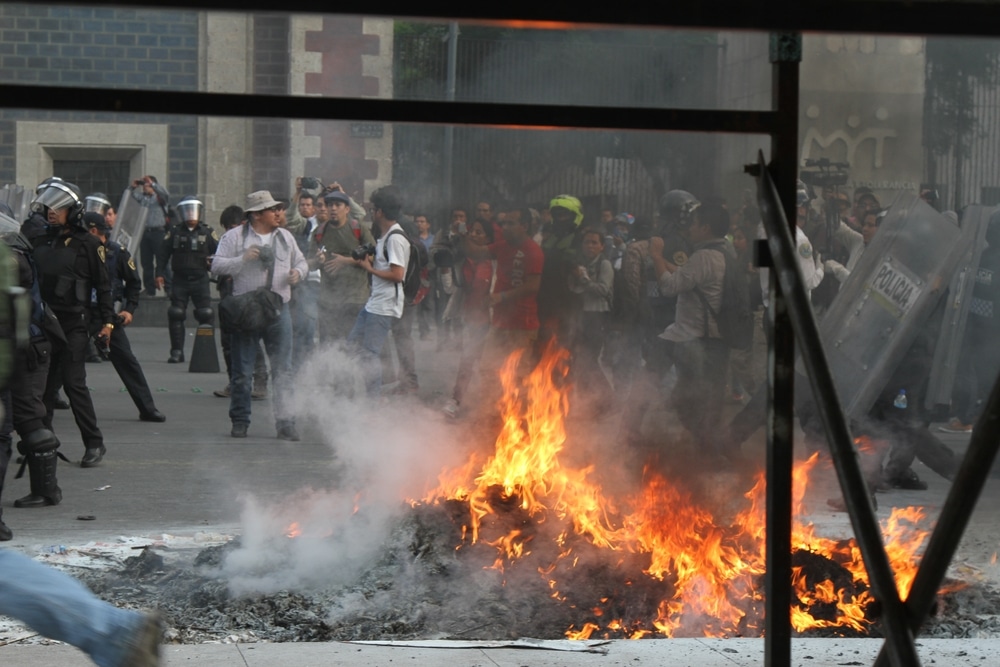
Traveling students from forgotten rural areas protesting the 1968 Tlatelolco Massacre became new victims of mass state violence and mass state disappearances, an unforgivable state crime.
As a student, I was educated by Hobbes’ idea of humans being naturally evil by nature, but as I grew up, the question changed: who is stopping governments from being evil? A question we need to ask more often.
Bureaucrats protect social class and power for their own benefit. They did not stop using Pegasus until 2022. A country widely known in the international community for the continuous targeting of journalists.
Three different political parties: one bought it, one used it, and the other said they would stop using it, yet they continued using it.
They use the media to create an idea, a justification of their actions, a quiet surveillance of what we think, or to oppose it. Finally, we obey them through their punishment and vigilance, a torn social contract.
What remains is not truth, but students murdered in its name, and a society taught to accept it.