

A Life Reclaimed
“For my own good – I will keep to the end, Never from Him to go free”
— Hymns old and new, 1987
The Truth, Two by Two, The Way, all titles ascribed to ‘The Church With No Name’. As of 2024, the FBI have been investigating the home-based, fundamentalist Church under the grounds of suspected child sexual abuse, alongside other contemptible criminal activities.
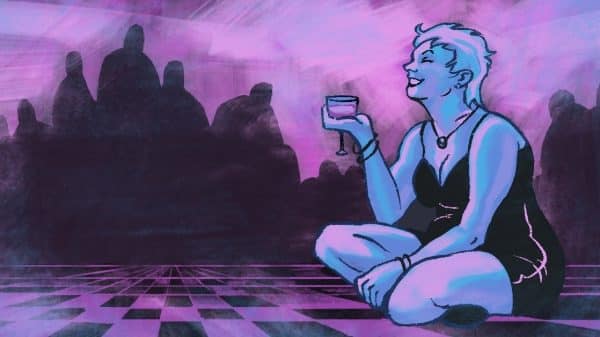
Recently, I spoke with a former member of this underground movement. Sharing a remarkable story of self-discovery, Selene described her journey to freedom and independence. As a transgender woman, she was subject to emotional abuse from both ‘Friends’ and family, forcing her to suppress her identity under fear of social ostracism.
Now safe and free to express herself, Selene has been rebuilding a life free of judgment, “learning how to be an adult, nurturing my inner child, reforming my identity, and learning what it is to be me for the first time — ever.”
The Church With No Name
Discouraged from reading or transcribing theological writing, The Two By Two centres on a ‘living witness’ doctrine, one where oral storytelling remains the sole path to ‘salvation’. As a result, information surrounding this cult is exceedingly rare. In opening up to me, Selene hopes that her experience will help to shine a new light on the sect and its wrongdoings, specifically towards queer individuals.
Origins of the Movement
Members believe that the inception of the Two by Two movement is a direct continuation of Mark 6:7, where Jesus called on his twelve disciples and “began to send them forth by two and two”.
In reality, evidence points to a much shorter timeline, beginning with Scottish evangelist William Irvine between 1897 and 1903.
In The Secret Sect, historian Doug Parker writes that Irvine (a lay evangelist of the Faith Mission) formed his ‘mission’ in Ireland after reading Matthew Chapter 10. A verse that upheld the unpaid, itinerant minister as the only labourer “worthy of his meat,” William interpreted this passage as a revelation, prompting him to reject the financial structures of the church and establish a movement rooted in asceticism.
According to Britannica, “hardly any religion has been without at least traces or some features of asceticism.” Rooted in the belief that God alone provides, followers of ascetic doctrine renounce worldly possessions and earthly temptations, trusting that faith itself will sustain them.

In the early 1900s, Ireland, this message found fertile ground. According to University College Cork’s Atlas of the Irish Revolution, rapid urbanisation and an influx of migrants contributed to unemployment rates of around 20 percent. Against this backdrop of instability, Irvine’s promise of work, purpose, and security proved deeply appealing to young converts eager to “prove God’s care and provision for us.”
After recruitment, preachers travelled extensively, publicly proclaiming their mission and spreading their beliefs across communities and countries alike. As the movement expanded internationally, it rapidly evolved into the sect recognised today, reportedly amassing between one and four million members worldwide, according to a 1980s report by The Sydney Herald.
The Workers and the “Perfect Environment for Abuse”
The modern Two By Twos remain virtually identical in structure to Irvine’s original arrangement.
Missionaries, known as ‘Workers’, travel the world evangelising in same-sex pairs. They rely entirely on the charity of ‘Friends’ or ‘Laypeople’ (church members), who provide them with accommodation and financial support.
Reflecting on this unusual living arrangement, Selene described the presence of these ‘boarders’ as creating the “perfect environment for abuse.” Workers would often stay in her home for three to seven days at a time, during which there was “a consistent expectation that we would entertain them.” As a result, she said, “I always felt like the house wasn’t ours.”
Allegations and Investigations
NewstalkZB reported that the overseer of the New Zealand branch, Wayne Dean, recently resigned from his role, citing the “constant pressure” surrounding the FBI investigation. Despite denying any involvement, Wayne maintained that the church had “put in place safeguards to protect children,” even as evidence suggested otherwise.
Selene told me these so-called child protection measures were only “implemented a year after the FBI probe was made public.” While conventions eventually introduced child safety plans, she says there was “no way to verify that police-enforced safety training was actually completed.”
Although Selene did not personally experience abuse at the hands of the Workers, she recalls knowing the daughter of a fellow congregant who was allegedly a subject of child sexual abuse by one of them. While she does not know the full details, she believes the abuse occurred “five to seven years ago.”
Selene’s own childhood within the fellowship was haunted by physical punishment. She remembers being taken into a back room and “smacked for being too noisy,” describing spanking and pinching as routine forms of discipline. According to Selene, members of the fellowship “treated the hidings as if they were commonplace.”
Worship Behind Closed Doors
Irvine taught that the physical setting of a church was inherently corrupt, a belief that continues to shape Two by Two practice today. As a result, most sermons are held in private homes. Larger gatherings such as conventions are staged in hired community halls or similar venues, often under false pretences.
Selene recalls attending multiple meetings each week. Sunday mornings, she describes, would “function as a weird, unmoderated religious group therapy session” led by a male ‘elder’. According to Tellingthetruth.info, this “Sunday ‘fellowship’” typically includes hymns from the 1987 edition of Hymns Old and New, followed by prayer, personal testimonies, and communion in the form of bread and wine.
By Sunday afternoons, members reconvene “in town halls for more of a version of church that people typically think of,” while Wednesdays involve a similar structure but with a more directed focus, often on a preset theme such as purity.
Occasionally, these meetings extend into regional ‘conventions’, where different areas of the movement gather at campgrounds to hear sermons from the Workers. These events typically run over four days, with attendees camping on-site or staying in nearby hotels.
Confession, Shame, and Control
Testimonies for Selene were intensely invasive, with elders coercing followers into revealing deeply personal information as a means of “cleansing” them of “sins.” “In some ways, this was voluntary,” she explains, “but the expectation to bring heavy and deep stuff to the sessions makes it coerced.”
In one meeting, Selene recalls feeling obligated to publicly admit to cross-dressing, alongside other intimate details. “I was still in huge amounts of self-denial back then, disowning my desire to dress femininely before that group. Some of them even told me afterwards that they were proud of me for doing that — I wasn’t.”
She describes the psychological toll as persistent and destabilising. “Overcoming the fear of eternal damnation was one of the hardest battles,” she says. “It became a constant conflict between the rational part of me — the part that knew everyone has the right to love who they love, so long as it’s consensual — and the religious doctrine that contradicted this. It was deep cognitive dissonance.”
Cognitive dissonance

Selene’s emerging gender identity was subjected to intense scrutiny within her family, where expressions of femininity were routinely punished. “Growing up, I wore my mother’s heels behind her back. Over time, my feet grew, and I accidentally broke a pair. When she discovered the broken heels, I was made to wear her dresses. As I did so, she laughed, openly shaming me.”
Even in therapy, Selene found little reprieve from the religious framework she had been living in. At her mother’s request, discussions around gender and sexuality were off-limits. Selene recalls that her psychologist, who identified as Christian, initially adhered to these restrictions before later introducing religious perspectives into their sessions.
Her mother also intruded on nearly every aspect of her private life, including reading Selene’s journal in an attempt to use her “brain dumps” for a book about surviving “rapid onset gender dysphoria” and escaping “gender ideology”. Over time, this escalating control reached a breaking point.
The Boiling Point
The situation came to a head after Selene’s parents overheard her confiding in a friend over the phone. What followed was a family “intervention,” during which Selene “completely shut down”. It was only when her friend, who remained on the call throughout, urged her to leave that she realised how unsafe her living situation had become.
Packing whatever belongings she could fit into her car, Selene fled to her friend’s house, where she stayed until she was able to regain some stability. In the midst of this broader process of transition, she recalls that “the first few weeks were the hardest.” She struggled with sleep and was haunted by persistent flashbacks to hymns sung within the cult, particularly those centred on submission and “being a willing slave.”
Learning How to Live
Over time, however, things began to improve.
With the support of her university’s LGBTQ+ organisation, Selene secured accommodation and employment and began the gradual process of gender exploration. Surrounded by what she describes as her “found family,” she slowly began to build a sense of self-acceptance: “To look in the mirror and see the woman I’ve always wanted to be, rather than the illusion that others were forcing me to hold.”
For those still trapped

Selene is beginning to imagine a future beyond the religious abuse, but many queer young people remain trapped within it. For LGBTQ+ individuals experiencing religious abuse, support services and crisis hotlines can provide confidential help.
I encourage anyone with information relating to abuse within the Two by Two movement to contact law enforcement, including the FBI, or advocacy groups such as Advocates for Truth.