Everything was perfect and beautiful in the world of Academia, as the people of this land went about their daily tasks—working to live life and grow in the knowledge and abilities of their chosen fields. While not all of their roles were the same, each was valued and necessary to keep the world running. They lived separately, gathering in lands with others who pursued the same goals.
Everything seemed to be going well as the houses lived in their separate clusters across a beautiful campus. The house of Biology dissected, grew, and experimented with life on one side, the house of Engineering studied lasers, mechanics, and math on another, and so many others—Nursing, Sociology, Theater, Business, Computer Science, Psychology, Chemistry—thrived in their own spaces.
There were a few who lived with a foot in multiple worlds, known as the “double-talented,” or Dual Adepts. These moved between disciplines, fitting into both—but never quite perfectly. They paid the price of never fully committing to one path, but were gifted with a broader range of abilities.
Many took lessons in other disciplines, adding to their main skill set without ever fully mastering it. These were said to “minor” in another field—never as skilled as those who devoted themselves fully, but talented nonetheless.
But this ideal world was not meant to last.
The Plague (told by the Healer)
The Healer, a young Nursing adept, was practicing with a dummy when a horrible sound cut through the air—a screech, like something grinding.
She looked up.
An enormous cloud had formed in the clear sky, twisting into an unnatural shape. Beneath it stood several members of her house.

She recognized one immediately: a top student, one of the strongest healers they had.
Then the cloud collapsed.
It dropped in an instant—and vanished in a flash—leaving them sprawled across the lawn.
The Healer ran.
She dropped to her knees beside the girl and tried to heal her.
Burned eyebrows. Soot-streaked skin. Fast pulse.
Burned… but how?
The girl coughed, then sat up as if nothing had happened.
“Are you okay?” the Healer asked.
“I’m fine,” the girl said, standing. The others did the same.
“Back to work,” one of them muttered.
“But I’ll never be good enough,” the girl said suddenly. “There’s no point.”
The Healer froze. “But you’re at the top of—”
“No point,” she repeated.
“You’re right,” one of the boys said.
And just like that, they turned and walked away.
Something fluttered to the ground as they left.
An application form.
Fully filled out.
The Healer picked it up, confusion tightening her chest.
Why would someone throw this away?
Something was wrong.
The realization (told by the Seer)
The Seer, a talented dual adept belonging to the houses of Psychology and Sociology, sat quietly on her bed, her long hair falling around her face. She looked at peace.
She wasn’t.
Her mind was elsewhere.
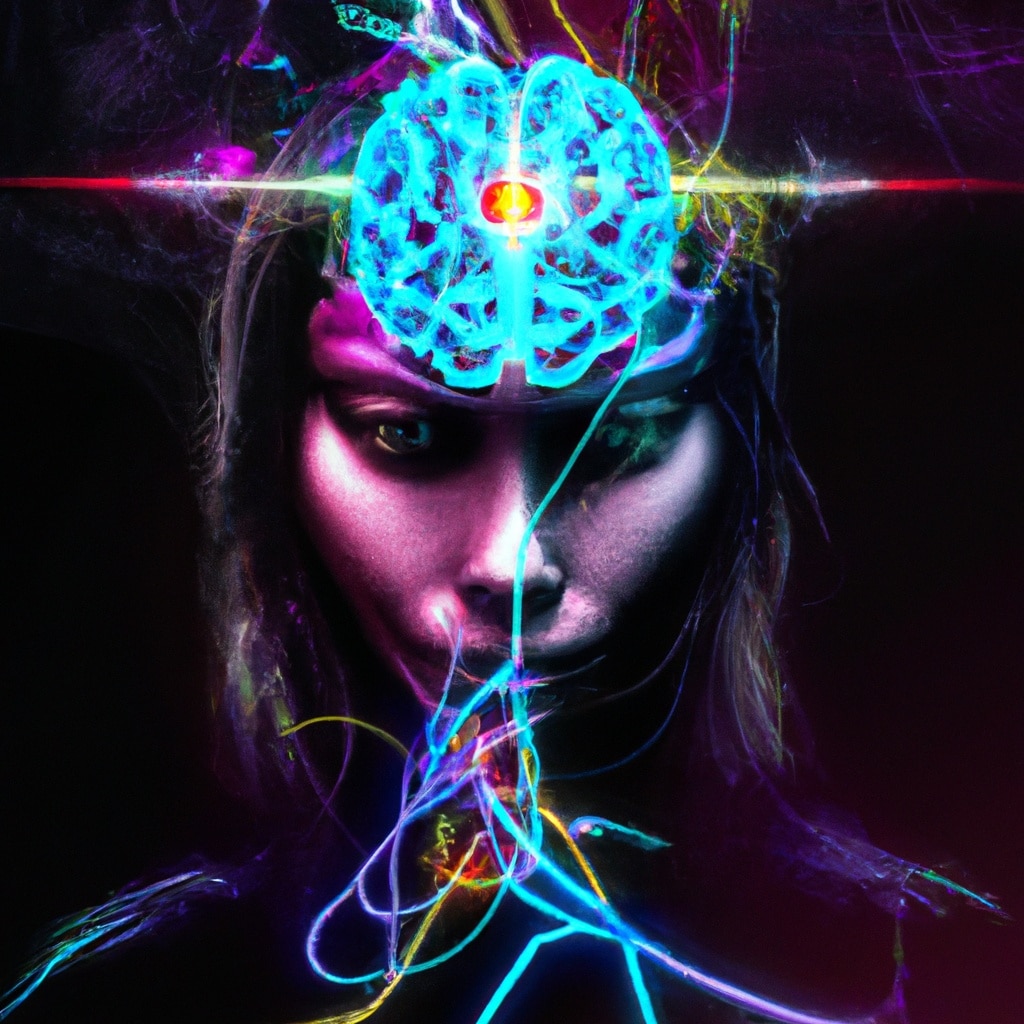
She saw the cloud stretching across the land, reaching over castles and houses alike. She saw confusion—adepts dropping their tools, abandoning their work, retreating into rooms, into woods, into anywhere they could disappear.
“Retreat,” she whispered. “Retreat… What makes people retreat?”
Was it trauma? But why all at once? Large-scale PTSD? Fear of interaction?
She remembered a conversation.
“There’s just no point in it,” a girl had said. “I’ve been working for weeks—months—years—to be good enough, but it hasn’t worked. I keep failing. It feels like I’m moving backward. There’s no reason to continue.”
The Seer frowned.
This wasn’t fear.
It was something else.
Something deeper.
Too consistent. Too widespread.
Her eyes opened.
This cloud didn’t just affect behavior.
It affected motivation.
Identity.
Her breath caught.
“Burnout,” she whispered.
Her fingers curled slightly.
“It’s come for us.”
The group forms (Wizard)
A group formed—each from a different house. Not all of them; that would be chaotic, inefficient.
The Wizard disliked inefficiency.
But this group was necessary.
He studied them through his seeing glass, lines of code flickering across the surface of the glass, giving him the information in real time. He was so glad he had been given this tablet as a gift; his Computer Science abilities hadn’t worked as well without it.
Seer—knows people and situations.
Healer—preserves life.
Artificer—builds from fragments. Caiden liked him. Logical.
Alchemist—dangerous potential, though she’d never use it that way.
Bard.
Dancing, singing, performing. A girl from the house of Theater. Beautiful and added a nice spin to life, but as for her spot on this mission?
The Wizard frowned slightly, and then typed into his research glass.
“Bard- Unclear utility.”
“Your thoughts are loud,” the Seer said from behind him.
He ignored her and returned to his analysis.
The Cloud.
No structure, pattern, or logic.
Why?
He scanned again.
Then froze.
This wasn’t a system failure.
It was a system infection.
And like corrupted code…
It spread through people.
“Exactly,” The Seer said. “It’s spreading, and I can feel it interfering with my connections.”
The Wizard adjusted his glass. “It’s concentrated,” he said.
“Where?” The Bard asked, sticking her nose into the conversation.
“The City of Heroes.” The Seer replied.
The Beautiful City (Bard)
The City of Heroes.
Immaculatus—the place for the most gifted—was where all the hardest workers and brightest minds were sent.
AND WE WERE HEADED TO SAVE THE WORLD!
That’s how the Bard would retell it later—dramatic, musical, perfect. It had to be perfect, or else she would face the judgment of those around her. Maybe this could be her final performance in front of all the great actors of the house of Theater! She sighed, feeling the pressure growing. Her performances could shape her future. Her future was up in the air!
But right now, in the present, she tripped.
The Artificer caught her without looking.
Then set her back down and kept walking.
The Bard stared after him.
Not even a heroic line? These heroes were nothing as she had been told. How was she supposed to tell amazing stories about them?
The group moved through the forest—less like a grand quest, more like a strange gathering between disciplines.
Still… they were heading to the City of Heroes.
Immaculatus.
Then a whisper behind her:
“Stupid Bard…”
She spun.
Nothing.
Of course.
Then a small explosion—green fog.
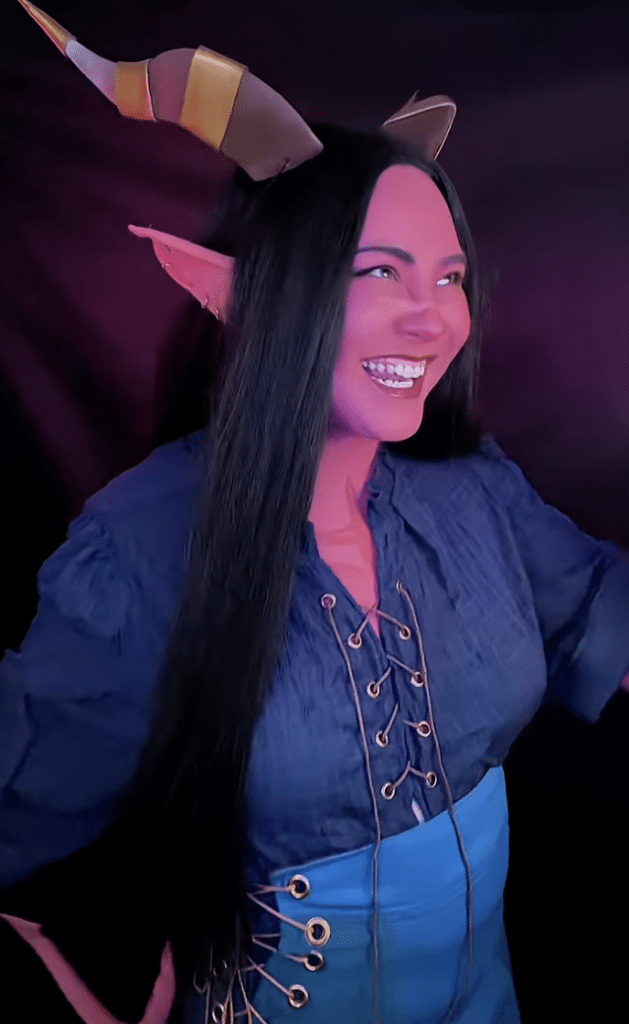
“My bad!” The Alchemist, a dual adept from the houses of Biology and Chemistry, waved from behind the smoke.
The Bard hmmed to herself. Green smoke and one of the best adepts… perhaps this could add a good tilt to the story.
She bumped into the Artificer in front of her, and then looked up and gasped. They had arrived.
The Bard’s Poem
“First Sight of the City”
I had heard the stories—
whispered between my lessons,
half-believed, half-dreamed—
but nothing prepared me for this.

The city rose like a promise,
all glass and gold and reaching light,
spires climbing higher than knowledge,
challenging the sky
and winning.
Every street moved—
no pauses, no stillness—
just footsteps and voices
woven into something perfect.
Windows burned with reflected sun,
banners stretched across the air—
Achieve. Become. Excel.
And the people—
brilliant, shining, perfect—
moving like they belonged
to a group far greater than mine.
I stood at the edge of this perfection,
watching it breathe—
And I couldn’t look away.
For love of others (Rogue)
The Rogue knew he wasn’t part of the group—not yet. But they would see his usefulness soon. They had to.
He was a master negotiator, a tracker, and—if he was honest—an all-around impressive person.
He’d been watching since the beginning, ever since his sister came home with burned eyebrows and a refusal to do anything. She was the only person he cared about, and it had stuck with him in a way he couldn’t ignore.
So when the quest appeared—something about a Cloud, something about people changing—he went. Whether they wanted him or not.
Maybe his “business magic” would matter. If something was causing this, it needed to be understood, argued with, outmaneuvered.
He stepped forward, brushing back his curls.
“Hey guys.”
The Bard screamed. “It’s the villain!”
“The villain is a cloud,” the Artificer said flatly. “This is a boy.”
“I’m your age,” the Rogue said.
“And you’re following us… why?” the Alchemist asked.
“Every party needs a Rogue,” he said. “I negotiate. You’ll need that.”
“Who are we negotiating with?” the Healer asked.
He opened his mouth—then stopped.
His sister flickered through his mind. Burned eyebrows. Silence. “Failure,”said like a fact, the word coming from his sister’s mouth as tears ran down her face.
He smiled instead.
“I’m here to optimize your time,” he said smoothly. “And right now? You’re wasting it.”
Into the city (Artificer)
On the surface, the city was perfect. Beautiful. Every structure in place, everything organized and prepared to an optimal level.
But something was wrong.
The Artificer felt it immediately as he walked into the city with the group—and the Rogue they had reluctantly allowed to join them.
He scanned the streets as adepts moved past him. He should like this, he told himself. This was what things were supposed to look like—efficient, ordered, refined.
And yet…
The organization was excessive.
Unnecessary.
The adepts moved with unnatural precision, their paths too direct, their timing too exact. It was as if variability had been removed entirely.
From what he had heard, they were “optimizing” their skills.
But this wasn’t optimization.
This was overcorrection.
The Artificer slowed slightly, his mind running through possibilities, trying to identify the flaw.
Then the pressure hit
Sharp. Sudden.
His chest tightened, his fingers trembling as thoughts forced their way in—uninvited, unstructured.
You’re not doing enough.
You’re falling behind.
You should have done better on that math exam.
Built something more impressive.
You should prove you belong here.
He stopped.
That didn’t make sense.
Those weren’t his thoughts—not like this. Not this disorganized. Not this… absolute.
He frowned, trying to isolate the source.
“External influence,” he muttered under his breath.
Hair brushed his arm, breaking his focus. The Bard skipped past him, turning in a slow circle as she took in the city.
“It’s beautiful!” she said—then froze.
Her expression shifted.
“And I’m useless,” she continued, her voice dropping. “I don’t even deserve to be here… I have the wrong abilities. If only I were part of the house of Engineering—or even Biology—anything but Theater. There’s no point.”
The Artificer’s eyes sharpened.
Her words confirmed his thoughts.
“Burnout,” he said.
He looked up.
The Cloud hung above the city—denser here, heavier, stable.
Of course.
A system filled with high performers, each pushing toward constant improvement. A structure that rewarded output without limit.
He exhaled slowly, the conclusion settling into place.
“This is the origin point,” he said. “Maximum pressure. Maximum reinforcement.”
He glanced at the others.
“This isn’t where it spread.”
A pause.
“This is where it began.”
The truth about the city and burnout (Alchemist)
The instant the group stepped into the city, the Alchemist lost her connection with nature. It was as if a switch had been turned off. Interesting…
People often stereotyped the Chemistry and Biology houses, connecting them. They were wrong, and no one understood that more than the Alchemist. With her nature powers gone, only her Chemistry connection remained.
Without her Biology powers, she was far closer in mindset to the Artificer.
But now, in the silence, she caught hints of nature. But something was wrong.
It wasn’t the organized chaos she knew.
It felt wrong.
Overwhelming.
Like it was pulling her in too many directions at once, refusing to settle, refusing to rest.
And beneath it all, she could hear something else—faint cries of strain from the trees around them.
They were being forced to grow this way.
She walked forward, placing her palm against the bark of the tree. Usually, the trees would listen to her, welcome her. This one did not; it seemed to push against her, as if it needed to be alone and completely focus on itself.
She stepped back, wanting to be away from this twisted form of nature.
She looked around.
The struggles of the others
The Bard was curled up on the ground, eyes shut tight, tears falling down her face. She sang softly to herself, broken and repetitive.
“Never good enough… never gonna be good enough… for anyone.”
The Wizard rubbed his forehead, eyes locked on his glass.
“There is no correct answer,” he said flatly. “No solution. No logical problem—so no logical explanation. It’s hopeless.”
“I’ve doomed our little society by bringing us here,” the Seer murmured, looking up at the Cloud as it darkened over the city. “Our group… it wasn’t structured strongly enough to survive this.”
The adepts walking past them didn’t even seem to notice. Their eyes were glazed, voices muttering in repetition:
“Must do better.”
“I must get a good grade.”
“Must memorize more.”
“Must win.”
The Rogue stood nearby, arguing with an adept in front of him. The adept didn’t respond at all.
The Rogue’s voice rose in frustration—his debate collapsing against a mind that wouldn’t engage.
The Healer’s hands were open in front of her, reaching out for nothing.
“I’ll never be able to heal everyone—or even enough people,” she said. “I’m doomed to watch people get injured and be unable to help.”
The Artificer, a few feet away, was staring at a nearby house like it might give him an answer.
“I’ll never even be able to create anything worth the time it took to get here,” he said flatly. “My designs are basic… useless. There’s no point.”
Determination
The Alchemist needed to hold on. She had to. For the sake of creation itself—for the sake of what grew and changed and wasn’t meant to be forced into perfection.
Because if this determination for perfection and organization kept spreading… it wouldn’t just shape their world.
It would erase it.
The Alchemist had never thought of herself as a hero. She wasn’t a philosopher, or someone who chased knowledge just to uncover some deeper truth about the world.
She just understood how things worked.
Reactions. Growth. Change.
And this—this was one.
The Cloud hadn’t come from nowhere. It was something pushed too far. Maybe it hadn’t even started with bad intentions—but pressure, expectation, control… all of it had been forced past the point it was meant to hold.
And now it was unstable.
That’s what people didn’t understand.
About chemistry.
About biology, too.
You could set the conditions. You could nurture something, support it, give it everything it needed to grow.
But you couldn’t force it.
Not without consequences.
Not without changing what it was.
And if you pushed too hard—
t stopped being growth.
It became strain.
Strain
She could feel it everywhere now. Not just in the people, but in the world itself. Even the traces of nature felt wrong—overwhelming, disordered in a way that wasn’t natural. Like everything was being pulled in too many directions at once.
Like it was being forced to grow.
And beneath it—
the same relentless perfectionism she saw in everyone around her.
People weren’t just tired—they were comparing, competing, talking about how miserable they were, like it meant something. Like there was value in pushing further, in proving they could endure more.
As if burnout were something to win.
This wasn’t poison.
It was overload.
A reaction pushed too far.
Growth forced past its limits.
And you didn’t fix that by adding more.
You didn’t fix it by trying harder.
You stopped by stepping back.
By letting it run its course.
By letting it settle.
And by resting.
She had already done her part. That was the part people forgot—you could only control what you put in.
After that—
You had to let it go.
She looked around at the others, each of them collapsing in their own way, each of them still trying to fix something that couldn’t be fixed by more effort.
And she made a choice.
She sat down, folding her hands in her lap, closing her eyes.
“I can stop,” she said quietly. “Rest is not failure.”
The words felt unfamiliar.
But right.
One by one, the others followed.
Peace (Seer)
No movement, fixing, or proving.
No pushing past what they could carry.
Just… existing.

For the first time, none of them were trying to become something “better.”
And slowly, the reaction began to change.
The Cloud didn’t disappear—not all at once.
But it shifted.
It loosened.
It pulled back.
Because it had never been separate from them.
They had been feeding it.
And now—
They weren’t.
The Seer opened her eyes and looked up.
Balance.
That’s all it had ever needed.
And for the first time in a long time—
She felt peace in the thoughts around her.
Epilogue: The reunion (everyone)
“It was nice to get to know you. I just wish it had been under different circumstances,” the Seer said to the Alchemist.
The Alchemist nodded. “Me too. I’ve always wanted to learn more about the other houses.”
“They’re an interesting group,” the Seer said. “We’re usually kept divided, but after this… maybe we’re meant to learn from each other. It could be chaotic.”
“In the best way,” the Rogue said, throwing his arms around them. “Speaking of, I’d like to make a deal—”
“No deals,” the Wizard said, laughing. For once, he looked relaxed.
“Yeah,” the Artificer added. “Let’s just enjoy this.”
The Alchemist glanced at a nearby jug of water, and then, out of the wood of the porch, a vine sprouted, carrying several lemons.
The Artificer took them, pulled a piece of metal from his pocket, and with a few twists created a knife, and sliced the lemons before tossing them into the water. They each poured themselves a cup.
“I guess we have you to thank for defeating Burnout,” the Seer said to the Alchemist. “You’re the hero.”
The Alchemist shook her head. “No. We all chose to let go. I just gave you the key.”
“Are we safe forever?” the Healer asked.
“No,” the Bard said from the porch post.
They turned.
“We’ll face it again,” she said. “But now we recognize it. We know how to fight it—with rest, awareness, and remembering our worth isn’t tied to productivity. And I can’t wait to write the stories—especially about our heroic Alchemist—”
“We just said she’s not the only hero,” the Seer said, smiling.
A pause.
Then—
“We’re all heroes.”