
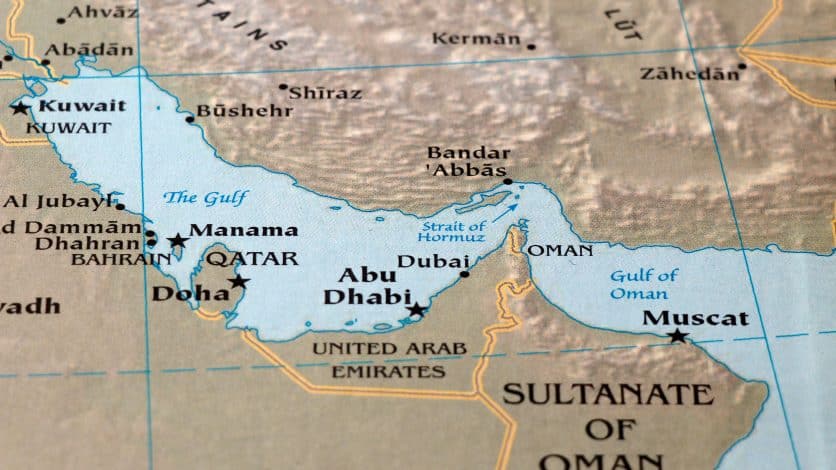
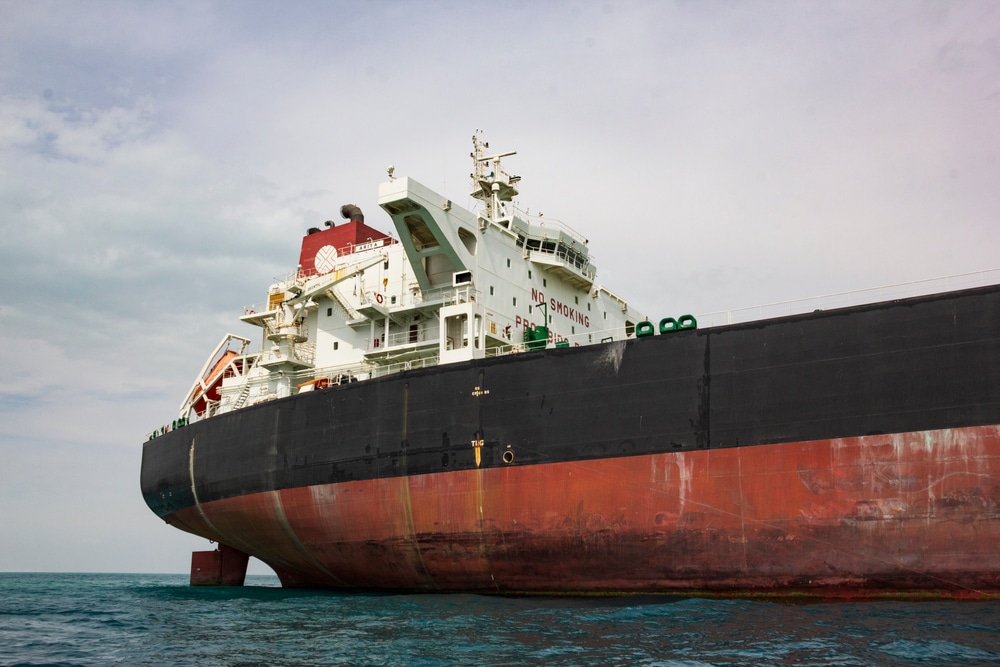
Roughly a fifth of the global oil supply passes through the Strait of Hormuz, a narrow waterway at the mouth of the Persian Gulf through which tankers must travel to reach global markets. Threats of disruption in this chokepoint can send energy markets into turmoil, driving up fuel prices across the global economy.
This chokepoint gives Iran a powerful form of leverage. It does not need to win a conventional war to inflict economic damage–merely threatening interference in the strait will be enough.
The strategic lever
For decades, the United States and its allies have treated the free flow of oil through the Strait of Hormuz as a core strategic interest. Stability in this chokepoint has historically come in the form of heavily armed naval patrols and military bases in the region.
But the geography of the strait complicates that goal of stability. Iran’s proximity allows it to threaten shipping without complete control over the strait, while also avoiding confrontation with superior Western forces with the use of naval mines and missiles. In effect, Iran does not need to win a war in the traditional sense; it just needs to make the cost of stability high enough to disrupt global energy prices. That reality leaves Western policymakers to face a difficult set of choices, all of which are unattractive.
The policy trap
Inaction carries economic consequences and risks making governments appear ineffective at home. Limited responses such as targeted airstrikes or naval escorts may reduce immediate threats but do little to eliminate Iran’s capacity for future disruptions. This approach risks normalizing periodic crises in the region, each spiking oil prices in the global economy.
A more decisive solution would likely require expanding the conflict by targeting Iran’s coastal missile systems and naval infrastructure, amongst other military assets. In its most extreme form, this could include ground operations to secure key areas, while establishing long-term control over the strait.
But after two decades of costly and deeply unpopular wars in Iraq and Afghanistan, public support for another major military commitment in the Middle East remains limited and divided along partisan lines.
“More Americans strongly or somewhat disapprove of the U.S. attacking Iran (48%) than approve of it (37%). Democrats are overwhelmingly critical of the attacks (11% approve and 78% disapprove), while Republicans are equally likely to approve (76% vs. 10%).”
YouGov
The result is a strategic dilemma: the most decisive actions require boots on the ground, but doing so would trigger enormous political backlash at home, resulting in hesitation from Western allies. This, in particular, is a risk many politicians in the United States are unwilling to take, leading up to the midterms later this year.

Extended disruptions
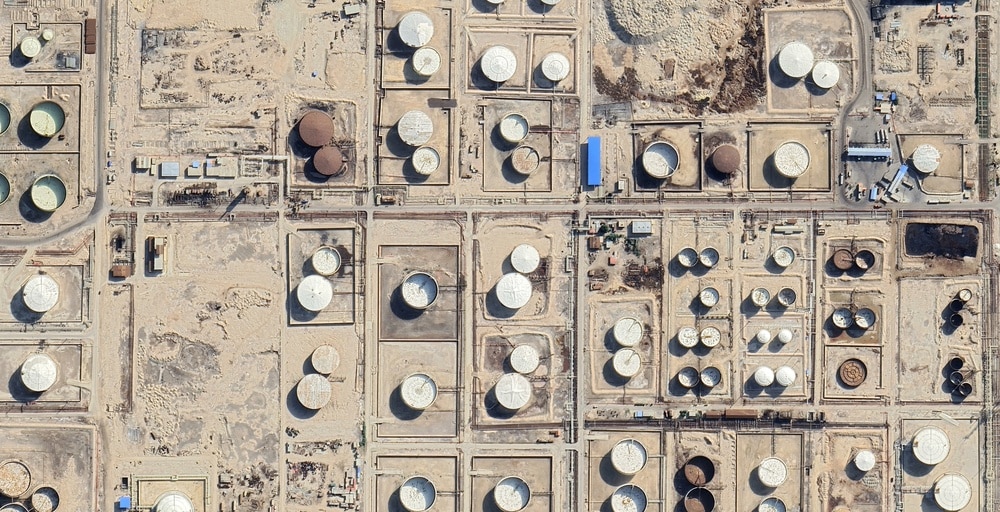
If shipping through the Strait of Hormuz is disrupted for an extended period, oil-producing states in the region will be forced to shut down production. With the strait being blockaded and storage capacity limited, there is nowhere for the oil to go despite surging prices.
Restarting production will not be immediate either, with oil wells and refineries often taking weeks or longer to return to full capacity after being shut down. Periodic short-term disruptions in the straits could create longer-lasting supply shortages.
In that sense, the economic impact of crises in the Strait does not end when tensions ease. Its effects linger, keeping oil prices elevated even after the immediate threat subsides.
Continual escalation
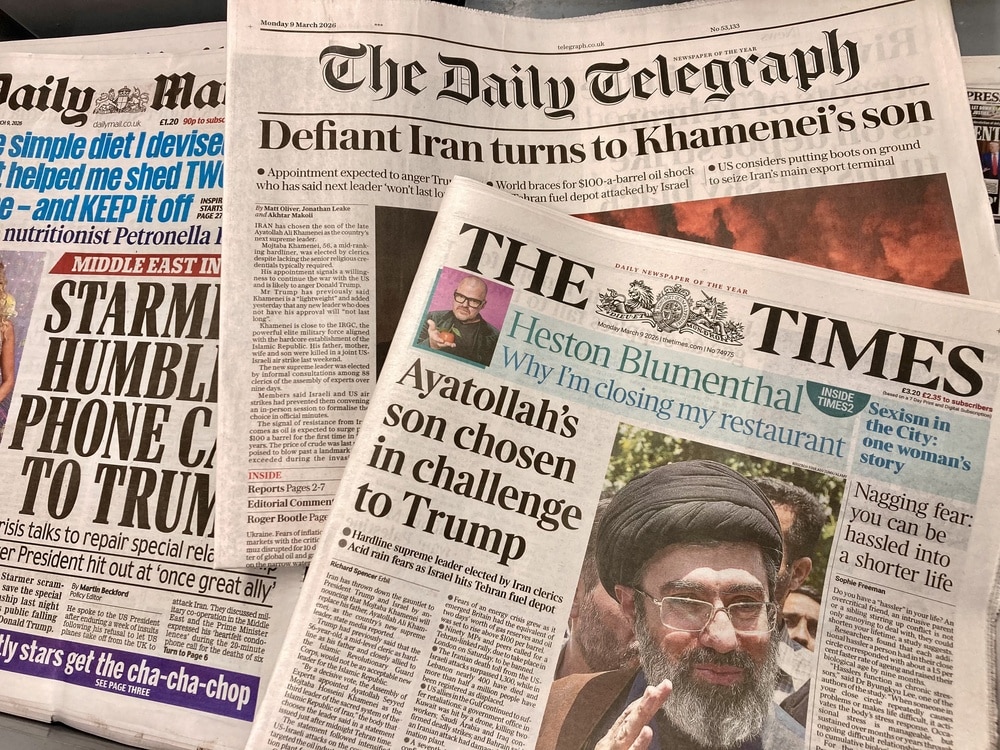
Even if Western governments choose to escalate, there is no guarantee the conflict would end quickly.
Years of sanctions and isolation have reshaped the political landscape within Iran. While the country’s population is as diverse as it is politically complex, external pressures have historically strengthened nationalist narratives and empowered hardliner factions. In this situation, escalation could be framed domestically as a defense of national sovereignty. Rather than forcing concessions, this could deepen public resistance and skepticism towards Western powers.
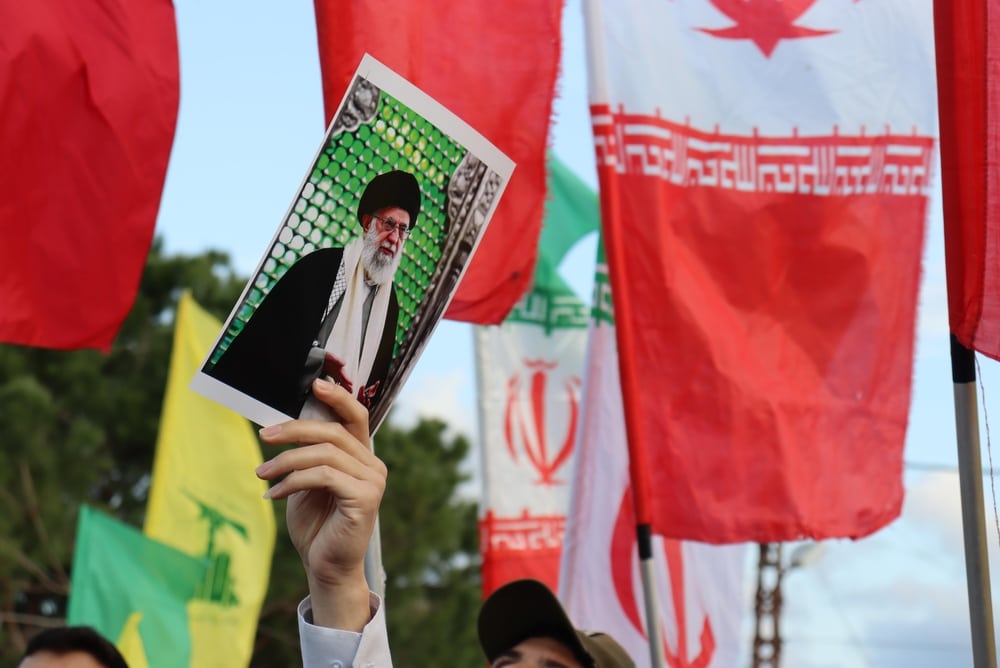
Recent tensions have underscored how quickly those dynamics can take hold, with the killing of Ayatollah Ali Khamenei being met with mixed reactions.
“Some might be happy with Khamenei’s death, but the majority are worried about the consequences and the future developments in the country, particularly in relation to the conflict and likely instability”.
CNN
Following the death of Ali Khamenei, his son Mojtaba Khamenei was chosen as his successor, who is expected to continue the oppressive rule his father held. Mojtaba Khamenei reportedly lost his wife and a son in the US-Israeli strike on the supreme leader’s compound, which killed his father
“In the first public message attributed to him, Khamenei said Iran should use the “lever of blocking the Strait of Hormuz” as the channel is an area where ‘the enemy is highly vulnerable'”.
This creates a second dilemma for policymakers: the tools used to compel change may instead reinforce the forces most opposed to it. Escalation becomes self-defeating, as negotiations from both parties break down.
The risk of another “forever war”
Taken altogether, these dynamics will likely lead to a prolonged period of instability in the region.
Disruptions in the Strait of Hormuz will likely come in cycles: escalations followed by uneasy de-escalations, with each episode pushing up energy prices, while also raising the risk of wider conflict in the region. Over time, this pattern could harden into a new status quo, where instability is persistent, rather than the exception.
The geography of the strait, the structure of the global energy markets, and the political constraints facing both Iran and Western governments all limit the prospects for a clean resolution. What emerges instead will be a familiar pattern: a conflict that cannot be easily won, cannot be easily ended, and cannot be easily avoided.
Another “forever war” is taking shape, not due to a single decision made recently, but decades of decisions and policies that now leave little to no alternative.