When a band, or a duo, or any partnership gets famous as a unit, the thing they most want to release is a solo project. Here’s my real, brutal, honest art, without the constraints of my less-talented partner! In 2025, watching the Safdie brothers launch their solo movies has been exactly that. And the question is whether they work better together or should fly solo permanently.
Funny enough, their projects are eerily similar on paper. Josh Safdie’s Marty Supreme and Benny Safdie’s The Smashing Machine both center on an American athlete. Each man has only one real, respectful relationship: the one he shares with the person he plays his sport with. Each seems to despise everyone else by default. Both films treat sports as a religion. Losing is sacrilege. And both climax in Japan, with their protagonists defeating a Japanese athlete.
One lands better than the other. But they come from the same psychological place, which raises a more complicated question: do the Safdies actually need each other?
What made the Safdies great?
For years, a Safdie movie meant taking risks. Their films were usually led by a charismatic but erratic character pushed to the edge. Robert Pattinson’s Connie in Good Time is a charming disaster. Adam Sandler’s Howard Ratner in Uncut Gems is a failure you cannot look away from. Both became pivotal career moments. Good Time helped Pattinson finally break free from the Twilight gravity that had followed him for years. As for Sandler, the missed Oscar nomination felt like an outrage, something that had never been said about him before.
The duo was committed to defying traditional storytelling through characters flawed enough to take a detour. Their casts matched that commitment. Audiences held their breath through every sequence. It worked. Their cultural footprint became mainstream.
Then, in 2024, Benny told Variety he didn’t know if he’d ever direct a film with his brother again.
The incident behind the split
Last month, Page Six published a report claiming the rift dates back to an incident on the set of Good Time — and it has less to do with creative differences than many assumed. The report centers on allegations against producer Sebastian Bear-McClard, who was later accused of sexual misconduct in a separate report. According to Page Six, Bear-McClard allegedly approached a 17-year-old girl on Instagram, offering her the chance to shoot a scene with Robert Pattinson. When she arrived on set, she was made to wait for hours only to find herself shooting a sex scene with an actor who had just been released from jail.
Variety had already reported the broader story in 2024, but PageSix’s account suggests this specific incident is what broke the brothers apart. While both were on set, only Josh had the full picture of the teenager’s backstory. Benny only learned the full scope years later, after their partnership with Bear-McClard ended.

This is no longer just a healthy artistic dispute played out in public. It is now an ethical one.
Benny’s Film: The Smashing Machine
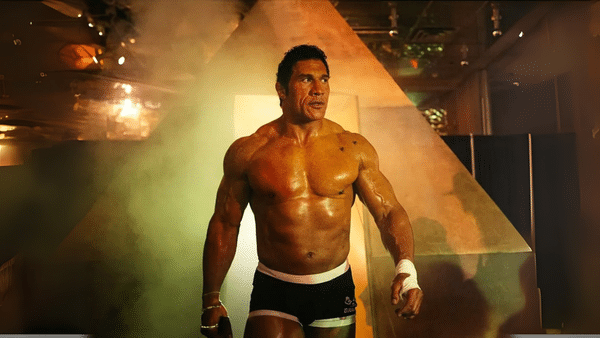
A24 releases both brothers’ solo projects in 2025. Benny goes first with The Smashing Machine, the Mark Kerr biopic starring Dwayne Johnson and Emily Blunt. Despite a stellar cast, it premiered to mild reviews and shocking box office numbers.
It’s not a terrible film… It’s just a bit flatlined. Benny’s movie is about a man who doesn’t know how to lose, but the narrative itself doesn’t know what to do with him either. Kerr is a drug addict, a loner, abrasive to his partner, but surprisingly tender with his male peers in the gym. These are interesting ingredients. The script just never cooks them into anything.
Dwayne Johnson is genuinely good here. This is one of the rare times his presence isn’t about smirking through the camera or jumping off buildings. Kerr is a complicated physical fact: a soft person in an imposing body. Johnson understands that tension. He plays the tenderness without being cartoonish, and the addiction without turning it into a redemptive montage.
Emily Blunt is almost unfairly alive in it. She plays Dawn with a generosity the script almost never returns. Because Blunt is the kind of actor who fights for contradiction, she ends up feeling like she’s on the verge of bursting out of the movie into something sharper. Something less safe than the structure allows.
Josh’s Film: Marty Supreme
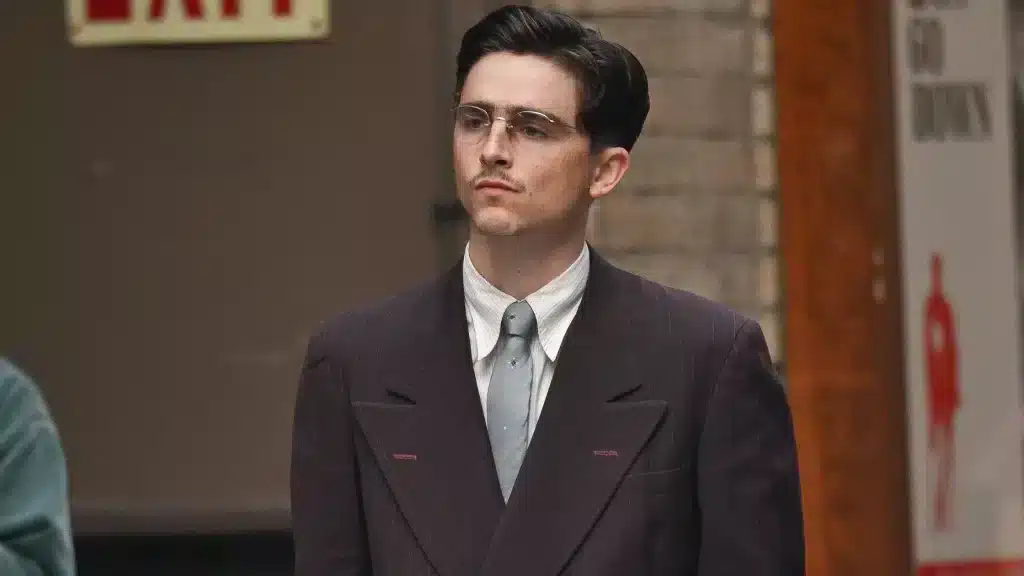
Josh, on the other hand, arrived alongside Timothée Chalamet in the electrifying Marty Supreme: a prestige-cinema film, an unhinged sports movie, and a surprising box-office and cultural hit all at once.
There is far more to grasp and chew on in Marty Supreme than in The Smashing Machine. Josh’s script announces itself early: within the first act, the stakes are set, and the film begins its steady climb into absurdism and grandeur. It comments on the American Dream of the 1950s through the lens of the Jewish community on the Lower East Side.
The velocity of the movie makes Chalamet thrive. He runs around the world with the cockiness the character demands, and he’s never engulfed by it. Any lingering reservations about his ability to carry a film as a leading man should be gone after this. Marty Supreme feels more connected to the Safdies’ established style, which is precisely why it’s the more successful film.
Two different kinds of self-destruction
To be fair, Kerr and Marty Mauser shouldn’t be compared as if they’re playing the same sport. Kerr’s story turns inward, and his journey through addiction makes him a passive player, weathering personal self-destruction. Marty’s story explodes outward: appetite, ego, showmanship, and the desperate desire to be a legend.
Two different standpoints on the same theme of self-destruction. There’s nothing wrong with that. Josh just makes his argument much better.
But here’s the part we cannot ignore: the part that makes this less about sibling rivalry and more about accountability.
Can the art be separated from the artist?
Between this clash of two incredibly talented brothers, the story of an underage girl allegedly exploited on their set still lingers. It has been under the carpet for years. Meanwhile, both brothers have continued building their prestige as solo acts, while others have been ostracized into courts and private hearings.
The recurring debate about separating art from the artist usually focuses on a creator’s personal life. But what happens when the problematic thing occurs during the making of the art itself? Isn’t the work, in some way, a direct representation of who made it and how?
Marty Supreme is the superior film. But if Josh Safdie was complicit in what allegedly happened to that teenager on set, is he really the winner here? Or is Benny, who walked away, the one who made the harder, more honest call?
Where does that leave them?
Artistically, the brothers may not be codependent. Josh can clearly run the machine on his own. Benny can pursue a quieter register and still deliver a competent, well-performed film.
But the question of how high a standard we hold creators, especially when their alleged complicity is tied directly to their work, doesn’t have a clean answer. The Safdies are off to strong solo starts. They just come with more questions about their careers than resolutions.