

Similarly to the Middle Ages, our systems are failing. The West has reached the effects of late-stage capitalism. We associate the time before inflation and social media with success, and we fear the predicted doom of the future. Increasing inflation and unoriginality in media point to a decline in our quality of life. So, can we expect a new-age creative Renaissance like that of the Middle Ages?
We have surrendered our entertainment to regurgitated brain rot, filming with the sole purpose of being clip-farmed. Yet we have a choice to lean into this Renaissance and utilize new advancements in a more meaningful way.
The Middle Ages
Today, we reflect on the past through the rose-colored glasses of nostalgia. As evidenced by the “2026 is the new 2016” trend, we yearn for the messy camera roll dumps and dog filters of previous eras. Angela Yang wrote for NBC that “the trend has become the latest example of people online romanticizing a different time as a form of escapism.” A loss of originality has us shaming the current world of entertainment.
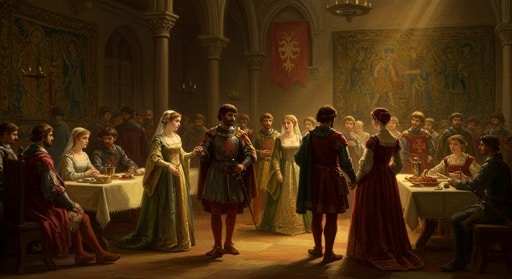
Simultaneously, anxieties are mounting regarding the future. From the fifth to the late 15th centuries, Romans believed that they were living in the ruins of the intellectual giants before them. While literally occupying the abandoned architecture of a booming Rome, they were convinced that they were awaiting the end times. When crops failed and Rome fell, the Renaissance was born. With the decline in our economy, as well as our waning trust in media and entertainment, what can we expect?
Our Middle Ages
In late-capitalistic America, we view originality as unattainable. Repetition fatigues the entertainment industry. Rather than seeing new, original stories, we are constantly bombarded with sequels and book adaptations. In the Middle Ages, they feared that all there was to know had already been discovered. Instead of coming up with new content, they commented on older, more established information. Philosopher Bernard of Charta summarized the 12th century with the statement: “We are like dwarfs standing on the shoulders of giants.” We have lost the motivation to imagine a new future due to the saturation of culture with internet slop, a term now used to describe our bleak entertainment scene.
People are realizing that the media industry has enslaved their attention. Much of the youth has become entranced by streamers and reaction content, preferring to watch someone else play a game or hang out with friends rather than do these things themselves. We can blame this phenomenon on the audience’s demand for community, which has proven elusive in the current loneliness epidemic.
Cancel culture
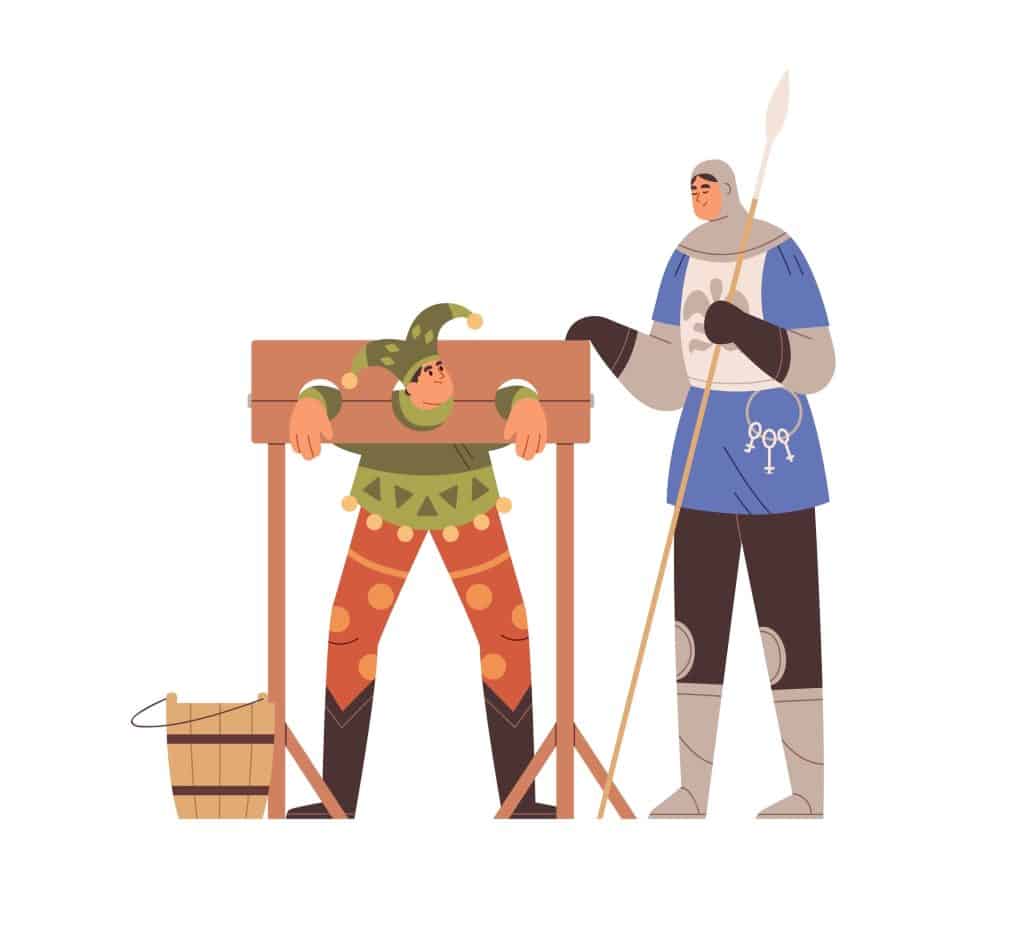
During the Middle Ages, criminals and social outcasts were humiliated in a pillory, a practice called Karavari. Townsmen would bang pots and pans and throw rotten vegetables at wrongdoers, utilizing humiliation as punishment. In the modern day, we, too, employ humiliation tactics by sending hate comments to celebrities we deem “cancelled,” returning justice to the mob rather than the slow governmental system.
News
Before the invention of the printing press, information was collective and rumor-based. Now, our news has become propaganda-ridden entertainment.

“Everybody wants to be entertained by the news,” says Todd Gitlin, professor at the Graduate School of Journalism at Columbia University. Gitlin told the Los Angeles Times that “news evokes feelings, even if those feelings are feelings of fear.” Broadcasters exploit the emotionality of the industry by pushing self-serving stances. As people wake up to this pathos, they will seek information elsewhere. In a piece titled “Power to the People: The rise and rise of Citizen Journalism,” Micha Barban Dangerfield highlights the yearning for authenticity that has been made evident through the increased ingestion of democratic and collaborative media.
We gravitate toward human-made value. The masses were granted a voice through the printing press, which ultimately expanded into social media. Lately, we’ve seen a proliferation of podcasts and Substacks from influencers, signifying a shift toward longer-form content. Dangerfield’s article continues, “But if citizen reporting has reshaped collective action and mobilization, it can also be a new space of control and governmental interference,” reiterating hope that the emphasis on communal values may bring about another revolution.
Will the 2030s look like a renaissance?
Renaissance means rebirth. AI is prompting a cultural re-evaluation. New artistic possibilities are now accessible through widespread AI access, possibly prompting an artistic Renaissance through its usage, or in contrast, fostering fuel for defiance. Times of tension, such as the censorship in media today, force creativity by breeding innovation.
“We will see new ways that people connect with each other, and I believe the new generation will hit a level of introspection that only through art and ideas will we be able to fully express as the world changes to meet our evolving needs as human beings. The renaissance of ideas and self-expression is here.” — Slater Colt, Founder and CEO at LCD Entertainment
The Black Death
In the Middle Ages, peasants worked for little to nothing until the Black Death wiped out much of the workforce, making human labor scarce. Through revolution, they were able gain respect and eventually, livable wages. Ohio State University released an article titled “The Rhyme of History: What the Black Death tells us about COVID-19’s Aftermath,” noting the patterns of economic destruction. Author Sara K. Douglas concludes that, like the aftermath of the Black Death, we can expect constructive trends in the coming years.
AI could replace most of our jobs if capitalists so desired, diminishing worker value. However, AI cannot replace critical thinking and creativity. Hopefully this sparks a boom in the arts and entertainment.
Religion and the mind
Recently, there has been a transference from religion to spirituality. This can be seen in the growth of the crystal girls in 2020 and the popular spiritual discourse of “rewiring our nervous system” in 2026. Kevin Singer blamed this shift on social media in the Religion News Service in 2023. He writes:
“The people of Gen Z hear about these practices via a slew of independent spiritual teachers who appear on popular social media apps such as TikTok and Instagram. They also hear about them from an increasing number of celebrities they admire.”
In past renaissances, there has been resistance to religious fundamentalism due to market exploitation. As our consciousness is manipulated, we see a rise in esotericism. With “brainrot” and memes encapsulating the absurdism of the modern era, the response is to embrace “nicheness.” There is a reduction in aesthetic engagement and a return to originality. Incorporating millennials’ prioritization of mental health serves to expand the potential for intellectual advancement.
Education
In the Renaissance, scholastic Christian education’s narrow thinking was displaced by Platonism, which deemed individuality to be sacred. There was a shift toward valuing human dignity and potential rather than inherent human nature. Our experiences mold us. With the average Gen Z experience involving “reelsmaxxing” and dopamine highs, constructive thought has all but flown out the window.
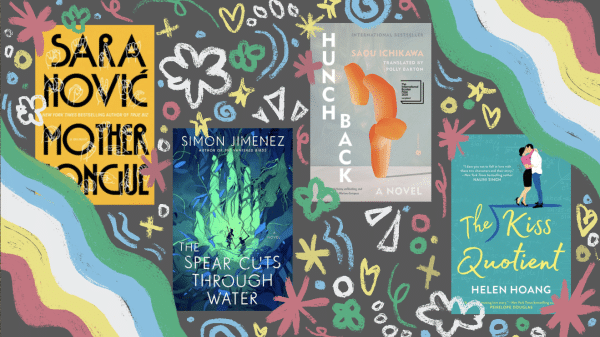
Generation Z no longer prioritizes literacy and education. Teens and young adults have abandoned reading altogether, and literacy rates are dropping as early as primary school. We have entered a mainly visual world that is skewing our reality with AI distortions. The Walton Family Foundation and Gallup 2025 Voices of Gen X released a study reporting that 35% of Gen Z K-12 students are anti-reading. A little less than half reported that they have never, or very rarely, read for fun. However, popular streamer Kai Cenat has begun reading aloud on stream to improve his vocabulary, prompting Cosmopolitan to release an article entitled “Can ‘Bookstreaming‘ Save the Literacy Crisis?”
Language
Everything was written in Latin during the Italian Renaissance, even though the language was largely absent in society. In a departure from tradition, Dante Alighieri, an Italian poet, writer, and philosopher, wrote his famous poem “Divine Comedy” in the Tuscan dialect, which was spoken by the public in Florence at the time, making his work widely accessible. He followed with an essay titled De vulgari eloquentia, arguing for the usage of the common tongue in literature because it appeared more natural.
Mirroring this pipeline, AI’s unnatural speech will likewise prompt an re-emphasis on human language. People frequently use AI to write emails and to appear more qualified, when in reality, it is the human errors; the “ums” and “uhhs” between sentences that ring true in a time of perfect regurgitation. As we tire of the style and patterns of AI writing habits, the pendulum will swing back, causing the public to yearn for imperfection and authenticity.
The cringe factor
People frown upon self-expression and care, calling it “cringeworthy.” But recently, there has seemed to be a transition away from this rhetoric. Popular hip-hop artist ASAP Rocky captured the sentiment: “How you going to knock somebody in the world for actually trying to do something? Trying. Since when has it become not cool to try?”
Timothee Chalamet’s SAG Awards acceptance speech contained a similar message, as he received backlash for revealing that he wants to become “one of the greats.” We live in constant fear of humiliation, associating effort with shame and protecting ourselves with irony.
The Renaissance was an era of unapologetic ambition. Renaissance men believed in “fama,” or fame; that “cleos,” or glory, should be pursued and publicized. Chalamet’s speech marks a return toward this sincerity. He is encouraging his fans to follow their passions with everything they have, regardless of how others might perceive it.
The current pushback
There is another trend glorifying the choice to “go offline.” Living offline is the new cool, precipitating a boom in tangible media sales. The collective is sick of being told what and how to think. Ad Fontes believed that medieval commentary stripped meaning from texts. A similar phenomenon can be observed today with the rise of streamers and reaction content.
However, resistance to this “slop” is mounting. In addition the offline movement, the monopolization of streaming services has prompted the return to theaters. According to an article by TheWrap, Gen Z’s attendance in movie theaters rose 25% last year. We can only expect this to accelerate as the entertainment industry sells itself out.
A dark age
In the past, collapse has initiated educational prioritization. What differentiates our era is the lack of learning. Our declining literacy rates suggest that America may not have what it takes to stand up for its creative minds, which are clearly under attack.
“Literacy is one of the major civil rights issues of our time, and our children’s future — and our nation’s democracy — depends on us addressing it now,” says Allison Rose Socol, EdTrust’s Vice President of P-12 policy, practice and research.
In the past, general knowledge was attainable through time and effort, but modern scholars fear that there is too much information to make sense of our era. Without generalists and mass understanding, how can we engage with the complex ideas of revolution on a larger scale? Our scathing cynicism and weakened attention spans have caused many to scorn the possibility of a creative rebirth.
It is up to us
Art renews culture, and every great renaissance has followed a recognizable pattern. Rather than institutions, it is the public who enacts this revival of culture. Visionaries do not require a scholastic education and platform; most were normal people. America’s academic institutions are more focused on their financial gain than developing thinkers, leaving the creative revolution to us. In entertainment, we can expect a drastic shift from the traditional to the decentralized and interactive. In defiance of AI and the buy-out of the entertainment industry, it is time to draw back. Abstain from passive consumption and create to express yourself. That is all we have.