You don’t have to look far to see that ultra-thinness is making a comeback. From runways and red carpets to TikTok influencers to blockbuster movies like Wicked, one thing is clear: the skinny epidemic is spreading. But it didn’t appear out of nowhere, and history tells us it’s unlikely to go away.
When the long-awaited sequel film, Wicked: For Good, was released in late November, a flood of critical commentary followed online. Surprisingly, though, most of the videos weren’t about the movie itself; they were expressing concern over the shocking thinness of the film’s leading actresses.
Now, the Internet and media having opinions about famous women’s bodies is nothing new. But this particular incident seems to have struck a nerve with people, highlighting a covert cultural shift.
It wasn’t that long ago that we were celebrating the inclusion of plus-size models. However, in 2025, you’ll be hard-pressed to find anyone beyond mid-size on a runway or red carpet. Even celebrities who were previously lauded as plus-size icons are shrinking dramatically.
With the growth of the GLP-1 industry, people are quick to blame Ozempic and Wegovy, but I believe this goes deeper than diet culture or weight loss drugs. History shows that this thin epidemic is not only cyclical, but also a direct consequence of the rise of far-right ideology, conservatism, and political unrest in the nation.
The Wicked problem
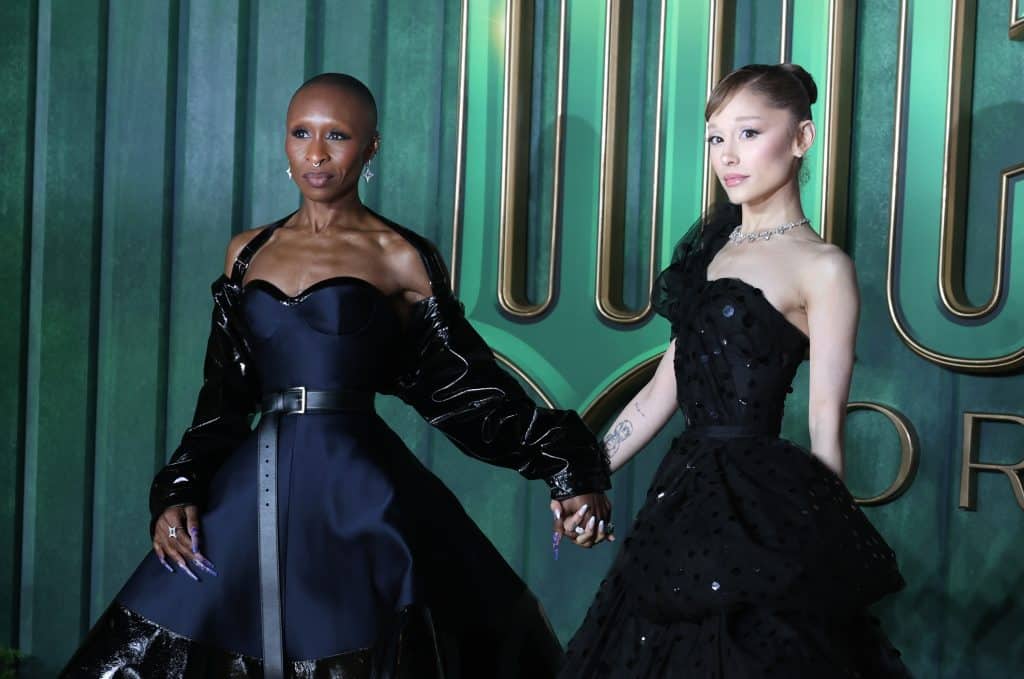
While the Wicked films certainly didn’t start this movement, they’ve become the face of it. The combination of the first film’s success, the cast’s fame, and a full-scale marketing campaign made Wicked — and subsequently, Grande, Erivo, and Yeoh — omnipresent.
So, when all these leading ladies underwent such a drastic appearance change, it didn’t go unnoticed. The backlash to these shrinking stars was just as inescapable as the films themselves.
But is it really that big of a deal? Is it even appropriate to be commenting on women’s bodies in the first place? After all, if they had suddenly gained a ton of weight, it would definitely be considered un-politically correct to comment on that.

It’s a huge deal and the issue is much bigger than a couple of women’s bodies. It’s about societal trends and messaging.
The issue with the rise of thinness
As Rebecca Morrison discusses in her article:
“This isn’t about calling out celebrities, and it isn’t about body-shaming. It’s about the unspoken message all of this is sending: When it comes to health, thinner is always better. This isn’t just frustrating. It’s dangerous” (HuffPost).
Actress and model Jameela Jamil expressed similar sentiments on her TikTok. She explains that we are being inundated with a wave of the “emaciation aesthetic” everywhere we look. Women in the industry are specifically wearing clothing that accentuates “how skeletal they are becoming.” She questions,
“Why is famine a desired aesthetic, again? …This stuff is really, really serious, and it’s being so hyper-normalized. It’s okay for us to say that this feels very discombobulating, and it’s setting an example for young girls. It is patriarchal conditioning…” (Jameela Jamil).
We are allowed to have empathy for how these women’s bodies are being scrutinized by the public, while also understanding that, as cultural icons, their physical transformations are representative of larger issues embedded in the culture.
And the Wicked cast aren’t the only ones—they’re just the ones that got this recent discussion rolling.
The thin obsession has a Wicked long history.
To those who still think people are reaching, I urge you to take a scroll through Ariana Grande’s old Tumblr (and yes, Tumblr is still alive).
This isn’t new, it’s a pattern. By no means am I going to try to diagnose a woman I do not know, and I beg you to do the same — that’s how unhealthy parasocial relationships develop.
The point is that whether she was conscious of it or not, Ariana Grande has long been a symbol for a community of young girls with eating disorders. Young girls look at her unattainable thin body, and are ready to go to whatever lengths necessary to recreate the same.
And since she is a celebrity, who has access to infinitely more resources than any of these girls, that becomes dangerous.
Registered dietician and certified intuitive eating counselor, Sammi Brondo, commented on the topic for Buzzfeed:
“”We can never say if someone is healthy or not, but for people to strive for these very thin bodies, in general, isn’t healthy” …The majority of people will not be able to achieve such a look without extreme malnutrition… “our bodies can only change so much, even with the most manipulation and restriction.”” (Buzzfeed).
The thin media takeover
It’s hard to believe that Paloma Elsesser was making news as the first plus-size model to be on the cover of American Vogue just 4 years ago.
Because since then, the “body positivity movement” and fight for size inclusivity has all but been erased (much to many critics’ celebration).
“According to the Vogue Business fall 2025 size inclusivity report, of 8,703 looks in 198 shows and presentations, only 2 percent were midsize (defined as U.S. size 6 to 12) and only 0.3 percent were plus-size… This was worse than the representation in the Spring shows, which took place in September and October and included 0.8 percent plus-size looks and 4 percent midsize” (The New York Times).
That’s not just a drastic drop, it’s a violent swing of the pendulum backwards. It’s easy to think that what goes on the runway has nothing to do with you, but you’d be sorely mistaken.
Models are more than pretty people who wear fancy clothes — they’re symbols of aspiration. Whether you care about fashion and runways or not, the industry is a billion-dollar mega-machine pumping out the cultural standards that form your life.
So with plus-size and midsize models disappearing, and thin models shrinking to skin and bones, you should be concerned.
Because the runways are where it starts, but not where it ends. These standards trickle down and permeate every facet of our lives.
#SkinnyTok and Looksmaxxing
If you want evidence of the impact of these new standards on culture, look no further than the SkinnyTok influencers and looksmaxxing trend.
For the uninitiated and mentally well among us, these are more than hashtags or trends. These are communities of people online, promoting a cultish lifestyle where they dedicate themselves to achieving their ultimate aesthetic, spiritual, mental, and moral potential through staunch restriction and routine.
On the surface, there doesn’t seem to be anything wrong with people pursuing self-improvement, especially since these pseudo-cults use the language of health and wellness to proselytize their ways.
But beneath their honeyed promises of a more perfect you lies an insidious ideology. It is a weltanschauung centered around the sanctity of control, purity, suffering, self-denial, and martyrdom. These are the same tenants that shape fascist ideology and ultra-religious conservatism.
It feels absolutely insane that our generation’s version of fascism is coming in the form of girls in Skims leggings and guys mewing, but that’s where we’re at. It seems ridiculous. But that’s what makes the pipelines work so well.
The pipelines explored
They never start with the crazy stuff. Both pipelines lure young, vulnerable people in with the promise of “self-improvement.” You’re shown videos of beautiful, charismatic people that seem to have it all. The women have flawless figures, light skin, clean homes straight out of a magazine, and every trendy product you could imagine. The men are the picture of masculinity with designer watches and elaborate home gyms.
They call out all your deepest insecurities, while assuring you that they have the solutions. Through their methods you can become just like them. More than that, they promise community—a sense of solidarity and camraderie.
But the language they use is very specific. It’s ostensibly positive, yet engineered to isolate and break you down. When I call it cultish, it is not hyperbole. They use many of the hallmarks of cult linguistics—us vs. them, jargon exclusivity, babble.
For women, they focus on the idea of empowerment through “freedom” from hunger and base desires. Skinny women don’t need to “cheat” with things like Ozempic, because they have that much self-control. They use phrases like “it girl,” “low vibrational desires,” and “avoid the temptation of filling your body with toxic trash.” They’re the picture of a modern woman, self-possessed, powerful, and successful.
For men, they focus on pseudo-science. There are charts and scales for every insecurity you didn’t know you had: the nasolabial folds, the arch of your nose, the thickness of your eyebrows, the cervicomental angle, and the palpebral fissure ratio. You can either be a “high value alpha” or a “subhuman.” You must overcome these deficiences through hard work, resilience, and determination. Even if that means hammering your cheek bones.
At the end of both of these pipelines, is the assertation that your station in life is a choice. There are only two kinds of people: attractive people who work hard and ugly people who are lazy. If you are ugly, fat, and undesirable it is because you have chosen to be so.
The history of the thin cult, religion, and conservatism
The relationship between thin beauty ideals and pseudo-religious conservatism has a storied history. Many scholars argue that the idealization of female thinness specifically has roots in not only the subjugation of women and the patriarchy, but also racism, classism, and the enforcement of colonial constructs.
This kind of ideology creates a perfect form for the public to strive for, for both women and men. This image promises power, that you obtain through “suffering, sacrifice, and self-denial.” But its dominant form is defined by Western white features, which are unobtainable for the majority. In championing this specific archetype, they create a hierarchy where those who do not fit that mold are subjugated to ridicule, rejection, and shame.
For the outcasts, it is a moral failing to exist. But for the successes, intoxicating reverence awaits.
“Ultimately, the religion of thinness lures adherents by promising a kind of personal “salvation”: the happiness, health, status, and beauty that the thin “feminine” figure seems to embody” (Indiana University Press).
On their own, thin beauty ideals aren’t a huge issue. But the extremity and inflexibility are. Through the enforcement of these ideals and the psychology built around them, thinness becomes a tool of corruption.
Conclusion
It’s not just about the rise of thinness itself. The point is what it says about and what it’s doing to the culture. We’re seeing the rise of this thin, conventionally attractive, white prototype in marketing campaigns, Hollywood, runways, and social media, because that’s what’s safe. That is the form that’s not a risk to stakeholders in this political climate that cries about “the woke agenda” at the sight of anyone slightly brown, mid-weight, or queer. And it’s not a coincidence that it’s the form that reinforces the conservative agenda.
Under this framework, deviations aren’t only reviled, we’re not allowed to exist. That’s scary and worthy of discussion. Go in a comment section, and you’ll find thousands of people yelling about how people should be “normal” again. That outrage didn’t come out of no where. It has been carefully cultivated by powerful, rich billionaires to disenfranchize and ostracize those that would oppose them.