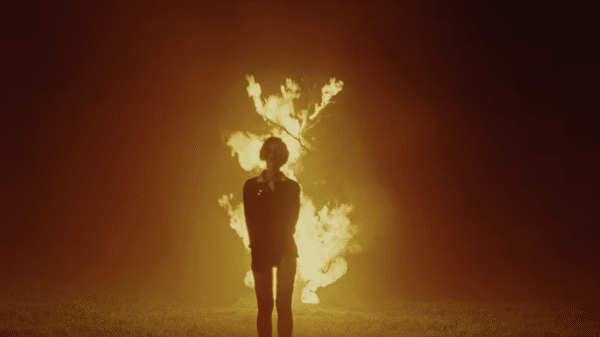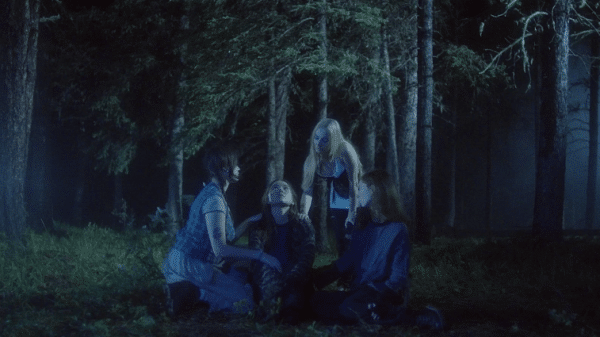
The original novel has been compared to Freudian concepts through its plot and characters; however, Guillermo Del Toro’s “Frankenstein” (2025) utilizes visual imagery to drive these themes much further.
Director Guillermo del Toro released his film adaptation of “Frankenstein” in theaters this October. It proved itself a major success through its short theatrical run and its domination of streaming charts since its release on Netflix. It has established itself as a major Oscar contender in Variety Magazine due to its cinematic and mentally introspective visuals, prompting much discourse online regarding its symbolic cinematography.
Freud’s philosophy
What are you afraid of? Our fears mark windows into our subconscious, representing repressions from our past. Philosopher Sigmund Freud refers to this concept as the uncanny — that which was once known and familiar transforms into something frightening. We fear what we know but cannot fully understand. Mary Shelley wrote and published her novel “Frankenstein” in 1818. This novel, while well before Freud’s time, encapsulates a perfect depiction of his ideology concerning the psyche.
Illustrating a lookbook of Freudian concepts, Del Toro blatantly references this ideology through the mass symbolism of Victor’s psychoanalytic experience. His team used striking imagery, fostering not just a film but a visual representation of the philosopher’s ideas, taking his audience on a tour of Victor Frankenstein’s subconscious as his inner shadows curate his reality.
Here, I have compiled a lookbook of Freud’s ideology as represented in the film’s imagery through styling, color, and scene, as they foster a beautifully unveiling window into the deeply disturbed protagonist’s mind.
Warning: Spoilers lie ahead.
Structural model of personality
One of Sigmund Freud’s most notable theories is that of the personality. He states that our personalities, the way we behave and perceive things, are split into three synergetic categories. These categories are:
- The id
- The ego
- The superego
The id
Freud borrowed this term from the German physician Georg Groddeck, who used “das es,” meaning “the it,” to describe the unconscious drives. The id controls our basic instincts. It rules over our primal urges as they manifest through means we can not control or understand naturally. This part of our mind seeks to fulfill our desires through the immediate gratification of pleasures. The id is exemplified through the mind of a child, acting rashly based on desire, without learned constraint.

When Victor Frankenstein’s creation, played by Jacob Elordi, comes to life, he remains at this low level of consciousness. He is not yet able to contextualize his feelings within a world he has yet to explore. It is only through Victor’s harsh reprimanding that he learns how to engage with others and his surroundings. When he escapes, he is confronted with reality.

The ego
Freud constructed the idea of the ego during his clinical experience observing internal conflicts of patients with conditions like neurosis and melancholia. This is our reality, our consciousness. It is how we have learned to counteract our id’s impulses to live a structured life by achieving balance. The id, known as the reality principle, molds our actions through what we know is morally and socially justified.
In Victor’s case, his traumatic upbringing has infected his ego with molded routes to safety. His ego proves destructive as it acts on repressed childhood trauma. In the novel, both Victor and his creation embody monstrous titles. This film adaptation paints Victor as the villain, as he corrupts the innocent creature.
The creature is learning the preconceptions of the world as he explores it for the first time. He learns of the justification of violence, and is nurtured by the nature around him. During the second half of this film, he develops his ego and learns to make his own weighted decisions.
The superego
He developed the superego to explain the unconscious guilt and moral judgment his patients experienced. Our superego is how we wish to perceive our ego. This contains the standards of being that we learned from parents and societal expectations. Our constructed, desired moral behavior and understanding of nature. This is our internalized standard for ourselves and our ideals. By not meeting them, we create feelings of guilt and inferiority.
Victor is full of shame and yearns for love, allowing this preconstructed sense of self to contaminate his actions. Victor Frankenstein makes a projection of what he cannot conquer in an attempt to regain power; however, he fails, leaving him feeling like even more of a disappointment. Because of this guilt, he resents his creation’s imperfection and rejects it as a failure, something to feel shameful about.
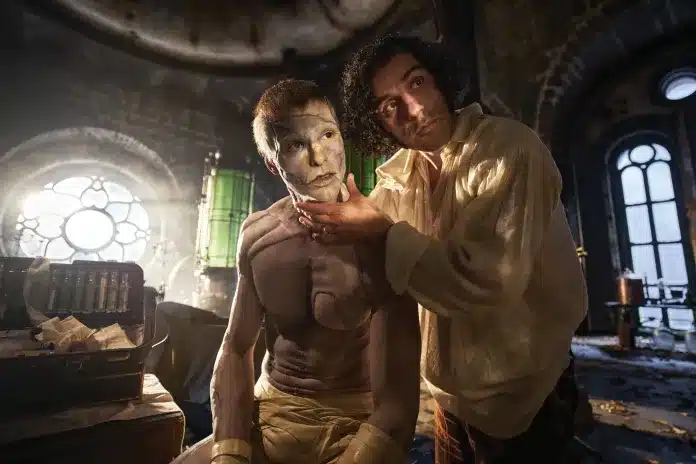
Freud believed that these three components are in constant conflict with one another, creating inner battles regarding our perceived image of ourselves.
Oedipus complex
Derived from the ancient Greek myth of King Oedipus, the Oedipus complex may be one of Freud’s most discussed theories. It illustrates a son’s inherent, subconscious sexual desire for their mother and rivalry with the father. He believed that as we age into the complexity of emotion, the son views his father as a competitive force for his mother’s affection. Oedipus was prophesied to kill his father and marry his mother, but in a mass attempt to overturn this prophecy, he unknowingly fulfilled it. This story comments on the power of free will and inescapable destiny. Freud applies this to our consciousness, as we cannot control or run from our mental shadows.
This concept is heavily relevant in the film as Victor reflects on his past relationship with his now deceased parents. He absolutely adores his mother and resents his father for his lack of support towards his child-self. In the very beginning of the film, a young Victor states that his father was mostly absent from his life, but that everyone, “bent to his will when he came back.” He continued, “The rest of the time, mother was mine,” initiating this sense of competition.
Del Toro’s decision to cast Mia Goth as both Victor’s mother and love interest in the film blatantly illustrates Freud’s belief. Elizabeth is the return of his suppressed grief towards his mother in the form of desire.
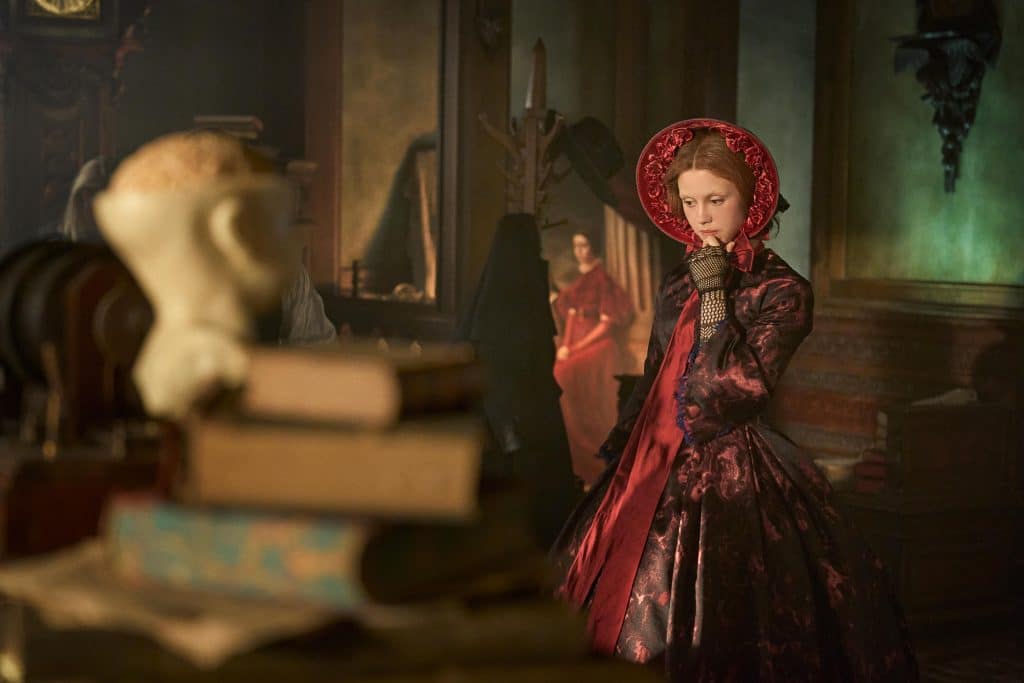

Freud refers to this cycle as repetition compulsion, the unconscious drive to relive painful past experiences. This is how the mind attempts to overcome or resolve them, rather than remembering and learning to move on. This often causes us to repeat self-destructive behaviors and foster dysfunction. His love intertwines with his guilt, conveying the complexity of human connection. What we seek from each other in the form of desire and relationships often stems from our unresolved trauma.
Constant consumption of milk
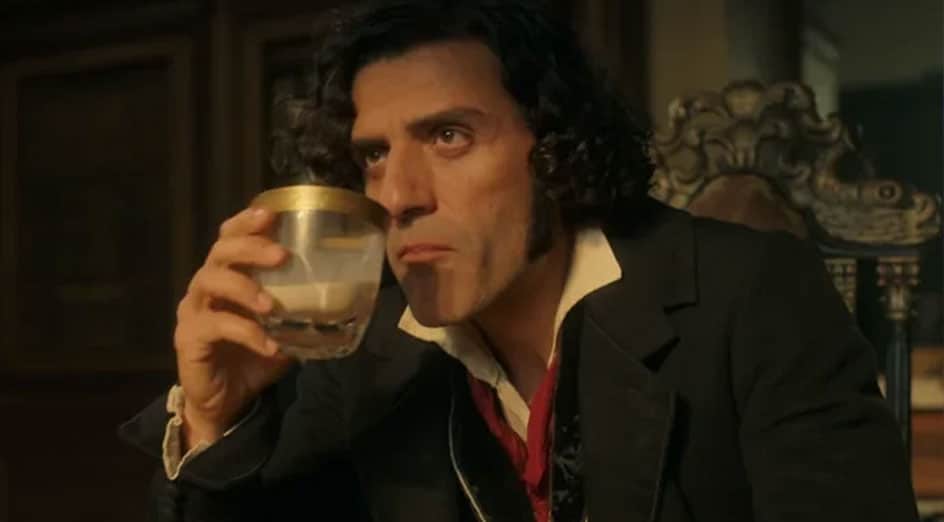
Victor is seen drinking full glasses of milk on a multitude of occasions throughout the movie. While milk is a standard symbol of purity, it has been transformed by the film industry as a wink towards evil. This allegory is used in multiple previous cases, such as the films “A Clockwork Orange” and “Get Out.” A young Victor is witnessed drinking milk while arguing with his father. Applying this knowledge, Victor’s immoral character is established from the jump.
He continues to indulge in the beverage long into adulthood, demonstrating how childhood conflict has stunted his maturity. Dan Laustsen, Del Toro’s Director of Photography for the project, as well as costume designer Kate Hawley, have confirmed this symbolic relationship.
Hawley says, “he is a man-child,” that the milk, “links him directly back to his mother.”
Usage of color
One of the most prominent utilizations of color is red. Red is utilized to convey passion and desire, referencing her womb as a source of life. The color is also seen under Elizabeth’s umbrella, as well as Victor’s gloves that he uses as he works on his creation. Victor’s mother appears in a red gown for the majority of the prelude, contrasting the dark and earthy tones that surround her character. This marks her as the center of life for Victor, one he desires and feels immensely for. In the scene of her miscarriage, her blood stains her surroundings, including Victor’s white blouse and young face. Further contaminating the purity of his childhood and unconditional love, he associated her with.
After his mother’s passing, he says the “firmament was now permanently dark,” utilizing color not only in the visuals, but also in his language to further convey the direness of her death in his life.
Elizabeth wears mainly green, representing rebirth and purity. She is feminine and safe.
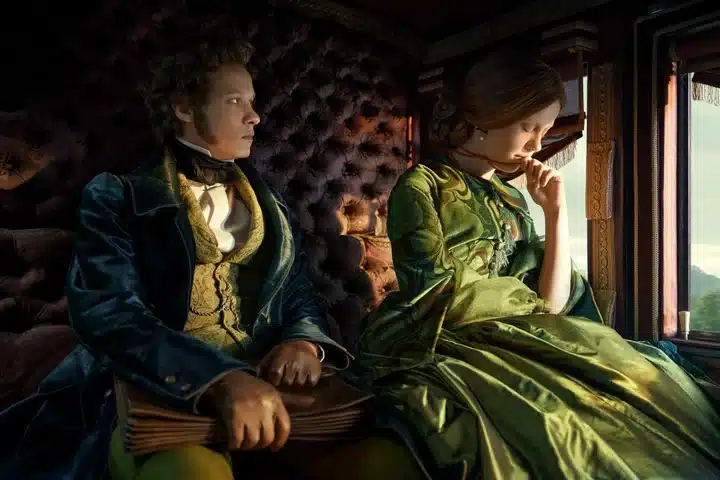
Through the utilization of color, he brings Freudian concepts to light. Every color utilized is an expression of the depths of Frankenstein’s soul, attempting to convey his confessions.
His repressed grief
He heavily represses his grief for his parents’ loss, allowing it to manifest in his actions of simulating life through his creation. In contrast to her passing due to scarlet fever in the original novel, in Del Toro’s take, Victor’s mother dies in childbirth. Victor Frankenstein is left with the impression of death at the source of life. He blames his father for this tragedy and grows to despise him. In adulthood, he attempts to embody the mother he loved so much by creating life himself, conquering it like he could not conquer hers. He wishes to care for him, as he never experienced with his father.

Review
Guillermo del Toro does an excellent and unique job of visualizing these themes through his direction, practically shoving Freud’s ideology down our throats. As the film industry becomes further corrupted with clipability and our weakened attention spans, it is crucial to pay attention to the media that works to teach us valuable lessons. While connecting with the experiences of these characters, we learn a thing or two about ourselves, and in turn, gain insight into our own lives and psyche.