
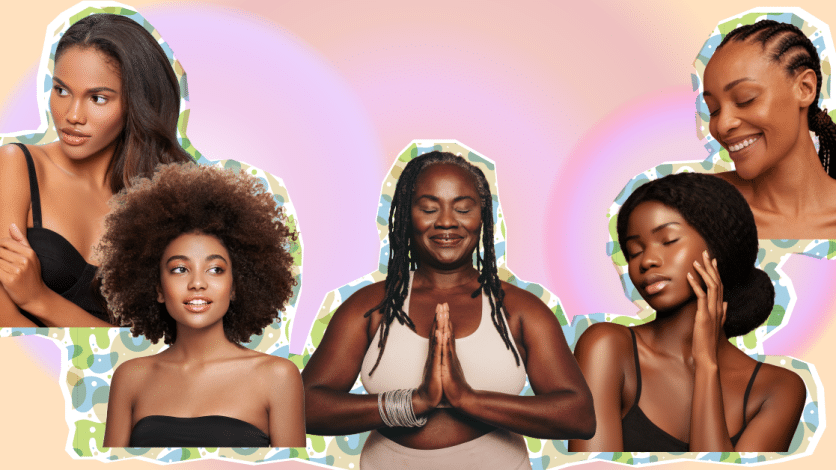
I’ve always known that hair speaks, maybe not in full sentences, but definitely in declarations. Even before we learn language, we know what makes someone get called “pretty,” what gets labeled “messy,” what earns a warning in school or a side-eye in church. And if you grew up a Black girl like me, then you learned early that hair doesn’t just sit there—it performs. It can defend, apologize, announce, and even betray.
But cutting mine? That announced something else.
The cut that changed my face back to me
At the end of my freshman year, I did something bold—or reckless, depending on who you ask. I chopped my hair off. Not a trim. Not a “healthier ends” situation. A real cut.
And though I’d always loved the ’90s short-hair icons—the Nias, the Halle Berrys, the Toni Braxtons—sitting in that chair, I realized the scissors weren’t just trimming strands. They were trimming fear.
Growing up, hair was the social currency of girlhood. We whispered about good hair versus bad hair like it was scripture, a hierarchy we never consented to but somehow memorized anyway. “Bald-headed” was an insult no one questioned. Length became proof of beauty. Texture became something to manage, soften, correct.
So when I sat there, I carried all of that with me—the fear that cutting my hair would cut my beauty, that a TWA (teeny-weeny afro) would make me look “older,” that my face wouldn’t be enough without something framing it.
I remember thinking my beauty might drain out onto the floor with the hair.
But when I looked in the mirror, I smiled. And didn’t stop smiling. It felt like someone had handed me back my own face.

Hair speaks before you do
That’s the thing about hair: before we say a word, it’s already speaking for us. In a conversation with Vogue, hairstylist Jawara Wauchope once described, “You can tell through someone’s hair what they’re going through, what they’re dealing with, how they feel about themselves.”
Before I open my mouth, a stranger has already decided whether I seem confident or rebellious, polished or unserious, approachable or intimidating. Hair becomes a kind of shorthand, a way people make sense of you without actually knowing you.
It’s frustrating. But it’s also real. Self-expression has become its own language, and hair is often the loudest dialect.
Stepping into color, stepping into self
During my sophomore year, I dyed my hair a bright, rosy ginger—the kind of color that shifts in the light and makes you walk a little differently. It was noticeable. It was playful. And it surely didn’t blend in.
But here’s the part people always misunderstand: the color wasn’t a statement.
There’s a difference between styling yourself to be read and styling yourself to feel at home. A statement expects an audience. It anticipates interpretation. This didn’t. I dyed my hair because I liked it and it felt accurate. For once, I wasn’t asking whether it made sense to anyone else.
That choice felt radical precisely because it wasn’t performative. It was quiet and internal, unconcerned with approval. And for someone raised to believe that every visible choice must be justified, that kind of self-directed decision felt new.
When Hair Becomes Political
Hair becomes political not because of the styles themselves but because of the meanings placed onto them. Across womanhood and femme-presenting identities, hair is where femininity gets sorted and desirability gets ranked. A pixie is “brave.” Coils are “natural.” Color is “experimental.” None of these words describes the person—they describe the assumptions made about her.
The pressure isn’t just to look good, but to look legible. So the question becomes: what do you do when your hair speaks before you do?
How to speak back
You start speaking back: slowly, intentionally, and on your own terms.
1) Choose the version that feels the most like you.
Choose the hairstyle that feels like you, not the one that earns the most approval.
So much of how we style ourselves is shaped by external feedback—compliments, family preferences, what’s deemed “safe.” Over time, that noise can drown out your own voice. Choosing honesty over approval is an act of self-trust. It’s you deciding that your comfort and recognition in the mirror matter more than being legible to everyone else.
In real life, this might mean finally cutting your hair short, letting your curls exist as they are, or abandoning a look you’ve outgrown. Emotionally, it feels like relief, like you’re no longer auditioning for belonging. You stop asking, Will they like this? and start asking, Do I recognize myself?
2) Don’t confuse professional with self-erasure
Present yourself with intention, but don’t shrink yourself in the name of professionalism.
“Professionalism” is often framed as neutrality, but neutrality usually has a very specific look. When we’re told to tone it down, flatten it out, or make it “make sense,” what we’re often being asked to do is erase parts of ourselves to make others more comfortable. There’s a difference between being polished and being afraid.
Practically, this means choosing styles that make you feel capable and grounded, not invisible. Emotionally, it means releasing the belief that your intelligence, work ethic, or credibility depend on how closely your hair aligns with someone else’s expectations. Your competence does not live in your texture, length, or color. And anyone who suggests otherwise is revealing their bias, not your limitations.
3) Let your hair evolve as you do.
Give yourself permission to change—again and again.
We often treat consistency as proof of authenticity, but growth is rarely consistent. Hair is one of the few visible places where change can happen without explanation. Allowing it to shift alongside your life is a way of honoring who you’re becoming, not clinging to who you once needed to be.
This can look like coloring your hair during a season of boldness, cutting it during a season of release, or growing it out when you’re craving softness. Emotionally, this process teaches you that transformation doesn’t require justification. You’re allowed to move forward without narrating every step.
4) Use visibility as a tool, not a burden
Being seen isn’t something to fear; it’s something you can wield.
Visibility is often framed as danger, especially for women and femme-presenting people. But hiding yourself doesn’t actually protect you; it just delays your freedom. When you choose how you show up, visibility becomes agency rather than exposure.
In practice, this might mean wearing your hair the way you love it, even when you know it’ll be noticed. Emotionally, it’s the quiet confidence of standing in your body without apology. The world will have opinions regardless—the difference is whether you let those opinions shape you or simply pass over you.
In conclusion…
Here’s what I’ve learned—and what I’m still learning: hair isn’t really about beauty or desirability. It’s about honesty.
It’s about recognizing yourself without negotiation, about letting your reflection catch up to who you already are inside. Hair will always communicate something—that part we can’t control. But what is the meaning and intention behind it? That belongs to us.
The real power is deciding who you are before the world decides for you.