
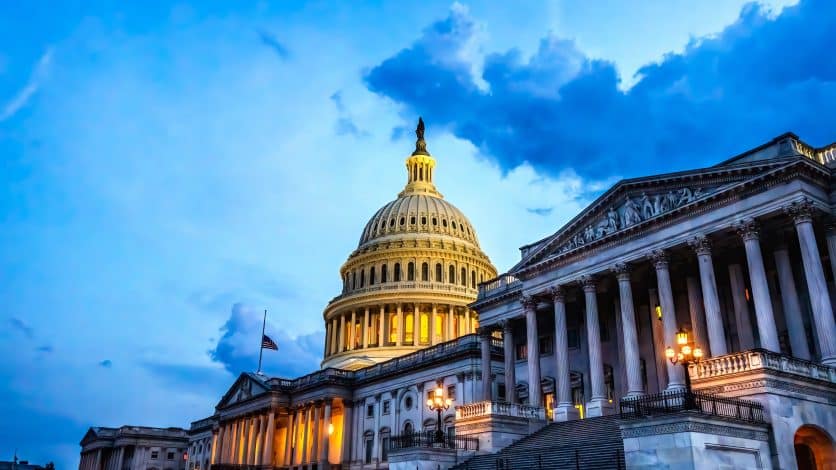
35 days; that is how long the previous government shutdown in the United States lasted seven years ago. Similar to the last halt, Americans were left in a dystopian daze. Queries hung in the air, the biggest of all being, “What does this mean for us?” For many, this is just as horrifying as the last shutdown. History is once again proving itself, as that too is the burning question right now.
Legacy media outlets such as AP News and The New York Times were quick to inform the American public about the government shutdown on October 1. Since then, two weeks have passed. 14 days of unknowns and constant media coverage- an overwhelming phenomenon.
The lead up
Starting from the ground up, the three branches of government (legislative, judicial and executive) must agree on proposed spending bills. Meaning both the Democratic and the Republican parties must agree on spending and slashing.
As the BBC put it, “The shutdown happened because Republicans and Democrats could not agree to pass a bill funding government services into October and beyond. Under the US system, the different branches of government have to reach an agreement on spending plans before they can become law.”
A dilemma arose from a disagreement between the two parties. According to the BBC, Democrats want to extend expiring tax credits, which make health insurance cheaper for millions of Americans. They’d also like to see a reversal of Trump’s cuts to Medicaid, a healthcare program utilized by millions of Americans. This reach ranges from low-income individuals to the elderly. Democrats also oppose spending cuts to government health agencies.
All of these desires were rejected on the Republican side.
There was an attempt to stop this shutdown via a stopgap bill, but it didn’t clear the Senate. Essentially, it would’ve temporarily funded the government. Giving them the chance to extend their discussion around spending and come to an agreement.
Cause and effect
Following causation comes effect. What does this mean for the American public? Many federal workers are clocking in and being paid. Meanwhile, essential workers are not receiving a stipend. So, what differentiates the two? Federal workers are individuals involved in the government. On the contrary, essential workers are people who work in roles which aid the government.

For instance, our president, Donald J. Trump and members of Congress are examples of federal workers. Whereas, those who are active-duty in the military are considered to be essential workers.
In contrast, an example of an individual who isn’t being paid right now is Transportation Security Administration agents (TSA) in airports. They were established after the 9/11 attacks in 2001 to provide airport goers with a safeguard. Understandably, not many people want to work unpaid. Resulting in the chaos and delays happening at airports right now.
They simply don’t have the bodies or the resources to function.
Forbes, an American business magazine, stated the White House said furloughed federal workers may not be paid for their labor once the government reopens. This directly contradicts a 2019 law, the Government Employee Fair Treatment Act; an act that states retroactive pay is required.
In other words, legally, these federal workers must be paid for their hours clocked during the government shutdown.
A glimpse into the damage
Since federal employees aren’t being paid, resulting in a lack of working people, the general public is left to suffer. Delays are being experienced across the country. The most noticeable instance is at airports, where flights are being delayed and canceled. According to CBS News sources, Fox Business, before this shutdown, air traffic controller shortages caused 5% of flight delays. Now that number is 53%, a whopping ten percent uptick. The main concern is that these delays heighten as staff shortages also worsen.
Though, this is only scratching the surface. Truth is, Americans from all walks of life are being effected.
An ongoing issue
This is an unwraveling event since the U.S. government has yet to find a resolution, meaning the American public is left in waiting. With that, there is still more to be learned. However, that is not to say the nation should be in a state of panic.
As of Oct. 16, according to NBC, Senate voted for the shutdown to end for the tenth time. This instance also ended in a Senate bill failing to pass. Nonetheless, there are genuine attempts being made to come to a resolve.