

At a big, shining industrial kitchen, with 10 different dinners cooking, cartoonishly bright faces stream between stations in a frenzy, bending around each other. The clattering of pots and pans punctuates long strings of laughter and excited conversation as another beer is accidentally knocked to the ground. The cooks squeal in mock dismay, the amber fluid bubbles into the tiles’ crevices. This scene once felt like home. But time turned it sour and garish to my senses. Now, I feel like a stranger fogging up the window, looking into a home I once owned. My community isn’t here; I’ve got to find it.
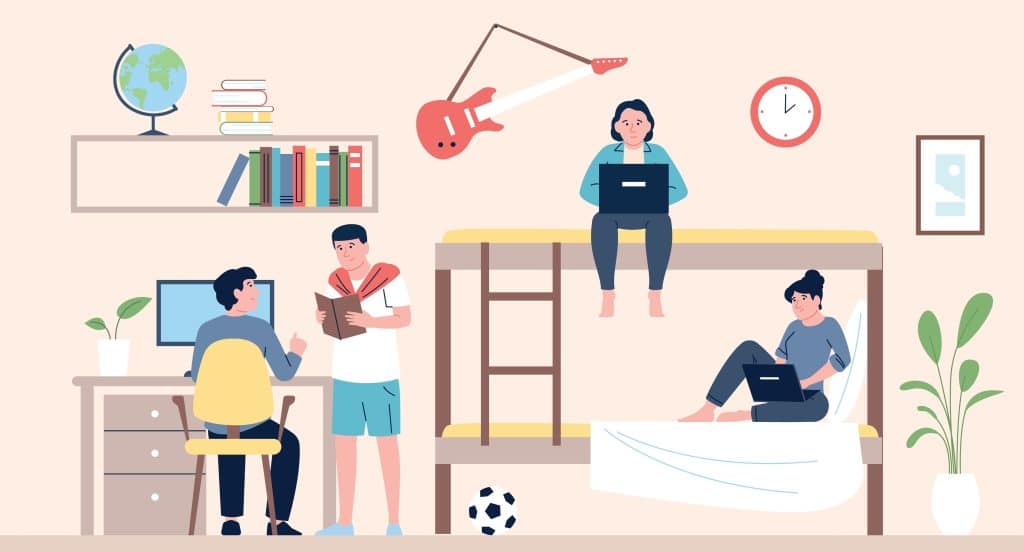
In their freshman year of college, many students willingly choose to live in a dorm room with strangers. They figured, as did I, that it would be a great way to meet new people and fully immerse themselves in the “college experience.” With random room assignments, it’s a roll of the dice. Will I bunk with psychos, keep-to-themselves-types, or a future best friend? I threw a neutral roll: I met my best friend, but our psycho roommate terrorized us. Realistically, It was probably cowering in our shared fear that bonded us. But there are more people to sort out than just your roommates. On my floor there were 15 other strangers to diagnose.
Getting along with these strangers was essential to survival. We all shared a coed bathroom, ate at the attached dining hall, and studied in the mid-hallway lounge together. Acquaintance-hood dissolved, and friendship followed naturally. Inevitably, lines were drawn in the sand, cliques were made, and rumors were spread—with intimacy comes drama, of course.
Some of the floor’s residents felt uncomfortable operating within this mini-society— this pre-built, at-home community. Having met no one who suited their fancy, they’d leave for friends they’d made outside of the dorms. Some holed up in their rooms, counting the days until they could escape from this interminable collective and graduate to an apartment. I was fortunate that I’d found a great group of people on my floor. Without them, I would’ve had a freshman year of significantly darker shades.
A transition from this to that
As the freshman year was ending, everyone was going their separate ways. I was excited to leave but I had grown fond of this social blanket. It was the perfect amount of suffocating distraction. Surrounded by activity, I was never alone to think. That dark pit of isolation and uninterrupted, self-examining thought was kept at bay. In retrospect, it’s clear how afraid I was to be by myself.
The idea of settling down in an apartment with a couple of the guys severely bored me. I’d have my whole life to live in a small, dingy apartment, and hunting for one seemed so grimly “adult” that I might as well open a 401(k) and start using a briefcase. Deeper in my worries, I fussed about choosing the right roster of roommates (balancing archetypes and whatnot). And if I did ask them and they had other plans, I was screwed. It felt like prom all over again—in which I did not, as a matter of fact, get screwed.
Suffice to say, moving into a space full of strangers and new energy would surely keep this social hamster wheel rolling. I wanted a charismatic family of characters, like Friends, to swoop me into their established routine like some fifth-season add-on. I wanted my college life to be full, fast, and, under no circumstances, dull. A friend of mine was moving into a co-op, and her description paralleled my romantic ideal. Co-ops, in Berkeley, are student-run and more like a big house with a lot of rooms, rather than an apartment isolated from the rest of the complex. There are group dinners, encouraged “hanging,” and plenty of parties. Sounds snug, right?
So, one glossy spring morning, I strolled by a co-op near hers and decided to knock on the door. It was the only co-op still accepting applicants, and it was all-male. This worried me, but they assured me it was not a frat. Phew, I don’t think I’d last long in one of those condensed vats of faux-masculinity. I asked if they had rooms available for the coming Fall, and they said they did. They gave me a form to fill out, and I dropped it off the next day.

This time it was different
Come fall, I was once again surrounded by new faces. But this time, it was different: there was more than I could account for. Compared to my dorm floor of 20 people, this place had twice that many. It was thrilling, if not a little overwhelming. For the first month, every corner I turned involved meeting someone, shaking their hand, and talking about ourselves. By the 30th dude, I had established an internal bullet point list of my background facts so that I could regurgitate everything in record time and get back to listening. I realized that I’m not too fond of how I present myself in mass introductions. However necessary and rude to avoid, these talks felt like speed-running a relationship. It was a constantly rotating buffet of small talk. As the only new guy, I had my plate full.
The house’s dynamic was fascinating from a newcomer’s view. They were so close! There were relational strings stretching, weaving, and reconnecting all the time. The chaos of it was really akin to TV entertainment, like one of those lovable sitcoms. With the cohesiveness of a family, they talked so familiarly: conversations infused with a plethora of inside jokes and historical anecdotes of “that time when….” And I couldn’t wait to take part in a new set of embarrassing memories that we’d reminisce on and shake our heads at, laughing.
And they moved as a pack. Outside the house, all their activities were intertwined so that no one resident could be found without at least one other. You might say that their unremitting intimacy bordered on cultish, but I was a fanatic. It was intoxicating. I desperately wanted to be initiated as a regular of this club. I spent so much time trying to convince them that I was “worthy.” What a waste.
The rug pulled
Some weeks dripped by, and my efforts to assimilate were fruitless. No set cast of characters revealed itself as my “TV family,” and I remained as an extra on the production’s outskirts.
For whatever reason, they communicated on a wavelength that I couldn’t dial into. It was exhausting to decode, and frattier than I had expected. Overwrought with “bro-isms” and topics of little interest to me, like the intricacies of fantasy football or the downfall of Kanye. I’ve never had as much passion about anything as some of them did about nothing; I couldn’t understand.
It’s not that we didn’t get along. I could make conversation fine, in the kitchen or passing in the hallway, but it was phony. I was a stinking, social faker. The interchanging facades I donned to match my perception of them, to conform to their countenance, drained the essence of my own identity. If I could just relax and be myself, things might’ve been easier, but I couldn’t drop my guard. If it was my inflated anxiety or an actual disposition I was reading off them, it didn’t matter—my existence was a fraudulent imposition. Wretched and spiteful, I turned, a pariah forsaking his parish.
Perhaps giving up too soon, I fell inward, increasingly projecting a distance between me and them. Whether real or illusory, a wall was forming, fortified with a new brick after each disappointing interaction. I started to forget myself. In my own home, I was becoming a ghost—so I felt. Lost and drifting in the land of the living, I was a pleasant poltergeist, but just that.
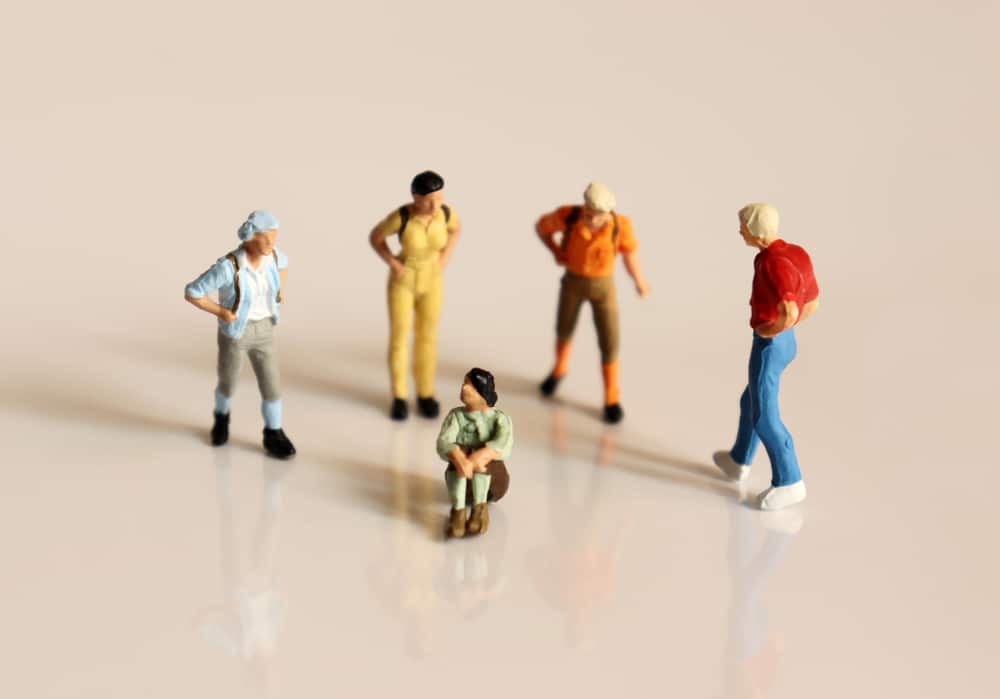
Where to go? Who to be?
Even in my room, I discovered, I couldn’t escape, even as I became more resentful and bitter. There wasn’t a moment of silence to be found in this thin-walled house. It really was a rollicking Fraternity, disguised in sheep’s clothes.
Any decibel of noise from human interaction would bounce around the walls of my room and then enter my skull to do another round. Laughter would mock me and spur envy, suggesting that someone’s having fun while you’re not. Music would give me a headache with a tempo. I thought I could turn to my work, to reject this plan of conformity and at least be productive, but my angst overwhelmed my concentration. The phantoms of my loneliness grew weighty from the shadows until their presence cut me off at all turns.
In the midst of a happy crowd, one can feel the most inflated loneliness. You are constantly reminded of what you do not have, as the solution taunts you within reach. I was a drowning crouton in a soup of contemptuous isolation. This wasn’t me. I considered myself outgoing and amicable, but I didn’t know how to dump this dark spiral down the drain. I needed to get outside and flip my head around.
Why did I think that this community would be such a good idea? The concept of it was risky, I now realized. Stuff yourself into a closed box with a bunch of strangers (too many to truly “befriend” anyone), sign a non-reversible lease, and hope for the best. I guess I thought that everyone needs a community. But a new theory was forming to adjust that assumption: a community fostered naturally (and vetted)—that one wasn’t in constant proximity with—was more in line with the type of person I am.
I wanted to choose my friends, not be thrust upon people expecting trust as a given. For me, that had to be earned. Also, my friend group doesn’t need to be 40 damn people. I was exhausted; the stimulation hammered me into social comatose.
How to cope, after it all
Well, now that I had my priorities straight, I changed my sights. There were people in my life who made me feel good; I just had to find them again. I’d been so caught up in the whirlwind of “winning” at this new place, and so selfishly invested, that I’d ignored my day ones: the dorm squad.
I hadn’t exactly ghosted them, but I had been flaking in pretty jerk-like fashion. It should’ve been harder to reestablish myself in their now extended milieu, but it wasn’t. After a couple of texts, plans formed. We met up the same week at a park, far, far away from my house. We caught up and got food. There were new people in the group now, beyond my core freshman mates, and befriending them didn’t carry the same stakes as it did in my house (i.e., having to still live with them, even if we disliked each other). It was lovely and unpressured, and this was conducive to success, I found. My outside network grew.
On a regular basis, we continued to see each other. Slowly, my social life refilled with faces that I was glad to see. A sense of confidence and identity was being restored; I was remembering what genuine friendship should feel like—not a performance, appealing one-sidedly to a non-enthusiastic stranger, but just being amongst people who didn’t ask for more. Not to mention, the option to say goodbye and miss them before the next time we met.
To you, if you’re here.
Asking around, I discovered that my experience was more common than I thought, and that many people also struggled to find footing in their community housing. The most common phrase I’d hear in our commiseration was: There are just too many people. And I knew exactly what they meant.
At first, I thought the layers of relationships would add depth to my life—i.e. figuring out who were enemies, best friends, new or old lovers—and at first it did. I was dorming in a soap opera. But as I found myself slowly spun in that web of tensions, I didn’t like how I matched up as a participant. Comparison struck my confidence down, for I could never attain the interesting plot lines everyone was so wrapped up in, nor did I want to. I was, and am, a simple man who enjoys watching.
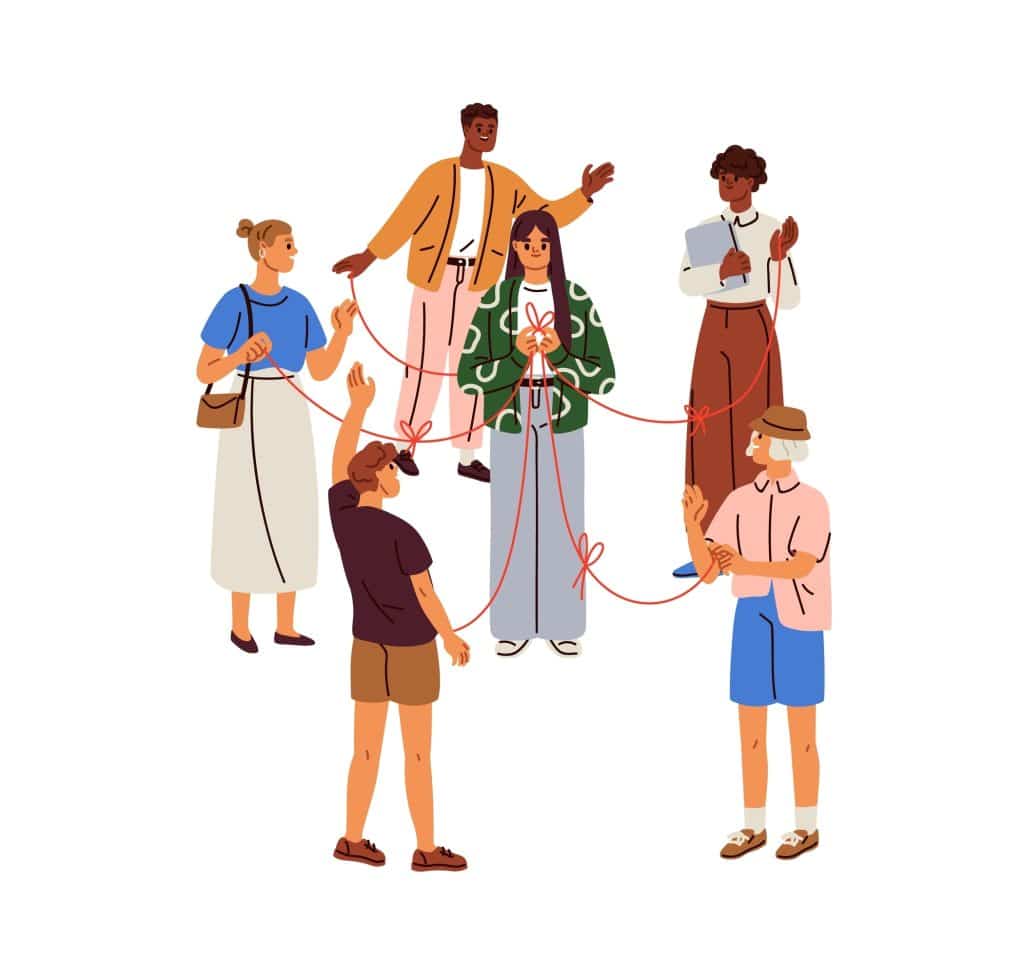
So, to you, reader, what if you are where I was? What if you are reading this right now, trying to find some semblance of quiet by which to read, but your co-op’s hallways are boisterous and unrelenting? What if you’re in your own home, surrounded by people, but feel nothing of support or community? You can’t just leave—no, there are bureaucratic factors that make that too difficult—and you can’t turn on everyone, it’ll just intensify your problem. The best remedy I can suggest is a change of perspective.
It’s easy to make your immediate environment your world. It’s even easier to forget that there is a whole range of experiences outside of it. If your world is inhospitable, it might be hard, but you can leave the planet, if only for a day. There is life out there, I promise, but it won’t always come to you. You must find, foster it, and hold it in your heart on your weary return. Plant this seed, and it will grow into a new world, so you needn’t leave anymore.