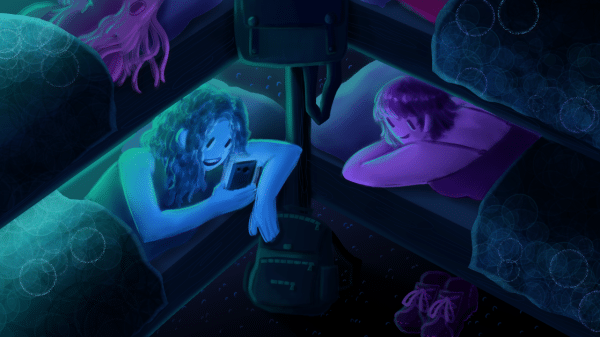
In the information age, data is currency, your life is a product, and privacy is a relic of the past. Anxiety that someone is always watching you used to be paranoia. But now it’s fact. The government and private companies collect everything. But in the 21st century, surveillance has become more than a tool of business or power. Surveillance is a cultural phenomenon that weaponizes us against ourselves and each other. So how do you survive the modern panopticon without spiraling?
Many of us have joked about our personal NSA agent monitoring us or phones listening to our conversations. But most of us don’t know just how true that is. Deep diving into the data stored on you is existentially horrifying.
“If you’re an American adult, the odds are that [IT] knows things like your age, race, sex, weight, height, marital status, education level, politics, buying habits, household health worries, vacation dreams — and on and on” (NYT).
In the 2010s, private data companies like Acxiom processed more than 30 trillion data “transactions” a year. While the NSA stored 1.7 billion e-mails, phone calls, and other types of communication a day. With all the new technological advancements we have today, their scope is unquantifiable.
It’s mind boggling. But the Big Data industry and aggressive surveillance policy have conditioned us into believing that it’s normal. So normal, in fact, that surveillance has become ingrained into our culture.
We share and post everything: our experiences, locations, meals, relationships, preferences, mental illnesses, thoughts, etc. We record ourselves and strangers without a second thought about how that information could be exploited. And you better believe it gets exploited.
Your data is used to do everything from reccommend you personalized ads, to surveill, harass, and detain political dissenters. And by surveilling each other, we’re only making it easier for them. But what about us?
When’s the last time you really danced in public? Or released your inhibitions? (Felt the rain on your skin?)
We embrace surveillance culture because it’s easy, and seemingly insurmountable. But in doing so, we participate in the erasure of our spirits, freedoms, and what makes us fundamentally human. We deserve better.

The history of American surveillance
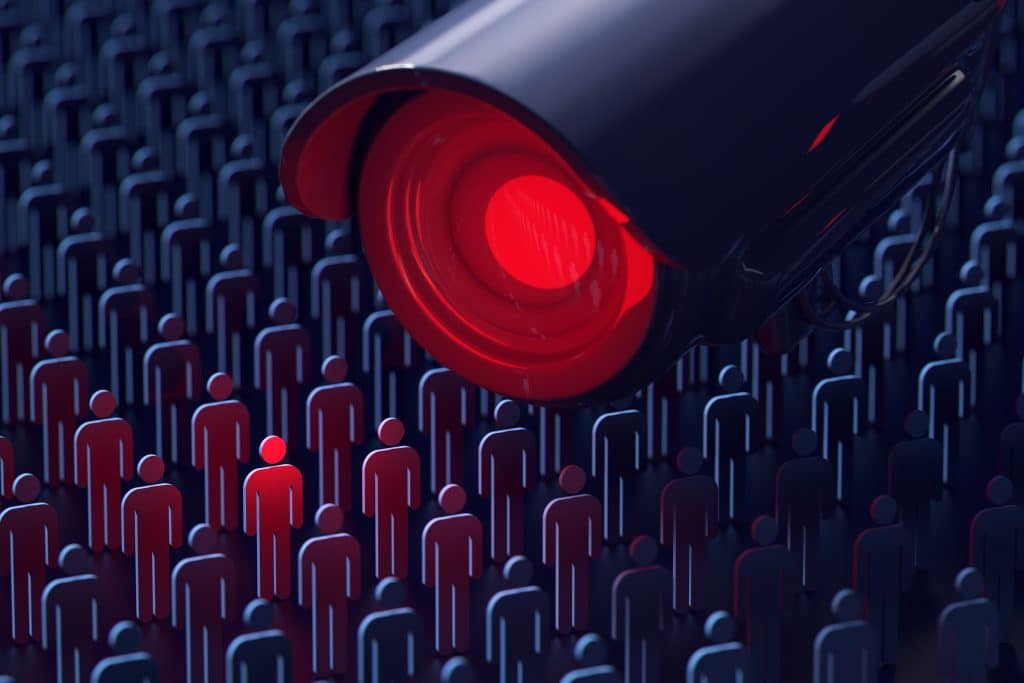
If information is power, then it’s essential you arm yourself with an understanding of the history of surveillance and privacy in America. Despite what people think, these aren’t new issues. The advent of the Internet exponentially worsened things, but these concerns have been on the American mind since the start of the 20th century.
Since the 1910s, the U.S. has been using the FBI, CIA, NSA, and loopholes in new technological opportunities like wiretapping to track and infiltrate “leftist” groups they disagree with (Origins).
In the 1950s and 60s, people worried that the development of technological advancements like the mainframe computer would create the risk of an “information tyranny.” People saw technology developing faster than protective legislation could be passed. There was too much opportunity for the government to exploit citizens without legal recourse. And that’s exactly what happened.
20th Century surveillance history
When President Lyndon B. Johnson proposed a federally controlled data center, the National Data Bank in 1965, journalists, writers, and human rights lawyers sounded the alarm.
It wasn’t baseless paranoia, they were trying to prevent the future we’re currently living. They saw a clear connection between mass data collection and violations of freedom and democracy. And they were desperate to prevent a world in which
“‘…technological advances could be turned around on the American people and used to facilitate a system of government surveillance.’ If the U.S. continued down this path, [Senator Frank Church] cautioned, ‘No American would have any privacy left,’ emphasizing that…’we must never cross over that abyss. That is the abyss from which there is no return'” (MIT Press).
But despite these objections and warnings, they were not able to stop that future from becoming real. Their conversations informed surface level privacy policy and protections in documents like the Privacy Act of 1974. But these mandates only required transparency, they did not provide concrete protections against data collection, abuses, or private institutions (NYT).
And the government repeatedly abused that fact. In a 1975 investigation of intelligence abuses by federal agencies (including the CIA, FBI, NSA, and IRS), “the [Church Committee] revealed extensive government spying on American citizens, often based on political beliefs with no link to violence or foreign threats” (MIT Press).
This is how data collection and surveillance is used to infringe on democracy. The government tracks and harsses anyone they suspect of being involved in “civil disturbances“—whether that’s the “anarchists” and “communists” of the Red Scare, the civil rights activists that marched alongside MLK and the NAACP, or the Vietnam War protesters of the 1970s. This is a fact that remains consistent today, as police repeatedly use drones to surveil anti-ICE and pro-Palestine protests, BLM marches, and even cultural festivals.
In this kind of world, it is easy to justify any number of clear human rights violations. All you need to do is classify those that express “transgender ideology” as “nihilistic violent extremists,” or declare cities with anti-ICE protests as “war zones,” and you can spy on whoever you want.
Surveillance and privacy post-9/11
If the situation was bad before, the situation post 9/11 and the Patriot Act can only be described as catastrophic. Stay with me through this next part, because it’s directly related to your rights.
The Patriot Act was a mass revision of the nation’s surveillance laws that “vastly expanded the government’s authority to spy on its own citizens, while simultaneously reducing checks and balances on those powers like judicial oversight, public accountability, and the ability to challenge government searches in court” (ACLU).
Under the Patriot Act and its amendments (the Protect America Act of 2007, and the FISA Amendments Act of 2008), the government has the ability to commit a whole host of ethically fraught invasions of privacy and acts of intimidation.
Some of the highlights of the Patriot Act include:
- Expanding the government’s ability to look at records on an individual’s activities being held by third parties.
- Allowing surveillance orders to be based on a person’s First Amendment activities
- Creating a new crime of “domestic terrorism.”
Esssentially, everything you do in public, private, and on the Internet is free-game for the NSA. This surveillance policy is what allows the government to detain students for articles they write, ban tourists for memes about JD Vance, and prosecute, detain, and deport ICE protesters and immigrants (ACLU). The same policy that makes you take your shoes off at the airport is used to systematically stalk and harass people.
“After 9/11, the FBI developed a system of ‘ethnic mapping’ and broadly infiltrated mosques, tasking informants with relaying attendees’ conversations. Since at least 2015, federal agencies have closely monitored Black Lives Matter protesters’ social media posts, tracked their protest activity, and, in at least one instance, opened intelligence files on journalists covering racial justice protests. [In 2021], we learned that the Trump Department of Justice obtained the communications metadata of Democratic lawmakers and their family members, including a child” (Brennan Center for Justice).
This reality didn’t come out of nowhere. It’s a direct result of lax legislation, corrupt lobbying, and our low awareness of privacy policy. What may seem like a fruitless battle to some, is the difference between liberty and fascism for the rest.
Modern Applications of Surveillance
Unfortunately, it gets worse.
Intelligence and civil rights abuses have become so bad, that many have given up caring about them. This magnitude of corruption is incomprehensible, and leaves many feeling powerless to do anything. So, people do nothing. And it’s that exact attitude that allows it to get worse. Those that wish to exploit you rely on you being too overwhelmed to care.
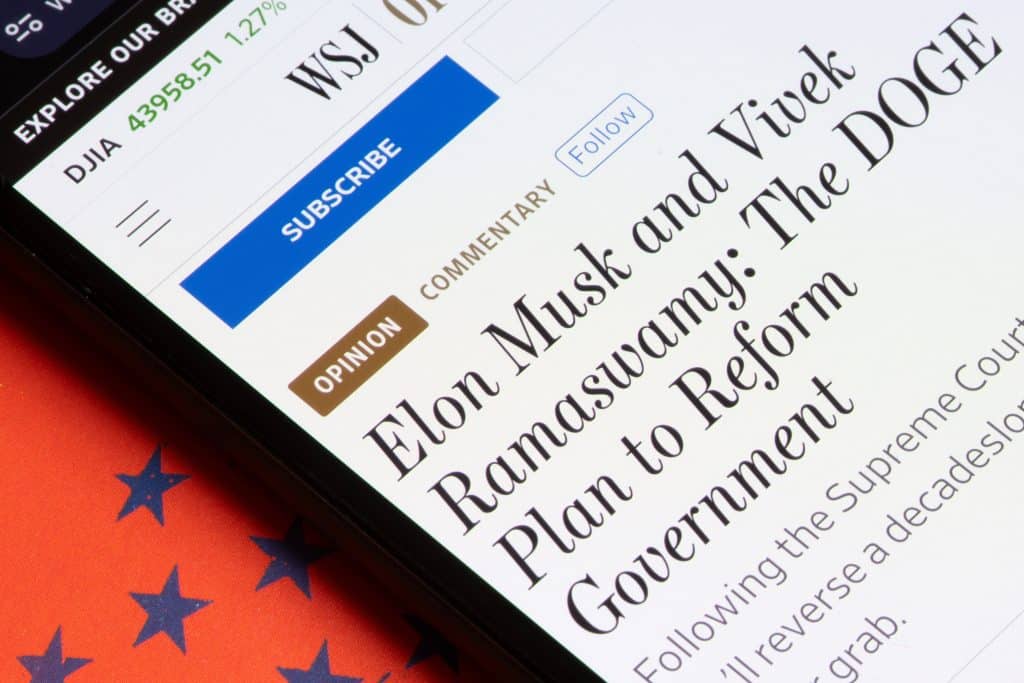
So, when a Texas police officer uses automated license plate readers (ALPRs) to conduct a nationwide manhunt for a woman who had an abortion, it flies under the radar. When Elon Musk uses DOGE to systematically undo what few privacy protections we had left, it’s a normal Tuesday (The Atlantic).
This is not normal. It’s not normal to comb through 83,000 ALPR cameras across the nation to catch a woman for having an abortion. That’s The Handmaid’s Tale. It is not normal to allow third parties that aren’t even elected officials to “intimidate, steamroll and fire [federal workers], enter their IT systems, and access some unknown quantity of data” (The Atlantic).
I mention all of this history, not to scare you, but to illustrate the depth of the issue. It feels ridiculous, but there is a direct correlation between the privacy policies you mindlessly agree to online and the erosion of human rights. Our haphazard relationship with privacy isn’t coincidence, it’s the result of a long battle against totalitarian surveillance.
Cultural surveillance: the digital panopticon
What does culture look like in the surveillance state? In a word: hellish. Constant governmental and private encroachments on privacy reinforce the idea that privacy doesn’t matter. The policies post 9/11 are particularly culpable for this shift in the culture. We’re comfortable sharing unprecedented amounts of information about ourselves, and others.
If we have nothing to hide, we have nothing to fear, right?
Except, it seems we’re fearing more than ever.
Club culture is dead
Go to any club in America, and you’ll find a herd of 20-30 something-year-olds just standing on the dance floor. Maybe they’ll throw up a hand gesture or two, hit a little sway if they’re feeling frisky. But they’re not really dancing.
Ask them why and you’ll get a tragic answer. People are afraid. They’re afraid of being recorded. Afraid of looking like a fool. Afraid of going viral. And worst of all, afraid of one night of fun following them for the rest of their life.
It’s become such an issue that Tyler the Creator even commented on it for the release of his new album, Don’t Tap the Glass. He posted on his Instagram story:
It’s not just us either. It’s an international phenomenon. Clubs around the world are pushing for no-phone policies to combat the issue. Dancing and enjoying music are fundamental parts of being human. That people should fear that is tragic.
But the fear isn’t unfounded. In the case of 64-year-old Michael Peacock, most people’s worst nightmare became his reality. Someone filmed him dancing at London’s Fabric Nightclub, and it ended up going viral. He then received a torrent of homophobic and offensive hate comments.
Peacock is not a special case either. There are hundreds of cases just like his online. And they’re not just exclusive to the club. Everywhere you go there’s someone with a camera ready to ruin your life for the crime of having a good time. This isn’t the government, or some evil corporation. It’s just us. We are the surveillance state.
“When we do this to ourselves, when we do this to each other, it inhibits us from sharing the world with others. Like, the fear of going viral, the fear of being surveilled, the fear of being called out. I think these things all drive us away from public life, and they drive us away from the things that should make us happy. And people wonder why people want to date ChatGPT” (Wagner NPR).
The aestheticization of surveillance
While we gain more awareness of surveillance and our lack of privacy, our anxieties begin appearing in the art, music, advertisements, and media we consume. Our fears become commercialized into the “surveillance aesthetic.”
Being watched isn’t just dystopian anymore, it’s editorial. It’s so haute it almost makes you want to be surveilled. Which is certainly convenient for the government and private institutions.
But it’s not all explicit CCTV photoshoots. There’s a more covert form of the surveillance aesthetic spreading: the obsession with the “candid moment.” This is more difficult, because it’s cloaked in the best of intentions. It logically follows that when everything is fake, we desperately want to see things that are real. We crave the purity of authenticity. Moments like these, for example, are incredibly sweet.
Hundreds of people post videos just like this, because they reminds us of the beauty of humanity. But most people get so caught up in the beautiful moment, that we completely forget how God damned weird it is to be filming someone through their window. I’d argue it’s weird to be filming strangers at all.
But constant surveillance has irreversibly eroded our sense of boundaries. If everything’s recorded, recording others isn’t a big deal. Right? Except, no, it is. Just because nonconsensual recording is cute, doesn’t make it less of a violation. To be crass—coating a turd in sugar doesn’t make it a cookie. And frankly, we shouldn’t be okay with turds in the kitchen at all.
Entitlement and socialized surveillance
Lacking protections on privacy don’t just normalize surveillance, they create a sense of entitlement to it.
Go into the comments of someone recording a stranger online, and you’ll find a sea of the same inane arguments. People believe they have the right to record anyone they want, whenever they want. “If you’re outside in public, anyone can see you! So, why does it matter if someone records you? Or posts it? It’s the same thing.”
But that’s one of the most egregious false equivalencies I’ve ever seen. It is obtuse to compare agreeing to be seen by the 10,000–100,000 people in your town to agreeing to be seen by millions to billions of people online. And that doesn’t even factor in the permanence of the Internet.
History teaches us that your locations, your first amendment expressions, your activites, everything can be used against you. Because of that data they can deny your insurance, surveil you without notice, and even detain or deport you. So when you carelessly post this kind of crap, it’s not a game. You’re potentially ruining someone’s life.
And new technology like Meta’s Ray-Ban glasses is making nonconsensual recording easier than ever. So now, God forbid you have one bad day in public. It could be used to humiliate you online forever.
Why would you fight so hard to become an agent of the surveillance state? For likes and views? Is that how cheap our bond with our fellow man is?
Recording’s not the only issue, though. We have an unprecedented amount of access to people all the time. And it’s made us entitled to information we don’t have or need.
You get to know your friend’s locations and what they’re listening to through Snapchat and Spotify. Cyberstalking people you’re dating or talking to is almost a pasttime nowadays. Kids as young as 10-years-old are cyberstalking each other. But why wouldn’t they? Society teaches us that it’s normal. Parents track locations 24/7, why can’t children do the same?
There’s no end to it all. And meanwhile, all of this data funnels into predatory data centers.
Morality policing
One of the (many) consequences of surveillance culture, is morality policing. You have power when you have someone’s information. And the increased lack of boundaries means our information is everywhere. So any little infraction can be reason to hoist someone on the pyre.
This is what real cancel culture looks like. It’s not celebrities getting in trouble for sexual assault or racism. It’s normal people feeling empowered by the hoards of the Internet supporting them, and deciding that gives them the right to hurt someone.
As Brittany Luse discussed in her interview with Kate Wagner on NPR about “Coldplay Gate,” “…we’ve reached a point where any little infraction against someone else’s moral code… however personal and individual that may be, whether that happens in public or in private, that can be reason for fear of doxing” (NPR).
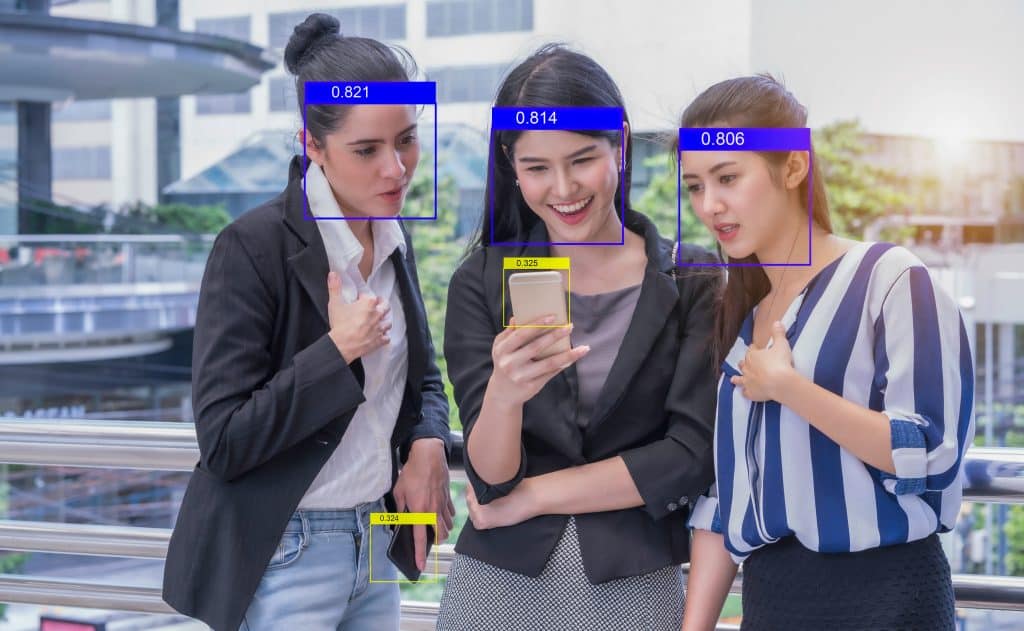
And the result of that kind of atmosphere is that people live in constant fear. We fear the threat of attacks. In both public and private, we talk like lawyers and politicians. Because you don’t know what might be used against you. Wagner touches on the topic, saying her friends were
“…kind of presenting themselves… in an almost pseudo PR way, where they were trying to justify themselves and their actions and defend themselves against some kind of moral judgement…” (NPR).
Just like in the panopticon—when we don’t know when we’re being watched, we fear ever stepping out of line. We are prisoners acting as guards. But punishing others doesn’t bring a reward. It just guarantees your punishment will be that much more satisyfing for the rest. The prison is the only one benefiting. The only way to resist is refusing to participate.
Psychological impacts of the surveillance state
Surveillance culture doesn’t only damage society as a whole. It wreaks havoc on your physical health. Humans are not built to be constantly observed. This degree of surveillance puts an unbelievable amount of stress on the body.
If you’re constantly afraid of being recorded or having your data exploited online, your body can perceive the situation as a threat. This can affect your hormones, raising your levels of cortisol and adrenaline. If this continues for an extended period, it “…can increase your risk of everything from anxiety and depression to obesity and heart disease” (qtd. Women’s Health Magazine).
Feeling constantly watched can also increase the likelihood of burnout, since many feel the need to constantly be performing. You need alone time to reflect and regulate yourself. Our time at home used to serve that purpose. But you don’t get that if you’re constantly tuned into people’s lives through social media and your phone.
Protecting your data and privacy is critical for your physical and mental health.
Theories of privacy, freedom, and power
Privacy is not only an issue of personal comfort. Privacy is intrinsically linked to freedom, dignity, and the liberty to make our own decisions about our lives.
The illusion of freedom and consent
Alan F. Westin, author of “Privacy and Freedom” (1967), defined privacy as, “the claim of individuals…to determine for themselves when, how, and to what extent information about themself is communicated to others” (qtd. MIT Press). There is power in the ability to control what is shared about you. And it’s a power that has been largely stripped from us in the modern age.
We are continually forced to hand over the rights to our private information in order to live a normal life. Everytime you check off a privacy agreement online, you are effectively handing over control over part of your life. And most of us don’t get a choice in it either.
Even if you wanted to read through all the terms of service, you probably won’t be able to. Unless you want to sift through hundreds of thousands of words of legalese, you’re not getting through it. And even if you did, there’s nothing you can do about it. You can’t change the terms of the agreement. The deal is either accept it as it is, or don’t use the service.
You don’t want your car collecting data about your sex life, biometric information, race, or ethnicity? I guess you won’t get a car then.
And every facet of our lives is like this. Our phones, social media, health services, education. As someone currently on the job hunt, I can’t tell you how many times I’ve been forced to hand over my private information or sign an agreement just to gain the privilege of applying for work.
When you are forced into an agreement in order to survive, and are not able to change the terms, that is not consent. And it is not freedom. It’s coercion.
Privacy and power
Whether it’s the government or private institutions, the power data collecters hold in this current dynamic cannot be understated. The degree of corruption and abuse possible with our new technology is of epic proportions.
Representative Cornelius “Neil” Gallagher (D-NJ) warned people in his speech to the American Bar Association in 1967, titled “Technology and Freedom,”
“…The computer, with its insatiable appetite for information, its image of infallibility, its inability to forget anything that has been put into it, may become the heart of a surveillance system that will turn our society into a transparent world in which our home, our finances, our associations, our mental and physical condition are laid bare to the most casual observer. If information is power, then real power and its inherent threat to the Republic will not rest in some elected officials or Army generals, but in a few overzealous members of the bureaucratic elite” (qtd. MIT Press).
Transparent world where our home, fincances, associations, and mental and physical conditions are laid bare? Check. Overzealous members of the bureaucratic elite? Check and check. If this isn’t an “information tyranny” I don’t know what else to call it.
The world our grandfathers feared and speculated about is here. And just as they theorized, “technological developments are arriving so rapidly and are changing the nature of our society so fundamentally that we are in danger of losing the capacity to shape our own destiny… control over the technology of surveillance conveys effective control over our privacy, our freedom, and our dignity—in short, control over the most meaningful aspects of our lives as free human beings” (qtd. MIT Press).
Tips for survival

So that was a lot. Truly, man-made horrors beyond comprehension levels of awful. But as we discussed, fixating on the stress is also incredibly unhealthy for you. So, let’s focus on what we can do about all of this mess.
First and foremost, you need to stay educated. As tempting as it is to give up and block out the noise, you need to care. Over and over again, history teaches us that as bad as things are, they can always be worse. The only thing stopping them from getting worse is you caring. Ignorance is their weapon. Staying tuned in to what’s happening, and loudly objecting whenever possible is our best defense.
Whether it’s the terms of agreement you have to sign everyday, or the new policy developed by the government. They’re relying on you finding it too complicated and overwhelming to care. Do the hard thing and listen. And when you do listen, do not stop yapping about it.
You should be thinking twice about what apps you download and the permissions you give them. And you should absolutely be using whatever tools you can to block them collecting info on you.
Second: we all need to stop perpetuating the culture that allows for this. In the current model of the digital panopticon, we are all victims and perpretrators.
“…we as a culture also have to stop participating in the spectacles. We have to ourselves not feel the temptation to post about strangers, especially to post photographs or to post screenshots. We have to… regain a certain sense of empathy… would you like that if it happened to you? …We have to ask ourselves, is this the way we should be living? And I think the answer is no. And so, part of it is logging off. But it’s also changing our own ways of thinking about what we do on social media and how we feel about other people” (Wagner NPR).
We seriously need to rethink the way we post anything. I come from the era of Internet-safety where you didn’t want to post your full name, age, or location. And I think we need to bring it back. Reclaim the power you have over your information.
In other words, practice the art of minding your own business. It’s not just about not becoming involved in other people’s business. Respect others’ boundaries, but also figure out what boundaries work for you. Take the time to be with yourself, and learn what you need. How accessible do you really want to be? How much control does technology have over your life? What can you control?