

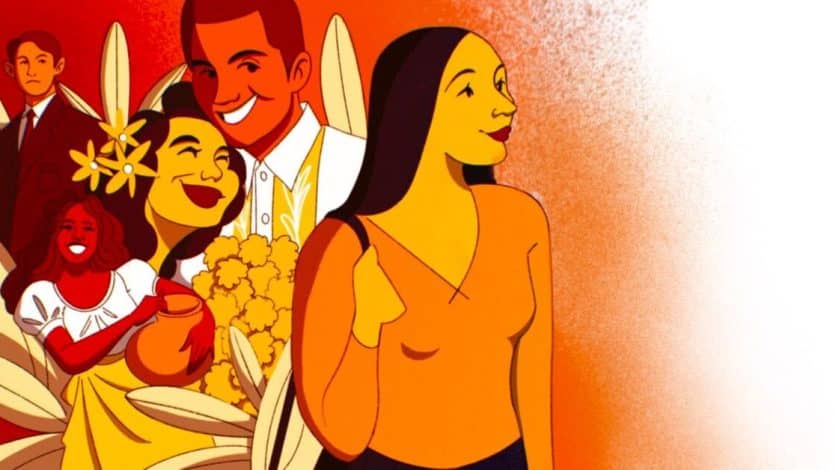
October is Filipino American History Month! In reflection of the pursuits, accomplishments, and progress of Filipinos in the United States, let’s highlight our cultural heritage and the shared experiences of second- and third-generation Filipino Americans.
First, let’s define what a Filipino American is.
Filipino Americans can be immigrants, naturalized citizens of the U.S., permanent residents living in America, or U.S.-born individuals with Philippine ancestry. Personally, I am a third-generation Fil-Am, born in the U.S., and I grew up estranged from my culture in a number of ways.
My story is a common one.
When examining the intersection of Gen-Z — particularly second- and third-generation immigrants — and Filipino American identity, there is a noticeable disconnect between young people and their ethnic roots.
To ensure that our history is not forgotten, to honor the heritage that we share, and to embrace their continual relevance to our families, communities, and selfhood, let’s celebrate Filipino American History Month (FAHM) by magnifying the sacrifices of, and growth enabled by, first-generation immigrants. Then, we can discuss how their stories inform the identities of subsequent generations, as well as their significance to the youth of Filipino America.
Why October?
Filipinos have been in America for centuries.
Following the 1882 Chinese Exclusion Act and 1924 Johnson-Reed Act — which placed oppressive immigration quotas on Chinese and Japanese immigrants, respectively — Filipinos comprised the third wave of non-white immigrants to come to America as laborers. From 1930 to 1970, an influx of Philippine immigration took place to fill the labor shortages caused by said anti-Asian legislation.

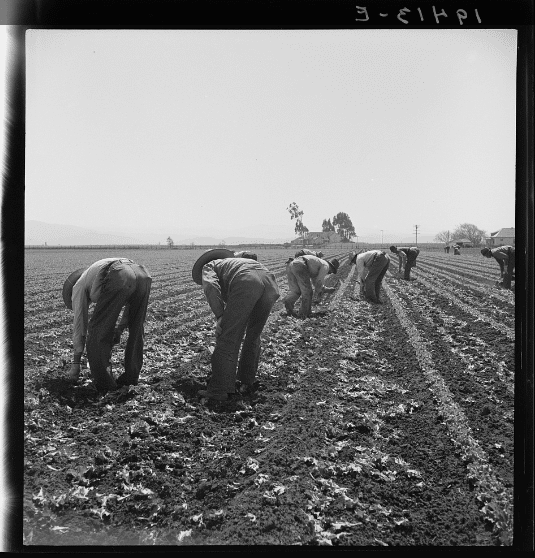
The first large-scale movement of Filipino immigrants began in 1906 and carried into the next several decades. With the establishment and prosperity of sugarcane plantations in Hawai’i, Filipinos came to the islands as farm workers, or sakadas, to fill the resulting labor demand. Beginning with the arrival of a mere 15 men in 1906, sakadas made up about 70% of Hawai’i’s plantation workforce by the 1930s.
However, Filipinos have had a recorded presence in the United States as early as the 16th century. To be exact, the first recorded presence of Filipinos in the U.S. was on October 18, 1587, when a Spanish galleon facilitating the trade of Asian goods, staffed with Filipino crew and laborers, dropped anchor in present-day Morro Bay, California.
Though initially introduced by the Filipino American National Historical Association (FANHS) in 1992, Filipino American History Month was officially recognized by Congress in 2009. Today, we celebrate FAHM in October to commemorate the historic arrival of our people to the continental U.S.
History vs. heritage month
It is important to distinguish October as Filipino American History, not “Heritage,” Month. Our history encapsulates not just our heritage, but our culture, struggles, and the efforts made for Filipino Americans to build lives and communities in the U.S.
By celebrating FAHM, we pay homage to imported laborers, immigrant families, Third World student coalitions, enactors of change, and countless others.
The historical mistreatment of first-gens
To understand younger generations’ place in American society, we must first recognize the lives and circumstances of first-generation Fil-Ams. As Filipino immigration to the U.S. increased, so did the obstacles to assimilate to American life.
Filipino farmworkers
Not only was the Filipino labor force prominent in Hawai’i but also in the continental U.S. In particular, Filipinos established expansive communities along the West Coast, especially in California. Immigrants from the 1920s and ’30s, mostly male bachelors who performed blue-collar work, were known as the Manong Generation.
In pursuit of a dignified life and the “American Dream,” manongs faced harsh working conditions, racial prejudice, and low wages. Inspired by the Civil Rights Movement of the 1960s, Larry Itliong, Philip Vera Cruz, and other manongs established the Agricultural Workers Organizing Committee (AWOC).
Under the threat of wage cuts, Itliong was the catalyst that propelled the Delano Grape Strike into action in September 1965.
Reaching out to Cesar Chavez, co-founder of the National Farmworkers Association (NFWA), Itliong helped facilitate the merging of AWOC and NFWA to create the United Farm Workers of America (UFW). Together, Filipino and Mexican Americans went on a five-year strike before being unionized.
Filipinos in the Navy
There also exists a decades-strong Filipino presence in the U.S. Navy. But why is this?
In 1947, the Military Bases Agreement was signed by the Philippines and the United States. It allowed Filipino citizens to enlist in the U.S. Navy with the possibility of becoming naturalized American citizens. The act followed the recognition of the independence of the Philippines.
This program was exclusive to the Navy, which prompted a notable Filipino demographic in the branch.
Filipino men were first permitted to enlist in the U.S. Navy after a 1901 executive order was signed into law by President William McKinley. However, most Filipinos were relegated to menial, stewardly positions such as cooks, cleaners, and other jobs with few opportunities for socioeconomic mobility.
The worth of Filipinos and their contributions to the country were continually challenged.
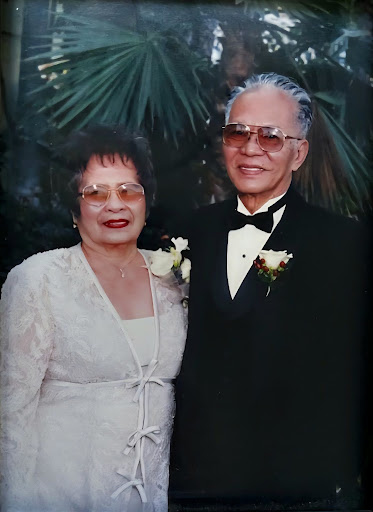
My own grandfather began serving in the U.S. Navy to gain citizenship in 1946 (before the Military Bases Agreement was signed in 1947, Filipinos could still enlist as U.S. nationals while the Philippines was an American colony). Ultimately, my grandfather, Romulo “Moling” Rufo, served for 20 years. However, because he was Filipino, he, like many other Asians, was a cook.
This pattern of forcing Asians into abject, lowly jobs reflected a greater pattern of Fil-Ams being devalued and treated as disposable in American society.
Further, assigning what was traditionally viewed as “women’s work” to Asian men sowed the seeds of emasculation and degradation. Nonetheless, Filipino Americans’ contributions to American farms, restaurants, canneries, and communities have been monumental.
Filipinos have always cleaned America, they’ve always cooked for America, and they’ve always harvested for America. [That contribution] may not sound so world-shaking, but, nevertheless, that’s how America survived.
Frederic Cordova, Archivist and Founding President of the Filipino American National Historical Society (FANHS)
Filipino nurses
Another part of American life shaped by Filipinos, particularly Filipina women, is the healthcare industry. Though Filipinos compose roughly 1% of the total U.S. population, they make up 4% of healthcare workers (predominantly nurses). How did Filipinos become overrepresented in this field?
President William Howard Taft’s Pensionado Act of 1903 allowed government-sponsored Filipinos (called pensionados) to pursue higher education in the U.S. and bring their knowledge back to the Philippines. Many of them ended up studying nursing. While 17 nursing schools were subsequently established in the Philippines, many pensionados remained in the U.S., giving rise to the Philippine Nurses Association in 1922.
An extra boost came from the Immigration and Nationality Act of 1965, which eliminated national quotas targeting Asian immigration that had been in place since 1924. By bringing in more women, the act not only united Filipino families in the States; it strengthened the nursing workforce.
My grandmother, Dionesia “Sesiang” Elguira Rufo, was a nurse. Although her initial aspiration was to teach in the U.S., since she had graduated from a university and taught English in the Philippines, her thick accent and foreign degree hindered her ability to be taken seriously in America. A career counselor advised her to become a nurse instead, and she practiced for over 35 years.
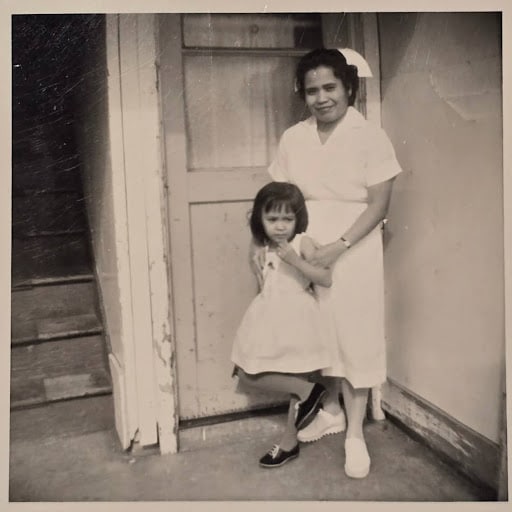
Even by working within the confines of American legal restrictions, the emergence of stereotypes, and potent racism, Filipinos have flourished as nurses. Today, Filipinos continue to play essential roles in healthcare professions, often guided by the ideas of making a decent living, job security, and generational tradition built by first-generation immigrants.
Finding community in chaos
Between acts of racial violence like the Watsonville riots, the San Francisco State College strike (1968-69), the implementation of quotas on Filipino immigration, and their attempts to integrate into a country whose “melting pot” rejects non-European contributions, Filipino Americans have battled injustices for decades.
However, many Pinoys found solace by fostering community bonds with one another. Across the U.S., but particularly in Hawai’i, the Bay Area, and SoCal, Filipino American neighborhoods, organizations, and small businesses thrived.
The I-Hotel
One such community was San Francisco’s Manilatown, a ten-block neighborhood of pool halls, barbershops, senior centers, and low-income housing servicing Filipinos and other people of color, including the International Hotel.
The I-Hotel helped house disadvantaged immigrants, many of whom were manongs living on fixed social security benefits, through its cheap rent of $50 a month. It facilitated a strong sense of community in Manilatown by making housing accessible to long-term or permanent Filipino residents.
Over the course of nine years, the community battled population density and city redevelopment projects that threatened the I-Hotel. Eventually, the originally ten-block Manilatown was reduced to just one block. In March 1968, the Milton Meyer Company bought the I-Hotel’s lot and made planns to tear it down, effectively displacing its long-time residents.
As the hotel–a crucial site of refuge for its elderly and immigrant occupants–was prepared to be demolished, protestors, already active from the Third World student strikes at San Francisco State, came to aid the cause.
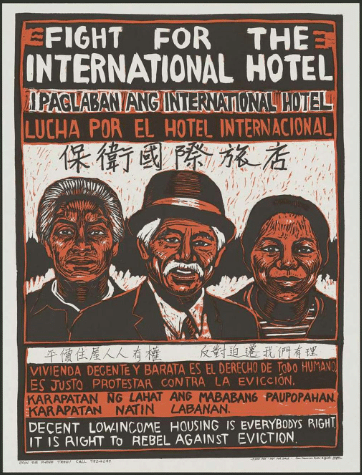
Student organizations, United Farm Workers (UFW), Tenants Organization Opposed to Redevelopment (TOOR), and innumerable others united in one of the most wide-ranging coalitions against the hotel’s demolishment.
But on August 4, 1977, the I-Hotel’s elderly residents were forcibly removed, despite a 3,000-person human barricade against police and persistent protests from community members. In 1979, the I-Hotel fell.
It wasn’t until March 2003, 26 years after the evictions, that construction began for a new International Hotel under nonprofit ownership. In 2005, 6,000 people were on the waiting list for tenancy (11 of whom were original, surviving residents).
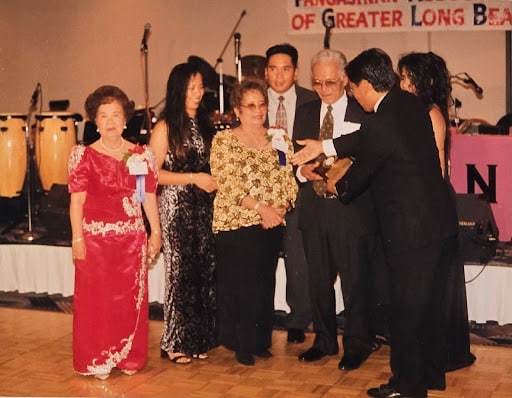
The Pangasinan Association of Greater Long Beach (PAGLB)
The same longing for camaraderie was present in SoCal and my own neighborhood. When my grandparents came to Long Beach, they sought community with others who spoke the same dialect, loved the same food, and had endured the same discrimination as them.
This eventually led my grandfather to co-found the Pangasinan Association of Greater Long Beach (PAGLB) in 1969 with other neighbors, Navy sailors, and Filipinos from the Pangasinan province of the Philippines.
It was through this organization that my dad and his sisters met fellow Filipinos in their community, many of whom are still part of our extended family.
Why should younger generations care?
Filipinos are connected through both the positive and negative aspects of our cultural identity in America.
We have experienced institutionalized discrimination, labor unions, dying languages, and fading history lessons. But we are also connected by the indispensable pillars of community, cuisine, and oral history. Awe-inspiring traditional garments and performing arts. Pinoy neighbors who become titos and titas.
Neglecting the nuances of Filipino American identity undermines the accomplishments of our predecessors and leaves younger generations vulnerable to the same methods of exploitation and oppression.
Bridging the gap
From the adversity faced by first-generation Filipino Americans often comes a dilution of Filipino-ness in second-gens. Whether it be a conscious effort by immigrant parents to spare their children from the prejudice they faced or shame or disinterest barring their children from partaking in their culture, the pressures of assimilation emphasize the “American” in Filipino American identity.
One of the overarching ideas preached by immigrant parents–one I frequently heard from my own father–is to “take advantage of the opportunities in America.” Education was seen as necessary for second-generation Fil-Ams to thrive in the U.S.
I remember my dad asking me, as a kid, what I wanted to be when I grew up. I told him I wanted to join the Navy like him, and he looked at me with disappointment. I distinctly remember him saying, ‘No, son, I don’t want you to do what I do. I want you to go to college, earn your degree, and get a better job. I don’t want you to be a blue-collar worker. I want you to be better than me.’
Ray Rufo, 61, 2nd-generation Filipino American immigrant
However, in the tradeoff for American education, acceptance, and normality, one may lose access to sacred parts of one’s heritage. In my family, my dad and both of his sisters expressed remorse for not taking greater interest in their parents’ lives, culture, and most of all, language.
Having a son, I wish I had more knowledge to pass on to him. I feel a sense of loss being Filipino American, now that my parents are gone, and not knowing the language or sharing their experiences. In their absence, I try to fill the void of what it means to be Filipino without much of the substance of the culture.
Marilyn Rufo Yokoyama, 57, 2nd-generation Filipino American immigrant
Personal connection
My paternal grandparents intentionally excluded parts of Filipino culture from their children’s upbringing in the hopes of giving them a better chance at integrating into the U.S.
Like many immigrant parents, they concluded that stripping their children of parts of their culture would improve their chances at life in an unfamiliar country– unfortunately a common survival tactic.
That choice has manifested in my life as a tangible disconnect from the experiences and culture of my predecessors. I’ve grieved the absence of uniquely Filipino aspects of my identity that I’d otherwise be well-acquainted with—visiting the Philippines, knowing the language from childhood, and thoroughly comprehending my heritage.
Instead, I’ve grown up feeling as if I’m missing something that belongs to me.
Much of my interaction with my culture has been self-initiated: I’ve sought cultural clubs in high school and college, studied a form of Filipino martial arts called San Miguel Eskrima, learned to play Mahjong to bond with my elders, and taken Filipino language courses at UCLA.
And I rely on elders in my family to help fill in the gaps.
My Filipino identity really took shape during the Black/Brown power movements of the ’60s and ’70s. I protested against the Marcos dictatorship, marched with Cesar Chavez in support of Filipino and Mexican farmworkers, laid down an adobe brick roof in the Agbayani Village in Delano for the manongs, and combatted anti-immigration and racist sentiments affecting my community. These experiences have molded my identity and impacted the closeness of my family today.
Araceli Rufo Rossi, 68, “1.5” generation Filipino American immigrant
Gen-Z Filipino Americans
Other Gen-Z second- and third-gen Fil-Ams share a similar sense of detachment.
My parents were very deliberate in choosing not to teach me Bisaya or Tagalog. They wanted me to get accustomed to American culture and have English be my first language. I think they just wanted to make my experience growing up in the United States as easy as possible. Now, however, I feel like I lack that depth in my cultural identity.
Kirsten Bucu, 19, 2nd-generation Filipino American
My mother did not make an effort to really have us connect with our Filipino side. My siblings and I rarely heard the language, ate the food, or consumed the media. She always told us that we were Filipino, but I questioned what it meant to consider yourself part of a community, in a way greater than just blood and physical features.
Asha Lall, 19, 3rd-generation Filipino American
Reclamation
Understanding the trials of earlier generations, how can Gen-Z Fil-Ams honor their ancestry, maintain ties to their heritage, and integrate parts of their culture into their current identities?
Can second- and third-generation individuals resurrect the culture, or must the culture be reinvented entirely?
One friend described how she individualized her Filipino-ness by “visiting the homeland, and creating a personal relationship with the Philippines that was separate from my family.” Others have held tighter to their families, native speakers, and cultural organizations in college.
Although later Fil-Am generations may not relate to all the experiences of their immigrant elders, we can invoke concepts like kapwa to cultivate a sense of belonging. Coined by Professor Virgilio Enriquez, the Father of Filipino Psychology, kapwa describes both the individual and shared inner-self, cultivating a collective oneness with others.
This concept is fundamental to Filipino identity, and it is relevant to all Fil-Ams, regardless of generation.
In a landscape increasingly threatened by educational budget cuts and racial hostility, it is imperative to elevate the unique perspectives of underrepresented groups.
The Third World Liberation Front, the Philippine-American Collegiate Endeavor, United Farm Workers, and other trailblazing coalitions have paved the way for Filipino Americans to have self-determination, cultural pluralism, and a voice in the U.S. today.
Remembering our history will prove critical in preserving Filipino America and its youth. Find other ways to celebrate Filipino American History Month here.











Roselyn Estepa Ibanez
October 24, 2025 at 5:45 pm
Hello Gia
This is a well written article of why & how
we celebrate October Filipino American History
Month along with your family’s history.
I am your auntie Araceli’s sister n law, Roselyn (Rose) Estepa Ibanez.
Florante (your uncle George’s brother) and I are working on our 5min each documentary through VC Digital Histories program.
I am doing mine on my 1970’s Fil Am
Student Activisim.
Florante is doing it on the Filipino People’s Far West Convention.
It will be shown at the 2026 Asian pacific film
Festival.
Yes, there are many of our stories to be told
And I will share yours with my teenager
grandsons.
Thank you again!
Florante Peter Ibanez
November 17, 2025 at 10:05 pm
Well written and presented with history and ♥️ heart. As a retired FilAm / Asian Pacific American Studies Adjunct Professor and Librarian I appreciate your article. I guess that we are related thru your uncle George and auntie Araceli. I was one of the 4 founders of UCLA Samahang Pilipino back in the day. I’d love to meet you sometime to find out how the younger generations are adapting to the current political era. Congrats on your writing and getting our history out there. God Bless🙉🌈🌊🖖🏽🌴🤙