ADHD is often a misunderstood diagnosis, boiled down to hyperactivity and distractibility. While these are key components, there is so much more to this neurodivergence.
Along with the misconceptions, ADHD can be debilitating, causing problems in school, relationships, family life, and even in self-esteem.
The impact ADHD characters (even the ones that are coded) have on audiences that struggle with the same disability is hugely important. Seeing ourselves represented on screen is more than just comforting; it’s encouraging. It’s a mirror that we can look into and see our strengths.
So, without further ado, let’s get into the list of ADHD coded characters that make us feel seen.
1) Eddie Munson, Stranger Things

This metalhead, D&D nerd is ADHD to the max. From learning Metallica’s “Master of the Puppets” in two weeks to forgetting where he put his ketamine, he is truly the representation that reveals the realities of ADHD: the hardships and the superpowers.
In the classroom, he’s the kid whose mind wanders, not because he doesn’t care, but because he can’t regulate his focus. But he’s also the one to become so immersed in writing a D&D campaign that he forgets to eat all day long.
Having failed senior year twice, Eddie’s story isn’t about failure. It’s about not giving up and showing up with that sliver of hope that he could get to the finish line. It’s also about how ADHD students often don’t get the support they need in order to reach their full potential.
Where to watch: Netflix

2) Robin Buckley, Stranger Things

Robin Buckley—the local lesbian, loveable band nerd, and Steve Harrington’s ride or die—is also autistic coded, loves to rant, oftentimes getting lost in her rapid-fire thoughts.
Her impulsive nature and her unwavering loyalty, apparent in her decisions such as diving into the Russian Headquarters with Dustin and Steve in season 3, makes her a force to be reckoned with.
Her story helps us understand that sometimes we need another calming presence to mellow out the chaos that unravels inside of us.
Where to watch: Netflix
3) Jake Peralta, Brooklyn Nine-Nine

From hyperfixating on each of his cases to being late to work most days to having a mess of a workspace, Jake Peralta is textbook ADHD. But even with these executive dysfunction struggles, he proves that people with ADHD can indeed show up and perform their best.
Jake thrives in chaos and does his job as well as anyone else. While Amy is logical in her resolve, always methodical and organized to the t, Jake is more instinctive, trusting his gut and improvising as he goes.
Jake Peralta tells us that we don’t have to follow anyone else’s flow to be the best at what we do. Why fix what isn’t broken?
Where to watch: Netflix
4) Evan “Buck” Buckley, 911

Jumping from job to job for that dopamine fix, little facts at the tip of your tongue, and diving into danger head-on without a second thought.
Sound familiar?
Buck is a character who has grown from the impulsive, dopamine-seeking, (whether it be from hookups or heroics) season 1 Buck to a less impulsive, more self-aware season 9 Buck.
From leaving the Navy SEALS to filing the lawsuit, Buck has a lot of emotion in that big heart of his, directly correlated to emotional dysregulation.
In the first episode of season 1, Buck tells Bobby, “They wanted machines. People who could flip a switch in their head and turn off every natural human instinct of emotion in their body, and I can not do that.”
Buck shows us that we can all still be loved for being ourselves. And that big emotions don’t have to be “too much” with the right people.
Where to watch: Hulu
5) Malcolm Bright, Prodigal Son

This one might not be as known as the first few, but Malcolm Bright is the son of serial killer, Martin Whitly.
His ADHD manifests as he impulsively tries to detonate a bomb, his countless hyperfixational ramblings, and his strong emotional responses. Malcolm is also a pro at niche subjects like medieval sword collections, the classics like “Monte Cristo,” who could talk your ear off about it, which in the end serves his job as a profiler.
He is also autistic coded. Even though his job is to read people, he stumbles when he’s off the clock, often misreading social cues and taking things at face value.
Malcolm Bright speaks to the parts of neurodivergent folk that desperately cling to routine and hyperfixation in order to feel more “normal.” And he shows us that even though we struggle, our minds aren’t broken.
Where to watch: MAX
6) Jess Day, New Girl

Jess Day, the girl who sings all the time to calm herself down, who gets in her feels and cries it out to Taylor Swift with a glass of wine.
A brilliantly spontaneous character that loves to hyperfixate on her hobbies to let off steam and do things for the people around her. For instance, she stress-bakes on multiple occasions and often does arts and crafts projects for her students.
Jess reminds us that being true to ourselves is the most important thing in life. It doesn’t matter what anybody else thinks when being yourself makes you feel free.
Where to watch: Peacock
7) Peter Parker, MCU
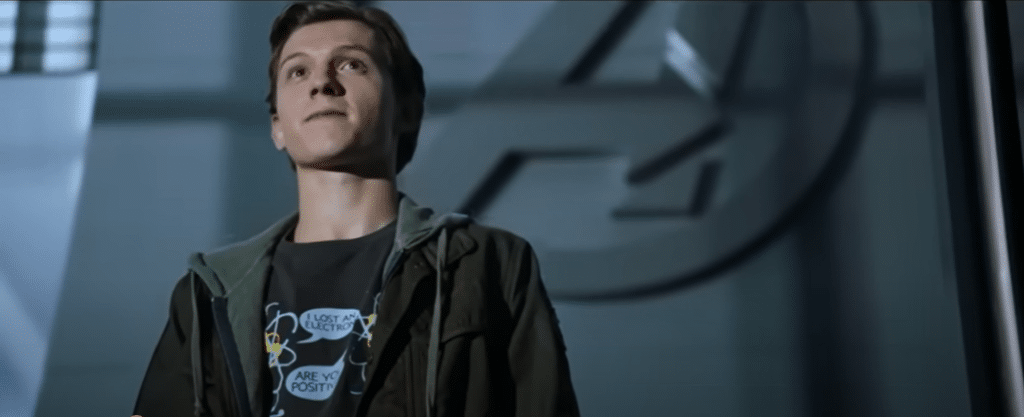
Our friendly neighborhood spider, who loves building LEGO with his friend Ned and geeks out over all things science is all coded chaos.
From forgetting where he put his backpack in the middle of his web-slinging duties to losing track of time inside the warehouse, restless legs and mind latching onto any semblance of dopamine, his powers only heightened his neurospicy brain.
Peter reminds us that even if your brain works differently from the “norm,” you can still be a hero. And as Tom Holland also reminds us, you can still be a successful actor and business owner like him.
Where to watch: Disney+
8.Tony Stark (MCU)

Genius, billionaire, playboy, philanthropist. The man in all his plated glory, who loved building things alongside F.R.I.D.A.Y and, in his earlier days, J.A.R.V.I.S.
Inventing gadgets left and right, he was the genius who went to MIT at 15 and spent years burnt out, potential flying over the radar until he took over STARK industries.
Tony Stark teaches us that even the most successful people can have ADHD. And not just live with it, embody it, and make it a superpower like he does in all those sleepless nights creating until his mind quiets.
Where to watch: Disney+
9) Shaun, Shaun of the Dead

We all know the iconic scene where Shaun walks around the block, distracted by his recent breakup and the mundane routine of getting his cornetto while the zombie apocalypse has invaded his neighborhood.
This 2004 zombie comedy is a prime example of ADHD thriving in chaos, but not without a few bumps on the road. Despite his poorly thought-out plan of going to the Winchester and his poor follow-through in emotional situations, it’s not until chaos erupts that he makes a change.
Shaun’s message to us all is that you need the right level of chaos to regulate and work with your brain.
Where to watch: Peacock
10) Daisy “Skye” Johnson, Agents of S.H.I.E.L.D.

Another MCU classic. And yet another hero who defies the conventional neurotypical persona.
Daisy is a badass, former hacker, current superhero named “Quake” whose powers go hand in hand with her emotions, at times causing an earthquake when sorrow strikes.
Along with her emotional dysregulation, her impulsivity takes hold. In season 7, she asked Deke to kill Malick in order to protect her loved ones.
Daisy lets us know that even when our feelings feel destructive, we can always rebuild and learn from the past; learn to tame the earthquake that shakes our soul and the impulsive action that follows.
Where to watch: Disney+
Spotlight: Canon ADHD characters
11) Jack Russel, Bluey

Even though Jack only gets a handful of screentime on Bluey, his character is one that truly sticks. A beautiful representation that depicts the realities of ADHD.
The first few minutes of “Army” capture Jack’s ADHD in motion. He fidgets, forgets his hat, and gets distracted by the goat outside. And we can see the shame building when his little sister asks him, “Why can’t you do as you’re told?” and he responds with, “I don’t know.”
However, as he meets Rusty and they begin playing Army, we can see a shift. His focus sharpens during sentry duty; he remembers Rusty’s hand signals, but it’s not a contradiction. It’s an interest-based nervous system that thrives in dopamine-giving activities.
Jack is awesome representation that highlights the real-life struggles that people with ADHD face. Even more so, this episode highlights that along with struggles, comes negative feedback that loops in our brains, ultimately internalizing it as the truth.
Jack Russel teaches us that beyond these struggles, there is a world of understanding and accomplishment with the right tools and support.
Where to watch: Disney+
12) Alex Claremont-Diaz, Red, White, and Royal Blue

Alex Claremont-Diaz, the son of the first female president, spent weeks writing a 14-page memo about how his mother could win over Texas in the election. Hyperfixation at its finest.
Alex holds a long-standing grudge against Prince Henry (whom he’d eventually fall for) due to their first meeting years ago, when Henry was apparently rude to him. This is a sign of emotional dysregulation and RSD (rejection sensitivity dysphoria), which manifests into anger and inadequacy when meeting him at the royal wedding.
The novel authored by Casey McQuiston highlights Alex’s ADHD storm in all his impulsive, chaotic, and restless glory. All things considered, both the movie and the novel showcase it not as a failure, but a success in strategizing his mother’s election.
Where to watch: Prime Video
13) Dr. Melissa King, The Pitt

Dr. Melissa King, second-year resident, who hyperfocuses on patient procedures, and sings to regulate herself.
She is Audhd (Autism and ADHD) at its finest. Social cues fly over her head, but she’s in tune with her patients’ pain. And she may forget everyone’s names, but she always pays attention—the doctor who sweats a lot, the other doctor who’s quietly floundering, the nurse who has a slight limp.
Dr. Mel is a testament to neurodivergent folk that we can be anything we want to be. We can adapt slowly on our own terms and still get things done.
Where to watch: Prime Video
14) Luz Noceda, The Owl House

Luz Noceda, a teenage wannabe-witch bumbling with energy and bursting with creativity, fits the common narrative of “if you would just apply yourself.”
Just because Luz’s brain is hyperactive and doesn’t conform to the same old mind-numbing schoolwork, it doesn’t mean she isn’t smart or is a troublemaker. She shows her knowledge in creative ways like doing her book report in the form of a reenactment with a doll and a snake.
Because of this, her mother wanted to send her to a corrective summer camp. In the end, she stumbled upon a magical world called Boiling Aisles, where her creative mind could run rampant. And as she discovered magic, she thrived, not despite it, but because of it.
Luz teaches us the importance of a creative mind and how powerful it becomes when that side shines bright.
Where to watch: Disney+
Final thoughts
Seeing yourself in a piece of media you love can be affirming. In a world that can be harsh to judge, fictional characters can be our saving grace, a safe space where you’re allowed a fresh breath of air as you watch these characters be themselves.
Characters like these show us that ADHD isn’t good or bad. It’s what you make of it with the tools you gather along the way. It turns restless energy into motivation, impulsivity into proactive action, and hyperfixation into a love language.