Despite its August release date, Weapons is the movie of the summer.
After it left the number #1 box office spot last week due to Netflix releasing their smash direct-to-streaming hit K-pop Demon Hunters in theatres, Weapons is back at the top. Despite multiple superhero blockbusters coming out this summer, it seems to be dominating both the box office and everyone’s conversations.
As an avid moviegoer, it feels like horror is the only genre that’s still innovative. Every few weeks, there’s a new exciting release. This summer, Together (2025), Bring Her Back (2025), and 28 Years Later (2025) were all released to varying degrees of critical acclaim and box office success. And they’re not just being produced and distributed by independent studios like A24 and Neon, but also by blockbuster companies like Warner Bros, which distributed Weapons (2025).
All of this makes me wonder: what is it about horror movies that excites both audiences and studios? Why aren’t we seeing this same approach in the drama or romcom genre?
I think an interesting way to explore this question is by looking at Weapons. Through analyzing the film, we’ll see it seeks not only to entertain, but to ask the important questions.
Weapons Summary *Spoilers Ahead*
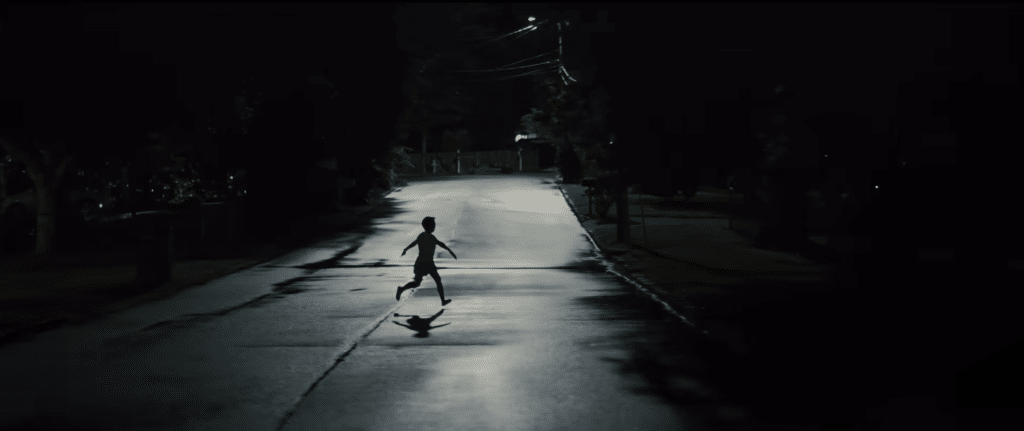
Weapons is set in a suburban town in the wake of tragedy.
One night, at 2:17 am, all but one child from a third-grade class gets out of their beds and runs away. The film unfolds from multiple perspectives of residents in the town: The teacher of the kids who disappeared, Justine, the father of one of the children, Archer, a local police officer, and an unhoused person whom the police officer arrests.
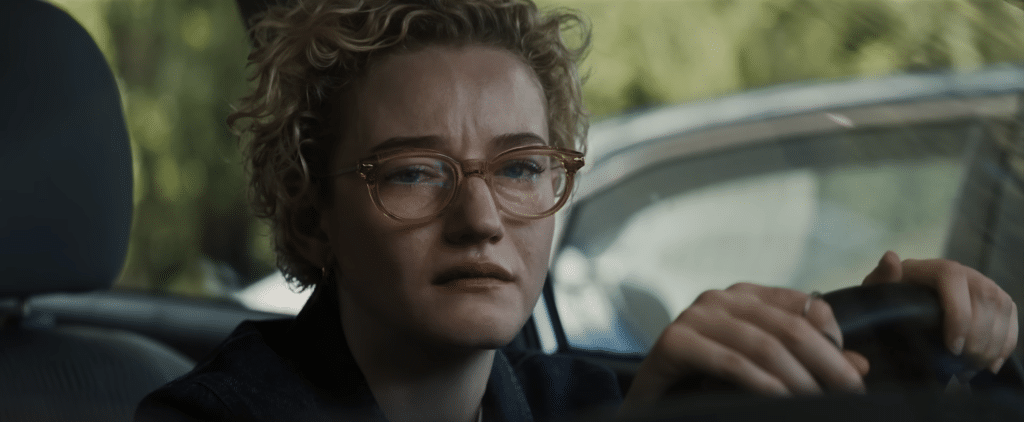
Initially, Archer believes Justine has something to do with the disappearance of the children. But when they both witness the principal of the school in a fugue state trying to attack Justine, they realize something strange is going on, and decide to work together.

Meanwhile, the only child left behind in the class, Alex, struggles at home. His sick aunt moves in with his family and takes over his house. Using a kind of witchcraft, she uses Alex’s parents as a life force to cure her illness.
When that’s not enough, she uses her magic to summon the children out of their beds one night. They run out of the house, through the small town, and into Alex’s house, where his Aunt Gladys keeps them in the basement.
Justine and Archer connect the dots and figure out where the kids ran to. They enter Alex’s house to find his parents, the missing children, the police officer, and the unhoused person in an entranced state.
In the end, Justine and Archer kill the police officer and the unhoused person in a struggle to save themselves. To save his life, Alex uses Aunt Gladys’ magic to make the children attack her and rip her to death.
Grief, pain, and sadness in Weapons
Weapons explores how grief and violence dominate the lives of suburban Americans, despite how protected they might feel from it.
In suburbia, you might perceive safety in your perfectly rowed houses, white picket fences, and local police forces. But the truth is that there is nothing that can protect anyone from evil or violence. Especially in a country that refuses to address issues such as poverty and gun control.
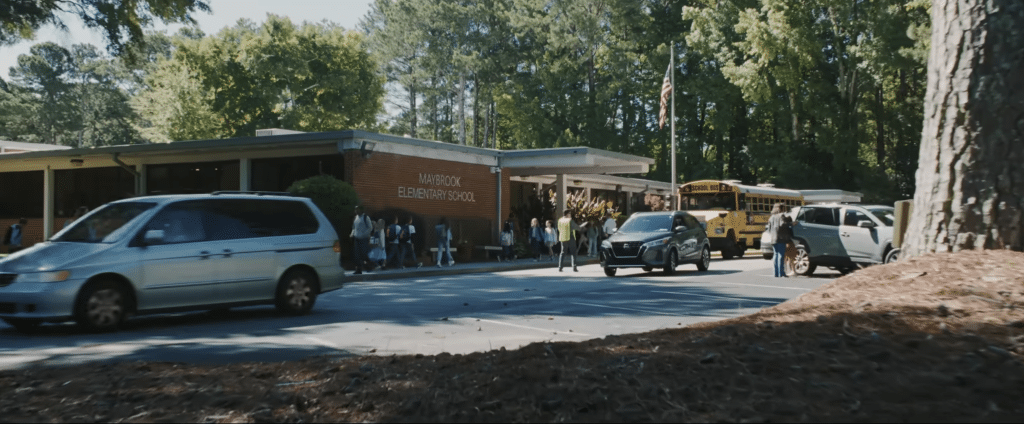
The movie was written from a place of grief. The director, Zach Cregger, said that after the loss of a friend in 2021, he channeled his sadness into Weapons.
“But I wanted to do something honest, and I found that as I kept writing, and the more I identified with all of the people I was writing about, the more this became something like an honest diary of my inner shit.”
Through this honesty, Cregger was able to channel his grief into something tangible and write a movie that represents grief with complexity. Simultaneously, he didn’t want the movie to just be a metaphor for grief. In fact, he despised the idea.
“Look, like the rest of the world, I don’t want to watch another horror movie about grief. That whole horror-as-a-metaphor-for-grief is so fucking played out…I don’t care if anybody gets any of that when they watch it. I want them to have fun. If the story rips, none of that matters.”
Cregger’s balance of both the entertainment value and the emotion of Weapons is what makes it work so well. You can invest as much or as little into the film, and still leave the theatre feeling satisfied.
Violence and its consequences
When engaging with themes of grief and violence, you’ll find that Cregger is presenting the viewer with a plethora of questions. Each character’s perspective explores how violence is ingrained in American life.
An example is how the cop treats the unhoused person he arrests. While trying to pat him down, the cop accidentally pokes himself with a stray needle in the unhoused person’s pocket. In a fit of anger, he punches the man in the face. When he reports the incident at work, his supervisor tells him to keep quiet and wait until the dashcam footage gets deleted, instead of addressing the problem.
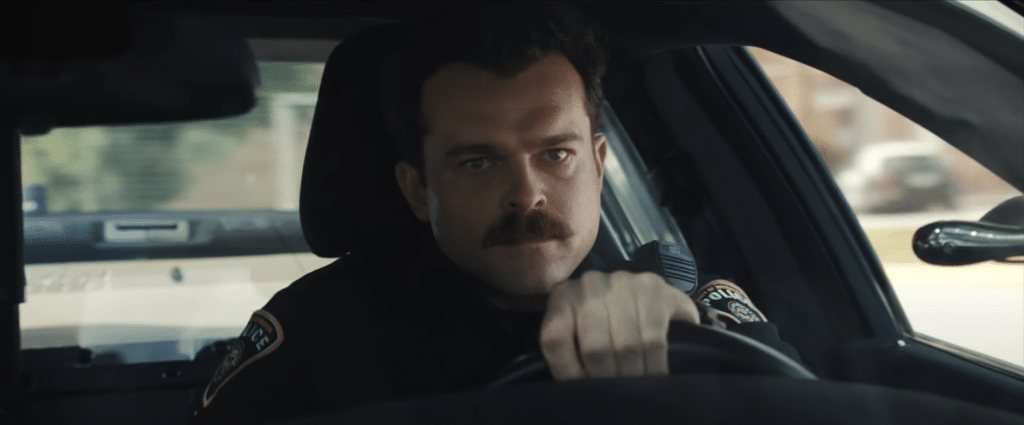
Violence by police officers against unhoused people is seen as not only acceptable but integral to a functioning middle-class society. It’s covered up by other officers and treated as an inconvenience on the job.
The violence and persecution of unhoused people create the perceived safety that families move to the suburbs for. But what they don’t understand is that the same systems that enable violent officers also put them in danger.
Archer, masculinity, and love
The perspective I found most interesting was Archer, the father of a child who has gone missing.
Archer is convinced that Justine is responsible for his child’s disappearance, despite there being no evidence to support this claim. He calls her out at a school-wide meeting, demanding she explain herself. After her response doesn’t satisfy him, he follows Justine home and paints the words “Witch” on her car in red paint.
Though he’s not physically aggressive towards Justine, his actions are all a kind of violence. His grief and confusion over the loss of his son drive him to do aggressive things to a woman who’s just as distraught as he is.

This isn’t the only time we see how Archer processes his emotions. In a dream sequence, we see him searching for his son in the street. While looking for him outside, he sees a giant cloud in the shape of a machine gun floating above his house. The time 2:17 is illuminated on it.
When he makes it back in the house, he finds his son in his bed. He tells him, for what seems like the first time, that he loves him, as he begs him to come home. Eventually, his son rolls over to reveal Aunt Gladys lying in the bed staring back at him, scaring him awake from his nightmare.
Archer, like many men, is stuck in the toxic cycle of masculinity. He feels responsible for solving his son’s disappearance by any means, even if it means hurting the person who’s most integral to figuring it out. The responsibility he feels to find and save his son is the same feeling that stopped him from telling his son he loved him when he had the chance.
Neither his masculinity nor his middle-class status saved him from the horrors of that classroom. And they didn’t help him solve the mystery either.
Absurdity and comedy: Two peas in a pod
Cregger is trying to grapple with the oddity and the mystery of loss. How can someone be there one second and gone the next? How, despite all odds, protections, and assurances, safety and security can be taken from them in the blink of an eye.
Some see the movie as an allegory for school shootings. While this makes sense, I think simply viewing it this way is reductive. It strips the film of not only its dimension, but its humor.
Towards the end, when Justine and Archer are being attacked in Alex’s house, there’s a scene where Archer and the unhoused person are fighting, and Archer knocks him out. After going down for a moment, he wakes up and attacks him again, over and over.
Though it’s dropped right in the middle of a serious scene, the moment had the theatre in stitches. It diffused the tension for just a moment, allowing the audience to laugh at the absurdity of the situation.
Conclusion: Weapons demonstrate what makes horror so successful
Weapons straddle the line of seriousness and entertainment. In doing so, it creates something that’s both enjoyable to watch and deeply layered with questions and observations. It’s the reason why it’s so successful, and why horror in general is such a popular and innovative genre.
Imagine Weapons was a drama film. The dark subject matter and serious tone might not interest audiences the way the film does. People might be less likely to take a chance on that film because drama doesn’t guarantee entertainment value the way horror does.
Though I don’t believe films should only be made when they have a better chance of making a profit, there is something to be said about the way horror can ask serious questions while also making an exciting film.