

Reading slumps are tricky, and finding the right book can be a challenge. Perhaps you’d like to try the latest trending book. But when you realize that the plot is predictable and the characters aren’t engaging, you’re back to square one. So, why do the latest #BookTok books lack creativity? Are authors just trying to make a quick buck?
Let me preface by saying that I have thoroughly enjoyed many of these books, and they are definitely worth a read. However, a vast majority of the books that are trending on #BookTok seem to be copies of the same generic stories, as opposed to older, more classic novels that have original plots and characters. The writing also uses simpler language, perhaps to appeal to a wider audience. Or perhaps authors believe that simpler stories and/or writing will make more members of Gen Z want to read. No matter the case, it can come off as lazy or driven by money.
There is a reason why these books keep getting made. It’s because they’re what sells; they’re what’s popular and trending. While there’s nothing wrong with investing in what sells, it’s gotten to the point where I can predict what will happen in the story by the end of chapter one. The books scream quick cash grab, which makes them less enjoyable to read. So let’s dive into what makes #BookTok books, specifically fantasy and romance books, so popular.
This plot is so predictable
Let’s start with the foundation of a story: the plot. Every story has one. Without getting too English class-y, a plot has a few key moments. We have the exposition, or the rising action, which leads to conflict and a climax. We then experience the falling action and eventually the resolution. This is the skeleton of the story, but I want to discuss the “meat” of the story: everything that happens throughout the book and where authors tend to lose their creativity.
So how does this apply to #BookTok books? Well, most romance books typically start with the characters “hating” each other. Then, some sort of circumstance brings them together. Our FMC typically starts catching feelings/already has feelings for the MMC, and it’s the same on his side. Eventually, they admit their feelings for each other, and things go swimmingly. But then they get into a fight over a misunderstanding (a suspicious text, usually from a sister/cousin, or an interaction with an ex). Finally, our story resolves with our characters communicating what happened and reconciling.
Whenever I read something like that, I can predict the rest. I’m not being taken on a wild ride of emotions, which is disappointing. Plot twists and cliffhangers don’t hit the same; chances are, I’ve already read them in another book. Which brings me to my next point: Are authors simply inspired by other books, or are they “stealing” the story completely?
Is it considered stealing or inspiration?
If you were on #BookTok around the release of Powerless by Lauren Roberts, you’ll know what I’m referencing. For those who weren’t, the incident revolved around the fact that Powerless seemed like a complete rip-off of Victoria Aveyard’s Red Queen.
Let me break it down for you: both books feature a poor, clever pickpocket who is considered the dregs of society (Mare is a Red; Paedyn is an Ordinary posing as an Elite). Both compete in trials, and both have captured the interest of the two princes, who are brothers (In Powerless, Kitt has fire abilities, much like Cal and Maven). In the end, both enlist one of the brothers to help their cause, which just so happens to be a rebellion against the caste system they live in.

To me, it is the exact same story, with a few tweaks. While the author of Powerless may have been inspired by Red Queen, the book screams rip-off. Unfortunately, this proves my point that newer books are entirely “inspired” by older books. While a book may not be advertised as a copy or retelling, there are too many similarities to just brush aside. It’s as though authors see the success of older books and try to recreate it with their books. But nothing is better than the original.
I swear I just read a book with that character
Now let’s move on to another shared aspect of these popular #BookTok books: the characters. One thing I love about the characters in a story is that you can see yourself in them. This helps the story feel more engaging and heartfelt. However, when characters in popular books all look and act the same, it’s hard to find the individuality within them.

Most popular #BookTok books contain FMC who are short, brunette/blonde, and have a witty personality. They are independent and strong; they don’t need a man to support them. While these characters are great for little girls to look up to, there is a lack of diversity among them. In other words, their personalities and mannerisms are so similar that I feel like I’m reading about the same character in every single book.
The men are usually tall, muscular, and brunette/blond. They are brooding alpha males who are rude to most people. They come off as jerks, but once our FMC breaks down their barriers, they turn out to be softies. After reading multiple books with the same MMC, I’ve found that their personality starts to feel like stale bread and that the alpha male attitude is exhausting.
What makes a good character?
So, how can authors create a complex yet relatable character that isn’t a clone of another character? It seems like a daunting task; yet it can be quite simple.
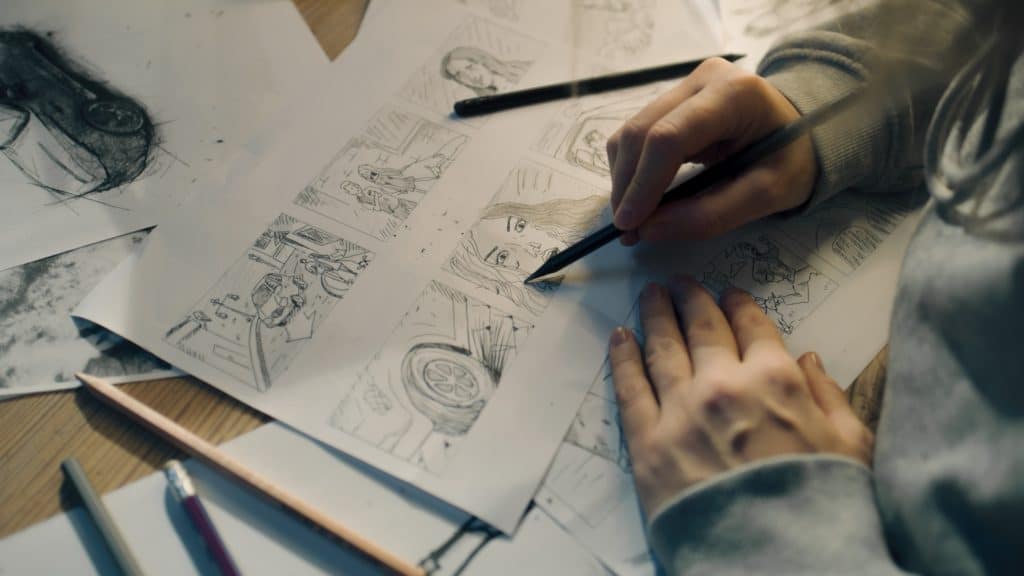
An author can achieve this by drawing inspiration from the people around them. Take J.K. Rowling, for example. The character Hagrid was inspired by a real-life biker that Rowling met while in London. This man may have looked rough and dangerous on the outside, but he was actually a huge softy on the inside. There are so many diverse people and personalities in the world that you’re bound to find one who fits your character.
Additionally, authors sometimes base a character on themselves and their personality. Perhaps that character has certain quirks of the author’s or bears a slight resemblance to them. This makes the character feel more relatable but still distinct–especially if the author has a disorder of some sort. One example is Rebecca Yarros, whose character Violet Sorreingaill has hEDS like her. Those with the disorder now have a relatable character to look up to.
Have books been dumbed down for readers?
I briefly touched on this point in my introduction, but now I want to draw more attention to it. Most #BookTok books have simpler language, simpler characters, and a simpler storyline. Oftentimes, they can be characterized as YA (young adult) books.
We are presented with two options. Option A is that authors are trying to appeal to a larger age range, thus bringing in more sales. Option B is that authors are trying to create simpler stories to appeal to Gen Z, who don’t read as much and/or have shorter attention spans. Or there’s the secret option C, which has to do with the fact that authors are increasingly relying on things like A.I. or deciding to become writers after taking one creative writing class.
That last sentence may have seemed rude, but it’s true. While you could have a great story idea, a lot more goes into writing a book. First, you have to craft a coherent plot to go with your awesome story idea. Then, you have to factor in storytelling, format, and editing. It’s a lot of work, and one creative writing class is not going to get you far.
Maybe we’re trying to be relatable?
One concept I’ve yet to explore is how all of this relates to Gen Z. I briefly mentioned that authors might be using simpler writing to appeal to Gen Z, possibly because they’re trying to be relatable. Yet is it coming off as relatable or just cringe?
Most of the language used is riddled with Gen Z slang, especially if it’s a rom-com style book that’s set post-COVID. Now, this is definitely the author trying to relate to a younger audience, especially if they are in the same age range. Although I use some of that slang myself, it can seem out of place in a book.
These books are also filled with pop culture references, which again has to do with relatability. This theory largely applies to rom-com books. When we’re talking fantasy books, it doesn’t apply. Most Gen Z slang would feel out of place in a book like that; however, authors still try to sneak it in there. So, while the author might be striving for relatability, it can read as cringey. Especially if the author isn’t from that generation.
Toxic relationships? No thank you
Most books feature a deeper theme than just your run-of-the-mill “love is powerful” kind of thing, whether it’s commentary on caste systems or the government. The same goes for relationships. However, the way most relationships are portrayed is damaging for younger readers, especially impressionable ones. I mean, we’re talking manipulation, gaslighting, cheating, stalking, and so many other things.
These types of books are poor models of healthy relationships, especially to a younger reader who is only just starting to navigate relationships. Not to mention, some of the books involve domestic abuse, which is a very important topic that people need to be aware of. Unfortunately, myriad books butcher the topic with bad writing (I’m looking at you, Colleen Hoover). Furthermore, dark romance books make it seem like this type of behavior (i.e., stalking) ends on a happy note, when in reality, it definitely doesn’t. No one wants that type of relationship IRL; however, the more it is romanticized, the more “normal” it feels.
However, if the author is trying to bring awareness to the problem, the book can be a good lesson for readers. Of course, the problem needs to be handled in a way that doesn’t confuse readers; instead, the book should help them spot warning signs. In the end, there are pros and cons to writing about a toxic relationship; however, the biggest no-no is romanticizing it and making it seem like the norm. That’s just a recipe for disaster.
Are #BookTok books short-term or long-term?
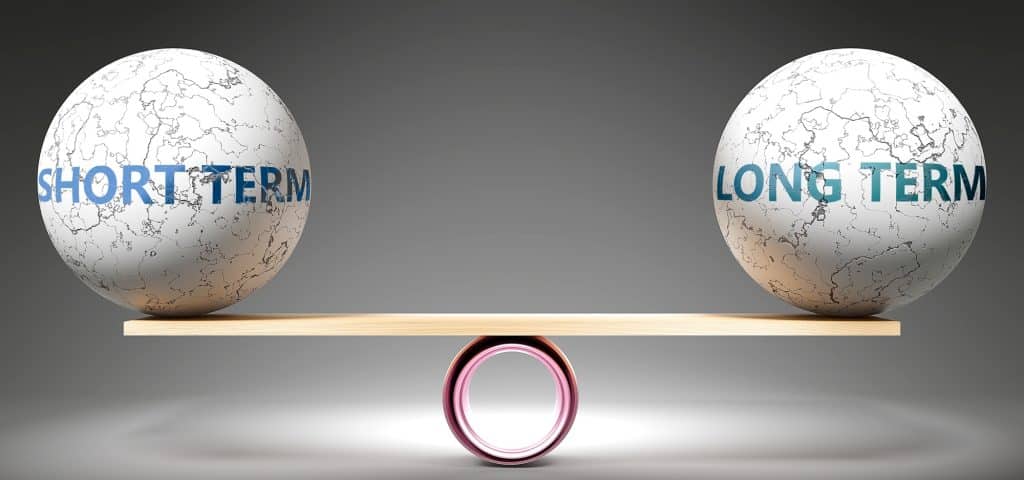
There are so many great books that have withstood the test of time, like Pride and Prejudice and The Chronicles of Narnia. What do these books have in common? They tell compelling stories with complex characters that suck you in.
Such factors create a timeless story. Not to mention, building the perfect world can make a story more memorable. But does this apply to newer books? As I mentioned earlier, the plots and characters can seem somewhat similar to each other. They lack the whimsical feel of older books.
At the end of the day, while they may be popular right now, I honestly don’t see the BookTok books remaining popular for years to come. They’re quite literally a trend, and that trend will lose its steam. Hopefully, it won’t be for a few years, as I do like some of the recs on there, and BookTok provides a great community for newer readers.
Okay, but some of these #BookTok books are really good
I’m not going to lie; I have enjoyed most of the trending #BookTok books. While the plot and characters may be repetitive, the books make for perfect filler reads while I figure out what I want to read next.
They can also be quite comedic–especially the romance books. However, comedy will only get you so far if you don’t have a cohesive plot.
Suffice to say, whether authors are losing their creative touch in order to make sales or are just writing for the fun of it, BokTok books can be pretty entertaining. They make for a good “shut your brain off and relax” type of read.
No matter your thoughts on newly released books, it is sad to say that they are missing the creative flair of past books. When these books eventually fall off the popular train, will authors learn from their mistakes and craft a truly original story? Either way, if you need a new book to read in the meantime, perhaps you should take a look at a few certified classics.









au
March 17, 2026 at 9:01 am
This really feels like it’s asking the wrong question. BookTok books are popular because they’re BookTok books. BookTok books are not creative because they’re BookTok books.
I think this argument fundamentally misunderstands what makes a book marketable. BookTok has been demonstrating for years that it has nothing to do with creativity. Much of the “blew up on BookTok” books are incredibly samey and unprofessional–much less creative.