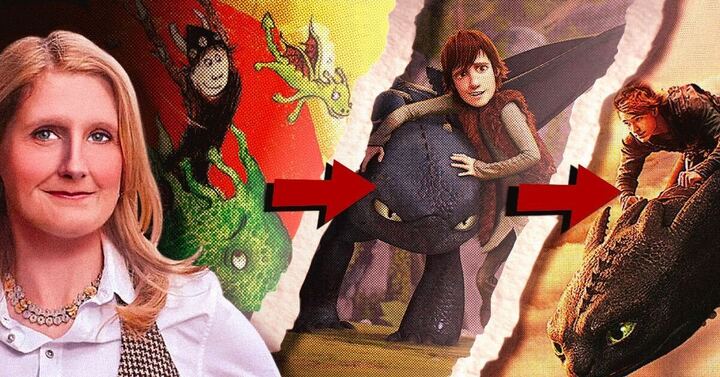
When the first How to Train Your Dragon came to the big screen in 2010, it was not just Hiccup that soared. Audiences’ hearts soared right along with him into the skies of Berk, and the franchise as a whole became a global phenomena that spanned the next decade. Now, the tale of Hiccup and Toothless has hit the theaters once again, but this time in live-action form. It’s the perfect time to ask: Where did the story begin? The answer is Cressida Cowell’s original book series.
When the How to Train Your Dragon live-action film was first announced, audiences were divided. Many fans cheered, excited to return to Berk. Many feared the film would be a soulless cash grab preying on nostalgia. To others, it’s just an advertisement for the upcoming theme park. Given the behind-the-scenes casting news surrounding the film and Hollywood’s tendencies to recycle old tales, the mixed reactions were justified.
Regardless, diehard fans of the original film all agreed that the live-action film would garner excitement about the franchise. It marks one of the few times that the franchise is back in the spotlight with an anticipated film. Given that the last major installment of the series was nearly half a decade ago, the new live-action is bringing second wind to thie franchise.
The old tale as a new film: what changed?
After watching the new How to Train Your Dragon live-action film, audiences have deemed it to be extremely loyal to its animated source. Dean Deblois and John Powell, the director and the composer of both films, clearly know what stole fans’ hearts. Working together, they reenacted the magic of Berk on the big screen a decade and a half later.
Hard-core fans of the original film think of this as a blessing. Most of their fears were baseless. From the identical track that plays when Hiccup and Astrid first take flight all the way down to small movements of the characters on screen, the new film captures the original film’s charm masterfully in the form of a live-action film. Some claim that the nostalgia even induced tears!
But not everyone is sold. They question why the remake exists if the same exact tale is being told, bringing up missed opportunities to improve the original series’s issues. Deeper dives into the Viking lore or fleshing out the side characters would have further expanded the potential of the franchise. As a result, certain critics dismiss the film as yet another live-action film that capitalized on fanbase nostalgia and fell short.
Meet the original Hiccup that lies in the pages
Book Hiccup is almost nothing like the movie Hiccup. Sure, just like his live-action counterpart, he is a scrawny, socially awkward chief’s son, but that’s where the similarities end. Unlike movie Hiccup, who by the second movie takes to the skies with his mighty Night Fury and fire sword, book Hiccup remain a scrawny, awkward kid throughout the entire saga. It is not his leadership or dragon-riding skills that save him, but rather, his witty intelligence and quick thinking.
Toothless could not be more different as well. In the movies, he is a brave, mighty Nightfury that carries Hiccup on his back. What makes him lovable is that despite his grandness, he still has an charming, cute side. However, in the books, he is just a common garden dragon (or what the movies call a Terrible Terror) who whines for extra oysters. He’s fussy, shy, and quite frankly a coward, despite his few moments of bravery.

Cowell’s storytelling is also very distinct. She fills the pages with chaotic, whimsical illustrations, as well as unique texts and prose to elevate the atmosphere. Cowell writes pages upon pages in different fonts and with varying rhyme schemes, embracing more of a Dr. Seuss style as opposed to a traditional fantasy book like Harry Potter or The Lord of the Rings. These elements coalesce to make the story feel like an epic poem: an Iliad for children.
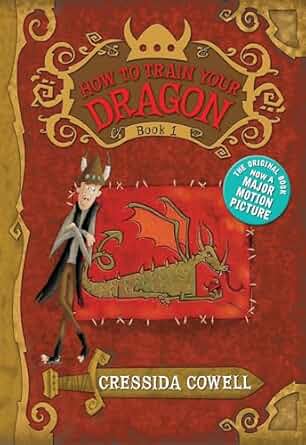
Most importantly, Cowell doesn’t shy away from the Viking lore that both films skim through. She dives deeply into ancient feuds between tribes across the continent. Snoutlout, Fishlegs, and other side characters are thoroughly developed, animating Berk more than the films ever did.
Hollywood vs. the pages – How To Train Your Dragon
The process of translating a story from page to the screen always becomes a negotiation between the original charm and studio expectations. Corporate studios (especially Hollywood) cater to what they think kids want: clean morals, familiar beats, and charming characters. However, by doing so, sometimes they miss the point of the original.
This does apply to Cowell’s books to some extent. Her striking storytelling and her questioning of generational hatred doesn’t necessarily fit the taste of Hollywood producers. DreamWorks’s original animated film was amazing in its own way. It has inspiring scores, epic flying sequences, and a heroic journey: truly a cornerstone of animation to be respected. But it was no Cowell.
@ign The live-action How to Train Your Dragon recreates this iconic scene almost EXACLTY. #howtotrainyourdragon #httyd #animation #ignlive ♬ original sound – IGN Entertainment
The tension between the book’s frenzied nature and the films’ polished stories reflects a broader conversation about children’s media. Should bigger, more mainstream films challenge children’s minds as the books did? What elements from the original should be preserved across adaptations: its niche, whimsical voice or just its broad plot? Even though the new How to Train Your Dragon live-action film essentially amounted to a beat-by-beat remake, we hope that the next installment will push on this line of inquiry.
And for those who want to answer these questions for themselves, now is the time. To audiences who just walked out of the theater, the books are waiting, and they’re very much their own adventure.