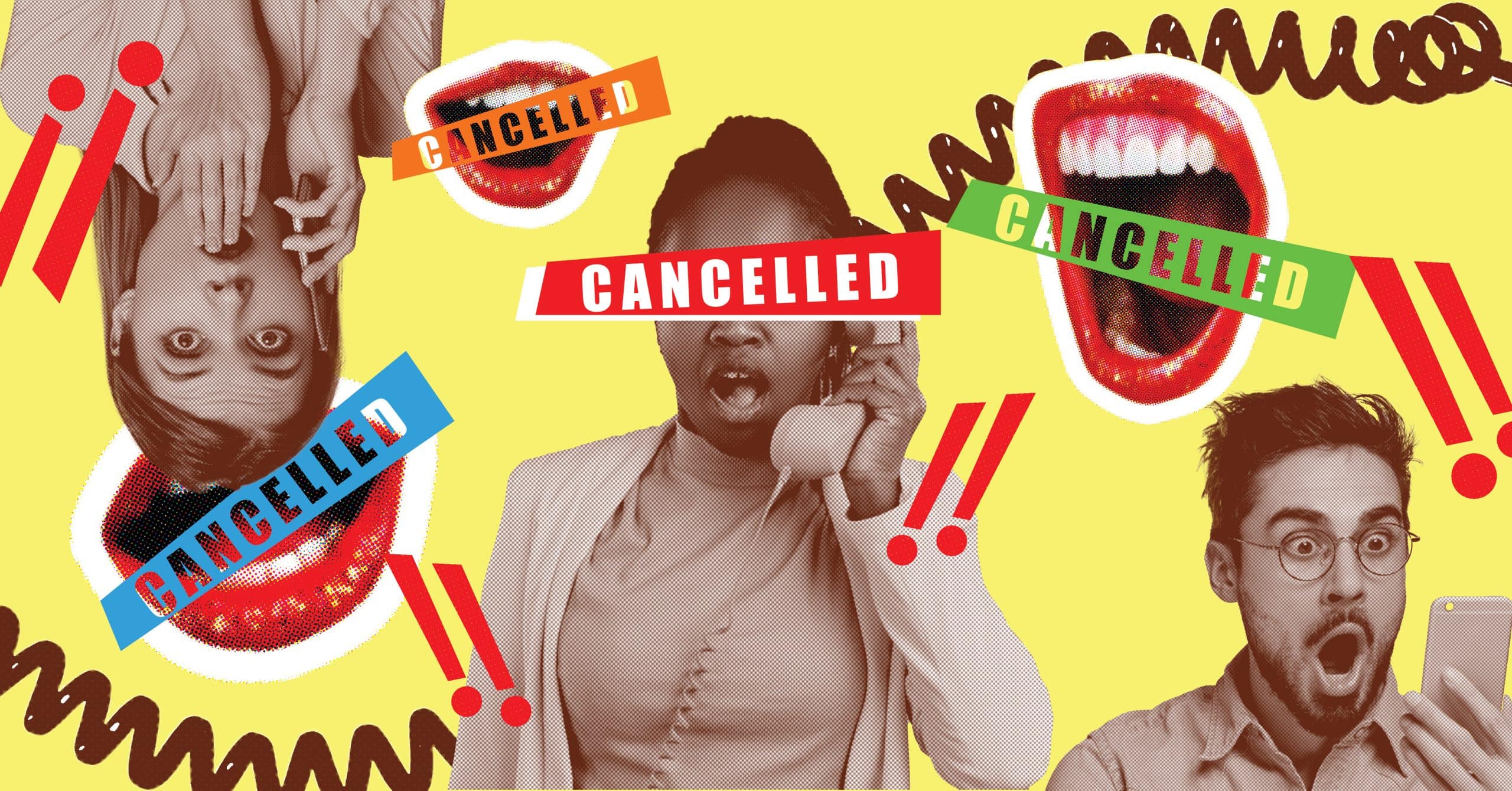
Cancel culture is a revolving door on social media. At some point, every brand, celebrity, and influencer has been canceled.
What is cancel culture?
Ellen DeGeneres has been canceled. Goya has been canceled. Kanye has been canceled more than once. The prebiotic soda brand Poppi was recently canceled.
Cancel culture is an internet phenomenon that refers to the withdrawal of support from someone accused of doing something wrong or controversial.
Meredith Clark, a professor at the University of Virginia, told The New York Times that “it’s ultimately an expression of agency…think of it like a breakup and a taking back of one’s power.”
When the internet cancels someone, it’s usually out of a desire to hold them accountable for what they did (or didn’t) do.
Cancel culture and social media
Social media platforms like TikTok, Instagram, and X are the birthplace of cancel culture.
As soon as someone makes an objectively controversial move, all it takes is one person to call them out for everyone else to follow suit.
Poppi, the prebiotic soda brand, recently faced backlash online for gifting influencers stocked vending machines of their product to celebrate the Super Bowl.

Many people took to social media to air out their grievances and claim that this was a bad move, issuing marketing (or moral) advice that they should have sent their product to communities that couldn’t afford it.
TikTok users thought that it was too gauche to send the vending machines to already, seemingly, rich influencers.
“Why couldn’t Poppi just send the vending machines to colleges, hospitals, police stations, or fire stations? Make it make sense,” wrote one TikTok user.
Certain influencers took it upon themselves to share the wealth and donate the gifted product in their community, whereas some decided to keep it for themselves.
Most people support the backlash and have chimed in to call out Poppi. Others call it “genius marketing.”
Whether you stand on the side that Poppi made the right move or not, little change arose from their five-minute scandal.
Allison Ellsworth, the founder, took to TikTok to address the controversy, claiming that misinformation fueled the backlash. The internet quickly moved on to the next thing.
“Cancel” cancel culture?
When it comes to cancel culture, social media users often see shades of gray when it comes to the debate.
According to a study done by Pew Research Center, “58% of Americans say…calling out others on social media is more likely to hold people accountable, while 38% say it is more likely to punish people who don’t deserve it.”
Cancel culture has proven that it’s not some casual, 2 week trend. As it gains more of a presence, so does the debate surrounding it.
It begs the question, “Are people rushing to judge or trying to be helpful?”
A New York Times article examined cancel culture as a form of social ostracism or exclusion from a group, since the publicized hate and judgment foster a space for cyberbullying and toxicity.
When we think about cancel culture, our mind automatically jumps to celebrities or anyone with a following, but canceling can also happen off the screen.
Social exclusion deeply affects younger kids, especially those who are still forming their identities. Hopping on the bandwagon just because others are doing it doesn’t justify the “trend” of canceling someone.
The impact of cancel culture extends past the “cancelers” or the “canceled” to people on the outside. Maintaining a negative outlook instills fear and preclude meaningful conversation.
Counselors at Carlow University have suggested that the best solution to cancel culture is to unplug from social media, refrain from participating, and consider having difficult conversations when you’re not hiding behind a screen.
Core values vs. cancel culture
Breaking up with celebrities or brands because our values don’t align is a good kind of cancel culture.
In a world where transactional dynamics consume our everyday lives, it’s not wrong to pick and choose who you support.
One student from Norfolk, VA, said that we should address problematic actions by helping people recognize their mistakes instead of aggressively calling them out in public.
The Poppi scandal revealed that consumers gravitate toward brands that are authentic and transparent, not the ones that are exclusively focused on influencer marketing.
The era of cancel culture has demonstrated how rapidly a brand can go from being popular to being questioned — a lesson for both the consumer and the brand.
Instead of outright rejecting cancel culture, we need to build a culture that holds space for accountability and transformation.
Maybe we can’t fully escape the inevitability of cancel culture, but we can choose how to engage with it.