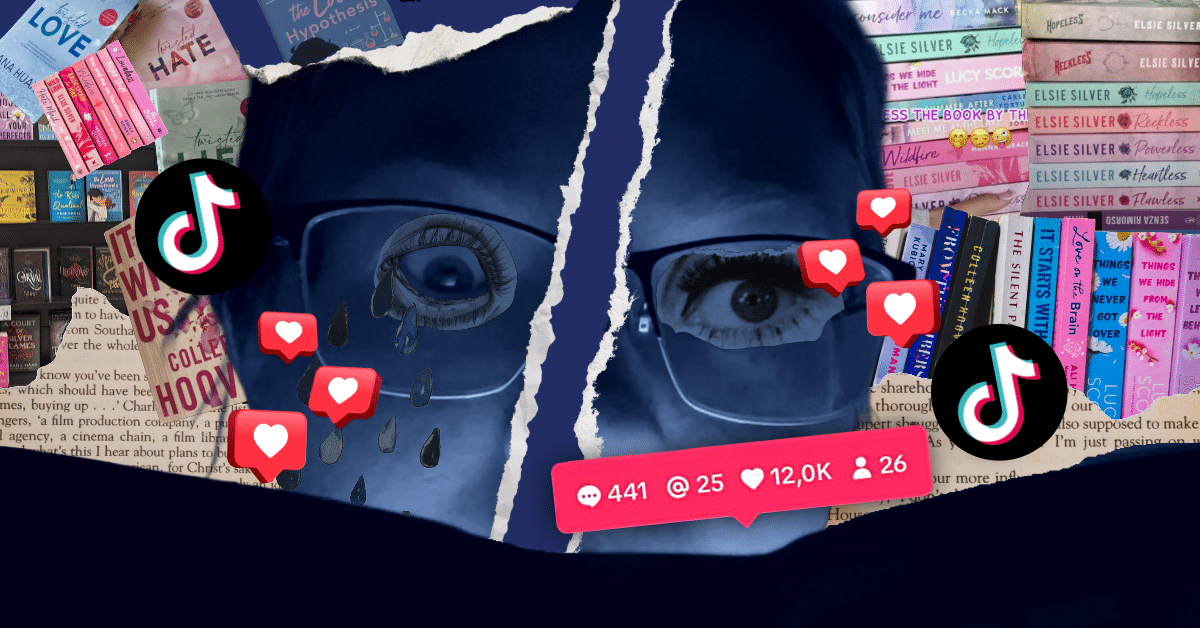
BookTok has always blended fun and controversy, but lately, the tone has shifted. What began as a space for discussing books and sharing recommendations has evolved into something more complex: a place where we question how we engage with what we read.
The debate has expanded beyond discussions of tropes and genres to whether we’ve “dumbed down” reading for the masses. Are we reading for meaning, or are we simply chasing the next quick fix?
At the heart of this debate is the tension between those who want books to be a space for fun and those who believe it should remain a platform for depth and intellectual engagement.
Why we love BookTok, and why we criticize it
It’s no secret that BookTok has had a huge impact on the world of reading. You can’t walk into a bookstore today without spotting an “As Seen on BookTok” table. It’s a community where people share their love for books, give recommendations, and discuss everything from bookish hot takes to favorite tropes.
When BookTok blew up during the quarantine, it offered people a sense of connection. Many found comfort in reading when the world outside felt uncertain. Bookstores that were struggling saw a major boost as BookTok drove sales and reignited excitement around books. It also opened the door for indie authors, providing them with a platform they wouldn’t have had otherwise. TikTok made it easier for authors to connect directly with readers, bypassing traditional publishers, and allowed conversations about books to unfold more organically, with readers deciding what truly mattered.
What made BookTok special was how it transformed reading into a social experience. People could talk about their favorite books, join trending challenges, or listen to passionate explanations of why others loved or hated a particular story. Books weren’t just something to read alone anymore. In a way, BookTok became the world’s largest book club.
However, this popularity has not come without downsides. As BookTok grew, so did the criticism about how people discussed books. While it made reading more fun and accessible, many started questioning how the community engaged with literature, raising concerns about whether it was contributing to an anti-intellectual approach to books.
While these kinds of summaries aren’t new to BookTok, the reaction to the video and the shared frustration about reducing books to simple tropes clearly show how people felt. In fact, these posts didn’t start a new debate, but they did bring up an ongoing one about whether BookTok is contributing to a growing anti-intellectualism in how we approach books.

The anti-intellectualism debate: are we dumbing down reading?
The frustration with the simplicity of BookTok discussions has been building. However, it wasn’t until a viral video from a BookTok creator that the issue truly caught attention. She pointed out the rise of anti-intellectualism in the community. According to her, BookTok had changed, moving away from honest book discussions and focusing more on flashy, oversimplified content.
In her video, she explains how BookTok often focuses on catchy tropes instead of digging deeper into books. Trends such as “enemies to lovers” and “strong female protagonists” tend to simplify complex stories. The creator expresses concern that this shift has caused people to engage with books on a surface level, rather than encouraging thoughtful conversation.
The shift toward surface-level engagement
Her frustration wasn’t just about the simplicity. She also worried about how these trends affected the publishing world. She warned that if publishers and bookstores kept focusing on viral buzzwords, they might lose more meaningful literature. The shift toward quick entertainment over deeper content seemed to change how people valued and discussed books.
Her video quickly gained attention, amassing over 2 million views. It sparked a wave of reactions from both BookTok users and creators. Many shared their agreement, posting countless stitches, duets, and even full YouTube videos discussing her points in-depth. This response signaled that her concerns weren’t isolated; they were widely felt within the community. People started noticing the same trends she had highlighted.
As the conversation grows, it has become clear that readers are worried about the shift in how books are consumed. People have begun bragging about skimming books or only reading the dialogue. They dismiss the slower, more reflective parts of books, like descriptions or inner monologues, as boring or unnecessary.
The impact of instant gratification on reading
Instant gratification is a major factor in how people approach books. Many readers have admitted that if a book doesn’t hook them right away, they’d drop it. This trend points to a bigger change in how people experience books. Instead of being a space for deeper thinking or personal reflection, reading has been reduced to fast, easy consumption.
In general, reading is less about personal growth or intellectual engagement and more about quick content consumption. People are seeking instant rewards, and they treat books as something to consume quickly, rather than a medium for discourse. If this trend continues, publishers might prioritize viral trends over more substantial content.
Can’t people just read for fun?

On the other side, some readers simply want to enjoy their books without diving into complex conversations. For them, BookTok can be an escape from stress, a source of joy, and a way to reconnect with their love of stories. They aren’t necessarily looking for philosophical insight or ideas that alter their worldview. A book is inherently impactful if it makes someone laugh, cry, or stay up late turning the pages.
There’s no single right way to engage with literature, and reading doesn’t always need to be serious or intellectual. Pleasure readers question the assumption that engagement has to involve analysis or academic-style critique. Instead, they gravitate toward humorous, casual conversations about how a book relates to their lives. These elements feel personal and fun, and that’s what draws them in.
Critics sometimes describe this mentality as a sign of growing anti-intellectualism in reading culture. But supporters see it differently. They argue that connecting with books on an emotional or entertaining level isn’t opposed to intellectual thought—it’s just a different way of experiencing stories. Still, concerns about anti-intellectualism continue to shape the conversation, raising questions about how we define thoughtful reading in the first place.
Understanding the appeal of BookTok
Much of BookTok’s appeal lies in how it invites people into conversations about books without the pressure to be overly analytical. The most popular videos are short, emotional, and focused on surface-level aspects of a book.
Serious readers deem this style of content to be simplistic or even a manifestation of anti-intellectualism; yet it suits TikTok’s fast-paced, attention-driven format. BookTokers talk about how a book made them feel, which characters they related to, or which tropes stood out. It’s less about reviewing the book and more about sharing a moment or reaction that might catch someone’s interest. Such content has wide appeal and spreads books to people who might not otherwise hear about them.
Not every reader connects with books in this way. TikTok’s algorithm favors content that simplifies or dramatizes stories, which doesn’t always paint a full picture. But it’s enough to get people reading—and sometimes, that’s what matters most.
Closing thoughts
BookTok has sparked real debates about what reading should look like—and that’s not a bad thing. For more academically minded readers, the distillation of books into trends and tropes threatens to oversimplify stories and enable surface-level engagement. They maintain that thoughtful reading deserves more recognition online and that not every book should be treated like quick content.
At the same time, BookTok has brought energy and excitement back to reading for countless people. It has helped casual readers reconnect with books and introduced new ones to the habit entirely. Tropes or emotional reactions might not offer critical analysis, but they do make books feel approachable and fun.
Both perspectives raise valid points. Serious engagement with literature is important—it keeps books meaningful and makes ideas last. But reading for enjoyment, escape, or connection is important too. The two approaches don’t have to compete, either; they should be able to coexist.
There’s room for thoughtful discussion and lighthearted excitement in the book world. BookTok shows how reading can adapt, grow, and reach people in new ways. Plus, when all approaches are met with respect, the reading culture as a whole becomes stronger.
If you want to read more about how BookTok is impacting reading and publishing, click here.