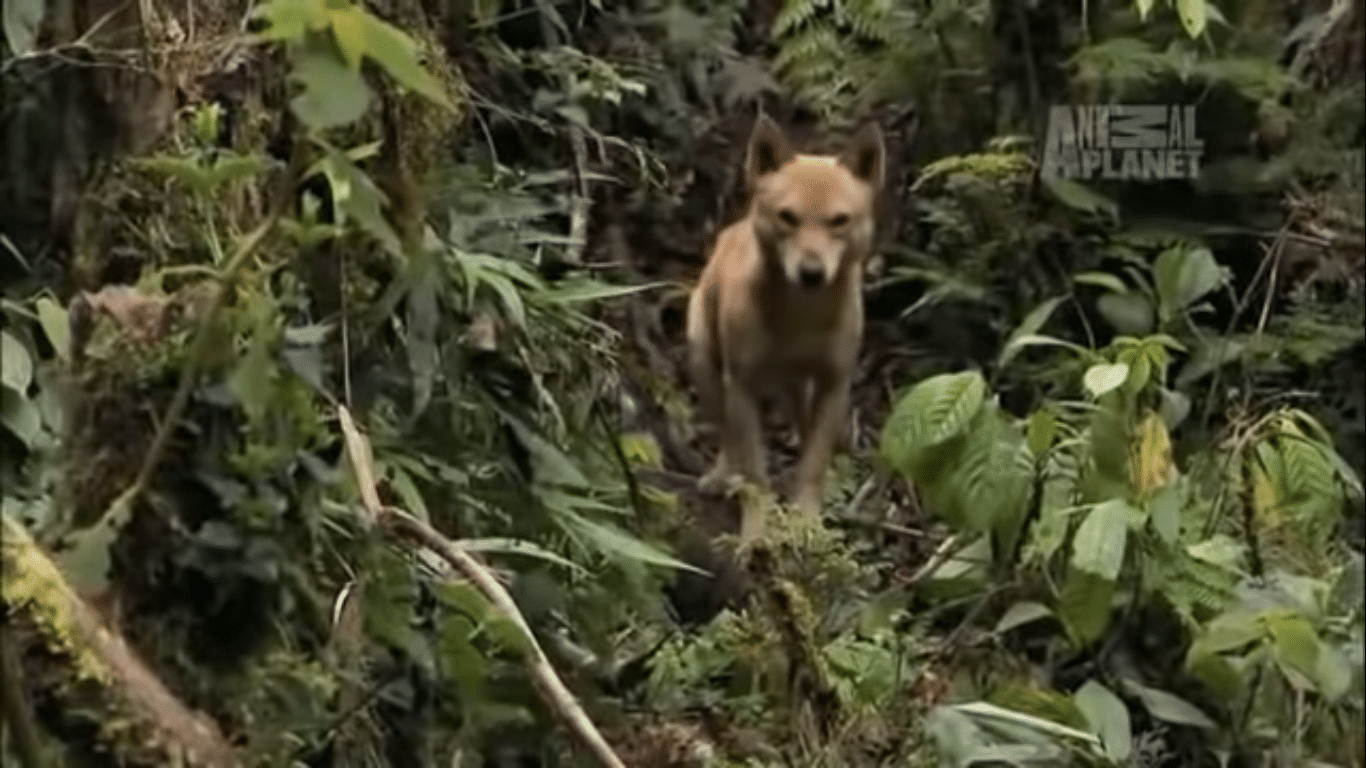
The last sighting of the New Guinea Singing Sog in its natural habitat (NGSD) 50 years ago led many conservation biologists to conclude that the breed was extinct, or nearing it.
However, the New Guinea Highland Wild Dog Foundation (NGHWD) recently made a breakthrough discovery. Back in 2016, a research group from Cenderawasih University traveled to a mountain summit in Papua Indonesia called Puncak Jaya and observed a pack of Highland Wild Dogs (HWD). They found that the breed’s vocalisations were similar to those of New Guinea singing dogs.
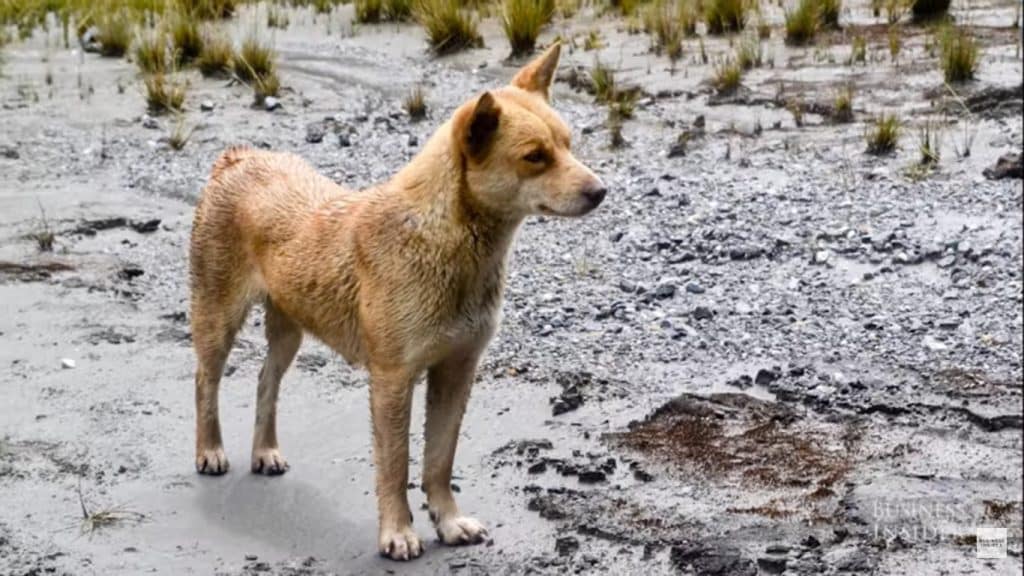
Two years later, they returned and took blood samples from three Highland dogs, then compared them to a captive pack of New Guinea Singing Dogs. Despite the physical differences due to inbreeding, the genome sequences were incredibly similar.
In fact, the National Human Genome Research Institute’s (NHGRI) staff scientist, Heidi Parker, PhD. remarked: “We found that New Guinea Singing Dogs and the Highland Wild Dogs have very similar genome sequences, much closer to each other than to any other canid known.”
“In the tree of life, this makes them much more related to each other than modern breeds such as German shepherd or Bassett Hound.” Both breeds possess genomic variants that other dogs don’t – at least as far as scientists are currently aware.
The Highland dogs are now thought to be the New Guinea Singing Dog population’s original breed.
A recent research article published through the PNAS journal provides more scientific insight. Senior author, Elaine Ostrander, Ph.D. claimed: “The New Guinea Singing Dog that we know of today is a breed that was basically created by people.”
The study could help scientists preserve and better understand the Highland Wild Dog, one of the rarest dogs alive. Studying the genomes that belie their unique vocalisations might uncover more history about humanity’s domestication of dogs.