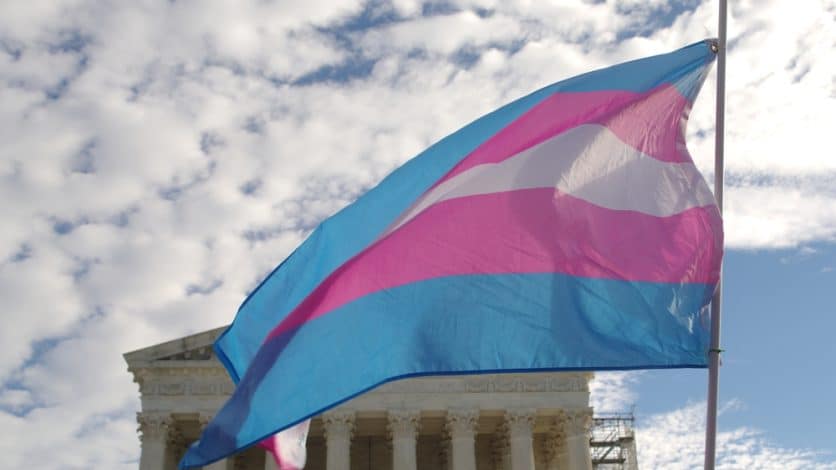
On Jan. 13, the Supreme Court of the United States heard oral arguments for Little v. Hecox and West Virginia v. B.P.J., two cases involving transgender athletes in public schools. Five months later, the Court determined public schools can determine eligibility of athletes in female sports based on sex assigned at birth.
The decision covers both cases. Although it only extends to the Idaho and West Virginia laws, it will likely have ripple effects across the country.
Background
Idaho’s Fairness in Women’s Sports Act barred transgender women from competing in women’s sports at public schools. This held true from elementary schools up to the NCAA.
In West Virginia, the legislature created the Save Women’s Sports Act. This required public schools to base gendered sports teams on biological sex.
Lindsay Hecox, a transgender student at Boise State University, filed a suit against the state of Idaho. She filed jointly with a high school-aged cisgender female athlete. Hecox planned to try out for the university’s women’s track and cross-country teams.
Becky Pepper-Jackson is a transgender girl who took hormone blockers and estrogen at the beginning of puberty. She competed on her school’s cross-country and track teams, but the Save Women’s Sports Act forced her to step down. Through her mother, she sued the West Virginia State Board of Education to reverse the law.
The district court and U.S. Court of Appeals for the Ninth Circuit both struck down the Idaho law. West Virginia’s was upheld at the district level, then reversed in part, vacated in part and remanded by the U.S. Court of Appeals for the Fourth Circuit.
Both cases look toward the Fourteenth Amendment on whether laws that classify athletics on the basis of sex assigned at birth violate the equal protection clause. West Virginia v. B.P.J. also looks to Title IX to determine if this is sex discrimination.

The Fourteenth Amendment states, “No State shall make or enforce any law which shall abridge the privileges or immunities of citizens of the United States; nor shall any State deprive any person of life, liberty, or property, without due process of law; nor deny to any person within its jurisdiction the equal protection of the laws.”
Title IX is a piece of the Education Amendments of 1972. These were additions to the Higher Education Act of 1969 and the Elementary and Secondary Education Act.
Under Title IX, no school or educational program that receives federal funding can discriminate on the basis of sex. The Trump administration’s Department of Education has claimed transgender individuals do not have Title IX protection.
The Supreme Court usually accepts around 80 cases to hear per term, out of over 7,000 applicants. Petitioners in both cases filed for a writ of certiorari on July 11, 2024. The Court granted the petition in July 2025. Dozens of amicus briefs, or documents citing supporters of each side, were filed over the year between updates.
The Supreme Court heard oral arguments in January, and made a decision on June 31.
How did the Court rule?
Writing for the majority on June 31, Justice Brett Kavanaugh addressed whether schools may limit participation in women’s sports to athletes on biological sex under Title IX and the Equal Protection Clause of the Fourteenth Amendment.
“In other words, may schools determine eligibility for women’s and girls’ sports based on biological sex?” he writes. “The answer is yes.”
Chief Justice John Roberts and Justice Amy Coney Barrett joined Kavanaugh’s majority opinion. Justices Clarence Thomas and Neil Gorsuch also joined the majority while writing concurring opinions.
Justice Sonia Sotomayor also wrote an opinion concurring in part and dissenting in part with the judgment. Justices Elena Kagan and Ketanji Brown Jackson joined Sotomayor. Justice Jackson wrote her own partial concurrence and dissent.
Sotomayor agreed with the Court’s ruling on the Title IX claim, but argued that the Equal Protection claim should have been analyzed differently. She argued that a district court should have more fully considered the Fourteenth Amendment’s demands when evaluating the law’s sex-based classification.
“This litigation implicates deeply sensitive, contentious, and evolving issues,” Sotomayor writes. “These circumstances demand exercising judicial restraint, not rushing to answer conclusively difficult questions without sufficient evidentiary development.”
Broader Implications
Constitutional historian and author Robert J. McWhirter said the likely short-term implications of this case will only affect those directly involved.
“Don’t overemphasize the size of the scope of this issue,” McWhirter said. “We’re talking about a narrow part.”
Fewer than 10 transgender athletes participated in the NCAA out of 510,000 total athletes, according to NCAA president Charlie Baker when he spoke in a Congressional hearing in December 2024. This hearing was five months after the petition for writ of certiorari was made in this case.
According to Glisten CEO Melanie Willingham-Jaggers, the decision is much broader.
“It’s about telling every young person in schools and the adults that are there as teachers and administrators that discrimination is how we approach young people,” they said.
Supreme Court rulings of any kind set a precedent that other courts in the United States follow. Though this decision upholds only the laws in West Virginia and Idaho, other states could use this to influence laws they write. Individuals under the new laws that come from this may have less standing in legal challenges until the makeup of the justices on the Supreme Court changes. Justices have lifetime appointments, so until a number of justices retire or die, the Court will likely follow this precedent.
Willingham-Jaggers also said it sets a precedent for cisgender students to see that discrimination is “the law of the land.”
Glisten, an advocacy group centered around LGBTQ+ issues in K-12 education, focuses on making schools into a “safe and affirming environment.” Willingham-Jaggers said they have been monitoring these cases for months.
Willingham-Jaggers said if states are left to opt in and out of Title IX holdings, a patchwork of liberty and inclusion may be created.
“What we understand is that when we have patchwork rulings and realities for different people, it’s a failure,” they said.
For McWhirter, this case points toward a larger sociological conversation.
“It gets to the fundamental way of how you view people in this issue,” he said. “Do you view people who have transitioned as wholly the gender to which they’ve transitioned? Or do you view these particular transgender men to women athletes as just jumping in with extra testosterone to get an advantage.”