In an ironic twist of fate, the party that often says to “trust the science” is now fighting the Environmental Protection Agency (EPA). But, now that the EPA has repealed the Endangerment Finding- which upholds all climate change regulations- our futures depend on their success.
On the brink
We are no longer in the phase where fighting climate change was about “our children’s futures” or our “grandchildren’s futures.” The world is feeling the effects of climate change right now, and our legislation needs to catch up.
We are experiencing extreme weather that was far rarer in the past. Hurricane Melissa, January floods in Southern Africa, a heatwave in the Western U.S. that’d be “virtually impossible” without climate change, and devastating wildfires in Argentina and Chile last February, are just a few examples of disasters that scientists say are made more likely because of climate change.
Even climate experts are surprised by how rapidly climate change is accelerating. The crisis has been outstripping their models. Meanwhile, the U.S. government is walking backward by removing emissions standards.
The lawsuit of our lives
The EPA initially created the Endangerment Finding in 2009. Using the 1970 Clean Air Act , which requires the EPA to regulate air pollutants that pose a danger to public health, the Endangerment Finding gave the government the authority to set emissions standards for greenhouse gases on vehicles and a wide variety of businesses, and challenge them when they did not meet those standards.
The Supreme Court case Massachusetts v. EPA upheld this rule. In this case, the Court ruled that greenhouse gases qualified as “air pollutants” under the Clean Air Act, and, because they were causing climate change, posed enough of a threat to public health that the EPA could regulate them.
However, last February, the EPA rescinded the Endangerment Finding. They claimed that “air pollution” in the Clean Air Act only applies to toxic pollutants that threaten individual health, not greenhouse gases that indirectly threaten people by raising global temperatures. They also claimed that the EPA lacked “procedural discretion” to create the Endangerment Finding in the first place.
A group of 24 Democratic-led states, along with several cities and counties, filed a lawsuit on Thursday, March 19th. They argue that the EPA is ignoring legal precedent and cannot change its rules without any basis in legal or scientific findings.

However, though the facts seem clear-cut, the oncoming legal battle might not be.
A court of trees and humans
Questions about climate change – and the environment in general – do not always fit well inside traditional systems of law.
One of the reasons it is difficult to bring up climate change in court is the issue of “standing.” Traditionally, courts handle disputes between two parties: one party, the plaintiff, will claim that the other party, the defendant, injured them in a particular, direct way. If they cannot, they lack standing to challenge the defendant.
This has hindered environmentalists several times. In Sierra Club v. Morton, the Sierra Club tried to prevent Walt Disney from building a ski resort in the Sequoia National Forest. The case reached the Supreme Court, where a 4-3 majority ruled that the Sierra Club did not have authority to do this. Although the land development went against their cause, none of its members would suffer a direct injury. Similarly, in Lujan v. Defenders of Wildlife, plaintiffs attempted to sue the government for harming species abroad. The case did not succeed because they failed to show that their members would be harmed.
It is true that, in both cases, no individuals were being threatened. But what these legal rulings don’t take into account are the ways that harm to the environment indirectly harms people. This isn’t a problem if laws and agencies can act where the courts can’t. But the Supreme Court in recent years has made that challenging.
In 2022, West Virginia v. EPA limited the EPA’s generally broad authority to regulate greenhouse gases. This case introduced the “major questions doctrine,” which suggests that, in matters of great “economic and political significance,” agencies like the EPA need permission from Congress before acting. Similarly, a 2024 case, Loper Bright Enterprises v. Raimondo, overturned a 40-year precedent that gave deference to agencies in deciding how to interpret ambiguous laws.
In Ohio v. EPA, they used these greater powers over bureaucracy by ruling against an EPA provision that would have required “upwind” states to regulate emissions that could drift into “downwind” states. They also did so in Sackett v. EPA, where they decided that wetlands are not protected by the Clean Water Act. This ruling departed from Court precedent and decades of EPA practice.
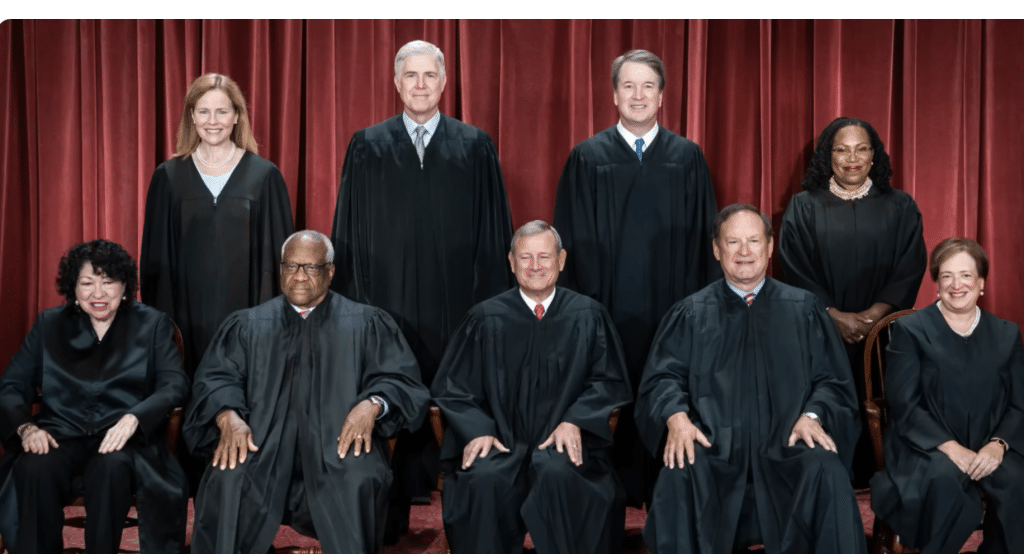
If this case reaches the Supreme Court, will they also decide that the EPA stepped out of its bounds with the Endangerment Finding? Legal experts suggest the Trump Administration wants them to decide while Trump is still in office, hoping this inspires the conservative supermajority to rule in his favor. Also, three justices who dissented in the original Massachusetts v. EPA case- Justices Roberts, Alito, and Thomas- are still in the court, while the justices who voted in favor are not.
However, they may side with the states. The conservative court does not always fall in line with the Republican Party. Just last month, they struck down Trump’s tariffs. Also, the reason that three judges dissented in Massachusetts v. EPA was that the evidence seemed too speculative. It’s not speculative anymore.
If anything is certain, it’s that, regardless of how the justices rule, there is a clear and present danger, and, somehow, it has to be addressed.