What comes to mind when St. Patrick’s Day is mentioned? Leprechauns? Parades? Does it ever connect to Christianity? Every year, cities around the world turn green to celebrate all things Irish. From shamrocks to beer, many people associate St. Patrick’s Day only with the holiday’s fun, festive elements.
Yet there is more to the holiday and its origins than some people would guess.
St. Patrick’s destiny toward Christianity
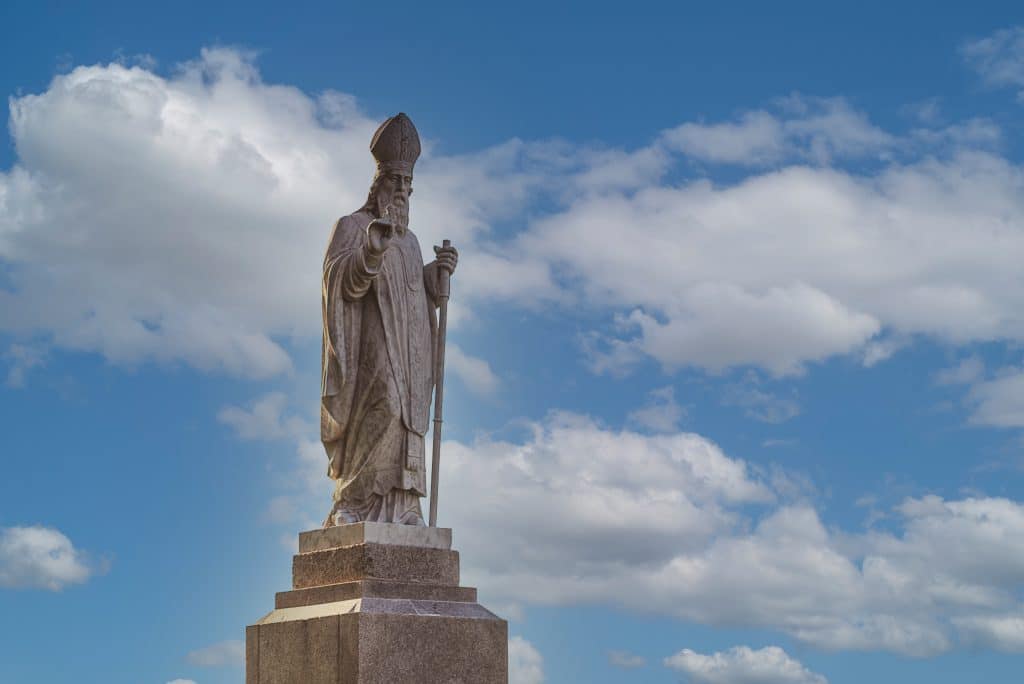
St. Patrick’s Day was originally a religious feast day honoring St. Patrick, the patron saint of Ireland. He is celebrated for introducing Christianity to Ireland. Mar. 17 became the official religious feast day in 1631, the date of his death in the 460s CE.
Although greatly associated with Ireland, St. Patrick was actually born in Wales. At age 16, he was kidnapped from the British Isles to Ireland and forced into involuntary labor, spending years as a herdsman. He later escaped and made his way back to Britain.
While back home, St. Patrick experienced a calling, known as the Voice of the Irish, to return to Ireland. This marked the beginning of his journey of spreading his faith.
Much of what we know about his life comes from the “Confession of Saint Patrick,” a spiritual autobiography he wrote. It includes his recounting of the seven years in captivity and his destiny to return to Ireland under God’s will.
The Origins of Modern Symbols
Much of our modern-day celebration of the holiday stems from traditions that developed centuries after St. Patrick’s life.
According to many legends of those who were close to St. Patrick, he would use a shamrock to explain the Holy Trinity, the three forms of God, to the Irish. This explains the holiday’s arching visual, with the shamrock as the central motif.

Leprechauns originate from Celtic folklore, as little creatures responsible for mending the shoes of other fairies. These characters are thought to bring good luck to humans, to protect them, or to cause trickery.
Green isn’t the initial color of the celebration either. Blue was associated with the earliest depictions of St. Patrick, who is shown wearing blue clothing. During the English rule of Ireland in 1541, King Henry VIII granted Ireland a coat of arms with a blue background. Then, in the late 1700s, King George III created a new order of chivalry, the Order of St. Patrick, and designated the official color as sky blue.
The Irish, on the other hand, chose to symbolize their country differently from that of the English. To honor St. Patrick’s use of the shamrock, green was accepted among the Irish. Green is a sign of defiance, as seen in the Great Irish Rebellion of 1641 and the Society of United Irishmen in the late 1700s against British suppression.
From Irish tradition to global celebration
Irish Immigrants, particularly in the United States, transformed the holiday into a broader celebration of Irish culture and heritage. The customs of wearing green traveled with them to the U.S. and have become widespread in all things Irish.
Irish aid societies, such as the Friendly Sons of St. Patrick, held annual parades in the U.S. during the late 18th century. Multiple New York Irish organizations united to create the official New York City St. Patrick’s Day Parade in 1851. The holiday now features a variety of parades and celebrations worldwide, including major U.S. cities. Chicago has been coloring the Chicago River green since 1962 to mark the holiday.
Now, nearly 32 million (9.5%) of Americans identify as Irish, according to the U.S Census Bureau. Countries around the world also celebrate Irish culture, according to World Population Review.

The Loss of Religious Tradition
There has been a major increase in the holiday’s participation compared to recent years, according to Northwestern Medill Spiegel Research. Yet, the religious origins aren’t as celebrated, or for some, forgotten.
While modern celebrations emphasize Irish culture, the holiday has become a major opportunity for business profit.
Beer is widely associated not only with St. Patrick’s Day but also with those of Irish descent, which businesses use to their advantage. Therefore, beer companies, restaurants, and bars roll out themed advertisements, special deals, and menus to attract those who celebrate. Beer is sometimes dyed green, and establishments are filled with shamrocks and leprechaun decorations. Large celebrations are also sponsored by big brands.
Many American traditions were later adopted in Ireland, in part to attract international visitors and build the tourism industry, showing how a holiday once about religion has swiftly become a globally driven event.
Additionally, much of the global celebration is inspired by Irish American traditions, which help foster a wider appreciation of Irish heritage. The religious roots of the holiday are now just one part of it, as St. Patrick’s Day also shines a light on various cultural aspects.
St. Patrick’s Day has grown from its origins into an international celebration loved by many, whether or not they are Irish. Today, you’ll often see lively parades, lots of green, and plenty of beer, but the true heart of the holiday lies in honoring Irish history and heritage. Mar. 17 is a special day for remembering roots and celebrating a vibrant modern identity.