


The new adaptation of ‘Wuthering Heights’ is full of many bizarre decisions. Perhaps the most outlandish is the design of Catherine’s bedroom in Thrushcross Grange, featuring wallpaper printed with photographs of Margot Robbie’s actual skin.
Emerald Fennell’s films have a reputation for being dark, sexual, and shocking. ‘Wuthering Heights’ — starring Margot Robbie and Jacob Elordi — is no exception. Loosely adapted from Emily Brontë’s beloved 1847 novel, the film has generated much controversy since its release on February 13th. Its race-blind casting, surreal architecture and costumes, and the complete exclusion of half of the novel’s characters and plot have left many viewers confused.
So, what is going on with the “skin room”?
The set design for this film is certainly unconventional. The most glaring example is Catherine’s bedroom in Thrushcross Grange, infamously nicknamed the “skin room.”
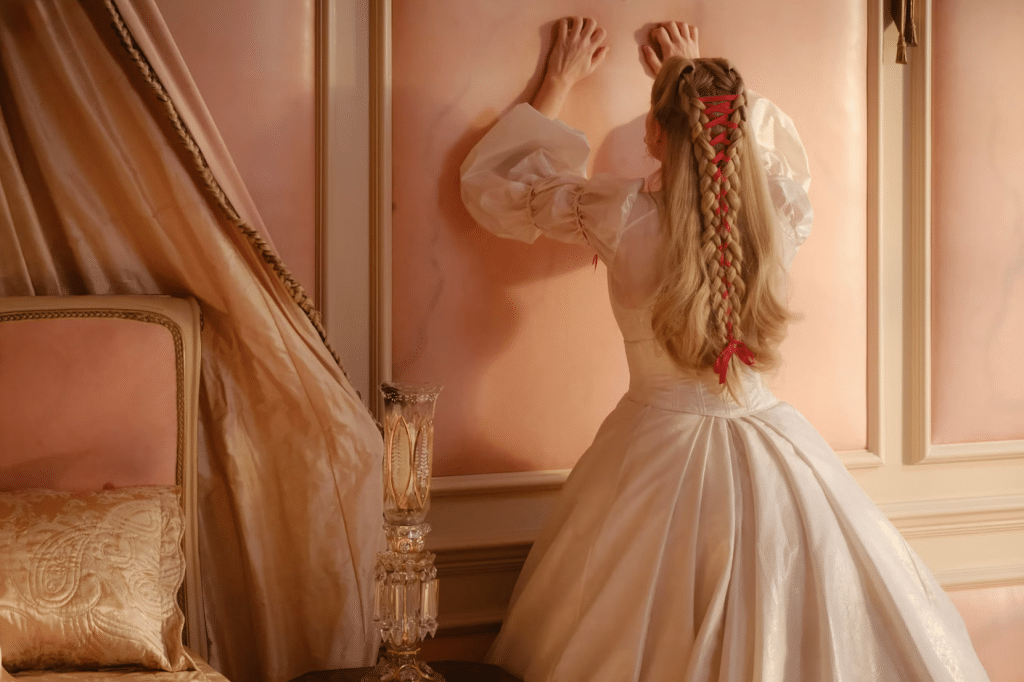
“The thing about Thrushcross Grange is it’s sort of designed to be at once kind of beguiling and grotesque,” Fennell told the New York Times. “So it was always about talking to Suzie Davies, the incredible production designer, about how to have a sort of uncanny feeling that was sort of subconscious rather than overbearing.”
“In the end, what it was made out of was padded panels with photographs of Margot’s actual skin and veins and freckles printed onto fabric. And then with an overlay of this very thin latex.”
The result is a room that feels cloistered and unsettling — exactly what Fennell was going for. But was it the right choice?
As surprising as this might be, no “skin room” exists in Brontë’s novel. Instead, Catherine’s bed chambers at Thrushcross Grange are referred to as a “box-bed.” This type of enclosed bed, common in European middle-class homes during the 19th century, was often built into what looked like a large wooden cupboard or wardrobe.
Several creators on social media, such as the one in this TikTok by Designing Spaces, have claimed that these bed chambers were referred to in slang as “skin rooms” during the time period. However, there is a lack of concrete evidence to corroborate this claim.

The more likely alternative is that the “skin room” is another one of Emerald Fennell’s creative liberties arising from her own interpretation of the text.
Interpretive, not faithful
Fennell has said herself that her ‘Wuthering Heights’ is not a faithful adaptation. Rather, it is one based on the emotion she experienced reading the book as a teen.
“The thing for me is that you can’t adapt a book as dense and complicated and difficult as this book. I can’t say I’m making ‘Wuthering Heights,” she explained in an interview with Fandango. “It’s not possible. What I can say is I’m making a version of it.”
This is the rationale behind why the film title is marketed with quotation marks. “There’s a version that I remembered reading that isn’t quite real,” Fennell said. “And so it is ‘Wuthering Heights,’ and it isn’t.”
I won’t deny the abundance of problematic creative decisions in Fennell’s adaptation of ‘Wuthering Heights’ that misconstrue the intended meaning of Brontë’s novel. However, I don’t think that the set design is one of them.
First, let’s do away with the notion of historical accuracy. Many people take issue with the inventive, surreal direction Fennell went in with the films’ architecture and costuming.
Art is interpretive. I believe that if you argue for complete book accuracy all the time, you are actually missing the point. In film, you get the unique opportunity to explore visuals that are impossible to include in a book. This invokes atmospheres, emotions, and new thematic elements that deepen and complicate the meaning of the story.
If tactfully executed, the novel’s truth can still be fully expressed without a one-to-one replication in the film adaptation. If we isolate the set design here, I think it actually does the book some justice.
The visceraliy of Thrushcross Grange
Now, were the set designs “tactfully executed”? From a purely technical standpoint, yes. The film’s sets manage to effectively emulate the emotions and themes present in the story of ‘Wuthering Heights’.
Fennell points out that in the Victorian era, there was a preoccupation with containing nature. In both the novel and the film, the suppression of Catherine’s true nature is the ultimate cause of her deterioration and eventual death at Thrushcross Grange.
The set design conveys this well. There is taxidermy on display. A collection of hand sculptures holds various natural objects in the library. The hallways of Thrushcross Grange are colored a vivid, arterial red like the inside of a human vein.
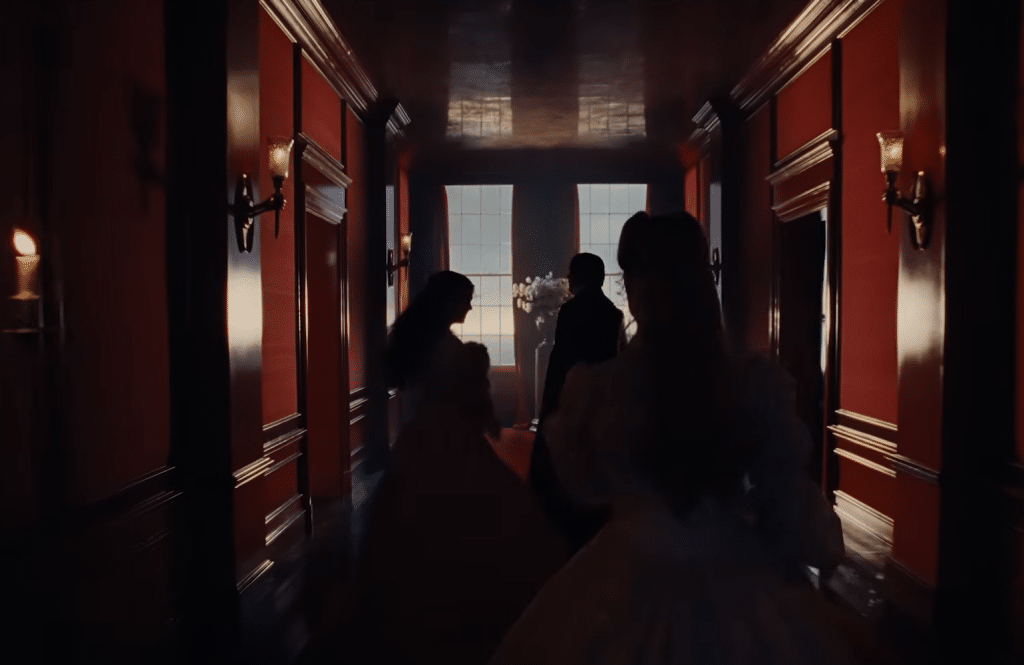
Catherine’s spirit is also contained as she is literally turned into a home decoration in the “skin room.” Living in accordance with societal expectations diminishes her agency and humanity. She abides by Victorian ideals by marrying a wealthy man for security rather than marrying Heathcliff, the man she truly loves.
The costuming also achieves the same effect. The tight corsets Catherine is laced up in restrict her movement, and the statement necklaces she wears have the appearance of choking her.
However, there is still a big problem, and it is arguably the most egregious fault of the film. The film misses the point: the reason for Catherine’s eventual deterioration. The ‘Wuthering Heights’ film has almost entirely altered the core message of the book.
As the saying goes: “I think I’m gonna die in this house”
The novel shows through Catherine’s suffering at Thrushcross Grange that Victorian societal norms constrict the freedoms of Victorian women. Brontë’s portrayal of child Catherine is as wild and passionate as the moors she races across with Heathcliff. When Catherine matures, she marries Edgar Linton and moves to Thrushcross Grange. The estate and those who reside there perpetuate the ideals of propriety associated with the Victorian upper class.
Catherine quickly grows restless and sick in what she refers to in the book as her “shattered prison.” Just like her box-bed, her life of propriety is claustrophobic. The place quite literally destroys her life force and passionate nature, as she dies later on after attempting but failing to fulfill the role of the ideal Victorian woman.
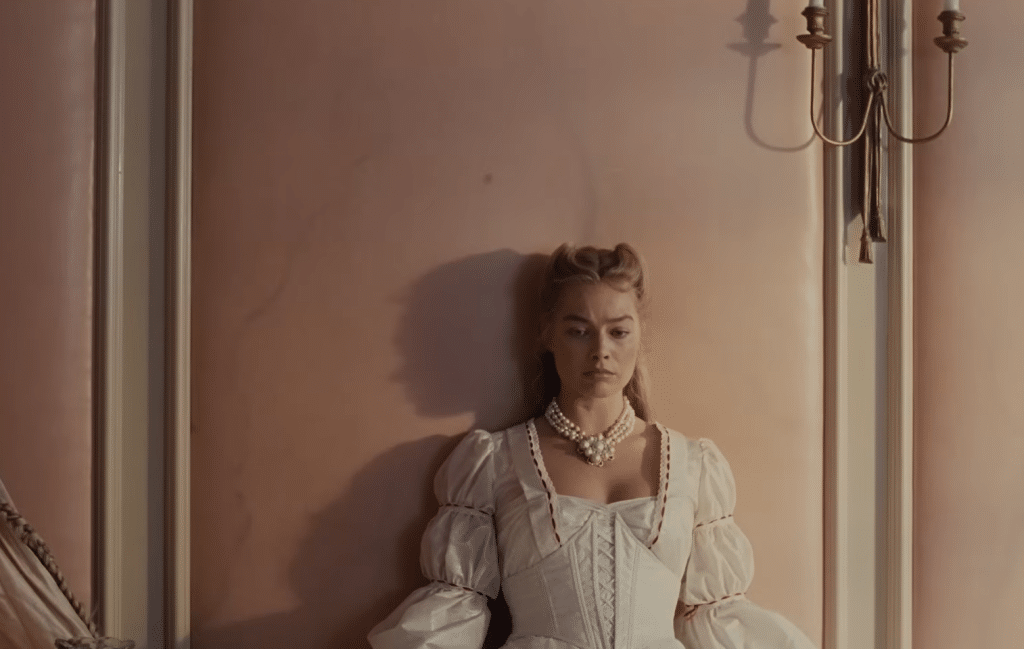
Conversely, Catherine’s suffering in the film is framed not as a response to the confines of social expectation, but rather because of her unfulfilled desire for Heathcliff. She is merely trapped in a loveless marriage.
To be sure, marriage is one of the aspects of Victorian propriety that Brontë explores in her novel. However, the film twists the drama to be about Catherine’s longing for a different husband rather than the damage the institution itself causes her.
It’s pretty, but the film missed the point
The film is undeniably visually striking and evocative. Emerald Fennell and her team did a beautiful job on that front. The film’s sets put the viewer in Catherine’s headspace and allow you feel her distress and suffocation.
However, with a more complex and well-developed reason for such emotions, the film’s message had the potential to be much more powerful than it ultimately was. What was once a story of generational resentment, revenge, and oppression has been flattened into a tale about unrequited love.
While effective in their emotional impact, the “skin room” and other sets ultimately don’t serve the objective of ‘Wuthering Heights’. Without the deeper meaning behind them, many of Fennell’s creative liberties don’t pack the same punch.
I’m in full support of bold film choices that go against the grain. However, in order to change something, there must be a substantive reason to justify it. Or at least, it must serve the same purpose as the original narrative. If it doesn’t, then the piece loses its integrity as an adaptation.
Unfortunately, I think this is the case with Emerald Fennell’s ‘Wuthering Heights.’ In a new story altogether, her distinct style would be haunting and visceral without feeling forced. Yet, in this adaptation, much of it rings hollow.