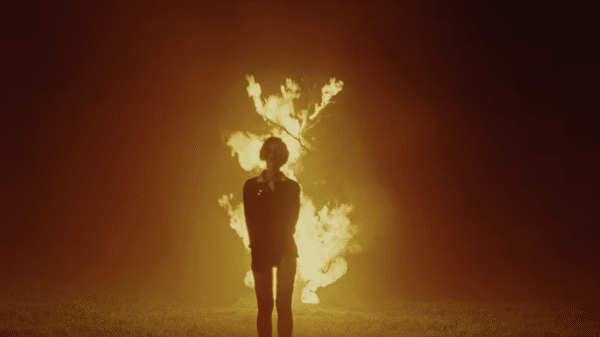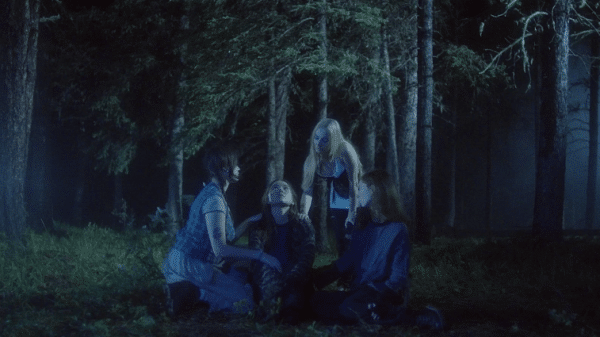
Del Toro released his long-awaited “Frankenstein,” based on Mary Shelley’s novel, for a short theatrical run on Oct. 17 before moving onto Netflix in November. It quickly became a hit due to noteworthy acting, as well as the film’s dense, layered symbolism. Although Shelley’s novel has been adapted countless times in different styles, the most famous version is the 1931 Universal Pictures adaptation. However, many criticize the 1931 film for deviating too far from the source material.
On the other hand, Del Toro’s version adheres more closely to the original story. Del Toro opts for a more focused approach on lingering themes present in the novel through visuals and symbolism to explore grief, obsession, creation and power. While critics have focused on the film’s themes and emotional impact, they have given far less attention to the rich symbolism embedded in the story.
“Frankenstein”: A Brief Overview
The film follows Victor Frankenstein (Oscar Issac), a brilliant yet arrogant scientist driven by a single goal: to create life and conquer death. His obsession is rooted in personal tragedy, specifically the death of his mother, a loss that leaves a permanent mark on his psyche. His obsession with creation ultimately culminates in the creation of the Creature, a being who is neither fully human nor monster.
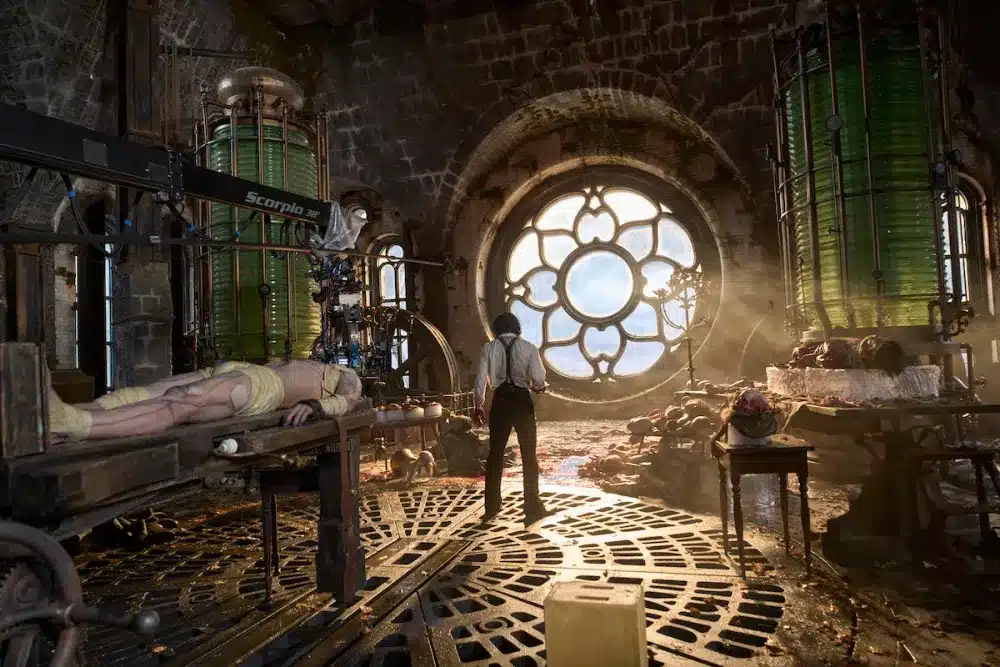
Where in Shelley’s novel Victor quickly abandons his creature, the film Victor initially chooses to stay with his creature for some time, attempting to teach him language and guide his development. This change allows the film to focus closely on Victor’s role as a creator and the responsibility that comes with it, changing the dynamic he has with his creation. From there, the story unfolds as a visually rich tragedy in which symbolism plays a central role. The film conveys much of its meaning visually, starting with its use of the color red.
The Color Red: Grief, Memory and Desire
The color red is initially introduced through Victor’s mother (Mia Goth). Her dresses are doused in the color red, and Victor’s close connection to his mother associates the color red with warmth and maternal love. However, that comfort quickly turns dark as Victor’s mother dies in childhood, leaving a literal scar on Victor through her bloody handprint on his shirt, as well as a symbolic scar on his heart.
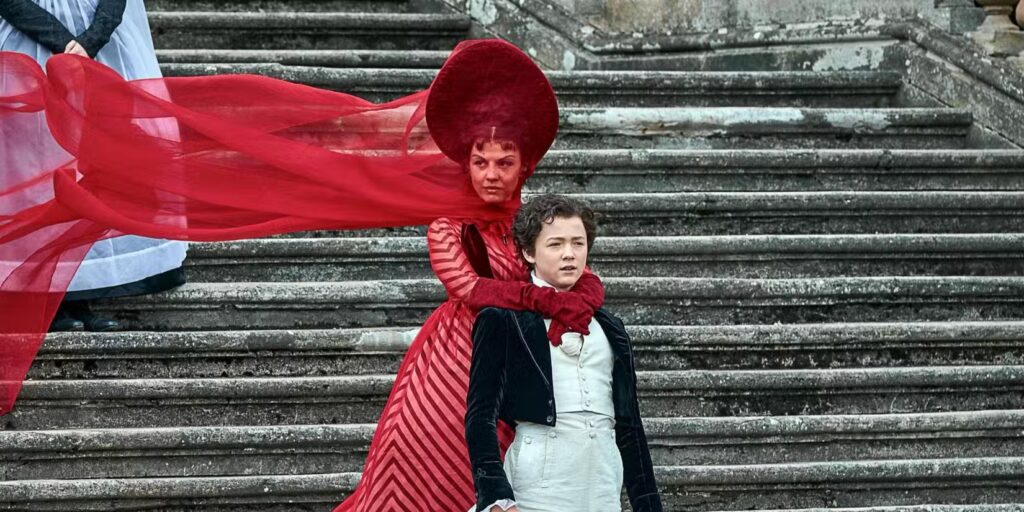
After the tragedy, the color becomes associated with death, and Victor adopts red as a part of his wardrobe through his neck scarf and gloves, forever carrying his mother’s death with him. The choice can be read as a form of mourning, but also as a fixation. Red becomes tied to his past, a reminder of the death he cannot move on from. At the same time, it foreshadows the destruction that his refusal will cause.

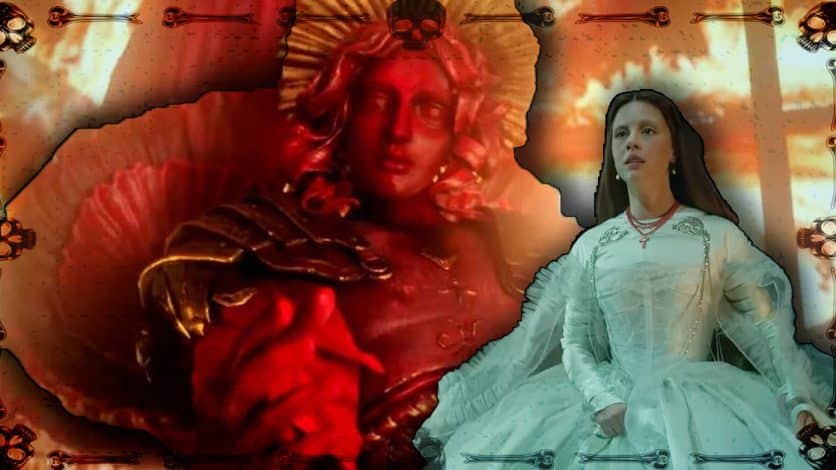
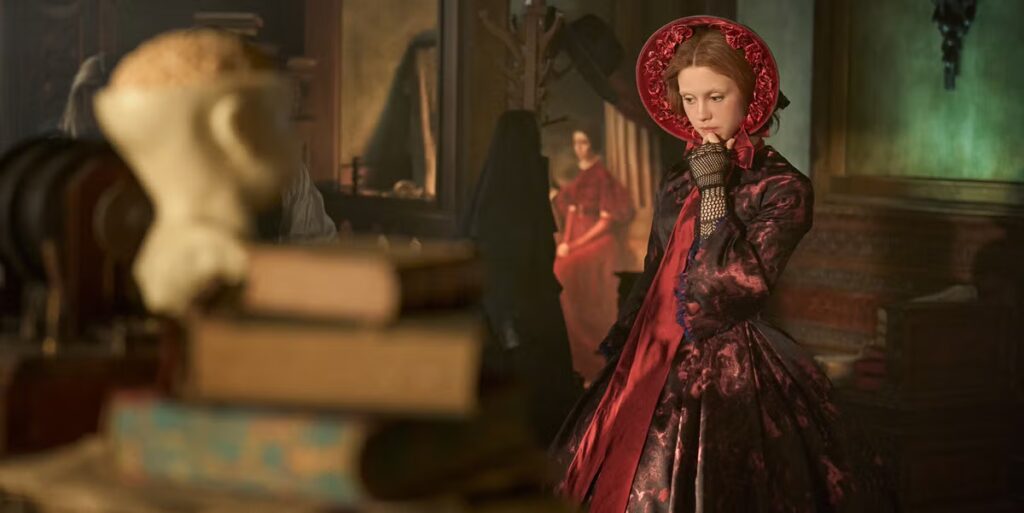
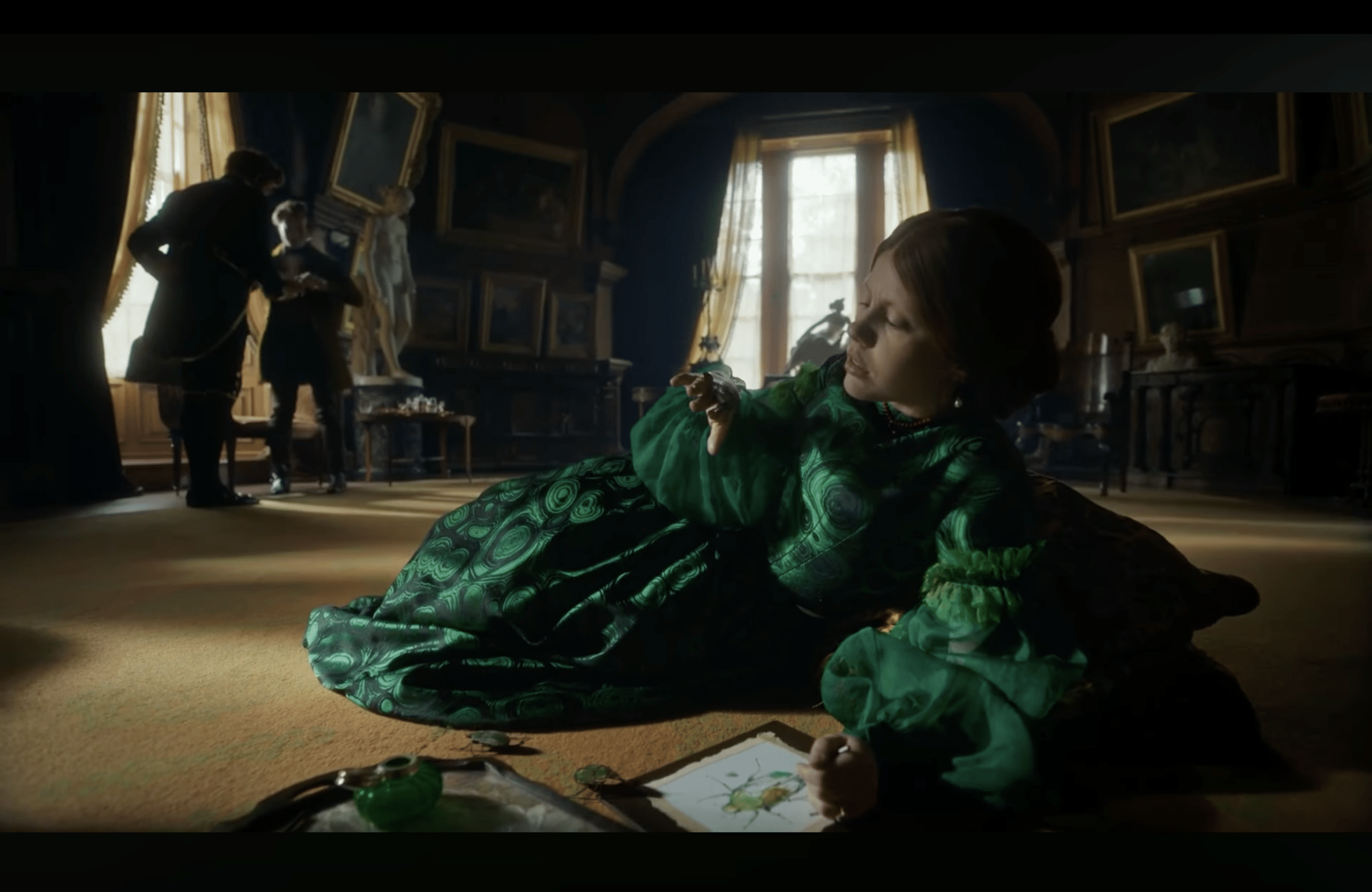
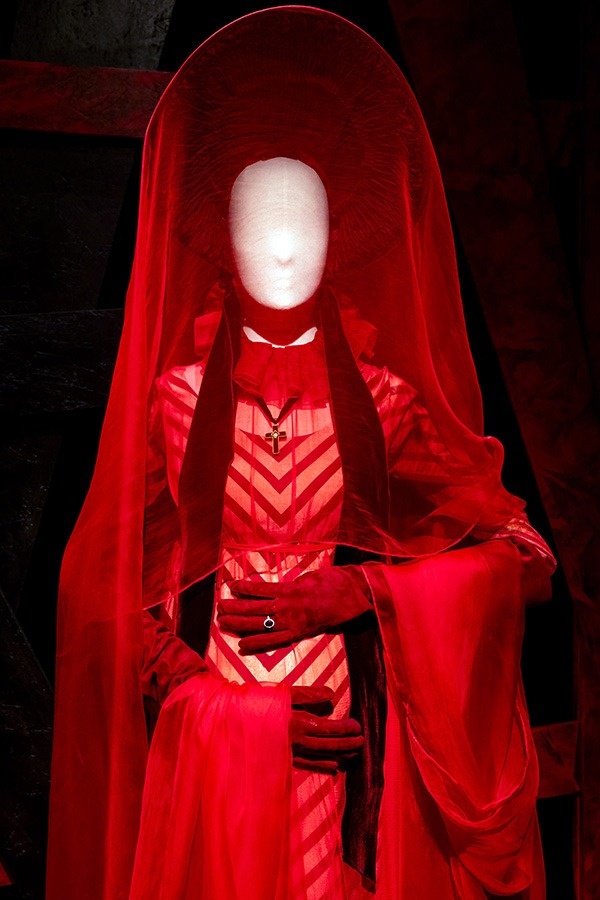
Red also draws Elizabeth (Goth) toward Victor, a woman engaged to his younger brother, William (Felix Kammerer). When Victor first notices Elizabeth in the market, she is carrying a red umbrella, a visual echo of his mother. Later, Elizabeth appears in a dress bathed in red, topped with a floral bonnet that mirrors the arrangement of flowers on Victor’s mother’s casket. This visual parallel complicates the meaning of red. Beyond death, the color symbolizes lust and desire through his attraction to Elizabeth. His attraction to her is inseparable from the grief he feels for his mother, blurring boundaries in a deeply unsettling way. Casting the same actress as both Victor’s mother and Elizabeth further complicates Victor’s relationship with her.
Religious Imagery: Playing God and Defying Nature
At the beginning of the film, Victor prays to an angel for guidance. Later, he encounters a “Dark Angel” worshipping it, mistaking obsession for destiny.

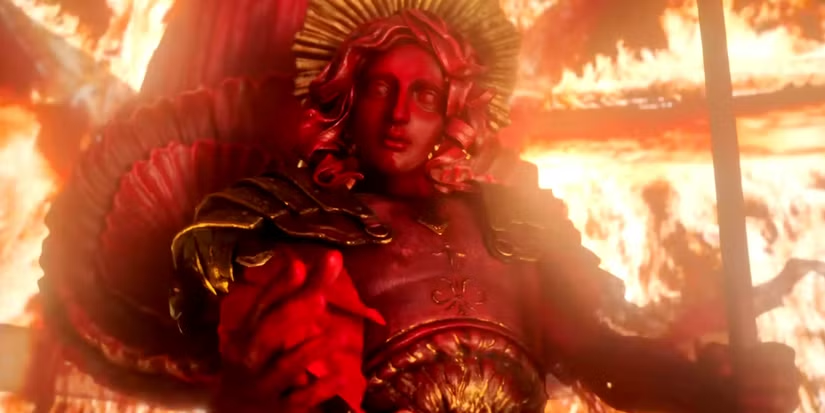
Victor’s actions make the religious parallels more explicit. By creating life, he literally plays God, defying nature and its rules. At one point, he even plays a priest to try to trick Elizabeth, positioning himself as a divine authority despite his mistakes.
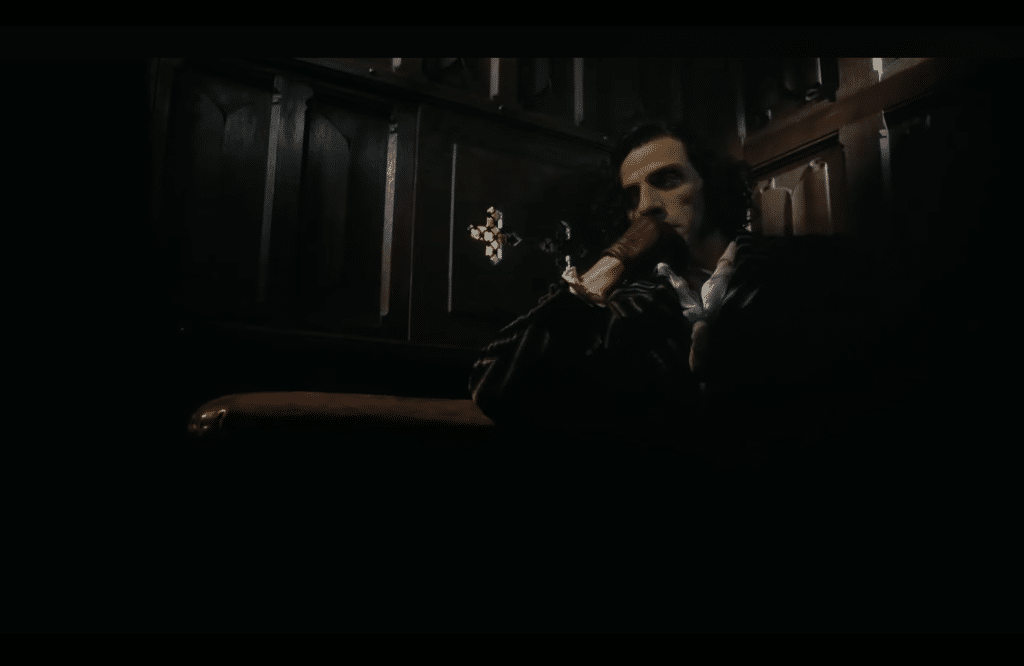
These moments echo one of the novel’s most enduring feminist critiques — that creation cannot exist without women. By erasing the female role in reproduction, Victor attempts to create life on his own, an act rooted in dominance and arrogance. Del Toro reinforces this theme through Elizabeth and her connection with nature. Her red rosary and love for the small things in life symbolize her reverence for God and nature, directly opposing Victor’s defiance.
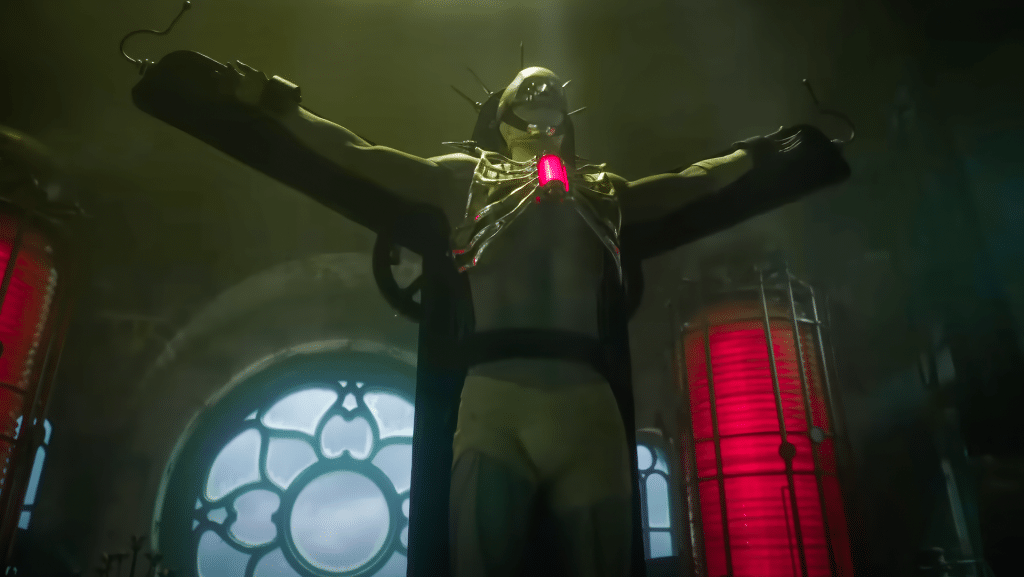
The Creature is also steeped in religious imagery. In one scene, he is strapped to a cross, evoking the image of Christ’s crucifixion. Like Jesus, he is innocent yet punished by humanity, and is hated despite his kind and gentle nature. At the same time, he can be seen as a reference to Adam, the first creation, thrust into a harsh world with no guidance. He is pure and heavenly, only sinning when the world turns against him.
It’s worthwhile to note that in the book and film, the Creature reads John Milton’s “Paradise Lost,” a religious epic. In “Frankenstein,” creation is inseparable from responsibility, a lesson that Victor struggles to learn until the very end. He acts as both Satan and God, a creator who brought life into the world, only to reject his creation and the consequences of his unchecked ambition. Similarly, the Creature mirrors both Adam and Satan, beginning as kind and innocent before the world casts him out and isolates him. This shows that monstrosity is not inherent, but rather, created through rejection and isolation.
Costumes: Confinement and Identity
The costuming choices play a crucial role in reinforcing Frankenstein’s themes, especially the costumes of Goth. For example, the film dresses Victor’s mother in red and often veils her, signaling both her impending death and her confinement and lack of agency. Her identity exists through her relationships rather than herself, reflecting her limited power within society.
Elizabeth’s wardrobe is immense, all reflecting her own identity as well as her position in society. The first dress we meet her in is blue, paired with an ornate winged headdress. The butterfly-looking wings surround her face, both symbolizing her love of insects and her confinement in society, functioning as a cage restricting her movement. Another interesting detail to note about her blue ensemble is her necklace, which resembles beetles, another reference to her interest in life.

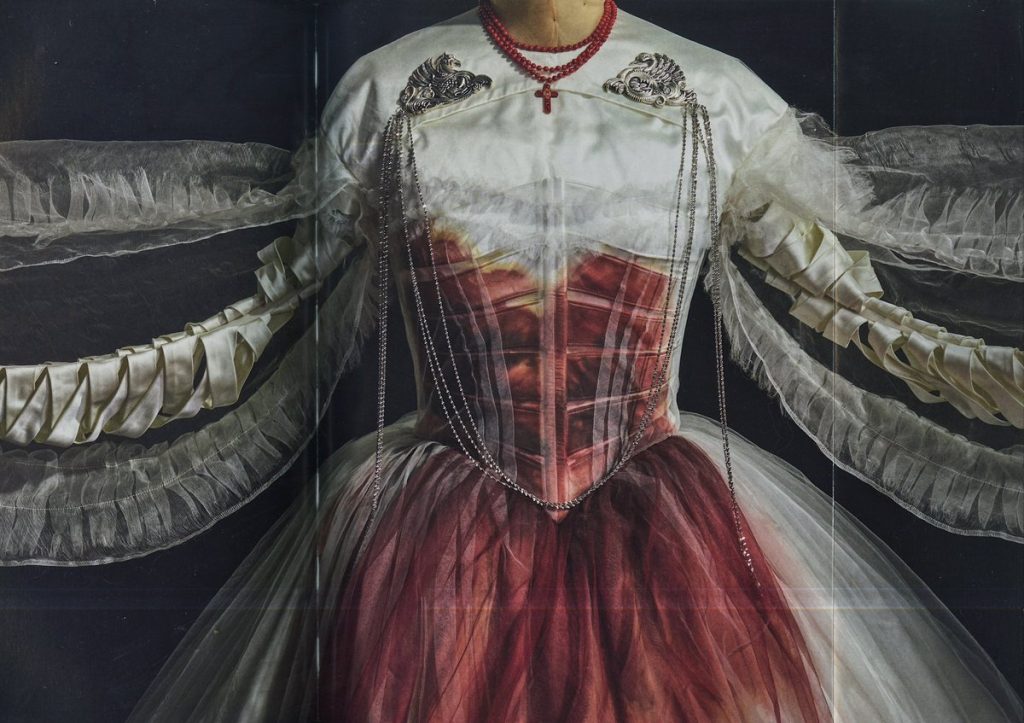
Elizabeth’s wedding dress deliberately resembles the Creature, with costume designer Kate Hawley drawing inspiration from the 1935 film “Bride of Frankenstein.” The bandage-like fabric and structured corset echo the metal ribcage seen during the Creature’s assembly.
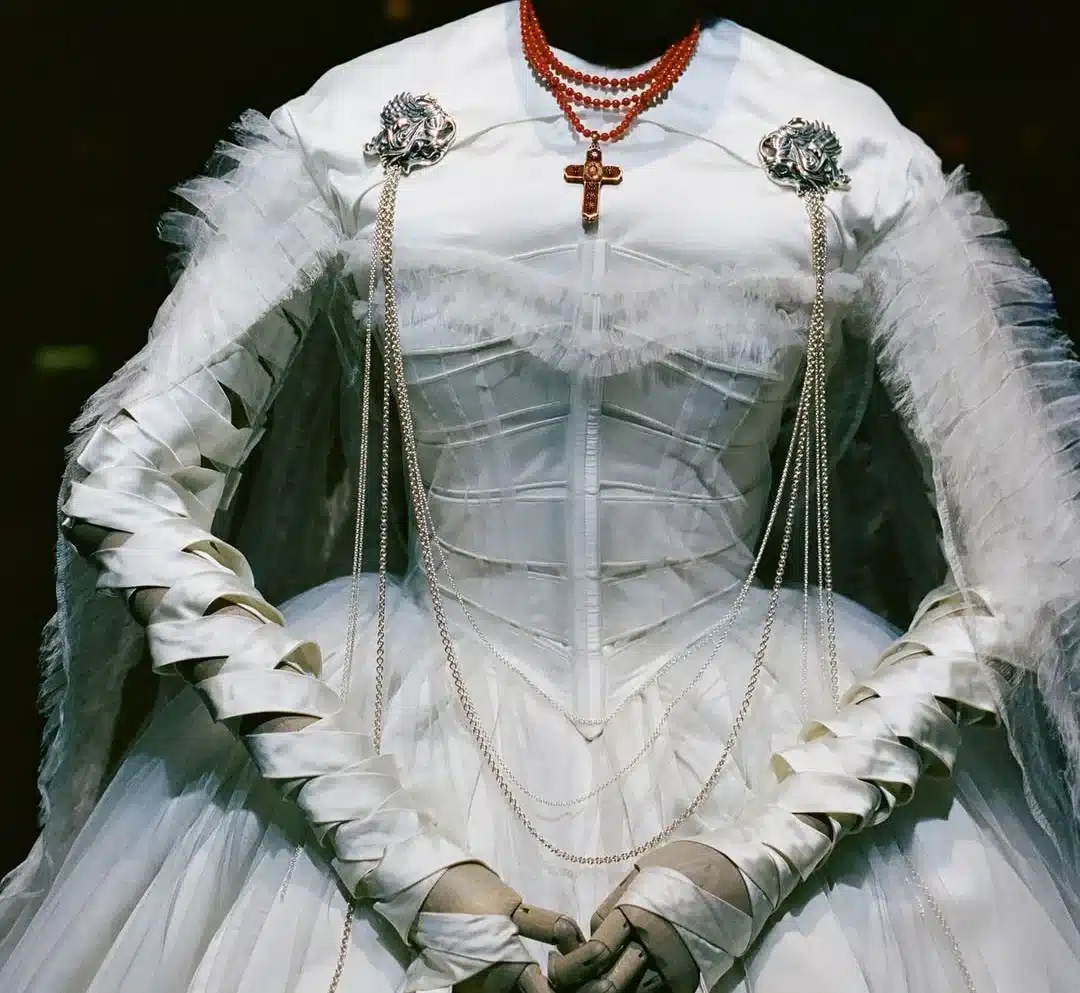
When Elizabeth later dies, blood stains her dress red, completing the symbolic cycle. Once again, red ties back to Victor, to his grief, obsession and insanity that inevitably kill Elizabeth.
Final Thoughts
Del Toro’s “Frankenstein” is a visual masterpiece and not just for its stellar performances. The visual imagery present in the film tell it’s own story, adding layers to the film that deepen its exploration of grief, obsession and creation. These symbols invite the viewer to interpret the film from many different perspectives. By focusing on symbolism rather than plot alone, Del Toro’s “Frankenstein” stands out as a visually rich adaptation that uses imagery to question everything.
The film is definitely worth a watch (and multiple rewatches if you ask me), and it’s available on Netflix. Happy watching!