


In a world where images are created and shared in seconds, and nearly everyone is a photographer, film photography offers something different. It slows the creator down and encourages a more intentional way of seeing. Taking place in the darkroom, film development has existed since the 1800s, but only recently have we begun to understand how harmful its chemicals can be.
The glowing red light, the hum of ventilation, and the acidic smell of chemicals: These are the three things your senses register as you walk into a darkroom. They may make you anxious, disoriented, or possibly curious. For the curious individuals who looked past the safety lights, the darkroom became a safe space where they could have full creative freedom.
Yet for most of us, the darkroom is something we’ve only seen in movies or TV shows, often depicted with photos hanging from a clothesline and a sense of romanticized mystery. In reality, it is one of the most creative and unpredictable places for an artist to be. We live in a world where art is always around us- from social media, to the dentist waiting room, to highway billboards- it is everywhere. Because of this, the darkroom can be exciting in the sense that it is the unknown.
While the darkroom is a place of endless possibilities in the world of film-based photography, there are problems with the chemicals and even the film itself that have only come to light in the past few decades. People started questioning the ethics of industrial and chemical waste all the way back in the 1960s and 70s, and we now have basic safety standards in the darkroom, but much still needs to be done to protect our world and our health.
From silver to paper
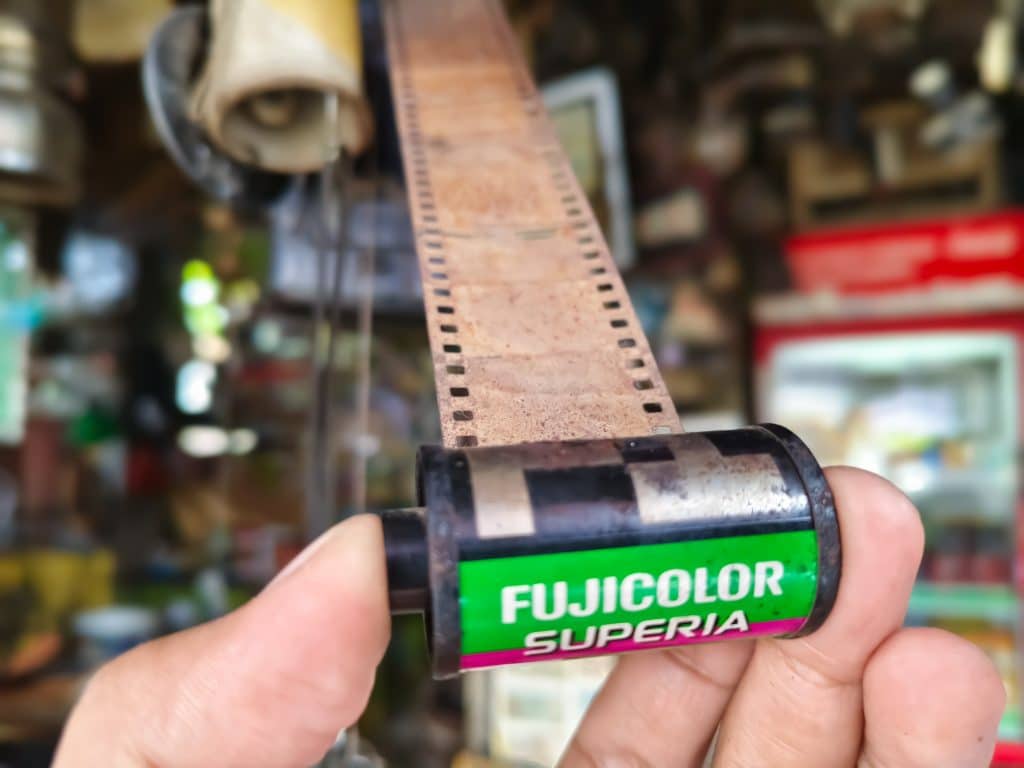
When using 35 mm, 120, or large format film, the writers at Digital Camera World shared that they all share the same basic materials: a flexible plastic covered with a light-sensitive emulsion and backing layers that prevent the image from fogging up. Sounds simple enough, right? But what about the chemicals?
Developer, stop bath, fixer, and hypo clear are the four main chemicals used in a darkroom. The four chemicals consist of hydroquinone, acetic acid, and dissolved silver. The Allan Chemical Corporation and other companies have found that these chemicals can cause skin irritation and respiratory issues. They can also contaminate groundwater and sewer systems if they are not disposed of properly. I don’t think that John Lennon meant us to take the phrase “all art is pain expressing itself” so literally.
What about the paper? That can’t possibly be a problem, right? Well, the light-sensitive paper doesn’t directly harm us, but it contains silver halides that prove highly problematic in water. According to the site dispose-cleverly, silver halides can leach into soil and bodies of water, posing a threat to aquatic life, the larger ecosystem, and overall drinking water quality. Overexposure to halides can also lead to discoloration of the skin and eyes, liver and kidney damage, respiratory and intestinal tract issues, and even changes in blood cells, according to the CDC.
The discussion
Why do we need to know or care about the composition of darkroom products? Well, film photography is on the rise, as seen in Market Growth Reports. Younger generations are interested in film and are taking the time to learn and reinvent the game.

So far, the resurgence of film photography hasn’t led to a measurable increase in pollution—but it’s up to us to keep it that way! There are endless resources out there that provide alternatives to film, chemicals, and paper. Olivia Mackenzie discusses using expired rolls of film, and Kelsey Smith discusses using environmentally friendly paper alternatives and bulk-loading film. Now let’s turn to the chemicals.
Sustainability is possible
1: Developer
There are several ways to create an eco-friendly film developer at home. One of the most popular is caffenol, which is made from instant coffee, washing soda, and vitamin C. It’s biodegradable, inexpensive, and non-toxic. The fun part? Washing soda and vitamin C can actually be combined with any naturally occurring phenol. What does that mean? Phenol is a naturally occurring chemical compound found in coffee, tea, plants, and tannins. Yes, that includes cannabis. As long as you pair an alkaline activator with vitamin C or ascorbic acid, you have a natural photo developer!

2: Stop Bath
Stop bath is a dilute acetic acid solution. While it is the least harmful chemical in the darkroom, it can irritate the eyes, skin, and lungs, and can contribute to water acidity if not properly disposed of. The easiest alternative is water, though you have to give the photo more time for development compared to the acid. You can also use vinegar or citric acid, or you can skip a stop bath entirely and go straight to the fixer so you aren’t wasting any product. This is a great way to reduce chemical waste without sacrificing image quality!
3: Fixer
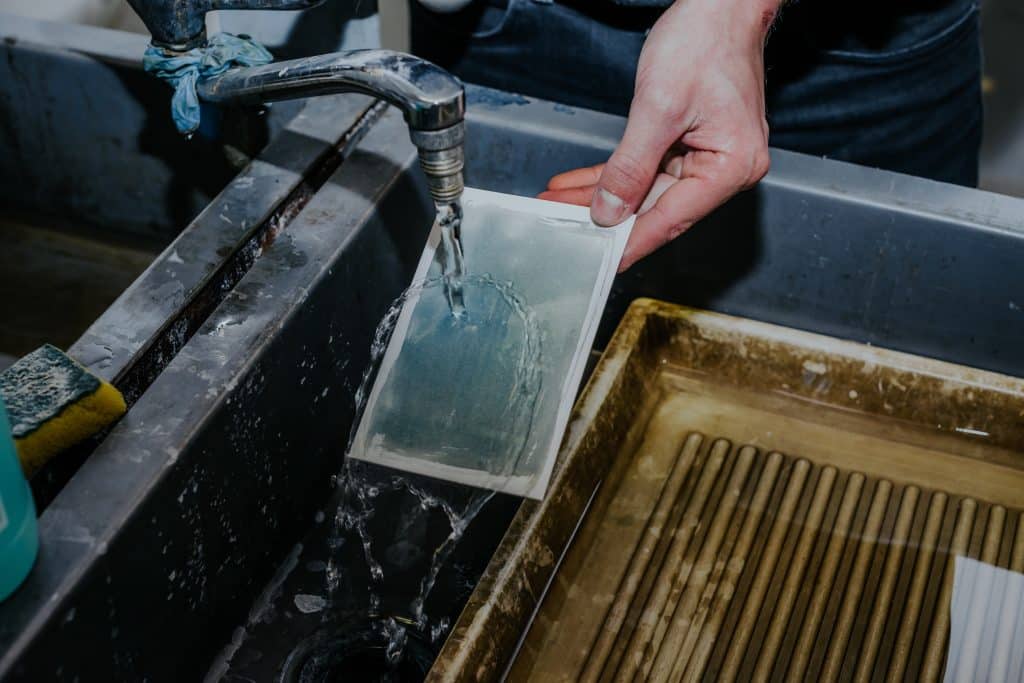
Fixer is the chemical that seals the photo and removes the silver halides from the film and paper. This means that when we waste it, we’re throwing these particles into the groundwater and sewer system. While there are plant-based alternatives in progress, we can still work to reduce silver waste in the meantime. You can reuse the fixer multiple times, and when it reaches its end, you can use copper or iron to draw the silver out before it goes to waste. Once you’ve removed the silver and you’re ready to dispose of the fixer, you can sell and reuse it. The remaining fixer should be collected in a hazardous waste container instead of being poured down the drain.
4: Hypo Clear
Hypo clear, otherwise known as fixer remover, does exactly what the name suggests: It removes fixer. It is a sodium sulfite solution, so it can trigger mild skin and eye irritations, and if the powder is inhaled before it is mixed, it can trigger mild lung issues. However, it is one of the least toxic chemicals associated with the darkroom. A simple solution is to use water instead of the actual chemicals to remove the fixer.
Sustainability starts with us
Film photography is an incredible art form that is rapidly surging in popularity, but the discourse around sustainability cannot be ignored. With endless resources and countless possibilities available to us, it is entirely possible to create extraordinary art while still taking into account the environmental impact. Beautiful, meaningful work can exist without destroying the planet.
We don’t need a complete overhaul of traditional darkroom methods; rather, we need to make more conscious decisions when working with film. Invest in plant-based developers, reuse chemicals when possible, use water in place of stop bath, and avoid pouring fixer down the drain.
The photography community must remain aware of its actions and its presence in the world. Continuing to take appropriate steps toward environmental sustainability will culminate in meaningful, lasting change.
If you’re interested in learning more, check out Alternative Processes and the Sustainable Darkroom.