Objects once carried the evidence of being touched. Their surfaces absorbed the oils of skin, the soft abrasion of repeated use, the slow erosion of time. Books bent at their spines, photographs curled at the edges, music wore itself into vinyl grooves and cassette tape. Ownership was tactile and intimate, confirmed not by contracts or passwords, but by weight, texture, and proximity.
To possess something was to touch it, and to touch it was to leave a trace.
These traces mattered. Scratches, smudges, and thumbprints were not imperfections but records of contact, proof that an object had lived alongside its owner. Physical things age with us. They accumulated memory not through storage, but through handling.
As technology becomes increasingly screen-based, the sense of touch has been pushed to the periphery of human experience. Objects that are traditionally worn, carried, and owned have been flattened into data, photographs reduced to pixels, books to files, music to invisible streams. This shift does more than dematerialize objects; it erodes intimacy itself.
Objects as foundations of the human experience
The sanctuary of the home allowed for an assimilation of a kinship between owner and objects, where the objects were not just things but companions in daily life. In the early 2000s, a day unfolded with texture, weight, and resonance; not in pixels, but in matter.
A teenager’s bedroom wasn’t just illuminated by a single rectangle of light. It was a collage of CD jewel cases stacked like tiny monoliths, magazines with dog-eared corners, and VHS tapes lining the shelves like old friends waiting to be invited into the VCR.
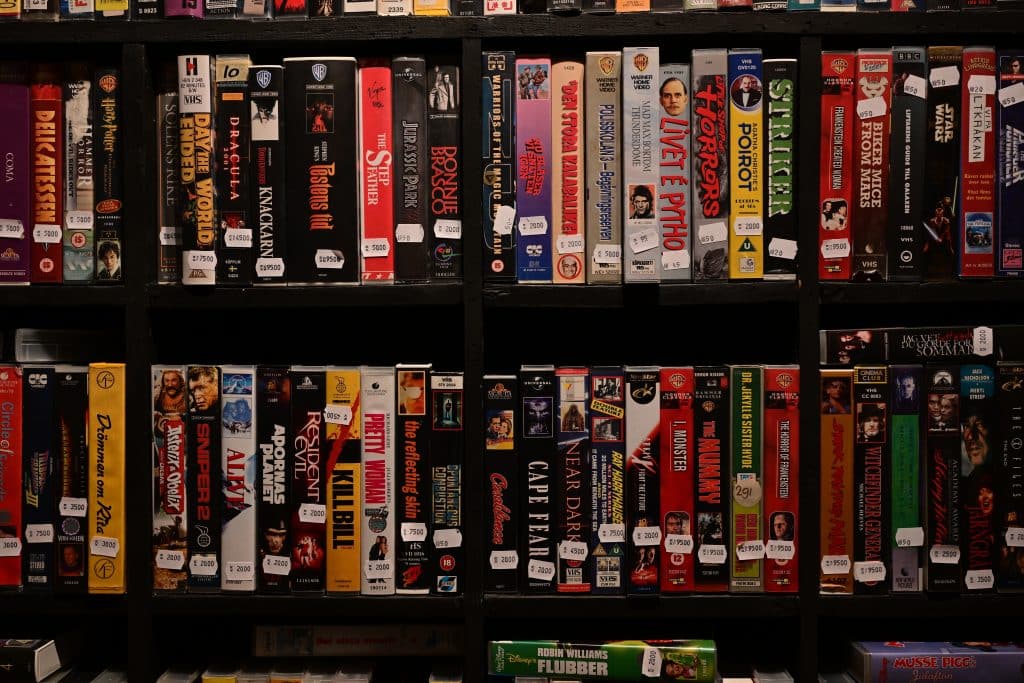
Bedrooms glowed with CDs stacked like miniature monuments, magazines folded at the corners, and tapes waiting for the VCR. Music poured from speakers; hands clicked discs into place; tapes hissed as people recorded and passed mixtapes from one person to another.
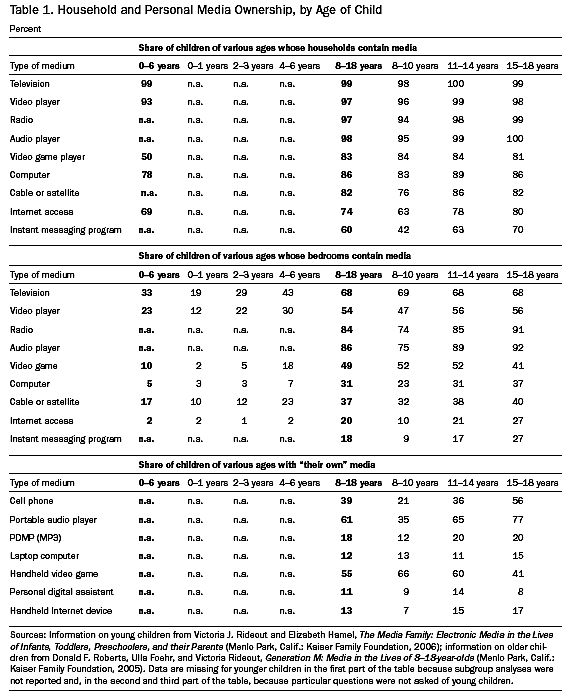
More than 60 percent of eight- to eighteen-year-olds owned a CD or tape player, often alongside radios, game consoles, and early computers—media kept literally at hand.

Television, music, and games structured the day. Young people spent nearly eight hours daily with media, but they engaged with it deliberately. Broadcasters set the schedule. Discs played from beginning to end. Viewers rewound tapes after watching.
People touched, handled, shared, and rearranged objects, using them to mark time and store memory. The digital world existed, but it had not yet reorganized daily life.
Screens were portals, not environments. This was not a fringe experience but an average one. In the early 2000s, most households still relied on physical formats for music, film, and reading. The home was a sanctuary where media did not infringe but coexisted with life. Before the swipe, before the scroll, there was the hand—and the world met it halfway.
The importance of touch
Touch once anchored ownership. To hold something was to claim it, to form a relationship with it through weight, texture, and presence. Today, ownership exists without contact. Objects live behind glass screens, accessible but untouchable, familiar yet distant. Without tactility, attachment weakens, and intimacy becomes abstract.
Routine was a catalyst for the utterances of mundane life, where we and objects were cordial with one another; where the rhythms of music began in the soundtrack of human movements, as a person rustled to place it in its compartment, and movies bore the subtle performance of human touch before they ever played. Touch was the prelude to everything.
It was once totemic—a physical anchor in a world growing ever more abstract. Before objects were optimized for display, they were designed to be held, weighed, and tested against the skin. Vision could deceive; touch did not. The hand became a witness.
Psychologists have long assumed that touch mattered primarily because it provided information—thickness, warmth, durability. But more recent research complicates this assumption.
Touch does not persuade only because it informs, but because it affects. For certain bodies, the act of touching is not a means to evaluate; it’s an end in itself—an autotelic impulse, driven by curiosity, pleasure, and the desire for sensory communion. These individuals do not touch to decide; they touch to feel. And in feeling, they form attachments that bypass reason entirely.
A pleasant texture produces a pleasant disposition. An object that feels good earns an individual’s goodwill. Trust emerges from sensation.
Do we own anything?
It may seem like a frivolous sentiment to mourn the loss of ownership when objects are still paraded before us; however, this is not to suggest objects are vanishing. Rather, our sense of ownership and belonging will lack the utilitarian meaning that once anchored routine, human intervention, and ritual in everyday life.
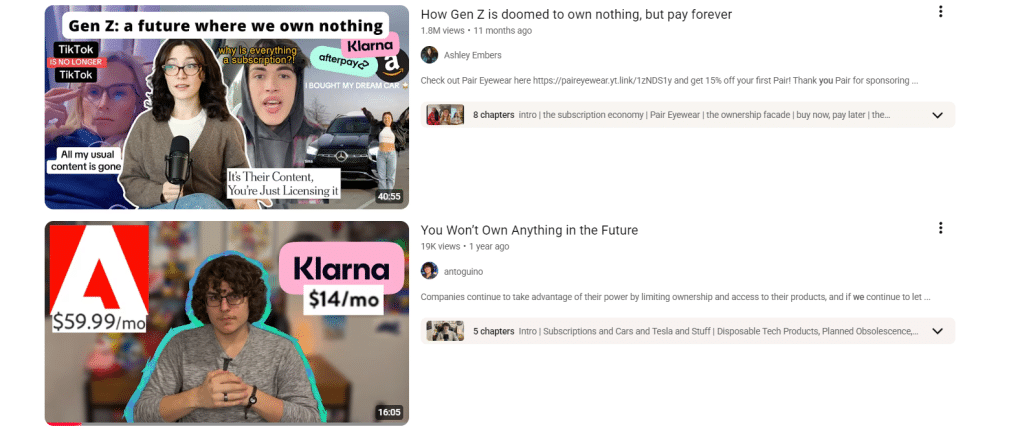
In many markets today, subscription-based models have fundamentally shifted consumption from ownership to access, reframing value creation as ongoing relationships rather than discrete purchases.
Global surveys reveal that about 74% of adults believe that people will own fewer physical goods and subscribe to more services in the future, and only a fraction maintain multiple physical possessions compared to subscription engagements.
What emerges from a loss of sensory touch is not a life owned, but a life assembled. Existence becomes modular—stitched together from rented parts, borrowed access, and provisional permissions.
Like Frankenstein’s creature, the modern subject is animated not by inheritance or possession, but by accumulated fragments: a leased home, a streamed identity, a career sustained by platforms that can revoke access without notice.
Nothing is fully theirs. Everything functions, but nothing belongs.
The Subscription Epidemic
On TikTok, this shift is articulated less as theory than as mood. Short videos narrate the quiet exhaustion of the subscription model: monthly fees for music, films, software, even memory, each promising access while withholding permanence.
This yields a shared restlessness: not quite a coordinated critique, but a recurring sensation of renting one’s own culture and of being perpetually upstream from ownership.
In online discourse, particularly on TikTok, creators have begun to articulate a growing unease with the normalization of subscription-based life. One such creator, sheisherrrrrr, reflects on what she describes as the slow but pervasive shift toward access over ownership. She notes how subscription models now precede nearly every interaction.
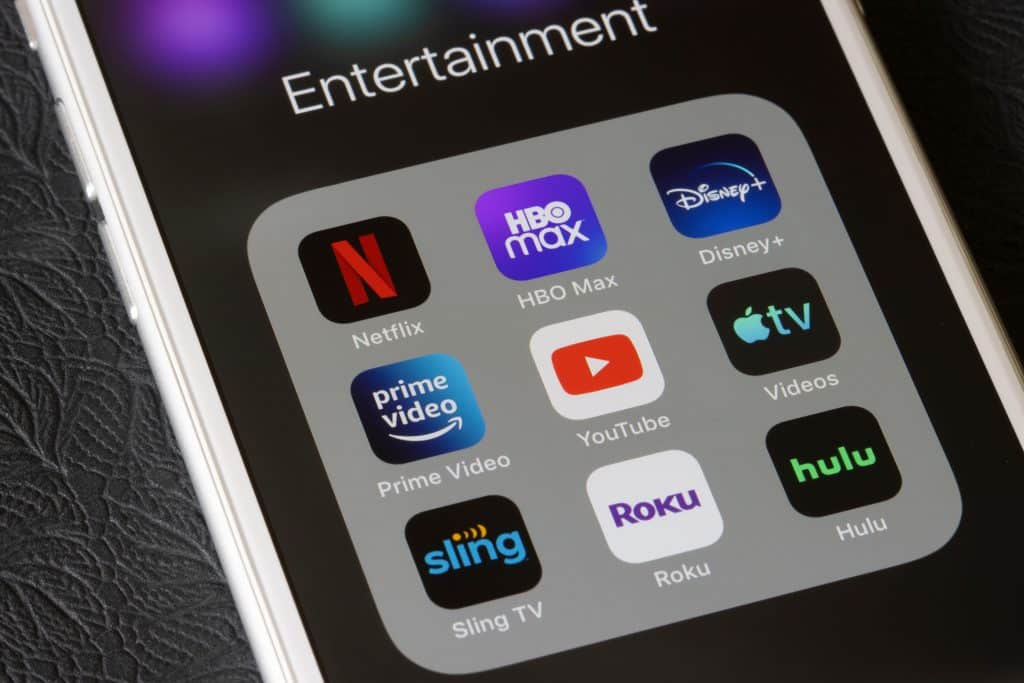
She details her experience with subscription models that no longer remain confined to clearly commercial or public domains. They first appear in large, infrastructural commitments—car payments framed as ongoing access rather than eventual ownership—before gradually extending into the domestic sphere. Inside the home, the same logic governs streaming platforms, where entertainment is never possessed, only continually renewed.
Her observation captures a broader cultural anxiety: that as everything turns subscription-based, the sense of personal possession—and the security and intimacy it affords—slowly erodes.
In the subscription economy, culture exists perpetually in limbo: accessible but unstable, its availability structured as a continual tease.
Industry data shows that the subscription model isn’t receding anytime soon; it’s expanding at an extraordinary scale even as consumers grow weary of it. The global subscription economy is projected to nearly double in value by the end of the decade, reaching roughly $1.2 trillion by 2030.
Gen Z’s nostalgia for the tangible
In response, physical media appears onscreen as a form of tentative reclamation. Shelves of CDs, stacks of DVDs, thrifted technology displayed not as mere collectibles, but as proof of something held outside the churn of renewal cycles.
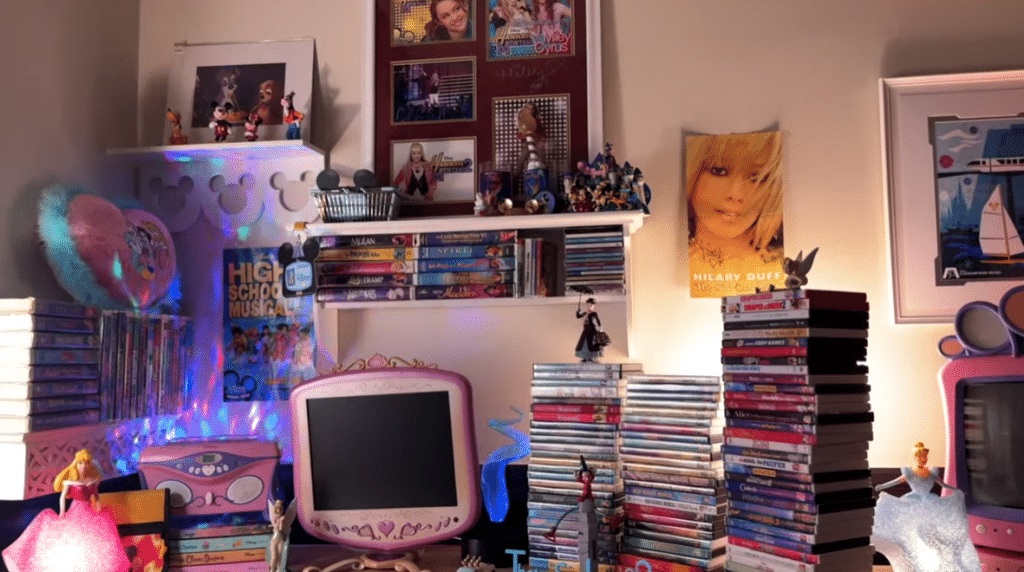
Alongside critiques of subscription-based life, a parallel discourse exists online that centers on the deliberate return to physical media and tangible objects. On TikTok, accounts such as nostalgixari document a renewed engagement with early-2000s material culture—CDs, DVDs, printed photographs, and other tactile artifacts. This revival is less about aesthetic nostalgia than about reclaiming permanence and control in contrast to digital access models.
Physical media resists escape and instead interrupts, offering experiences that updates cannot revoke, pause, or quietly erase.
What subscription culture renders obsolete, these objects briefly allow—teasing a future where access gives way to possession, and where feeling is no longer provisional.
What we lose when we lose touch
Anthropologist Daniel Miller has developed a useful framework for understanding this return to material culture. In Stuff, Miller argues that objects are not secondary to human life but are constitutive of it and that things shape people as much as people shape things.
Through studies of clothing, homes, and media, he shows how material possessions mediate relationships, structure daily habits, and provide comfort in moments of uncertainty. What might appear superficial, Miller suggests, often carries the deepest social and emotional weight.
Seen through this lens, Gen Z’s revival of physical media reads less as aesthetic affectation and more as an attempt to reassert sensory authorship. CDs, DVDs, and personal collections do more than store content; they organize memory, anchor identity, and create continuity in environments otherwise defined by impermanence.
As subscription models increasingly shape both public and domestic life, the question is no longer whether access is convenient, but what it requires us to relinquish. Subscription-based systems actively strip ownership away from materials and emotional grounding, rendering them abstract and conditional.
If access continues to replace possession, we risk more than a shift in consumption; we risk losing the conditions that sustain memory, agency, and selfhood. Touch is not incidental; it is how experience takes shape. Physical media demands care, repair, and attention, allowing history to accumulate through presence and use. Today’s youth are growing weary of screens and fleeting permissions, instinctively sensing this loss. Retreating to durable objects is a conscious refusal to surrender experience, identity, and memory to technologies that promise connection while keeping us perpetually at a distance.
What is at stake is not nostalgia for ownership, but the fading of touch as a form of witness. When we abstain from touch, we do not become freer; we sacrifice the marks through which memory, care, and responsibility accumulate. Objects once bore the evidence of use, repair, and devotion. A culture of access asks us to suspend contact in favor of permission. Nostalgia, then, is not sentimentality but residue, proof that touch once mattered, and that something durable has been set aside.