Tip culture is everywhere: nice restaurants, fast food diners, even your tattoo and hair appointments. While it hasn’t been too much of a problem in the past, tip culture has become so normalized that many people feel pressured into giving a tip so as to not be shamed by keyboard warriors. Let’s explore why people feel pressured into tipping and what workers think.
As someone who works at a place that accepts tips, I can see both sides of the issue. At first glance, tipping your service workers for doing a good job seems like a nice gesture. But if said workers become upset that you didn’t tip, or if you receive lackluster service that may not deserve a full tip, things can get complicated.
Figuring out how much to tip and when to tip is important. And you shouldn’t feel pressured into giving a tip, especially if the service is poor. However, other concerns may arise. What about the workers who rely on their tips to get by? Should you tip more to compensate for their lack of a paycheck?
What is tip culture?
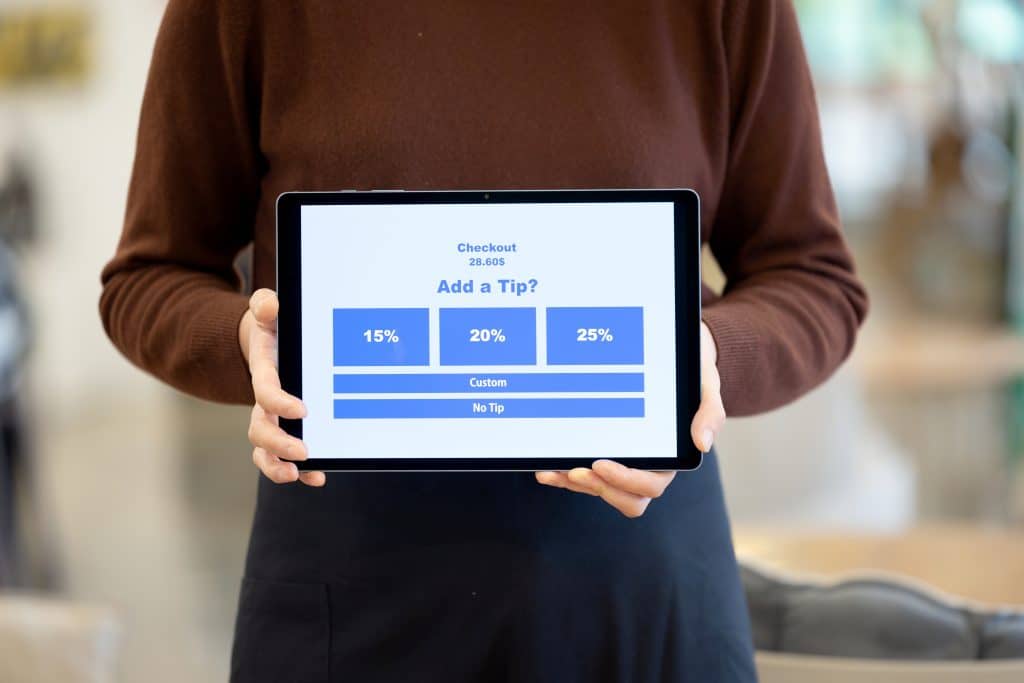
Tip culture has been around a lot longer than people think. In its most basic form, top culture involves giving extra money to service workers on top of their paycheck. This is mostly done to acknowledge good service. Tips are usually around 20% of the total cost; however some people may overtip or undertip. Others don’t tip at all.
Tip culture isn’t necessarily a bad thing. It’s how certain employees pay their rent or accumulate extra money for personal things. Unfortunately, tip culture is everywhere now, including beauty salons, tattoo parlors, and even DoorDash! Of course, several of these examples deserve tips, especially the service jobs. However, when companies shove tip culture down your throat, it might be time to stop and reconsider whether it has gone too far.
Tips also used to be a way to compensate for low pay. For example, in Massachusetts, there are waiters who are only making $6.75 before tips. This means that most of their paycheck comes from tips. Of course, it varies across states, but it’s important to note that myriad waiters are depending on tips to make ends meet.
Is it too normalized?
One problem that arises from tip culture is under tipping. While there is absolutely nothing wrong with undertipping or not tipping (not everyone can afford it) it does cause problems amongst workers. Occasionally, someone who places a bigger order and doesn’t tip can come off as selfish from a worker’s perspective. However, from the customer’s perspective, perhaps the worker was rude or the service was mediocre; therefore, the tip was not deserved.
Or there can be situations like the one in the video above, where you are prompted to tip either at self-checkout or when you are buying something online. Such transactions involve little to no human interaction. To quote the video, “Who is this even going to?” I’ve also seen tip prompters at merch stands, which is similarly taking it a little too far.

Another problem with this tipping system is that, at fast food restaurants, you are prompted to leave a tip before the service is complete. Sure, you engaged with the person taking your order, but you haven’t received it yet. What if it tastes terrible? What if a different employee has a bad attitude?
Should I still tip 20% for poor service?
A major downside to tip culture from the customer perspective is the norm that you should still tip 20% even if you receive bad service. Of course, every person has their own opinion, but I believe that your tip should reflect the service you received.
While I am someone who usually overtips, the amount I tip still depends on the service that I receive. So, if my server is unpleasant or abrasive, I usually tip less (though usually still around 20%). However, other people won’t tip at all if their server doesn’t meet their expectations. While I think that is a bit drastic, I understand that a poor attitude doesn’t deserve a generous tip. If a worker wants you to tip, there should be some semblance of effort.
So, does the same apply to delivery drivers and others under the Uber/DoorDash umbrella? This question is a little trickier, especially since you usually can’t tell what the delivery drivers’ attitude is like until they reach your door. I think that tipping a delivery driver/DoorDasher 15-20% is generally a safe bet. And again, I think the tip should reflect the quality of service.
So when should you tip?

So when should you leave a tip? To start with the obvious, if a self-checkout or online site is requesting a tip, you shouldn’t feel pressured to. Because who are you tipping? Additionally, you shouldn’t have to tip people at merch tables who are just handing you a T-shirt. You don’t tip retail workers who cash you out, right?
So that leaves us with food service and service workers. Personally, I believe it is appropriate to tip stylists, nail artists, and tattoo artists. Unless, of course, the end result is not what you wanted or the service is horrible. However, if they did a good job, a 20% tip conveys appreciation and gratitude. If they provided excellent service, a higher tip is deserved.
The same can be said about food service workers, especially servers. If the service is high-quality, and you enjoyed the food and experience, a 20% tip should suffice. It is also considerate to tip more if you had a bigger order, although it is not required.
What if you can’t afford it?
A key factor to consider is whether you can afford to tip. Some people claim that if you can’t afford to tip, you shouldn’t eat out. While that may be a good rule of thumb, there is wiggle room depending on the service.
However, if you are going to a high-end restaurant that you know is a little out of your price range, you probably won’t be able to leave a tip. And if you can barely afford to leave a decent tip for the waiter, you probably shouldn’t go to that restaurant in the first place.
On the other hand, it’s not the end of the world if you don’t tip at a fast food restaurant. The quality isn’t always the best and likely doesn’t warrant a tip. I usually try to pay in cash and leave the change, but not everyone carries cash. Generally, if you can’t afford to tip, don’t go out, though you shouldn’t stress about tipping at fast food places unless the service and products are exceptional.
The employees side
As I mentioned earlier, I work at a place that accepts tips. In fact, tips help me out A LOT, meaning that tip culture forms a key part of my income. College students’ spending money frequently comes from tips. And yes, it’s nice, but the system also has its downsides.
First, there is the obvious: dealing with customers. Most people I interact with are relatively chill about the whole tip-prompting thing. However, when asked to leave a tip (by the card reader), certain customers will roll their eyes and make a big deal out of it. Or they will place a large order without leaving a tip.
Moreover, tip culture is an unreliable source of income. If you are a server relying on tips to pay rent, good luck. Some days, you’ll be walking out with your pockets full, while others will leave you with little to nothing. Inconsistent tips and low pay make it difficult to pay rent.
Wait, I have to share my tips?
Now add on the fact that most fast-food companies split tips, and you’re sure to have a grand old time!
When I was at my first job (which also accepted tips), an older gentleman told me that the dime he was tipping would surely put me through college. Even if that were true, the reality is that I would only see a single penny from the dime.
Now, don’t get me wrong; I appreciate every cent that people tip me. It all adds up over time. However, whenever someone tips $20, I already know I’m only going to see about $1, depending on how many people are working and how many employees we have. Of course, every fast-food place has its own rules, and tips can be allocated in different ways. For instance, at one place, I’d only get $1 out of that $20, but somewhere else I might get $5.
Two examples of split tips
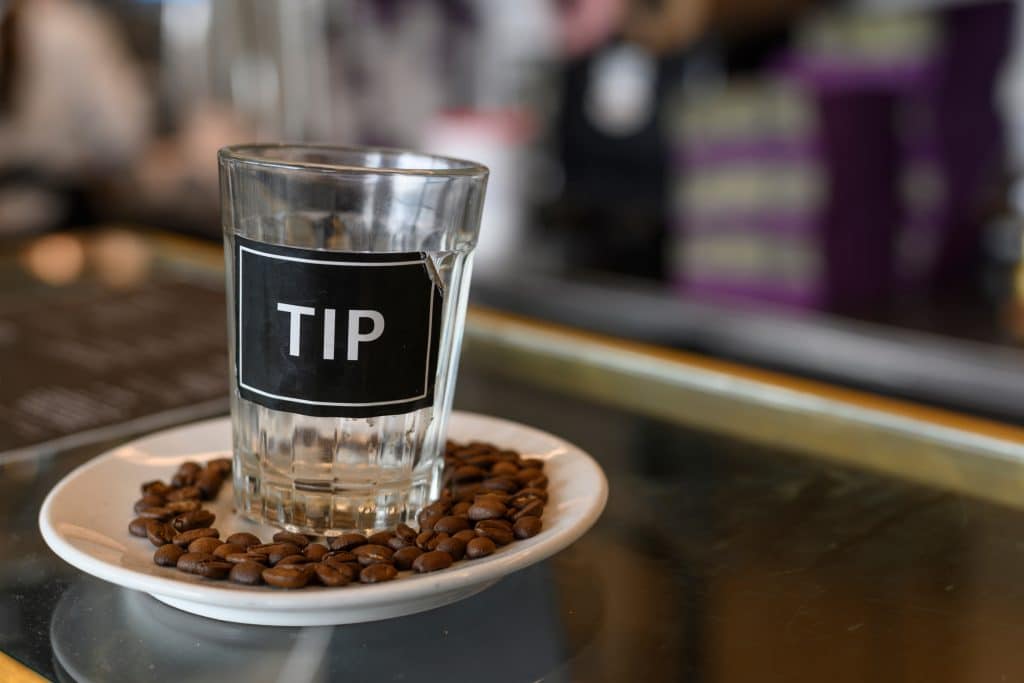
You might be thinking, “Why do companies do it differently?” To be honest, I don’t have a good answer. However, I can give you two examples from two different companies that I have worked for.
We’ll call them Company A and Company B. Let’s start with Company A, which gave me my first look at the tipping world. In this job, tips were split between the employees who were on the clock at the time, and they were either counted at the end of the day or at the end of the shift. For example, if there were five people working at a given time, any tips received in that time would be split between those five people, so each person would receive about $4 from that $20. And that could be for one hour, meaning that at the end of the day, you could make about $20-$30.
Company B is slightly different. Company B takes the total amount earned (change + bills) and divides that by the total number of tip hours, which is usually an hour or two less than you worked. And you split the tips with everyone, not just the employees who were on the clock. Depending on how many employees your store has, you might only get $1 from that $20. The amount of tips you get also depends on how many hours you work. So less hours = less tips. Not exactly ideal.
What does that have to do with anything?
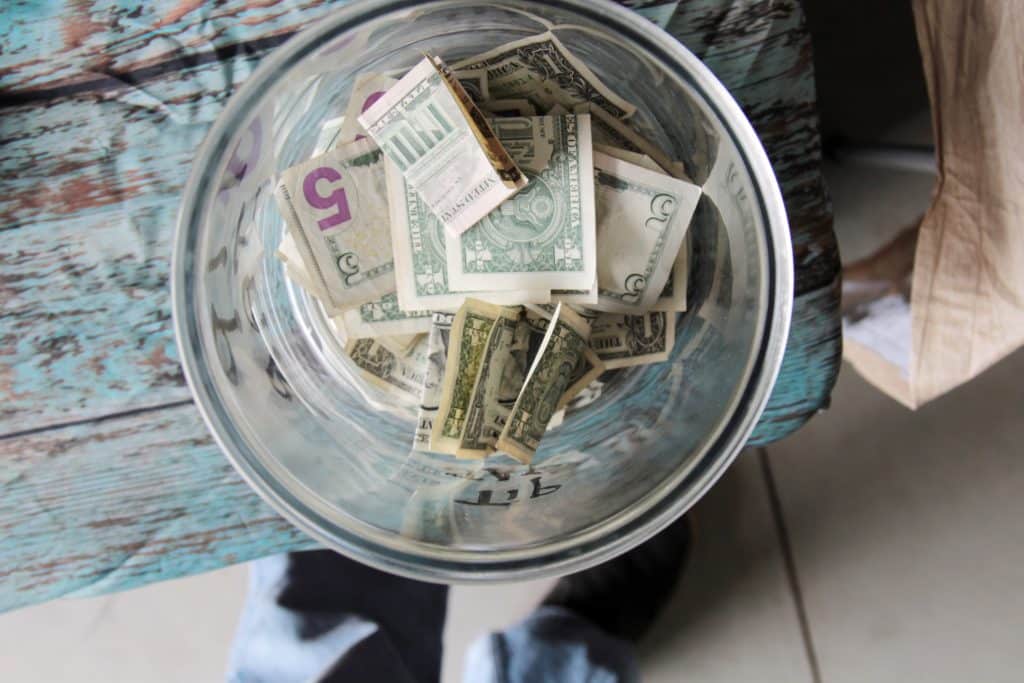
What does all of this mean? The two examples above reiterate the fact that tips are unreliable. And at Company B, the tips are not evenly split. In fact, you are getting tipped for your days off and other moments when you are not working. That seems nice in theory, but it’s not exactly fair to everyone else. By making tips on your days off, you are essentially getting tipped for doing nothing, taking away money from those who actually deserve it.
And like I said, less hours = less tips. If you are only working 20 hours a week, you would be getting less than someone working 30 hours, which makes sense. However, at Company A, the hours didn’t matter; what mattered was how many people were on the shift. Thus, you would make more in tips at one place than at another.
While this doesn’t necessarily indict tip culture as a whole, it demonstrates how the majority of people cannot rely on inconsistent tips when their hours are inconsistent. Fast food workers might earn the minimum wage, but discrepancies in both hours and tips make it impossible for them to handle any bills they may have. It’s important to consider how your tips affect employees and their lives.
What is the solution to tip culture?
Unfortunately, there’s no definitive way to resolve the complications of tip culture. Of course, we have a few options for defusing the madness. But it’s going to take a multipronged approach.
For starters, we can remove tip prompts for things that don’t need them. I’m never going to leave a tip at the self-checkout! Next, minimum wage must remain at a livable quantity.
People also need to stop being stingy with their tips. While you may not be the biggest fan of tipping, think about the employees who are relying on tips to survive. Not to mention, if you under-tip or refuse to tip at all, they may post complaints on social media, where the keyboard warriors will either support you or come for your throat. That will spark even more unproductive discourse about tip culture.
As we enter the holiday season, remember that your tips significantly impact other people’s lives. Maybe you want to be more generous around this time of year. Try and sustain that mentality throughout the year. Tip culture may have been blown out of proportion, but if you are smart with your tips, you could really help someone out.