

We are officially entering the last stretch of 2025 and preparing to embark on the new year. It’s during this time that readers reflect on the books they’ve read and set goals for the coming year. But can overly ambitious reading goals diminish the quality of reading done within the year?
Goals are often a good thing. They keep you consistent and motivated to continue a task that you may find yourself falling behind with. But with the era of book influencers, it’s hard not to compare your own amount of finished books to those of Booktubers.
But is it healthy to set goals to read outrageous amounts of books? Does it benefit the average reader or hinder reading comprehension? And does that matter? The answer is complicated.
What are reading goals?
Now, this sounds self-explanatory. Reading goals, in general, can be whatever you want.. Whether it’s a specific goal to read more from a certain author or simply to read more in general, a goal aims to sustain motivation.
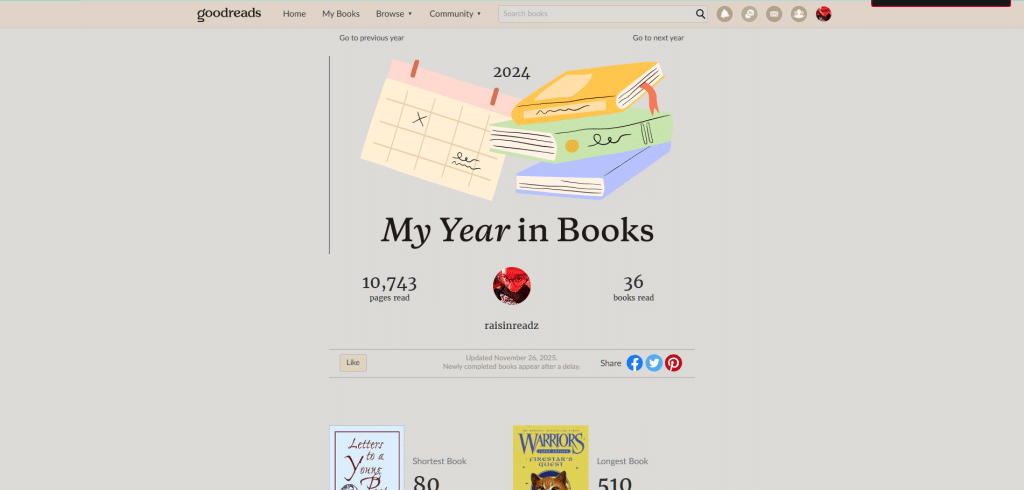
But within any book community on social media, a yearly reading goal refers to the total number of books read over the course of a year. On apps like Goodreads or Fable, readers can set this goal, and they’ll be notified of their progress.
Hitting a yearly goal has become a badge of honor, something to share with other readers.
At first glance, it’s a great way to push yourself to read and hit your goals. However, it can quickly become a way to assess one’s dedication to literature. With the rise of Booktok and “performative reading,” these goals can slip into a place of toxicity.
The negatives
It’s the last week of December, and you’re five books below your reading goal. Posts labeled with #readinggoals or Reddit forums like r/52books are discussing their own reading goals that they’ve hit or surpassed.

It’s hard not to feel a twinge of FOMO or perhaps disappointment. You might find yourself putting down the gripping 500-page novel you were reading and replacing it with a novella, a comic, or a children’s book. Not that these genres are inherently lower-quality, but it might not have been something you were itching to read in that moment. And thus, the pressure of hitting a goal changes the trajectory of your typical reading habits.
Maybe this isn’t a bad thing. It pushes us out of our comfortable, default reading style and into a new direction. But, in doing so, can it diminish the quality of the books that we are reading?
Quality is subjective, of course. But if you don’t typically find value in reading manga, then why start a volume just to reach a number? Doesn’t that defeat the purpose?
It depends on who you ask, as reading is deeply personal. It can be a form of escapism into a new world or an opportunity to slow down and learn. Regardless, the pressure of fulfilling a goal, especially around the end of the year, can quickly ramp up.
The positives
Now, on the flipside, a reading goal can obviously incentivize someone to read more than they would have otherwise. And no matter what you read—whether it’s a children’s book or the dialogue from comics—there is irrefutable value.
Reading has proven health benefits such as slowing the decline of cognitive abilities, boosting intelligence, and reducing overall stress levels.
The more you read, the more your body benefits from the activity, even if the books are a bit lackluster to the reader personally. So, if you read a couple of duds just to meet a goal, then what’s the harm?
Reading doesn’t have to be so complicated. It is a hobby, something to do for fun. How much of a given book do you need to retain to consider it read? Reading doesn’t have to entail analysis and annotating.
Readers who set high reading goals are the most criticized. But what about the readers setting modest goals? Someone who typically reads five books a year might set a goal of a book a month. Seven more books a year would lead the goal-setter to take more initiative in reading.
There are always going to be people comparing themselves to influencers on the internet. If you focus on yourself, however, setting a yearly reading goal shouldn’t be so problematic. As long as you don’t judge yourself too harshly for not meeting the goal, of course.
So, is it toxic or motivating?
All goals should be realistic and attainable, and if setting a yearly goal forces one to read more—regardless of what genre—then it should be a net positive, right?
Social media has always had the reputation of forcing comparisons–and online reading communities are no different. Seeing Booktubers who read 200 books a year can foster insecurity. However, readers need to understand that reading 100+ books is unrealistic for the average person. Book influencers can often turn their reading into revenue, which both motivates them and frees up more time for reading. Most of us are not getting paid to read like they are.
If the idea of a yearly reading goal thrusts you into a place of negativity, maybe it isn’t the right kind of goal for you. Instead of quantity, focus on quality. 2026 can be the year of DNFing more bad books and prioritizing well-written and impactful novels. Or, if you’re into a specific genre, set a goal to read more of that genre.
For example, popular Booktuber BooksandLala sets highly specific, intentional goals.
For 2024, her reading goals included reading more short story collections and staying up-to-date on nonfiction releases. These kinds of goals are tailored to her specifically without the pressure to reach a number.
The start of a new year is the ideal time to reflect on the past and set new intentions for the future. The goals we set should be personal and non-performative; goals that genuinely better ourselves and our experiences. Whether you like the push to read more books or want to focus on quality, the important part is to keep reading in a way that suits your lifestyle.