
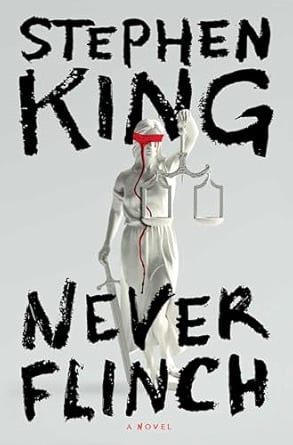
Stephen King is back with his new horror novel, but this time he didn’t bring world-ending catastrophes or haunted hotels. Featuring the return of Holly Gibney, one of King’s consistently returning cast throughout his latest works, Never Flinch ditches the supernatural horror for something far more terrifying: human nature. It’s a brutal thriller that shows that King doesn’t have to include ghosts to get under your skin.
Holly Gibney returns and navigates two parallel storylines that expertly weave into one. As the plot threads unfold, King’s new horror novel successfully explores themes of revenge, justice, trauma, and obsession.
After his recent novels, Holly and Billy Summers (two novels that also include Holly Gibney), King found his new niche: realistic thrillers consisting of horror that does not come from monsters, but from humanity’s darkest nature. Never Flinch doesn’t just follow this trend; it turns it up to eleven, and it proves that King’s reputation is well-earned: He’s flexible enough to write all types of horror. In one moment, he can tell the story of an ancient, haunted hotel. But in the next, he can tell a thrilling story about stalkers.
The Plot: Two threads of unease
Never Flinch centers around two major storylines.
The first starts with an ominous letter. Sent to the Buckeye City Police Department, it promises the death of “thirteen innocents and one guilty.” Detective Izzy Janes and private investigator Holly Gibney dive into this case, but there is no straightforward whodunit. The killer claims to be driven by the wrongful death of an innocent man and tries to fix it.
@scribnerbooks Stephen King discusses the books and authors that inspired him to write Never Flinch – as well as the perils of writing a plotted novel. #Neverflinch #stephenking #stephenkinguniverse #stephenkingbooks ♬ original sound – Scribner Books
Meanwhile, Kate McKay cruises through her lecture tour across the Midwest. Her profile rises during this tour, but so does the danger. A stalker trails along silently, watching, closing in, and strikes. Holly finds herself guarding McKay as she deals with the mystery of the first case.
Preview readers praised the book’s ending as its ultimate highlight, one that expertly converged all plot threads. That’s no small feat, however; critics are often disappointed by his endings. But it seems like Never Flinch remedies that issue.
The Characters: Fragile heroes and human monsters
Holly Gibney has always been an anxious, fearful protagonist, and in Never Flinch, King leans relentlessly into this portrayal. Her personal flaws are hauntingly highlighted, and it makes her human — a protagonist readers can relate to.

Yet her weaknesses don’t undermine her strength. She braves all of her fears, never allowing her losses to hinder her. Instead, she pursues justice just as she always does.
The antagonists in the two stories are equally gripping. Their obsessive threat letters add a sense of immediate danger that Pennywise never posed. The reality of their threats intensifies the effect, because obsessive extremists are all too real. Moreover, their exact motivations and identity remain unknown until the finale, preserving the tension throughout the story.
The Themes: Unsettlingly real
While Never Flinch operates as a thriller, it doesn’t shy away from deep themes. Through a complex web of past cases, the story highlights the dual nature of the justice system. But the extremity of the antagonist makes the theme more nuanced. It displays how personal vengeance may masquerade as pseudo-righteousness.
The novel also explores how we carry our past. Holly Gibney, while haunted by her losses, continues to seek justice and bring violence to its knees. However, the past consumes the antagonists, and they resort to obsession and violence. The juxtaposition of these two wildly different methods tells us that healing lies not in erasure, but in how we carry our baggage.
Such nuance elevates Never Flinch beyond a crime thriller. Instead of solving crimes, it’s about what happens when the justice system fails — and, by extension, what happens when trauma goes unchecked. King never excuses extremity, but he does make us understand how characters got there.
King’s Flexibility: From I Know What You Need, Mr. Mercedes to Never Flinch
In many ways, Never Flinch echoes King’s previous short story I Know What You Need. Both stories dissect the dangers of a delusion of care stemming from obsession. The short story follows a young man approaching a girl and giving her everything she needs — or, at least, what he thinks she needs — by reading her mind. The horror doesn’t come from its supernatural element but from the violation of personal space from the man who believes he is owed affection.
Never Flinch escalates this element by getting rid of the supernatural element altogether. And it brings in something crueler: people who justify their cruelty through their sense of justice. Unlike the antagonist in I Know What You Need, they don’t even have the decency to cover it up with false friendliness.
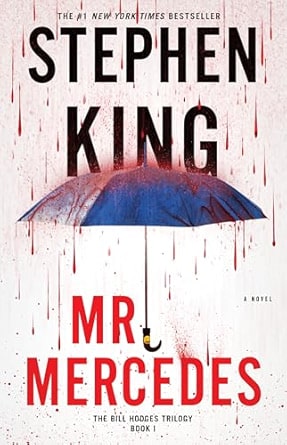
Another striking comparison is Mr. Mercedes, the book that introduces Holly Gibney. Just like Never Flinch, the story is driven by an antagonist who resorts to violence to leave a mark on society, but King’s newest novel differs in its tone. Mr. Mercedes, even amidst its cruel scenes, has moments of levity and dark humor. And even in scenes that don’t, the focus is more on the detective work. However, Never Flinch doesn’t stop; it is hellbent on delivering a psychological thriller.
Critics aside, the sheer variety of King’s works proves that he is able to evolve with the times. He understands how each aspect of fear, whether it be aliens or murderers, strikes the minds of his readers and takes full advantage.
Where Never Flinch and Holly Gibney fit in the King universe
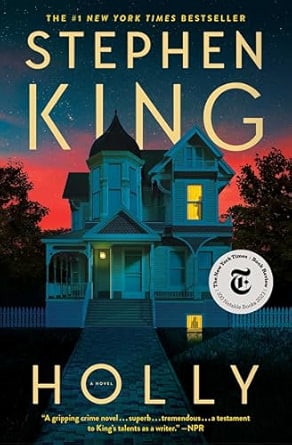
Never Flinch isn’t a standalone story; it’s a continuation of Holly Gibney’s story. First introduced in Mr. Mercedes, Holly has made her way through many of King’s recent works and has cemented her status as an enduring lead. She played a major role in solving the case in The Outsider and led the charge in Holly. With the addition of Never Flinch to her saga, she has gained even more depth and personality.
In The Outsider, her fears and character are overshadowed by the supernatural killer in the story. While her dark past is vaguely hinted at, it is not quite enough for readers to be invested in her character. The fact that she is introduced in the second half of the story doesn’t help either.
However, just like Holly, Never Flinch grounds her by making her confront not shapeshifting demons but the horrors of the real world, which then renders her more relatable to readers.
In the broader context of the “King Universe,” Holly isn’t Ronald Deschain climbing up the Dark Tower or Randall Flagg spearheading a cult. She’s an emotionally vulnerable moral compass, a continuous thread that hardcore fans can hold onto in a world filled with haunted towns and eldritch gods.
Never Flinch is Stephen King at his most ruthless and precise. Without a single ghost in sight, he manages to elegantly keep readers on their toes while deconstructing the morality of society in nuanced ways. It’s more than a new horror novel — it’s a testament to how far Holly Gibney has come and how far King is willing to go to uncover the monster hidden among us.