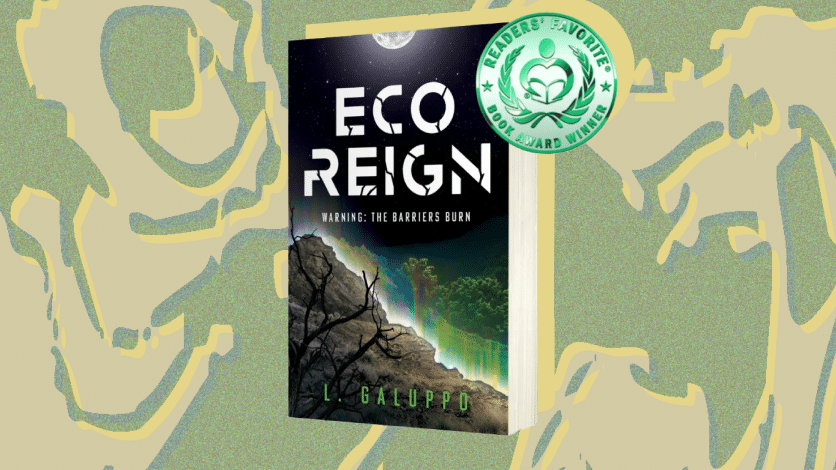
In March of 2025, L. Galuppo released her debut novel, Eco Reign: Warning: The Barriers Burn.
Since its publication, the science-fiction novel has been incredibly well-received. It earned several awards in 2025 and was included in the top one hundred Indie books of the year.
But the implications of this story extend far beyond its status as an entertaining read. The book’s focus on worldwide environmental issues makes it startlingly relevant to today’s society.
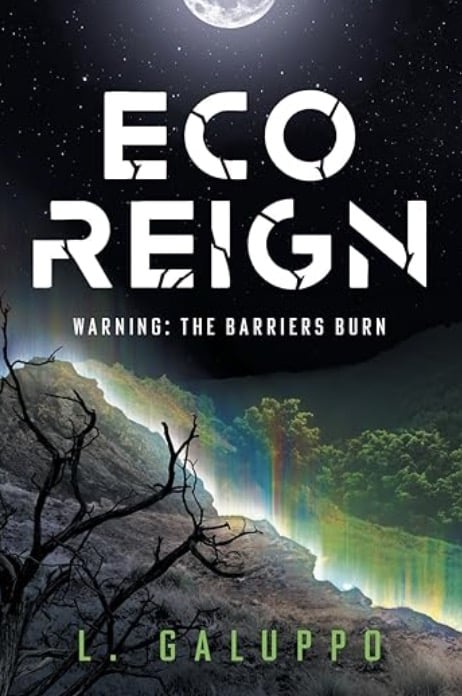
The story is a conservationist take on what an alien invasion would entail for Earth’s inhabitants.
In this universe, when extraterrestrials arrive, they imprison all of humanity to save Earth’s environment from destruction. Lauren, the book’s fourteen-year-old protagonist, possesses the unique ability to telepathically communicate with the invaders. She is soon chosen for special training, which exposes her to the effects of the aliens’ actions: a healthy, thriving Earth.
The environment today
Lauren’s universe seems very far removed from our own. But, like the dystopian Earth in Eco Reign, environmental issues are at the forefront of contemporary policy-making.
Across Europe, advances in environmental guidelines have facilitated longer life expectancies and improved public health.
Among these positive changes are chemical laws that decrease the use of harmful substances, improve sanitation, and reduce air pollution.

But countless problems remain, and they aren’t limited to the Eastern Hemisphere.
The National Aeronautics and Space Administration (NASA) reports that the consequences of climate change are already observable on a worldwide scale.

Latin America, for example, is currently experiencing heightened drought conditions, and Australia’s biodiversity is under threat from environmental changes. Meanwhile, the United States has already encountered prolonged wildfire seasons, more intense hurricanes, and changes in precipitation patterns.
Other worldwide effects include rising sea levels, more dramatic climate extremes, and an increasing global temperature
Evidently, conservation efforts today are more important than ever. But several countries are taking only minimal action to prevent climate change, and others outright refuse to acknowledge it.
Recent environmental policy in the U.S.
Spearheading the regression in regulatory environmental policies is the United States.
In November of 2025, the US Department of Energy’s loan office announced that it would no longer be considering National Environmental Policy Act (NEPA) regulations when determining which projects to finance.
NEPA dates back to 1970 and requires the government to examine environmental impacts for projects such as the construction of federal establishments. Its deregulation will lead to a significant reduction in environmental protection.
Recently, the US has also suppressed the search for solutions to climate change.
On December 17, 2025, the Trump administration publicized the shutdown of Colorado’s National Center for Atmospheric Research (NCAR).
NCAR was the largest federal climate research center in the country, according to the NDRC. With its closure, Americans will be less aware of, and therefore less equipped to deal with, the effects of climate change.
These environmental abuses are only a few of many that the US has undertaken in recent years. However unbelievable they may seem, Galuppo imagines a world with very similar attitudes toward climate change.
Comparing our world and Glauppo’s
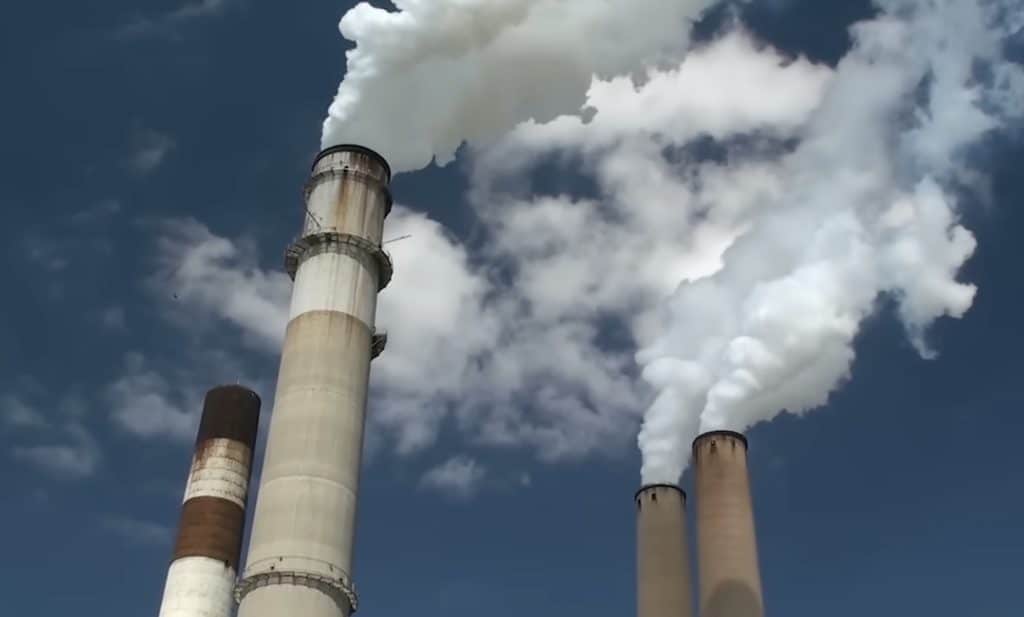
Like our Earth, the world in Lauren’s universe is subject to human mistreatment that results in harmful developments like deforestation, reduced biodiversity, and pollution.
But, unlike our Earth, Lauren’s has the chance to flourish under the aliens’ forceful elimination of human influence.
While it’s near impossible to achieve as sudden and effective of a transformation today, there are steps we can take to mitigate the worst of climate change’s effects.
But recent actions, such as the United States’ decision to forgo NEPA regulations, demonstrate a trend in the opposite direction.
With the government’s open disregard for climate change, environmental consequence will only worsen over time. And, unlike Lauren’s world, we lack an external force of extraterrestrials that can heal Earth.
Moreover, there are striking parallels between our world and Lauren’s in human reactions to environmental deterioration.
Despite her young age, Lauren is one of the few people actually aware of climate change’s destructive effects. She’s a strong advocate for sustainable practices and, on some level, can even understand the aliens’ reasons for invading.
However, most other characters dismiss climate change and Earth’s well-being as a whole.
Among them is Lauren’s mom, who regularly minimizes her daughter’s environmental concerns. While she may come across as uniquely unobservant, she is one of many who remain skeptical about climate change.
The ignorance observed in Lauren’s mother, her classmates, and the vast majority of the human population reflects the current state of our world.
With the closure of Colorado’s NCAR, the Trump administration has both discouraged environmental awareness and prevented vital climate research. This catastrophic decision will only exacerbate the shift toward anti-intellectualism.
Although their beliefs are flawed, Galuppo’s characters are also victims of a world that promotes ignorance, one that possesses concerning similarities to our own.
Why does it matter?
Global temperatures are veering alarmingly close to what scientists refer to as the “dangerous climate change guardrail,” otherwise known as the 1.5° C mark.
Once this limit is breached, the threat of climate change will become much more severe.
Stabilizing the global surface temperature will reduce the likelihood of irreversible changes. Among these are species extinction and higher heat-related mortality rates for humans.
If we surpass 2° C, we will further endanger ocean acidity levels, sea ice sustainability, food security, clean water supplies, and economic growth.
With the recent policy cuts to environmental protection, as well as the blow to climate change awareness caused by the shutdown of NCAR, we are more likely than ever to reach this dangerous threshold.
So, with our planet’s well-being on the line, how can we limit human impact on Earth?
Moving forward
Now more than ever, it is vital that everyone make an effort to lessen the impacts of climate change, both the obvious and unexpected ones.
Another, more understated way to make a difference is to support authors like L. Galuppo who spread awareness through their novels.
The United Nations’ Sustainable Development Goals outline steps we can all take to prevent potential environmental catastrophes. They include using public transportation, consuming more plant-based foods, and eliminating needless waste.
Unlike the inhabitants of Lauren’s universe, we still have the chance to alter our destructive habits before it’s too late. But time is running out, and we must act quickly.
The responsibility rests in all of our hands, and it’s up to us to decide the future of our Earth.