


NASA faked the moon landing. The government manufactures every tropical storm. The “deep state” controls everything in our lives. Lately, conspiracy theories are gaining traction among Americans, and the consequences are rarely as innocent as believing an odd or esoteric theory of the world. In fact, they are quietly becoming the walls that divide us; the chisels that chip away at our trust in each other.
But we are always stuck asking who is right and who is wrong. It’s hard to sift through all the noise and truly make sense of it all. And while people confront the never-ending struggle for truth, neighbors can turn into enemies. It is something many of us are sorely familiar with.
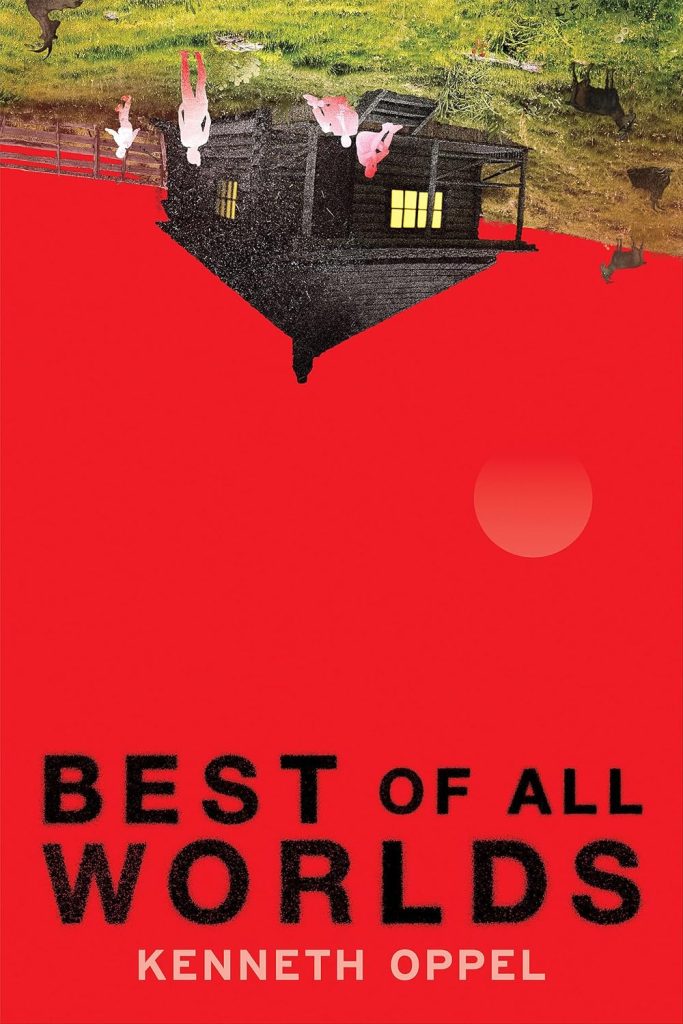
Kenneth Oppel’s Best of All Worlds reflects this reality. Three years after the Oak family is trapped beneath a mysterious dome, another family shows up. Stark ideological differences drive a wedge between them, particularly when it comes to who or what they think is responsible for their capture.
At the center of their conflicting beliefs is an allegory for the consequences of the modern conspiracy theory.
A temperature check on the modern conspiracy theory
Claims like the flat-earth theory or a fake moon landing were, until fairly recently, entertained only by fringe niches of American culture. Now, as the internet becomes more embedded into our lives, the allure of the conspiracy theory — the perceived possession of forbidden knowledge — has found more inviting ears.
On the surface, the flat-earth theory and the idea that aliens built the pyramids seem like relatively innocuous conspiracy theories. Some find them fun to believe, while others find them fun to mock. At worst, they are a nuisance for the scientific community.

Unfortunately, theories like the “deep state” or the disturbingly racist “Great Replacement” theory remind us that not all conspiracies are so harmless. While the former purports that there is a power network undermining democracy from the shadows, followers of the latter claim that non-white people are intentionally “replacing” the populations of predominantly white nations.

The “deep state” and deep suspicions
Both the “deep state” and the QAnon conspiracy network have been gaining real traction lately, especially in the wake of the COVID-19 pandemic and the 2020 US presidential election. Among other things, the network of American conspiracy believers have theorized that President Donald Trump is waging war against a secretive government network.
At their core, QAnon and similar conspiracy theory communities are all loosely united in their suspicion of the government. Even flat-earthers maintain that the government or “deep state” is hiding something more insidious. Oppel’s story shows that even seemingly harmless conspiracies can sow discord and hostility.
After all, wouldn’t you be angry if you thought that your neighbors willingly voted for the interests of a malevolent cabal?
Oppel’s exploration
Oppel doesn’t try to hide the allegory in Best of All Worlds. In fact, his characters’ interpretation of their situation is eerily similar to everal conspiracy theories we have seen in our world.
Additionally, the two families’ dynamic constitutes a microcosm of the divisive nature of differing beliefs. Where there ought to be camaraderie after being abducted and placed in a dome, we instead see the characters vindicating their own beliefs and neglecting the collective well-being of the group.
One family’s conspiratorial worldview evolves into the story’s greatest point of tension. Keeping it spoiler-free, of course, it’s not too dissimilar to the effects of QAnon. Suspicion, distrust, and even outright hostility — these are the qualities that define the rise of QAnon as well as two fictional families’ entrapment in a mysterious dome.
It’s time to take YA seriously
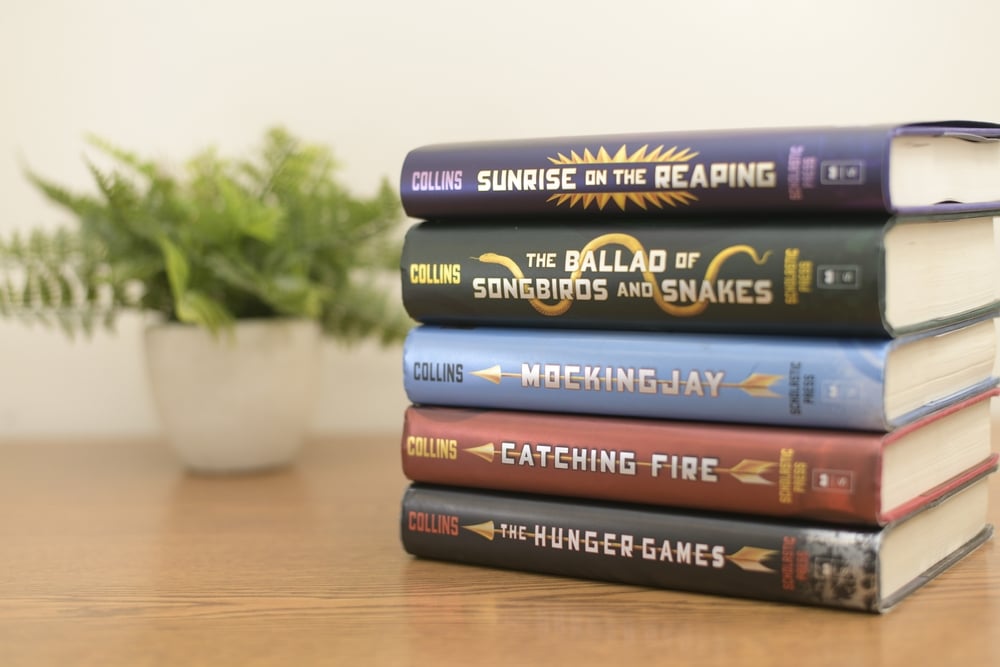
Granted, the majority of readers probably remember YA series like Percy Jackson & the Olympians or Harry Potter defining our teenage years. Was the experience any less valuable because we had those adventures when we were 14? Definitely not — every book has something to say. The Hunger Games series tells a story driven by rampant inequality and oppression. Percy Jackson centers self-discovery, something we can all relate to.
People tend to think of young adult literature as less serious. It’s time we finally move on from that bias. If adult audiences discredit or avoid YA novels simply because they’re aimed at teenagers, they will also miss out on experiencing key themes.
The term “young adult” reminds us of youth and naivete. Yet there is a lot to lose if we let ourselves blindly ignore entire sections in our libraries and bookstores. Characters whose shoes we will never walk in. Dilemmas we will never have to reckon with. Lessons about the world we will never learn.
You might also miss a cultural revolution. For example, The Hunger Games speaks to the frustrations that younger readers have with growing social inequality.
Best of All Worlds: Is it worth a read?
The short answer: absolutely. The long answer: still yes, especially if you, a friend, or someone in your family has been drawn toward any kind of conspiracy. Kenneth Oppel’s Best of All Worlds cuts through the noise of our modern world and grants the reader much-needed clarity. And don’t let the YA label scare you away!
The book is ultimately an allegory for society’s tenuous relationship with conspiracy theories. Oppel underscores the negative consequences of phenomena like QAnon within an isolated setting.
Best of All Worlds also holds a lesson for our future selves. As artificial intelligence continues to advance at a blistering pace, the prevalence of falsehoods has never been greater. Conspiracy theorists may be a fringe group for now, but it won’t always be that way.








D Sager
January 27, 2026 at 10:53 pm
Thank you for your insite and knowledge regarding this book.