Studio Ghibli Fest is returning this year, bringing fans another lineup of beloved films to experience on the big screen. Here are the movies you can look forward to.
Studio Ghibli was founded in 1985 by Hayao Miyazaki, Isao Takahata, and Toshio Suzuki. Both Miyazaki and Takahata met in the 60s while working at Studio Toei Doga. Their first movie, ‘Nausicaä of the Valley of the Wind’, was released in 1985. Since its founding, it has produced 24 films, the most recent being The Boy and the Heron.
(Credit to: Studio Ghibli)
One of the reasons the films have become so popular here in the United States is thanks to Disney. John Lasseter was great friends with Miyazaki, and he would bring over his anime, originally in Japanese, and have some of the best actors dub it.
Because of this, they became popular here in the States, so much so that in 2017, a tradition began. Every year, GKIDS (a popular anime distributor) would team up with Fantom Entertainment to distribute the films in both English-subtitled and dubbed versions during the summer.
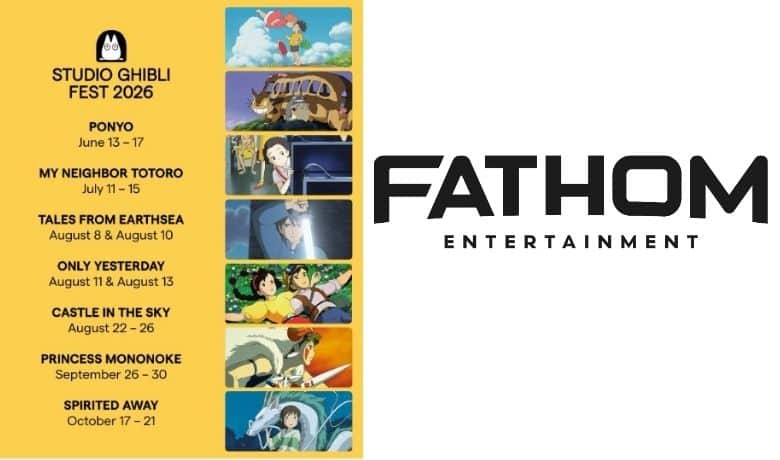
The Studio Ghibli Fest 2026 Line-Up
(Credit: Studio Ghibli)
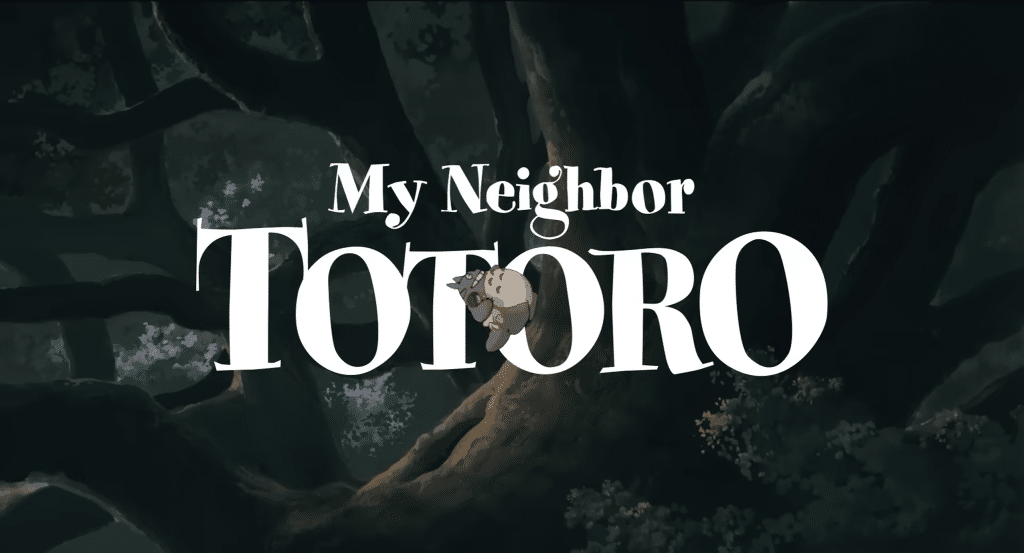
My Neighbor Totoro
(Credit: Studio Ghibli)
My Neighbor Totoro came out in Japan in 1998 and in the United States in the 1990s. Directed by Hayao Miyazaki, it is the studio’s 4th film and quite possibly one of its most popular. Even the studio’s logo has Totoro as the mascot.
The film tells the story of two sisters, 10-year-old Satsuki and 4-year-old Mei, who, along with their father, move to the countryside. The two sisters soon discover that a large tree near their house is home to various spirits. Including a large cat, owl, and tanuki forest spirit called Totoro, who has adventures with the two girls.
Totoro was the 1st Ghibli film I ever watched, and it holds a special place in my heart; it’s where I was introduced to anime and Japanese culture in general.
Of course, my favorite scene is the one where Satsuki is holding Mei, and they’re waiting at the bus stop with Totoro.
This film perfectly captures the sense of that one summer that stays with you. With the childhood whimsy of exploring a new environment and the sense of wonder of discovering something new. It captures the sense of freedom and joy that summer can bring, but also the pain that it can bring. Overall, it’s a film about how, in the end, everything is going to be okay if you have a good support system.

My Neighbor Totoro comes to theaters on July 11th, 12th, and 15th for the English dub and July 13th and 14th for the English sub.
Tales From Earthsea
(Credit: Studio Ghibli)
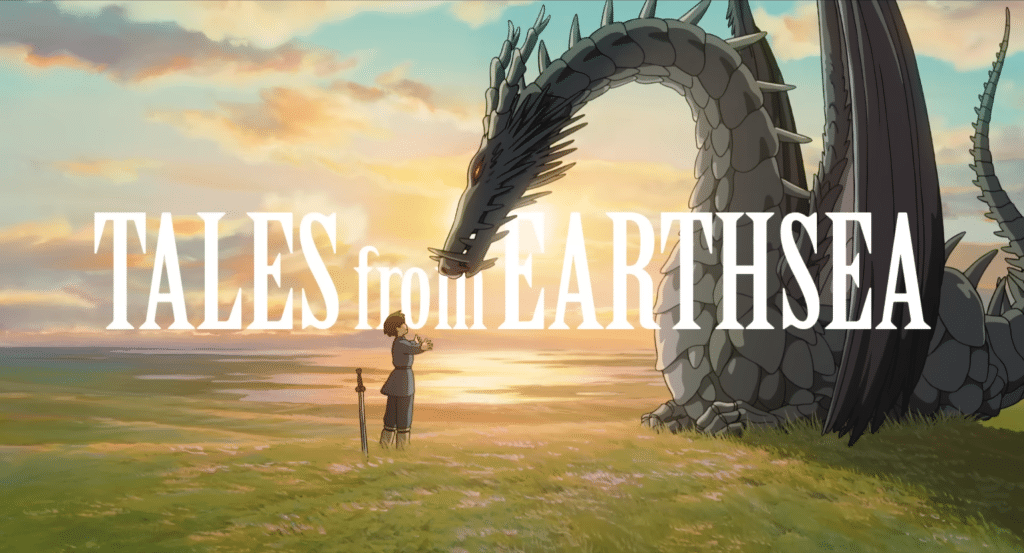
Tales from Earthsea came out in Japan on July 29th, 2006 (so this Ghibli fest is celebrating its 20th anniversary) and in the United States on August 13th, 2010. It was directed by Goro Miyazaki and was the studio’s 16th film. It’s an adaptation of the book of the same name by Ursula K. Le Guin.
The book is a collection of short stories, and the movie primarily takes inspiration from the first 4 stories in the book.
The movie tells the story of a land in ruins and how a wizard, Sparrowhawk, and a young prince, Arren, team up to find the source of the imbalance in their world that could destroy Earthsea.
I recently watched Earthsea, and while I loved the animation and the overall world, it felt very rushed. As if there were too many plot points that the movie would gloss over or barely get to, which can be expected from adapting 4 short stories at the same time.
The best scene in the movie, in my opinion, is when Arren and the silver dragon (won’t say its name to avoid spoilers) hug because it reminds me of the How to Train Your Dragon scene where Hiccup trusts Toothless.
While a bit messy, this film is a great example of why animation is more than just for children. The film contains messages about death and morality that can be helpful for both kids and adults. It can also serve as a way to get interested in the book franchise by watching the film and seeing how it compares to the reading.
Tales from Earthsea comes out August 8th for the English dub and August 10th for English sub.
Only Yesterday
(Credit: Studio Ghibli)
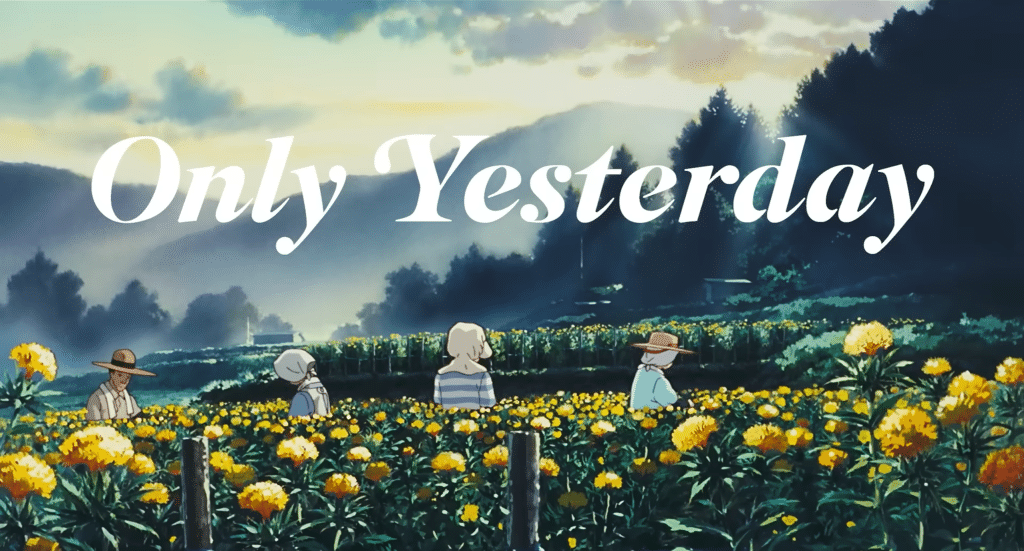
Only Yesterday came out in Japan on July 20th, 1991 (celebrating its 35th anniversary this year) and in the United States on February 26th, 2016. It was directed by Isao Takahata, and it’s the studio’s 6th film.
The story is about Taeko, an unmarried 27-year-old in Tokyo in 1982. She decides to visit her relatives in the countryside, where she reunites with old friends and has flashbacks to her childhood. It keeps flashing back and forth as Taeko contemplates her life and whether she truly became the adult she wanted to be.
My favorite scene is when Taeko was a little girl, and her family got a pineapple, and we see the buildup to them all finally trying it and getting a piece. It just tastes fine; it doesn’t wow them, it doesn’t change them. It just tastes fine.
This film is perfect for young adults or those about to finish college. It’s a reminder to reflect on our childhood and remember everything that once brought us bliss, especially as we adjust to adulthood. To remember the good and the bad because it’s all of those experiences that make us who we are. It’s a reminder that deep down we are all still children, and sometimes we have to let that child within us out to have fun.
Only Yesterday releases in theaters on August 9th for the English dub and August 11th for the English sub.
Castle in The Sky
(Credit: Studio Ghibli)
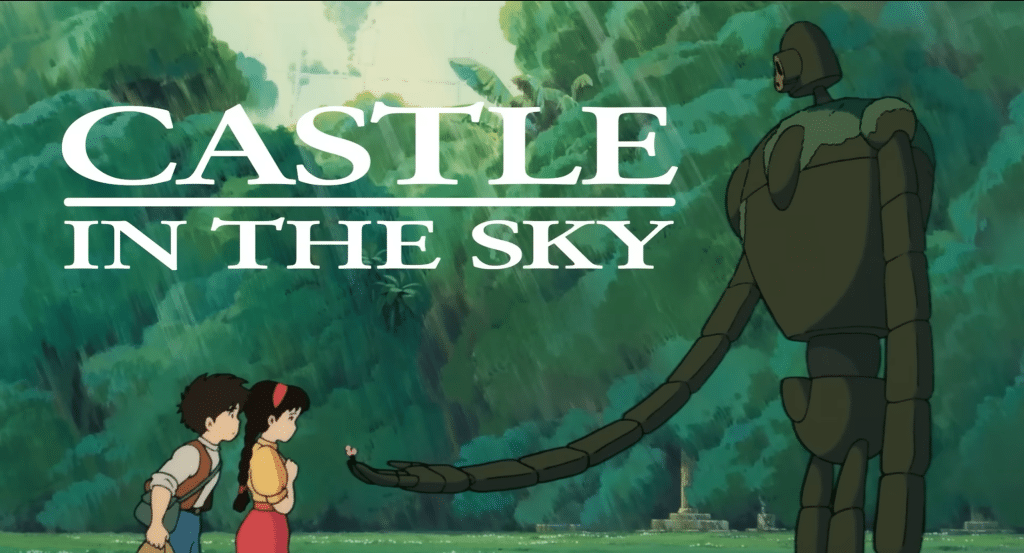
Castle in the Sky was released on August 2nd, 1986 (celebrating its 40th anniversary) and in the United States originally on March 24th, 1989, and later rereleased on April 15th, 2003. It was directed by Hayao Miyazaki and was the studio’s 2nd film.
The story follows Pazu, an engineer’s apprentice, who sees a young girl, Sheeta, with a glowing pendant floating down from the sky. Both join forces to find a floating castle but are being chased by the military, pirates, and the government. All of whom want the power that Sheeta controls.
I watched Castle in the Sky when I was just finishing high school, and again in college, and I loved it. I am a huge fan of fantasy and steampunk, and the movie scratched both of those itches.
My favorite scene is when Pazu and Sheeta hug because, to me, it’s not a romantic hug at all. It’s a hug to symbolize just how close they have become over the course of their adventure.
The film perfectly captures the pure, adventurous spirit of youth and also serves as a great commentary on how technology and nature can coexist. In a time when it seems as if technology is intent on completely destroying nature. This serves as a reminder that the two concepts aren’t mutually exclusive. It’s also a great starting point to show that not everyone who seems like a bad person is one.
Castle in the Sky releases on August 22nd, 23rd, and 26th for English dub and August 24th and 25th for English sub.
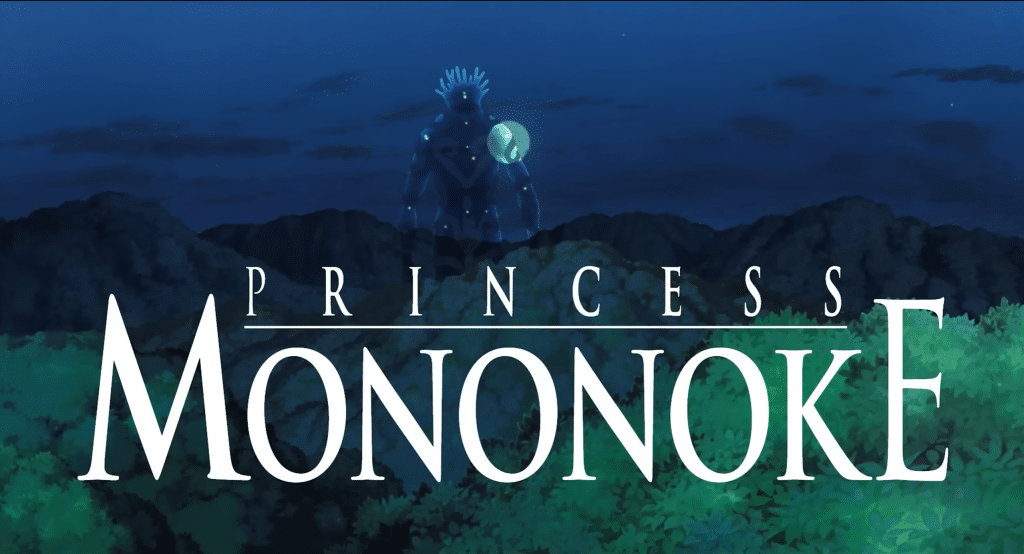
Princess Mononoke
(Credit: Studio Ghibli)
Princess Mononoke was released in Japan on July 12th, 1997, and in the United States on October 29th, 1999. It was directed by Hayao Miyazaki, and it’s the studio’s 11th film.
This is going to be a special release because, for the first time, the movie will be exclusively in IMAX theaters as a 4 K release. To celebrate Studio Ghibli’s 40th anniversary.
The story follows a warrior named Ashitaka who has been cursed. He stumbles upon Iron Town, ruled by Lady Eboshi, who is fighting against Princess Mononoke, a young woman raised by wolves, who wants to stop humans from infiltrating the forest.
I watched the movie in college, and it became my 2nd-favorite Ghibli movie. The animation is amazing. The forest can be beautiful but haunting, while Iron Town can feel oppressive but safe.
My favorite scene is when Mononoke and Ashitaka first meet, and she tries to kill him, but, in a daze, Ashitaka compliments her, which surprises her.
What makes this film so great is that there are no real bad guys (in my opinion). While yes, Lady Eboshi is destroying the forest, she is only doing what is necessary to help her people, and she is still a great leader. She wants only to protect her people and believes this is the only way to do so. On the other hand, Mononoke just wants to stop humans from invading her home and hurting her family.
Princess Mononoke releases on September 26th, 27th, and 30th for English dub, while September 28th and 29th for English sub.
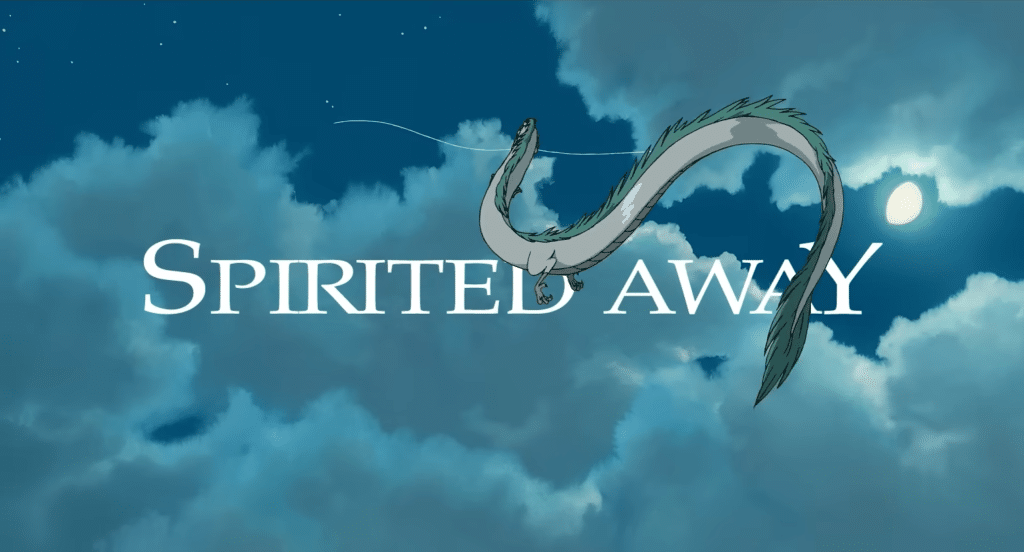
Spirited Away
(Credit: Studio Ghibli)
Spirited Away released in Japan July 20th, 2001 (celebrating it’s 25th anniversary) and in United States September 20th, 2002. It was directed by Miyazaki and it was the 13th film released by the studio.
The story follows Chihiro who while on a car ride with her parents they stumble upon a tunnel. They go through in a find a abandoned village, the parents eat the food that is laid out on the stalls while Chihiro is cautious. Soon night falls and it’s discovered that the village is a place for spirits. Now Chihiro must navigate this strange world and find her parents.
What can I say that hasn’t already been said about this film. While it’s not my favorite Ghibli film it’s the best Ghibli film in my opinion. Almost everything about it is great.
The film is ultimately about growing up: how, even if you are scared and in an unknown place, you have to face it with some strength. It’s how, in order to truly face the world, you have to face both its ugliness and its beauty. It’s about how to face the hardships in the world. You have to pull yourself up by the bootstraps and tackle it head-on, but you don’t have to do it all alone.
My favorite scene is when Chihiro and Haku are falling out of the sky and are crying as Haku finally remembers.
Spirited Away releases October 17th, 18th, and 21th for English dub and October 19th and 20th for English sub.
(Credit: Wire)
Closing Thoughts
Studio Ghibli is one of the most famous studios in Japan and has already made a name for itself here in the States. Now, once again, they are releasing their films on the big screen (and tickets are selling fast).
Overall, it’s abundantly clear that, through their films, Studio Ghibli conveys messages and themes of kindness, nature, determination, whimsy, and adventure. Reminding us that these are all things we need in order to grow.
These films are what made me love animation as a medium and fantasy as a genre. They made me want to share my own stories with the world. Hopefully, a new generation who haven’t seen the movies can watch them and be inspired like I was long ago.