


“Leviticus” is self-proclaimed queer horror release from Causeway films, the debut film of director Adrian Chiarella. It was distributed by NEON after premiering at the 2026 Sundance Festival. The film surrounds Naim Reid (Joe Bird) and Ryan Whelan (Stacy Clausen) as they’re haunted by an entity that takes the form of the person they most desire — each other.
Having already taken away the award for Best Indie Feature at the 2026 Astra Midseason Movie Awards, “Leviticus” has also hit Rotten Tomatoes with a score of 92%.
It rides the success of other popular Australian horror films as well, including “Talk to Me,” which also features Bird, and “The Babadook.”
Unhinged Masterpieces
A nod to Gen-Z editors on apps like TikTok, Instagram and YouTube, Chiarella released a scene pack ahead of the film coming to theaters. This move encouraged editors to compile edits which in turn would increase chatter and excitement in time for the film’s debut on June 19.
“Go nuts. Make whatever edits, reels, fancams, compilations or unhinged little masterpieces you want. Have fun with it,” Chiarella said.
This produced a fandom before fans even got the chance to go see the film. There is no doubt this move enhanced the film’s success, which took the form of $7.9 million worldwide. While not the same heights as recent releases “Obsession” and “Backrooms,” it has made back nearly three times its production costs and thrived through word of mouth and social media.
Edits have soared online as well, several using music by artist Ethel Cain, an ambient and Southern-Gothic songwriter and producer. Her identity as a trans woman raised in a Southern Baptist family makes her music accessible to the film’s content. With songs that surround themes of as religious strife, identity, desire, abuse, divinity, sexual trauma and loss of innocence, her music is essentially primed to go hand in hand with “Leviticus.”
Frank Ocean’s “Bad Religion” was also an exceedingly popular choice as it explores similar motifs.

Indecency. Lust. Desire.
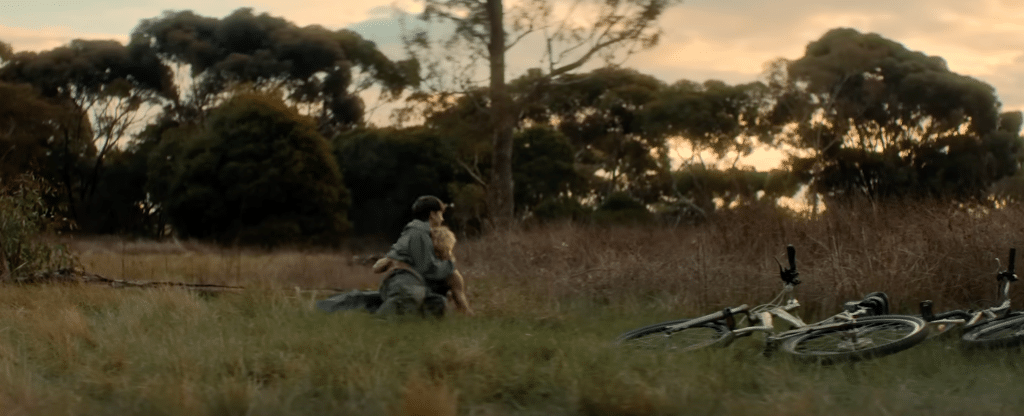
Set in an evangelical small town in Australia, Leviticus opens with the budding relationship between Naim and Ryan. The boys tussle in the grass, on the floor of an abandoned mill, anywhere far from the prying eyes of their peers. The opening glimpses of these two serve as loving homage to rough housing as an intrinsic part of how queer men indicate mutual interest. Oftentimes, LGBTQ+ communities are not afforded the dignity of open flirtation, so less conventional methods have to do.
The film doesn’t open with Naim and Ryan. Instead, we are shown Marnie, played by Tyallah Bullock, a lifeguard closing on her own at the pool after hours. She is seen giggling at an unheard joke as she showers, the scene seemingly a domestic and private moment between two lovers. There’s just one catch — you cannot see the other one.
This scene swiftly concludes as most cold opens in the horror genre do: with a death.

Marnie goes without a sound. The movie flickers back after the title card onto a dead frog in the mouth of a snake. For a movie with a biblical title, all of its biblical implications ought to be thoroughly appreciated. Before we finally meet Naim and Ryan, we first see a serpent and its prey. Reminiscent of, perhaps, the snake and the apple. Temptation, sin, the mill the boys mess around in as their own garden of Eden.
A Deeply Cathartic Watch
Before “Leviticus” even truly delves into its genre, it unfolds like a coming-of-age film. Bird and Clausen manage to capture the perfect essence of what it is to be a teenager. Not only a teenager, but a nervous, infatuated and closeted one. This is a unique experience that both actors do tremendous justice to. The boys’ conversations surround how they act different at school in an attempt to fit in and the mutual hatred of their small town. Two deeply relatable topics for queer individuals seeking an escape from where they grew up.
What a relief it is, as well, to witness a film like this succeed. Within queer communities, there is undeniably a fatigue when it comes to the raving success of heterosexual romances and the endless speculation and judgement when LGBTQ+ stories seek the same attention. “Leviticus” is a testament of a queer horror film made to embody the LGBTQ+ experience and become art that is a solace to people in that community — this is to say, “Leviticus” is not a film that exists to be understood by people who do not relate to it. Regardless, it is a fantastic watch even if some of its intricacies and nuances aren’t completely felt by all of its watchers.
“Leviticus” is hopeful and scary for the same reason and neither of these have to do with horror or religion. It has everything to do with queerness.
As Tender as it is Heartbreaking
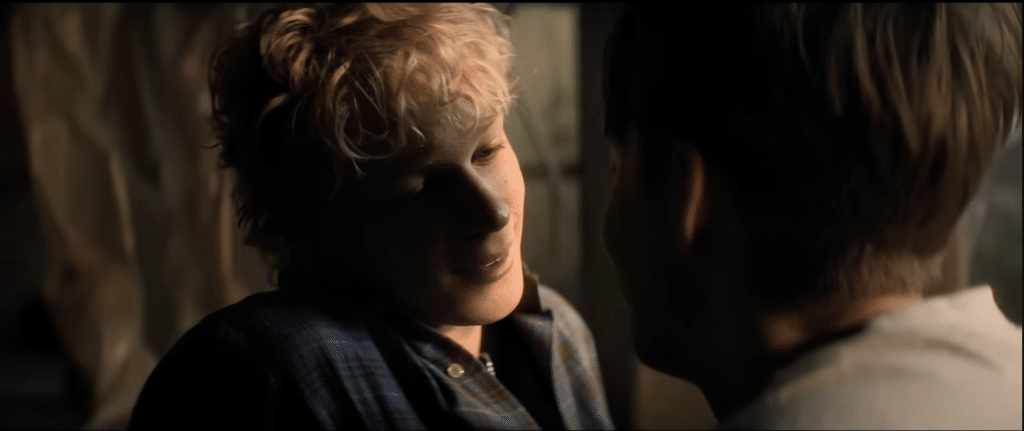
Naim and Ryan’s romance begins to take further root when Naim elects to stop by Ryan’s home unannounced. He finds him entangled with the small town priest’s son, Hunter, played by Jeremy Blewitt. The other boys, unaware of Naim’s eyes on them, throw stones at each other before they kiss roughly. It’s a polar opposite to Ryan and Naim’s playful dynamic at the start of the film. It is harsh, scary and cold, a reminder of how many LGBTQ+ individuals will settle for unhealthy treatment because they assume it is the only love they will be able to get, especially while closeted. Also, its purpose is to portray to the act of “stoning.”
This is when the genre slips and shifts, when watchers get the sense they’ve become privy to something gaining irreversible traction.
“They Wanted Us to Be Scared”
An emotionally turbulent chain of events including Naim outing Ryan and Hunter to Hunter’s parents causes a deliverance healer to come to town. In a very real portrayal of the horrors of conversion therapy and organized religion’s historic attempts to smother sexuality, Ryan and Hunter are then, in front of the church congregation including Naim and his mother, subjected to a disturbing ritual that ends with them suffering seizures, convulsing and vomiting as something sinister takes affect.
Because the town believes the ritual be for their protection — the “cure” to their lust — nobody moves to stop their suffering. This, the rest of the film’s dangers aside, is one of the scariest moments to behold. It tears away the veneer of fiction with a rotten truth reflected in reality.
If the entity in the film cannot kill Hunter, Ryan and Naim, the bigotry in their town will.
Queer Horror Makes Strides
There is horror present in the entity but also horror that can exist independently without it. Hate resides at the core of “Leviticus” (though, as the ending proves, so does love). “Leviticus” translates the innate worry of homophobia constantly shared by queer individuals to an audience who has never felt it before. Being able to do this so seamlessly is a new accomplishment in the queer horror genre.
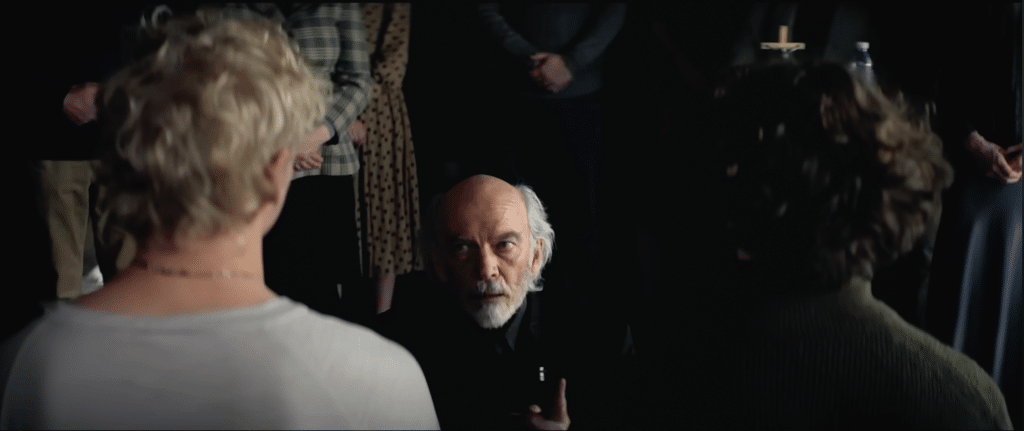
Naim, still untouched by the ritual himself but made aware of its damning effect after finding Hunter’s disembodied head in a ditch, attempts to communicate this to the town’s police officers. In another mirror of real life, his concern is dismissed. The town got rid of Hunter’s perverse sexuality. Unfortunately, that involved getting rid of Hunter entirely. Naim insists to the adults that Ryan’s life is in danger. They remain passive, uninterested in the distress of another wayward child entrenched in what they view as “sin.”
Seeing it as a last resort, Naim discloses his sexuality to paint a greater picture to the authorities. This ends as one would expect: with the deliverance healer paying him a visit as well. His mother watches, stone-faced, as her son kicks and screams, dragged away to experience the horrors alone. The nightmare is found in repeatedly being ignored and having your agency stripped in the name of attaining purity. “Leviticus” captures these caveats of queerness in a religious sector with grace.
Fear Walks with the Face of Love
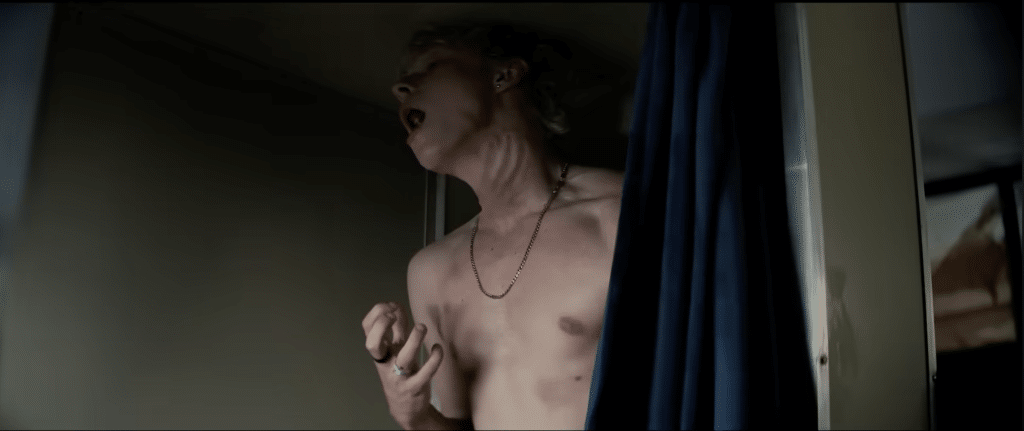
Naim, gone quiet and distant, finds Ryan at Hunter’s funeral and confides in him regarding what happened. Watchers are transported back to an earlier scene in which Ryan was attacked by an unseen entity and then immediately fearful for Naim when the Ryan Naim had been speaking to goes in for a kiss. It doesn’t take long before Naim surrenders to it. That’s when Ryan rears forward, choking Naim the same way we saw Ryan choked by thin air earlier.
What was before a hypothetical concept flashed before watchers in the trailer becomes startlingly real. Naim cannot trust his own eyes. He has no way to discern whether the Ryan standing before him is actually Ryan.
The entity, unleashed upon them by the deliverance healer, looks like the other boy. “Leviticus” is an incredible example of using one’s love against them, which is what the world does against queer people every day. It is stunningly literal in every way, a true love letter to the gay experience, the good and the bad.
On their quest to determine if they can rid themselves of the entity, Naim and Ryan meet Jessica (Shannon Berry) at a hospital. She too is a victim of the deliverance healer, as was her departed girlfriend from the beginning of the film. “You can’t make it stop,” Jessica warns them. “Nothing can make it stop.”
Everyone Deserves a Hopeful Ending
This is about where audiences would expect a tragic ending, the typical recycling of the “bury your gays” trope. For those unaware, this tired and true trope occurs when LGBTQ+ characters get disproportionately killed off without justification. Think of “Supernatural”‘s Castiel, “Brokeback Mountain”‘s Jack Twist, “Killing Eve”‘s Villanelle, “Yellowjackets”‘s Van Palmer, as well as “It”‘s Eddie Kaspbrak and Adrian Mellon. Queer horror has been seen before, but often at the expense of its queer characters lives. Jennifer of “Jennifer’s Body” and Frank-N-Furter from “Rocky Horror Picture Show” are a few more examples.
While not always purposeful, it lays the foundations for the intrinsic belief of queer audiences that their options for representation in TV and film are either dead, poorly written or both.
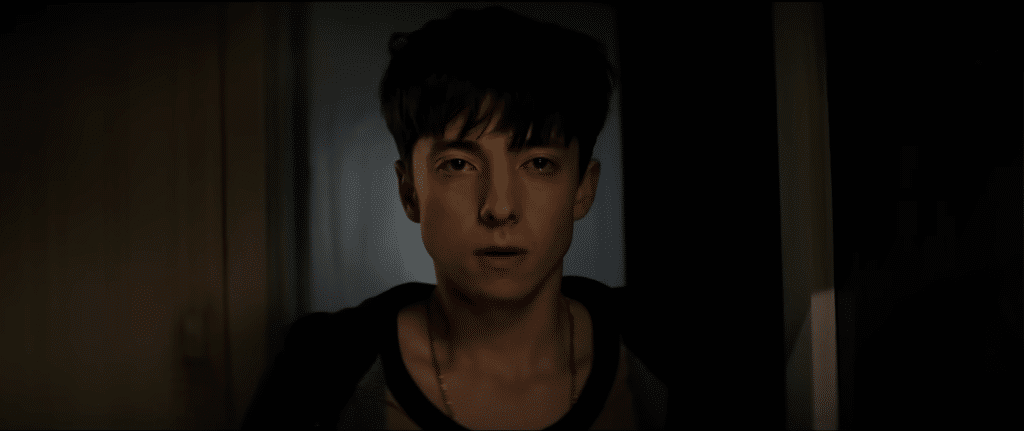
“Leviticus” does not subscribe to this all-too-common choice. Ryan and Naim survive, and they do so after explicitly making the choice to leave their town and embrace who they are. A beautiful scene unfolds of them warily stumbling upon each other at a bus stop, unsure if the other standing before them is even real.
A needle drop of Ocean’s “Self Control” leads into the credits. Our last glimpse of the boys sees them united again on a bus as it takes them away. Ocean shared his approval of his song being used in the film through a personal letter, it being the first use of his music licensed in a film in a half decade.
Once again an apropos choice, the boys notably aren’t rid of the entity that takes the other’s face. They’ve only left behind their neglectful parents, their stifling religious town. They have to live with this embodiment of hate forever. That being said, they make the choice to be together anyway.