

The United States is no stranger to extraordinary wealth. From John D. Rockefeller and Andrew Carnegie to Bill Gates and Jeff Bezos, every generation has produced individuals whose fortunes seemed almost unimaginable. Yet Musk’s fortune has surpassed even these historical comparisons.
Following SpaceX’s public listing, Musk briefly became the world’s first and only trillionaire. Depending on the day and time, he may dip below that threshold due to his wealth largely being tied up in SpaceX and Tesla, but it doesn’t change the fact that his wealth makes billionaires now appear modest by comparison.
At this scale, familiar measures of wealth lose their meaning. Musk’s net worth exceeds the annual economic output of many countries; his wealth fluctuates by an amount greater than the combined value of the world’s largest sneaker companies. Musk represents a level of private wealth unlike anything seen in modern history. The question is no longer simply how rich Elon Musk is, but what it means for one person to command that much economic power.
What Does It Mean to be a Trillionaire?
This is a rhetorical question, but numbers this large can quickly become abstract. A trillion dollars is an amount so comically large that most people have no meaningful frame of reference. We can picture a million dollars, a home in many parts of the United States, or perhaps a lifetime of savings. Even the leap from a million to a billion is understandable. But a trillion dollars exists on an entirely different scale, where familiar comparisons begin to lose their meaning.
If someone spent one million dollars every single day, it would take nearly 2740 years to spend one trillion dollars. Put another way, a person earning the median American salary would need millions of lifetimes to accumulate the same fortune.
Unlike cash sitting in a bank account, Musk’s fortune is largely tied to his ownership stake in his companies. As investors become more optimistic or pessimistic about those companies, his wealth will reflect that sentiment. While much of this wealth only exists on paper, the influence it provides is very real.
Understanding his wealth is the first step. The next question is whether history has ever seen anything comparable.
Every Fortune Before Musk
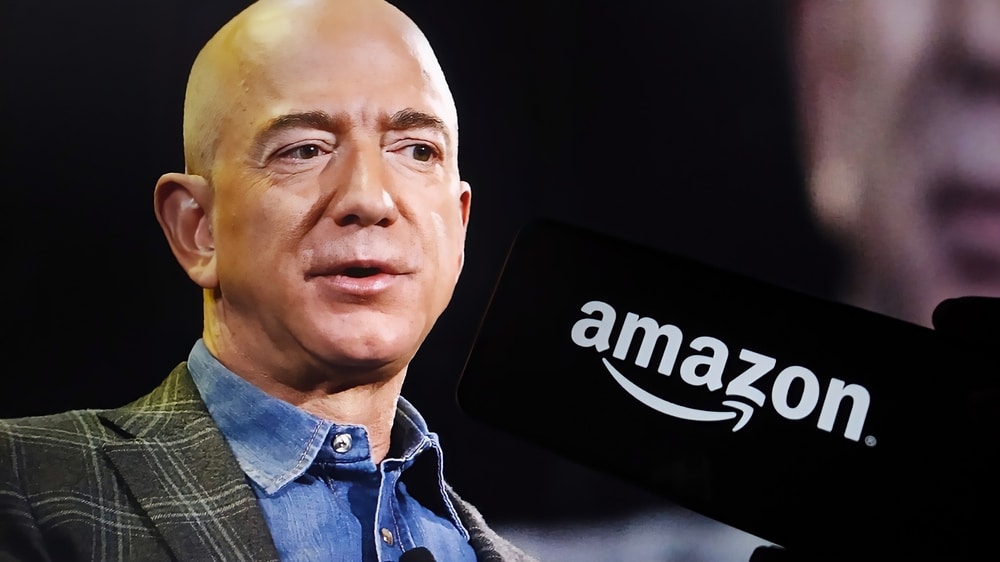
During the Gilded Age, John D. Rockefeller built Standard Oil into one of the most powerful companies the world had ever seen, while Andrew Carnegie amassed an enormous fortune through the steel industry. More recently, Bill Gates transformed personal computing through Microsoft, and Jeff Bezos’s all but annihilated retail with Amazon. Each represented the defining industry of their generation, and each became for a time the richest person alive.

Although it can be argued that Rockefeller controlled a larger share of the American economy relative to his Era. Musk’s wealth is the largest nominal private fortune ever recorded.
Comparisons to his modern peers are equally striking. Jeff Bezos’s, who was once viewed as the symbol of twenty-first-century wealth, now appears almost modest besides his peak fortune. In fact, at Musk’s highest evaluation, Bezos’s was mathematically closer to having no wealth at all than to matching Musk’s net worth. At his peak of $1.3 trillion, Musk could’ve lost a trillion dollars and still have remained wealthier than Bezos.
Money Becomes Power
A trillion-dollar fortune is less about consumption than influence. No individual, regardless of how extravagant their lifestyle, can hope to spend even a fraction of that amount on homes, cars, or private jets. Wealth on this scale becomes a tool for shaping industries, politics, and even the direction of scientific research.
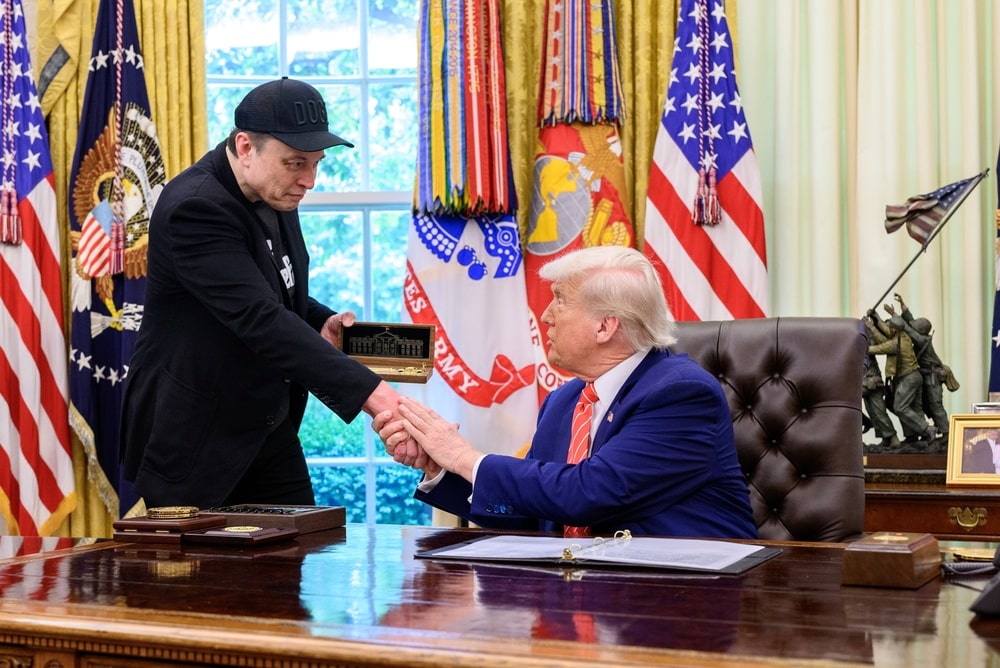
One of the clearest examples is politics. Vast personal wealth allows individuals to fund campaigns and push for policies on a scale unavailable to almost anyone else. Ownership of X (Twitter) has also given Musk access to one of the world’s largest communications platforms. Whether viewed as a champion of free speech or a controversial political figure, Musk possesses the ability to shape public debate that extends beyond his financial resources alone.
Extreme wealth also changes the kinds of risk a person can afford to take. Most publicly traded companies answer to shareholders demanding quarterly profits. Musk, by contrast, can direct billions of dollars towards projects that may produce no return for years, if at all. Tesla’s investment in electric vehicles at a time where the automotive industry continues to question whether or not there is a market is a notable example. There is also xAI (Twitter merged with Musk’s AI company) that continues to hemorrhage money with no road to path to profitability in the near future. These projects come with enormous costs, uncertain returns, and timelines measured in years rather than quarters- investments that his immense wealth makes possible.
The Elephant That Is SpaceX’s Valuation
SpaceX’s absurd evaluation is in part due to the limited availability of its shares. Unlike a traditionally listed company, only a small portion of its equity is available, creating artificial demand amongst investors eager for a slice of the pie. Combined with the NASDAQ and RobinHood bending their rules to allow for SpaceX to go public, many skeptics have asked the obvious question: just what is the valuation based on?
The argument that SpaceX’s evaluation is based on its current business model falls flat when comparing revenue. SpaceX is worth more than a majority of the Fortune 500 companies, yet the comparison is striking. Many of those companies generate hundreds of billions of dollars in annual revenue or employ hundreds of thousands of workers. SpaceX does neither.
Supporters of this evaluation may argue that revenue comparison misses the point and that investors focus instead on what the company can become. SpaceX dominates the commercial launch industry, operates the world’s largest satellite internet through Starlink, and continues to attract government contracts. Therefore, investors are betting on SpaceX becoming the backbone of future space transportation, communications, and national security.
But this assumes decades of continuous growth, an unlimited market, and success in industries that remain highly uncertain. If these expectations fail to materialize, both SpaceX and Musk’s fortune may vanish as quickly as they appeared.
The First of Many?
The question of whether SpaceX’s valuation is justified may not be answered for decades. Financial markets have always priced companies based not on what they are today, but on what they can become tomorrow. Some expectations are ultimately rewarded, while others end in spectacular disappointment. Time alone will determine which category SpaceX falls into.
History remembers John D. Rockefeller as the defining industrialist of the Gilded Age. Bill Gates as the face of the personal computing revolution, and Jeff Bezos as the face of the rise of e-commerce. Elon Musk may ultimately be remembered for something different- not simply as the world’s first trillionaire, but as the person who forced society to confront what having a trillion-dollar fortune actually means.
How should governments tax wealth that exists largely on paper? How much influence should a single individual have over politics, artificial intelligence, and space exploration? And what happens if financial markets continue rewarding companies with even higher evaluations? Musk may not be the last trillionaire. He may simply be the first.