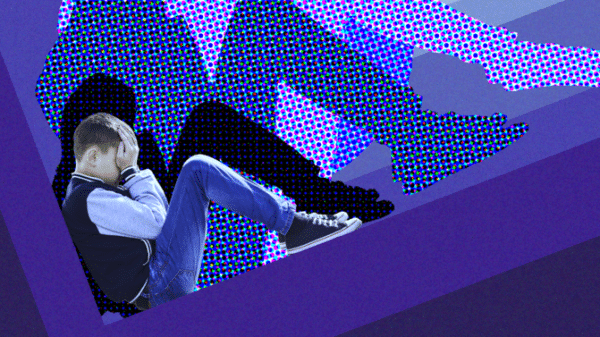
We were always told to be strong, brave, and hard like a rock. From a young age, we were taught that “strength” means staying firm, determined, and never cracking.
But surprisingly, no one ever taught us life’s biggest lesson: that vulnerability makes us human and real. It’s the foundation of true relationships.
Instead, we treat our weaknesses or imperfections as if they don’t belong to us. We bury them deep inside. But they still remain in us.
We’re terrified to show our vulnerable side to people. We fear they will reject us, judge us, or abandon us. But things work differently—acknowledging weaknesses and insecurities acts as a catalyst for deep bonds.
We don’t fall in love with perfection. Our hearts surrender when we stop acting like Mr. Perfect and express our messy, broken, real, imperfect side. And it took me years to learn this.
The Family We Pretend to Be
We need to change the idea of a happy, perfect family. If I ask you, how do you define a happy, loving family? When I start thinking, a scene plays in my mind: a family dining together, enjoying their meal, lost in small talk. Or parents drinking tea while children play. Something like that comes to every person’s mind.
But it never crosses our mind to imagine awkwardness, complications, loud arguments, messy situations, or hard conversations, even though these things actually exist. This is a big part of life.
And these things are never apart from healthy families either. But no one shows healthy families from the angle of complications and weaknesses.

So, we try our best to act like a perfect family: eat, love, care, play. And we’re afraid of breaking this image. We avoid showing any kind of vulnerability. And what cost do we pay?
We become actors. We start living in shallow peace. Our family becomes unknown to the real us. Even though we sit close, we are miles apart.
The Cocoon I Built
I remember every time I pulled up in my car after coming from university, my father asked how my day was or how my exams went. I always said, “It’s good.” Or “It went very well.”
Even when I faced something big, embarrassing, humiliating, or tough, my response was always the same. I didn’t tell them how much I struggled that day or how complicated the exam was.
I never had unfiltered conversations with my family. At first, it looked good. But eventually, it made me far, far away from them. It left me alone.
In saving myself from shame, awkwardness, or embarrassment, I created a wall between them and me, a wall that can only be broken by expressing my true emotions and exposing my struggles.
Now I realise my family didn’t really know me.
And the strange part is that we perfectly fit into the happy, loving family box, apparently. It never occurs to us that we live in a cozy delusion.
We do all the customs of a loving family, but we never get close enough to see each other’s wounds. We fight our battles all alone, secretly. Because it’s too hard to open up about your sensitive side, expose your fear, or tell the truth, especially when it might affect how people see you.
But we need vulnerability like we need air to breathe. And it’s not just about family. It applies to every relationship.
The Cost of Hiding
I acted like a robot all the time. A person who avoided conflicts or hid emotions. Good and polite. I operated on a constant mental prompt: “Don’t discuss anything.” Even though I knew everything about my friends, their failures, fears, dreams, desires, and struggles.
I just collected data about others and never showed the real me. Because of this, I was considered a good friend, but not a close one.
When it came to being chosen, I never was. I remained neutral. They sensed it too: something very important was missing, even when everything else seemed fine—the one thing connection needed.
One night at a sleepover, all my friends began spilling stories about their university crushes. Everyone expressed how crazy they were about someone. Some even shared their awkward moments and heartbroken rejection scenes.
But when it came to me, I said, as usual, “I never had any.” Suddenly, the mood in the room shifted from carefree teenage energy to awkwardness. A strange silence swallowed the room.
No wonder, in my hard times, it was just me and the issue. No one else. I felt estranged and void because I had never watered the roots of the relationship. I had simply let them dry and die over time.
But some time ago, I bumped into C.S. Lewis’s words. And it stirred something in my robotic heart that I thought was dead. In his book, he explains that if you fear vulnerability, you cannot truly love because love requires risk. But if you are afraid of being broken, you can lock your heart away, where it becomes unbreakable yet unreachable. He writes:
To love at all is to be vulnerable. Love anything and your heart will be wrung and possibly broken. If you want to make sure of keeping it intact you must give it to no one, not even an animal. Wrap it carefully round with hobbies and little luxuries; avoid all entanglements. Lock it up safe in the casket or coffin of your selfishness. But in that casket, safe, dark, motionless, airless, it will change. It will not be broken; it will become unbreakable, impenetrable, irredeemable. To love is to be vulnerable.
I realized Lewis was drawing my picture. I had done exactly what he described—wrapped my heart up safe, locked it away. But I never saw the cost until I read his words. He gave me a reality check: locking your heart away doesn’t protect you. It just leaves you unreachable.
Reshaping Strength
Further in my awakening journey, I found an inspiring Japanese concept: kintsugi. In this practice, broken pottery is not repaired with ordinary glue or hidden away. Instead, every crack is highlighted with golden paint. They believe celebrating broken parts makes the piece more valuable and beautiful.
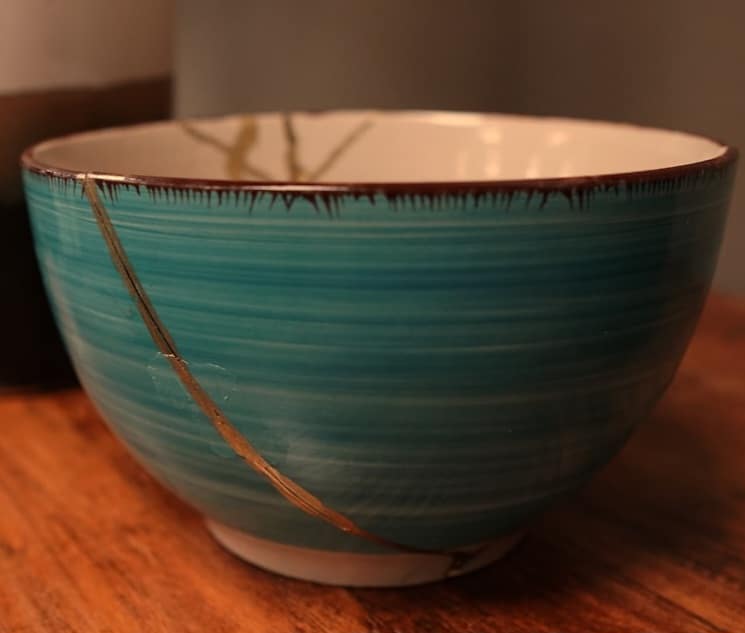
I think relationships work the same way. We spend so much time hiding our cracks, pretending to be unbroken. But real connection doesn’t come from perfection. It comes from letting someone see the golden lines.
And as I continued my exploration, I encountered Brené Brown, who values courage over comfort, something we often choose to avoid. She urged me to stop, to feel them, to live these words:
Vulnerability is not winning or losing; it’s having the courage to show up and be seen when we have no control over the outcome.
And now, after two decades, I am trying to gently reshape my perspective on strength. That real strength is embracing vulnerability, not concealing weakness. Authenticity creates true bonds, even amidst complications, uneasiness, and insecurities, not perfection.
I have made a mantra for my life: “Vulnerability is the essence of relationships.” It is the main secret ingredient for true, pure relationships. And I try to pull off the cover of “neutral person.” I know it will take a long time to reconnect with my loved ones, with every version of myself.
I start by taking small steps like facing something risky or uncertain, or sharing true feelings even when it feels scary or uncomfortable. And over time, it starts to work.
One of those small steps came recently. Some days ago, before a presentation, I admitted to my friends that I had a stage phobia. I said I couldn’t handle it—I felt like I’d start mumbling or mess things up.
The moment I said it, their eyes lit up. They came alive. They instantly started sharing tricks to cope. A tornado of energetic voices rushed toward me. One told me about breathing exercises. Another shared a counting strategy. Someone else offered a different tip.
I could see excitement running through their bodies as they spoke. At that moment, I saw genuine concern for me—as if they had been waiting for this for a long time.
That experience showed me the magic of vulnerability.
What Vulnerability Really Gives Us
I realized that vulnerability is the proof that your relationships are true, deep, and authentic, even if you have to face storms, expose insecurities, navigate arguments, or have uncomfortable conversations.
It’s the soul of healthy relationships. Without vulnerability, the body remains—but life is gone.
Brené Brown said: “Vulnerability is certainly a part of fear and self-doubt and grief and uncertainty and shame, but it’s also the birthplace of love, belonging, joy, trust, empathy, creativity and innovation. Without vulnerability, you cannot create.”
Sometimes, loud, messy, unpolished conversations are better than playing “home sweet home.” We need to open up about our true feelings, insecurities, and fears without worrying about being judged, rejected, or the disaster that might come with it. Because it is worth it. Not everything is solved by laughter, gentle talks, or silence.
Vulnerability is not a weakness, nor a dark emotion. It’s simply a dare to show who we truly are. A willingness to expose the truth, even when it feels risky. We think hiding our emotions, failures, fears, or mistakes makes us closer to others or more likeable, but it makes us mechanical, unreachable, and less human.
We need to redefine our perspective about vulnerability.
The more you let people see your wounds, your broken parts, and your battles, the closer your relationship becomes to that person.
So, the next time you feel uncertainty or risk, face it—not as a threat, but as a birthplace. A birthplace of love, belonging, and real connection. That’s when we break the wall of illusions that stands between us.
Because without vulnerability, relationships can’t be real.