While Independence Day has always carried political significance, this year’s celebrations have become unusually politically charged.
This Independence Day, the U.S. will celebrate its Semiquincentennial. July 4, 2026 will officially mark 250 years since the signing of the Declaration of Independence and the birth of the nation. This is an incredible milestone in American history. In fact, Congress deemed it so important that they began planning festivities for this year one decade in advance.
In 2016, Congress created America250, a commission devoted to organizing events for the Semiquincentennial around the country. Beyond that, their mission is to honor the nation’s history through educational programs and charity work.
One of its biggest projects was sponsoring Super Bowl LX. All games from Week 18 leading up to the Super Bowl were played with an official America250-branded football.
Freedom 250 is a much more recent commission with a similar mission. Established in 2025, President Trump launched Freedom 250 under a separate jurisdiction from America250 to also handle celebrations for the Semiquincentennial.
The establishment of these two separate commissions raises some important questions.
What’s the difference?
America250 and Freedom 250 are more similar than different. Both preach the importance of uniting the country during this historical moment through education, reflection, and celebration.
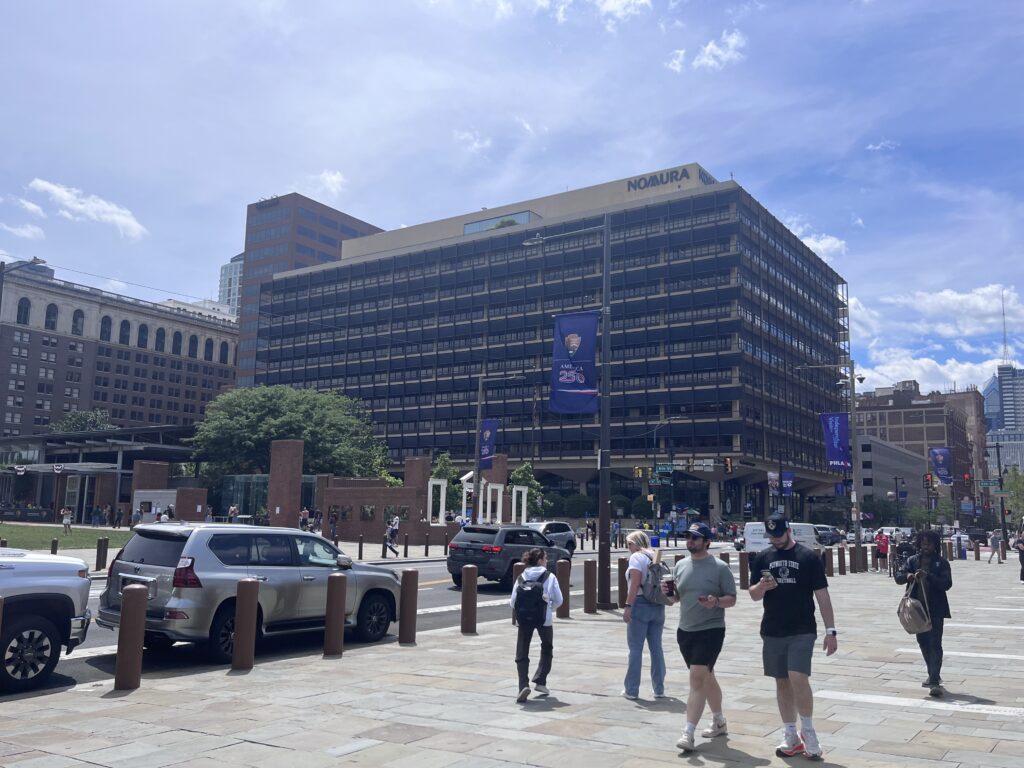
America250 planned a variety of festivities nationwide, including the burial of a time capsule in Philadelphia and multiple Times Square ball drops on July 3. Freedom 250 organized another set of events separate from those America250 arranged. These include the Great American State Fair and the first ever UFC fight at the White House.

Why are there two commissions serving virtually the same purpose?
From a practical standpoint, the creation of a second commission to manage the Semiquincentennial could only complicate matters. This enables the possibility of scheduled events conflicting with each other. Additionally, both organizations use federal funds to operate.
Critics argue that Trump did not create Freedom 250 for practical reasons, but rather as a political move. This has turned what would normally be a nonpartisan celebration into a political event, nearly posing the two commissions against each other.
Recent controversies
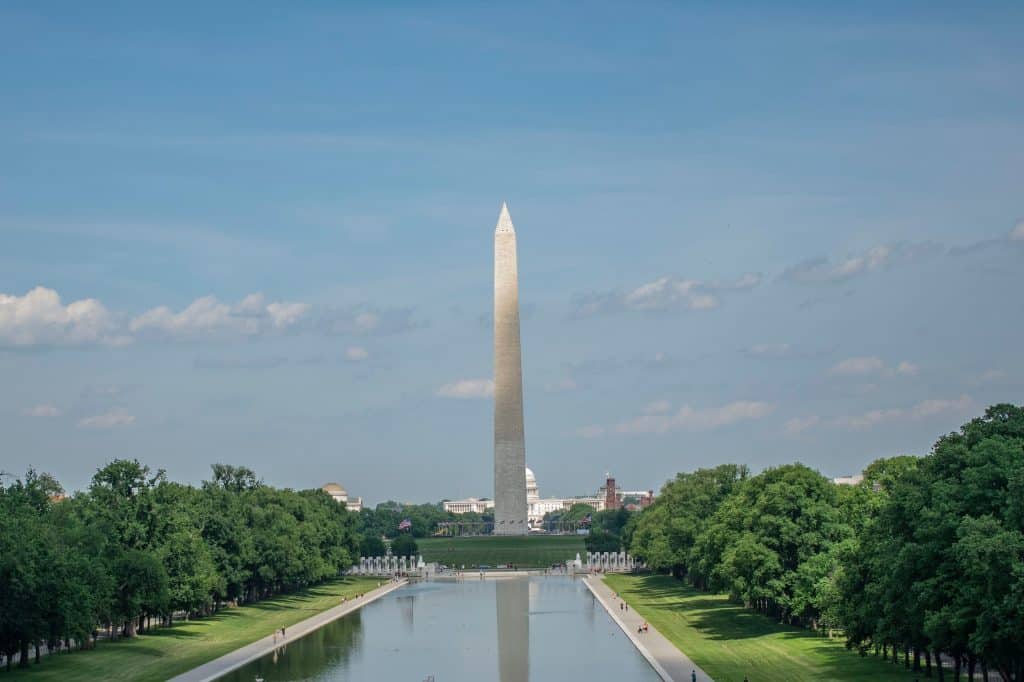
The Great American State Fair is Freedom 250’s most ambitious project. This 16-day event features cultural exhibits, movie screenings, and live entertainment in Washington D.C.’s National Mall.
Amidst this, several states have decided not to partake in the fair. A vast majority are under Democratic leadership, strongly implying a political motivation for not participating. The largest part of the fair will be a Trump rally held at the Lincoln Memorial and Washington Monument on Independence Day.
The decision to brand this event as a “Trump rally” has sparked some controversy as the celebration of America’s 250th birthday would not normally be political. Additionally, it feeds into suspicions that Trump created Freedom 250 to get the political high ground.
Freedom 250 invited entertainers to perform at the fair on July 4. Initially, they agreed, and a lineup was confirmed. However, these plans were very short-lived. Just hours after the announcement, several artists backed out of the event. Many publicly claimed they felt misled by the nonpartisan marketing. After seeing the event’s branding centered on Trump, they worried their involvement would be seen as a political stance.
Young MC, Bret Michaels of Poison, and Martina McBride of the Commodores all made statements on social media after cancelling their performance.
In mid-June, Trump invited country singer Alexis Wilkins to perform the National Anthem at the Great American State Fair Kickoff. Her acceptance quickly drew scrunity.
People accused her of only being invited due to her relationship with FBI director Kash Patel, though Wilkins insists this is false.
Trump later announced in a Truth Social post that he would replace the original “third-rate” artists with someone who “gets much larger audiences than Elvis in his prime,” referring to himself.
Since then, Freedom 250 has leaned into the Trump branding, with some graphics featuring his headshot.
Meanwhile, America250 has remained as politically neutral as possible.
Partners or rivals?
Striving for the same goal using different methods, the two commissions have a complicated relationship.
Freedom 250 remains silent about the existence of America250’s hosted events on their website and social media profiles.
In April 2026, America250 was expected to receive $100 million in federal funds, yet they only received $25 million. Meanwhile, the federal government has withheld at least $68 million in taxpayer money this year to fund its own commission for the Semiquincentennial, giving them a clear advantage.
Although the Trump administration’s clear bias toward Freedom 250 puts America250 in a very uncomfortable position, the nonpartisan commission remains cordial toward its planning partner.
America250 released an official statement addressing the formation of Freedom 250 in December. Despite their differences, the commission did not frame Freedom 250 as a rival, but rather as a partner. They encourage Americans to participate in events from both organizations.
The two organizations appear to have different priorities. America250 strives to unite the nation by any means in the spirit of celebration. Freedom 250 aims to gather as many Americans as possible specifically for their events.
Both organizations encourage patriotism during this momentous occasion in American history, yet they struggle to agree what that looks like.
What is patriotism?
Many people have their own ideas about what this country represents. Some look at the American flag and feel pride. Others feel shame.
In either case, the reason is likely political.
The idea of being an American patriot has evolved over the last few years. As the U.S. becomes more politically polarized, patriotism has become increasingly tied to one’s political identity. For instance, the phrase “Make America Great Again” is more associated with Trump’s political base than the country itself.
Former NFL quarterback Colin Kaepernick’s protest in 2016 sparked a lot of controversy around The Star-Spangled Banner. People started to question the song’s historical roots and racial undertones. An anthem originally adopted to spread national pride now also carries political implications.
With Freedom 250 being so closely affiliated with the Trump administration, even watching a firework show in Washington, D.C. feels political.
Patriotism has been rebranded as a Republican value.
A 2025 Gallup survey found that registered Republican voters are 63% more likely than Democrats to participate in any Semiquincentennial celebrations. The same poll found that American patriotism has reached its lowest point since 2001.
Studies also show that Gen Z is the least likely of any generation to take pride in America. However, older generations (Gen X/baby boomers), both liberal and conservative, are generally much more patriotic, despite being aware of the same issues.
Gen Z is redefining what it means to be patriotic, expressing patriotism in different ways to seek change, and pushing back on these narratives about American patriotism.
What we can expect
Trump’s affiliation with Freedom 250 already cost them several performers, but it may also cost them attendees. America250 advertises to a bipartisan audience while Freedom 250’s marketing appeals mainly to conservatives.
On the other hand, it is possible Freedom 250 sees an influx of conservative attendees because of Trump’s influence.
By marketing the Great American State Fair as a Trump rally, the administration is likely to attract a different audience in the nation’s capital. Conversely, centrists and leftists may be more inclined to participate in America250’s events.
This political battle for the Semiquincentennial has the potential to change how Americans view Independence Day. The more Freedom 250 leans into the right-wing branding, the more political this event will be perceived.
As we near July 4, the attendance numbers and political demographics for each commission’s events may provide insight into how Americans are responding to the competing visions for the Semiquincentennial.