
Moviegoing rates have been declining since COVID-19, and social media is monopolizing young people’s attention spans. Yet, recent statistics show that Gen Z is, in fact, watching a plethora of movies. The film-logging platform Letterboxd is partly to thank. It’s fostering a love of film for this culturally lost and hungry generation.
The modern-day dilemma
Movies are foundational to a cultured society. Like any art, they nurture human creativity and analysis on the complex, ever-changing world. They stand as technical feats, as artistic innovations, and as cultural time capsules. Today, though, all of this seems long forgotten.
Major studios have been suffering with deflated box office earnings since the pandemic. Warner Bros. ’ overwhelming debt and the subsequent merger with Paramount were an unintentional PSA that the film industry is changing. And not for the better.
Meanwhile, streaming platforms have a foothold on the viewership market – but subscription rates are stagnating. Worse: recent releases from these services are ‘multi-tasking friendly’, encouraging people to watch movies in a zombified and mindless state.

Social media has inspired a regressive genre of ‘film’ called verticals, or ‘micro-dramas’, which have a meager one-minute runtime. In short, young audiences love to scroll, understandably so. It’s easy to value effortless reels and sixty-second TikToks over time-consuming films that require devoted attention and a critical eye.
Then a film logging platform akin to Goodreads — called Letterboxd — launched. Over the years, it has grown to play a unique role in strengthening the film industry and film culture. A love for movies, old and new, is being reignited in Gen Z, and Letterboxd is partly to thank.
A very brief history of Letterboxd
The movie-logging app Letterboxd was created by New Zealand web designers Matthew Buchanan and Karl von Randow in 2011. They cleverly named the app after ‘letterboxing,’ a process of preserving a movie’s aspect ratio during transfers. Letterboxd was launched in 2013, but it wasn’t until 2020, amidst the pandemic, that it really took off. Since then, the number of users has grown by at least one million year over year.
Though movie-going rates are still ebbing overall, Gen Z is now the largest theater-frequenting demographic. The movie love isn’t just for mainstream releases, too: arthouses have credited Letterboxd with the increase in indie film appreciation among young viewers. Best of all, Zoomers are embracing the classics like never before.

Maybe it’s by pure chance. Maybe it’s a result of booming technology – like AI – that’s leading young people to crave simpler times. Most likely, it’s a combination of such factors, and Letterboxd’s emergence happened to come at the right time. A time where Gen Z’s need for movie guidance is strong, and the resources for it are slim.
Letterboxd’s well-loved features
There’s a whole lot that can be done on Letterboxd. This isn’t a user guide, though. Below are just the basics of why people are in a frenzy about it.
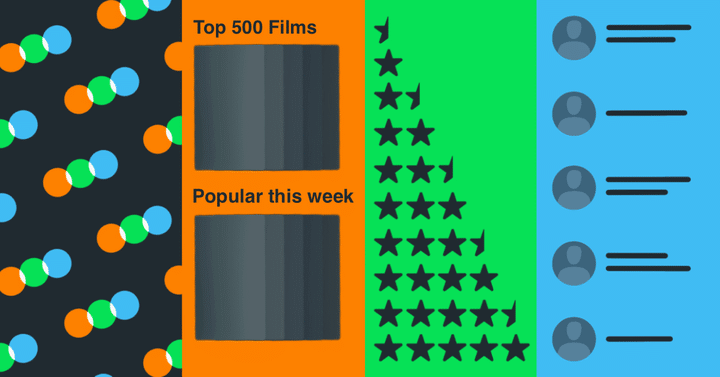
There are hundreds of thousands of movies on the app. It serves as a digital title archive that preserves a wide range of films. On the homepage, one can browse what’s popular this week with general audiences or snoop on friends’ recent watches. The search function allows users to find movies based on genre, decade, ratings, or through listicles, which is great for the indecisive or uninformed.
The rating system is well-developed and dynamic. Users can do half stars, a perfect compromise for movie watchers who struggle to decide whether something’s worthy of four stars or should be subjected to a meager three. The rating system shows an average rating compiled from all ratings in the system, as well as the amount of input per star.
A ‘diary’ allows users to track what they’ve watched on specific dates, and the watchlist feature lets users keep a list of want-to-watch films. You can make your own lists (public or private) with broad or hyper-specific ideas behind them, like this.
There’s nothing quite like Letterboxd. Movie guidance – good and well-rounded – is hard to find. Outside of the app, there are essentially two options: word of mouth and the general media. The former, although great, has a smaller pool of opinions. The latter tends to be less honest, more focused on what’s trending. Letterboxd differs in the sense that it has a vast, constantly growing data set, one that creates complex and thorough rating systems while maintaining a human touch.
All of this goes to say that there was a lot of thought, love, and care put into the design of Letterboxd. It’s easy for anyone to use, and has a generous amount of features without creating overcomplication or overwhelming excess.
How it’s shaping film culture
Before Letterboxd, movie reviewing was a critic’s job. Laymen couldn’t just put their film opinions out into the world if they were outside of related conversation. Though it seems silly, that sentiment has brought something intensely meaningful to the film-logging app. With Letterboxd came the ability for anyone – from high-brow cinephiles to everyday joes – to share their movie takes with the wider world, specifically with people who are actively seeking out those takes too.
“Honestly, what made me fall into it was the community aspect of the app, which allowed me to connect with like-minded people that I could finally share my passion with, as I only had 1 friend at the time who was as passionate as I was for the horror genre,” Letterboxd user Cesar Mendez, 23, says. Mendez, like many users, feels Letterboxd makes the world of movies feel full, vast, and lively. It fosters a sense of belonging that has been only mythical since the rise of the internet and the fall of homogenous movie culture.
Letterboxd is for people, not fads
Reflective of the early internet days and its sites (like MySpace and Old Reddit), it’s clear that Letterboxd was made by humans, for humans – not for advertisements and marketing tactics. It’s not an overly polished or refined platform, and it doesn’t pride itself on flawless curation, unlike today’s social media hubs.
In contrast with other platforms, there’s also no instant analysis; no sneak peeks of a film’s best moments (unless, of course, a user unveils a comment tagged with spoilers). Letterboxd doesn’t make movies go viral because of one broadly interpretable scene, stripped of its crucial context. Instead, the app acts as a gateway to the art form without diluting its substance.
Riley Braggs, A Gen Zer and digital content specialist, shares a similar sentiment:
“Letterboxd feels more like a movie club than a social media platform – I think this is what draws people in. This is where users share real reactions, funny reviews, and niche suggestions, rather than chasing likes or hopping on short-form trend bandwagons.”
Without community judgment, conventions, or social fads to follow, people have the freedom to be their true selves in a place that has no popular, uniform ideals. It’s nearly impossible to lie; to show a desirable faux identity. Instead, hungering after likes, fiending for followers, or posting identity-driven content is taboo. Instead, there is a refreshing emphasis on positive digital social standards.
Comments are almost required to be quasi-analytical or humorous. Lists are made with a selfless intent to give good movies more exposure. The profile gives users the ability to make subtle film recommendations and – more importantly – foster movie conversation outside of the screen by observing what’s watched, loved, and hated by the people in a user’s physical, everyday life. It’s not about being cool or fitting in — the app isn’t designed for such vanity. Letterboxd is all about movies. That’s it.
Features like the Favorite Four section – a major function on the main profile page which shows a user’s favorite films – are arguably more intrinsically challenging than they are socially. Users commonly report the internal battle of picking only four movies to list above all others as their most beloved. Sure, making that decision gives the outer world a glimpse at who a user is — but it also shows that same user what they really know about themselves; what makes them tick, and the ideas they hold true to their heart.
Classics are having a comeback
Because curating an identity isn’t at the forefront of Letterboxd, users can appreciate a wider range of movies. Movies made in long-gone eras depict foreign life experiences or feature unrelatable protagonists. The app challenges people to step outside the boundaries of what they know or understand; to experience and analyze unfamiliar realities. In turn, international films and classic movies have crept out of the realm of cinephilia and become more accessible to the everyday movie watcher.
“I’m a big movie buff, and so is my older brother. He first introduced me to the app, and once I explored it, I loved having one dedicated spot to find new movies, lists, and reviews. Letterboxd helped me engage with a diverse range of movies, including older ones. Whether it’s through reviewing friends lists or random users lists and reviews, I was introduced to new movies and was able to decipher if a specific movie may be worth watching or not,” Letterboxd user MacKenzie Knox, 27, says.
Today’s generations grow up with a lack of film knowledge – though it’s no fault of their own. Parents aren’t showing their children movies anymore; society writ large isn’t willing to expose young people to culture if it involves sacrificing space to push products on them. This has had a disastrous effect, one that Letterboxd is, in part, trying to mend.
Movies represent human creativity, innovation, and life itself; each movie has historical and analytical knowledge that can be absorbed and put to use in everyday thinking. When classic movies make a comeback, so does all of that.
“I strongly believe Letterboxd helped younger people to get more engaged with older movies. How? Algorithmic discovery on TikTok might surface a Kubrick clip and spark curiosity, but Letterboxd is where you’d go to prove you watched it, rated it, and had an opinion. It turned mere passive exposure into active participation…” – Kasper Hytonen, founder of Synchro Social.
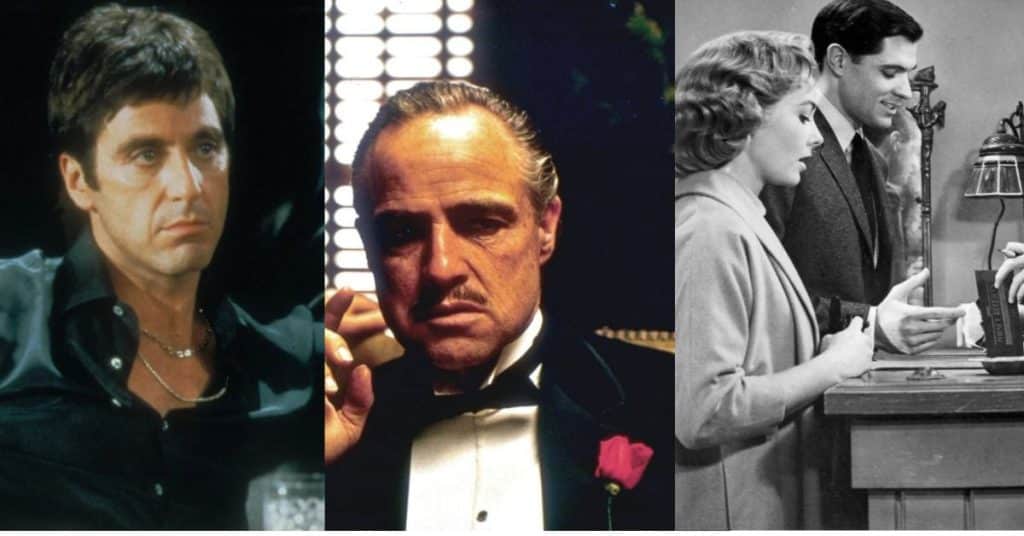
Regardless of whether they’ve watched them or not, movies like The Godfather, Psycho, and Scarface are household names that Zoomers recognize. Seeing those movies today is a certain kind of viewing experience, one that feels removed from what gave it the ‘classic’ label. Watching A New Hope on Disney+ compared to seeing it in theaters circa 1977 creates incredibly different viewer perspectives. When a movie is released, there’s buzz and, in turn, an opportunity to discuss, share, and be a part of that film’s essence.
Movies of the past don’t have that draw now. Gen Zers choose fresh releases that feel more relevant to their lives rather than digging through relics of the past. When Letterboxd rolled around, 20-somethings finally felt like they could be a part of the realm of classic films. The app creates a sort of buzz. Young people can now engage with classics in a similar fashion to how older folks did during their initial release.
The future
Whether it’s with classics, major releases, or indie flicks, Letterboxd is reminding people how much value movies have. The app is slowly infecting today’s youth with film appreciation, bringing hope to a technologically isolating and culturally void world. With the film industry chaotically teetering between decline, stagnation, and growth, such positivity is beyond necessary.
Letterboxd is not a perfect (nor the only) solution to the problems of the film world. A movie being watered down to a five-star rating doesn’t really do it justice. Movie lists and top four favorites being indicative of a person’s entire soul is definitely dramatic. But it’s a start, one that might motivate Gen Z to foster film culture beyond mobile screens.